A black board-and-batten house with a metal roof, wooden porch posts and a stone foundation, surrounded by dry grass, gravel and tall pine trees under an overcast sky.

Heat Pump Repair in Lakewood, CO

Tell us about the job

Takes about a minute. No obligation.

Step 1 of 3: Equipment

A tech checks the whole cycle, not just the symptom

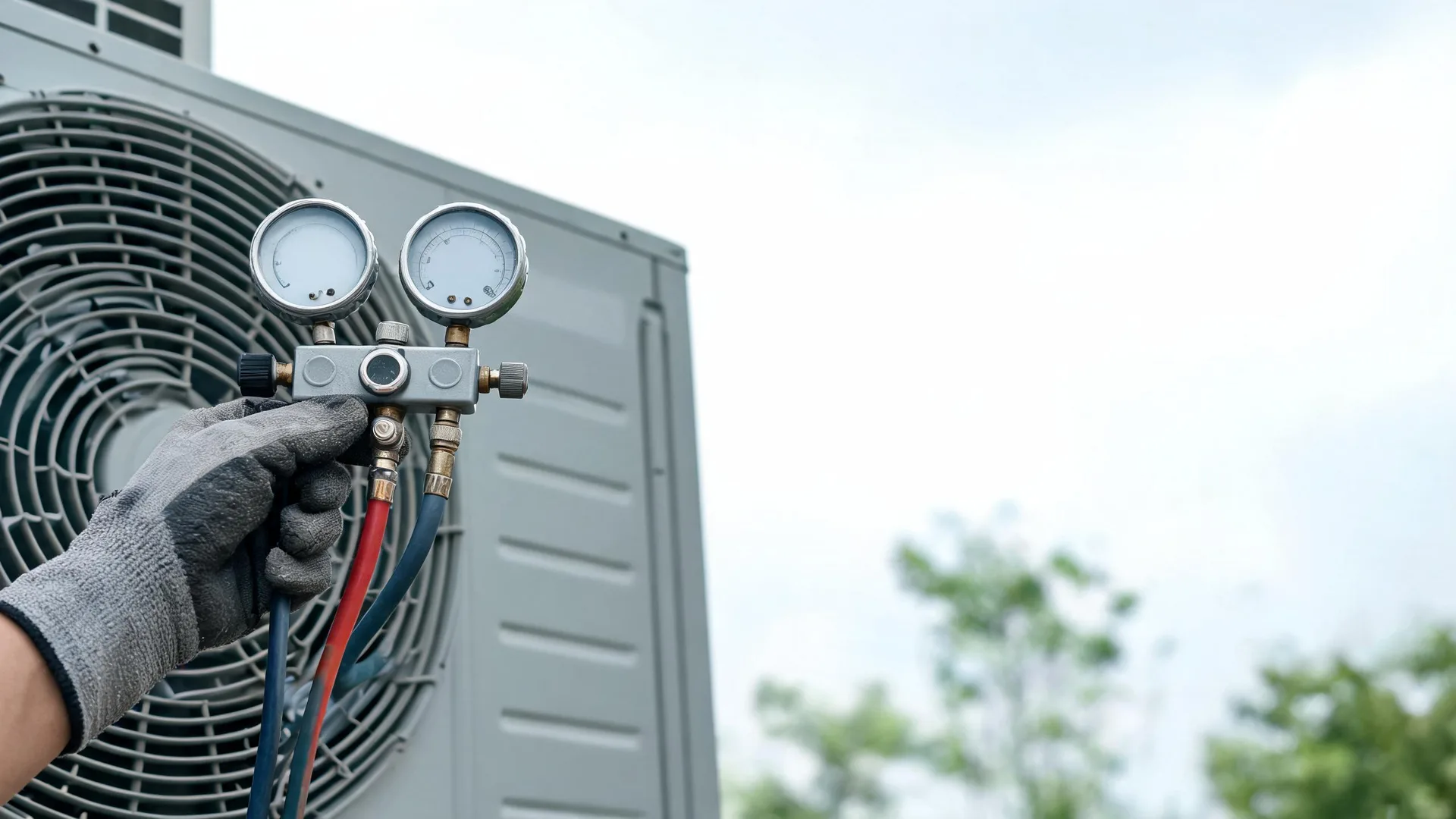
A heat pump that won't heat could be low on refrigerant, stuck in defrost, or blocked by a dirty outdoor coil. The tech checks refrigerant pressures, looks at the reversing valve, and watches whether the outdoor fan and compressor are both running. The complaint you noticed and the part causing it are often different things.

What they find decides what happens next

A failed capacitor or contactor gets replaced the same visit. A refrigerant leak means finding where it's coming from before anything gets recharged, since adding refrigerant without a repair never holds. If the compressor itself has failed, that changes whether repair still makes sense against replacing the unit.

9 months
September through May, your system heats
1 months
July through July, it cools
18°F
the average winter night it heats against
80°F
the average summer afternoon it cools against
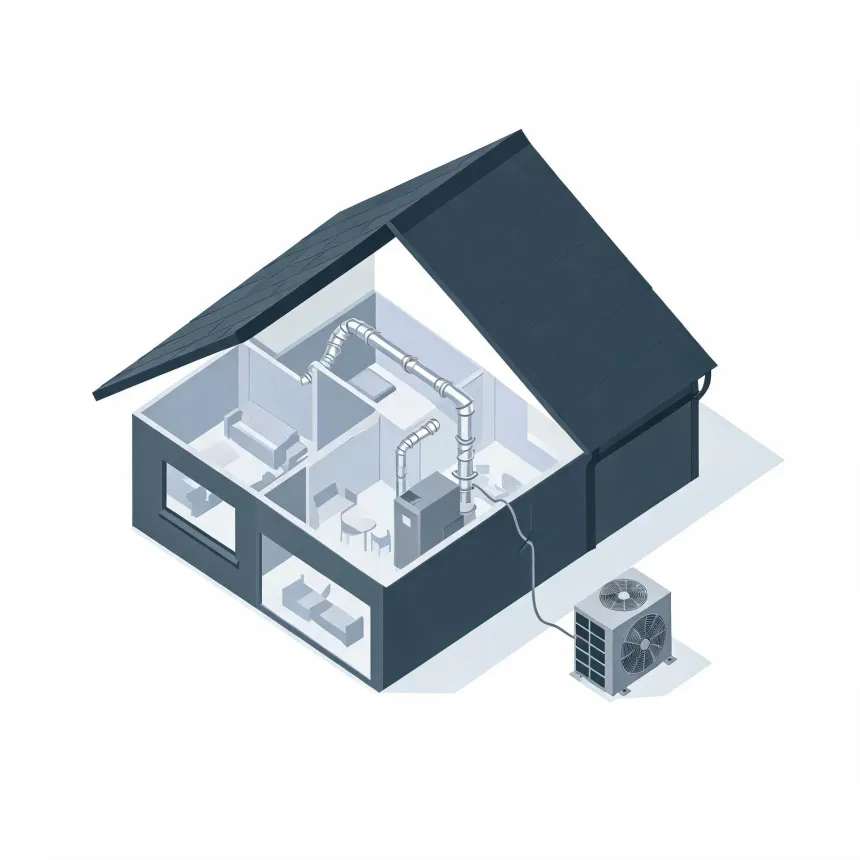
Isometric illustration of a cutaway house showing interior rooms with furniture, a furnace and ductwork, connected by a line to an outdoor condenser unit on the ground outside.
Your system heats September through May and cools July through July.

NOAA nClimDiv, 1991–2020 normals

A heat pump low on refrigerant makes the compressor work harder with every cycle.

Run it that way long enough and the compressor itself is what fails, turning a repair into a replacement.

Half the homes in Jefferson County date to 1980 or later, so a heat pump here is often newer than the house's reputation suggests

Half the homes here were built by 1980
114 damaging wind events from 2015 to 2024
152 hail events from 2015 to 2024
August is when a weak heat pump starts to failHeat runs September through May here, and the load hits first in the cold snaps that start the season.

Electricity in Colorado ran 14.92 cents per kilowatthour in 2024. A heat pump that's low on charge or struggling to defrost doesn't just heat poorly, it pulls more power doing it. That cost shows up on the bill whether or not you call someone about it. Leaving a stuck reversing valve or a dirty outdoor coil alone doesn't save you the repair, it just adds the running cost on top while you wait.

A newer system is usually worth repairing

If your heat pump came with the house, there's a good chance it's still within its working life. That points toward fixing what's wrong rather than replacing the whole unit.

Find a contractor
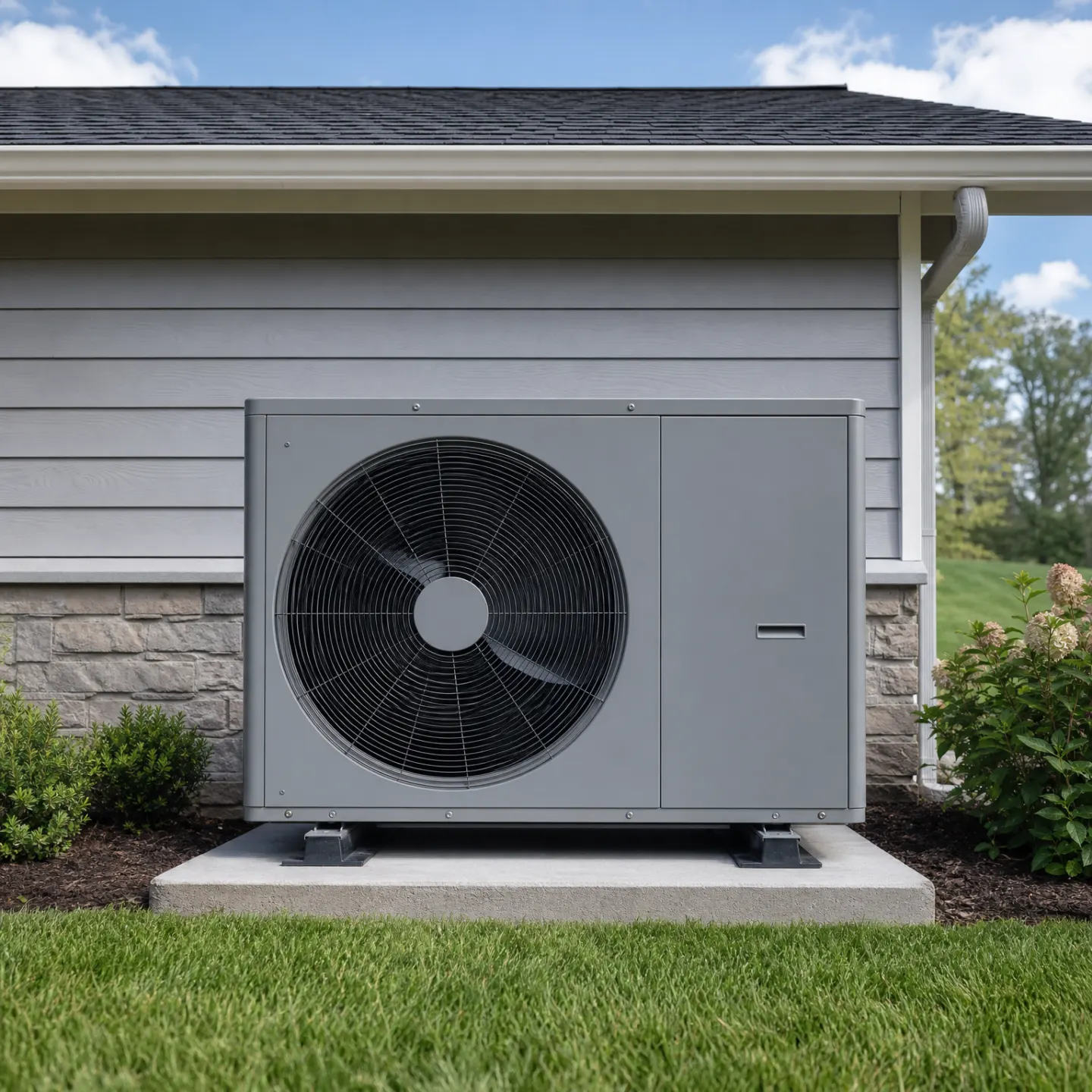
A gray outdoor HVAC unit mounted on a concrete pad beside a house with gray lap siding and a stone foundation.

It runs every month of the year, not just one season

A heat pump works year round, so the parts that fail are the ones that never get a break. The reversing valve switches every time the system changes between heating and cooling, and the coil that sheds solenoid wears out from that constant switching. The outdoor coil sits outside through everything, and anything that cuts airflow across it, leaves, dirt, a bent fin, makes the whole system work harder until something gives. Refrigerant leaks show up at joints and fittings that flex every time the system cycles on and off. The defrost cycle itself is a common failure point, since it depends on a sensor and a control board agreeing on when ice has built up on the outdoor coil. When that sensor reads wrong, the unit either defrosts when it doesn't need to or skips a defrost it does need, and ice builds up until airflow stops. None of this is about one bad season. It's wear from a machine that doesn't get to shut off for months at a time.

The sounds tell you something

A heat pump that's clicking on and off without settling into a run cycle is short cycling, usually from a bad sensor or a refrigerant problem. Grinding or squealing from the outdoor unit points to the fan motor or a bearing going out. A loud bang at startup can mean a compressor issue. None of these get quieter on their own.

Warm air isn't the only complaint that matters

The system running constantly without the house reaching temperature means it's losing the fight, whether that's airflow, charge, or the compressor itself. Ice on the outdoor unit that doesn't clear during defrost means that cycle isn't working right. A heat pump blowing cool air in heating mode isn't always broken, but one that never switches over or gets stuck in one mode needs a look at the reversing valve.

Before anyone comes out, there are a few things worth checking yourself. Look at the thermostat first. Make sure it's set to heat and the temperature is actually above room temperature, since a setting bumped by accident looks exactly like a broken system. Check the outdoor unit for ice or debris piled against the coil, and check the air filter inside, since a clogged filter chokes airflow and can make a working system act like a failing one. Go around the house and make sure every supply vent is open and nothing is stacked in front of a return. If there's a disconnect box near the outdoor unit, check it hasn't been bumped or switched off. None of this fixes a refrigerant leak or a bad reversing valve, but it rules out the simple stuff before you pay someone to find out it was a closed vent.

A repair makes sense when one part failed and everything else in the system is sound. A capacitor, a contactor, a fan motor, a control board, these get swapped out and the heat pump goes back to running the way it did before. Replacement starts to make more sense when the compressor is the problem, since that's the most expensive part in the unit and the labor to replace it is involved enough that a new system can cost less in the long run. Age matters too, but not by itself. A heat pump nearing the end of its working life that now needs a second or third repair is a different conversation than one that's never needed anything before. The honest way to decide is to ask what else is likely to fail soon, not just what failed today.