



Illuminated timber-frame and stone houses along a residential street at night, with snow-capped mountains visible in the background.

Heat Pump Repair in Broomfield, CO

Tell us about the job

Takes about a minute. No obligation.

Step 1 of 3: Equipment

Winter nights here average 20°F, and that's a normal load for a heat pump, not an extreme one. Broomfield gets its share of winter storms and wind, but none of that points to anything unusual going on inside your system. If your heat pump is struggling to keep up or running constantly without warming the house, the cause is more likely a refrigerant leak, a failing defrost control, or a reversing valve stuck in one position. Those are common problems with a known fix. A contractor can check the system and tell you what's actually wrong before you spend money guessing.

8 months
October through May, your system heats
3 months
June through August, it cools
20°F
the average winter night it heats against
86°F
the average summer afternoon it cools against
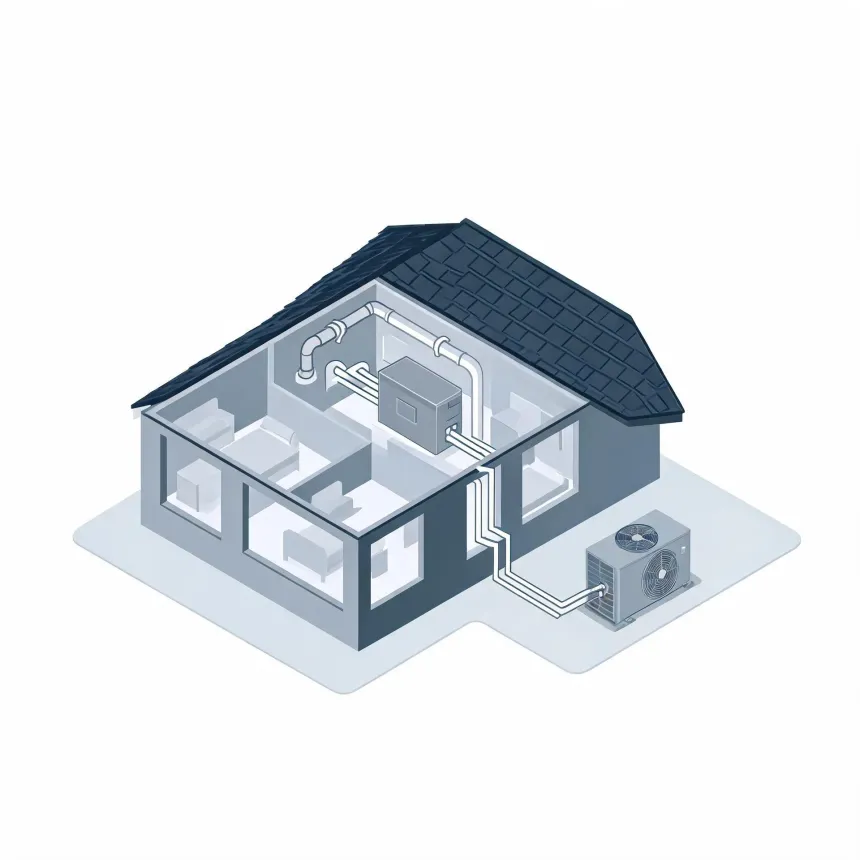
Isometric cutaway illustration of a gray house showing interior rooms, a central air handler with ducts in the attic, and refrigerant lines running to an outdoor condenser unit beside the building.
Your system heats October through May and cools June through August.

NOAA nClimDiv, 1991–2020 normals

Your heat pump switches over to heat in October and runs through May.

September is the month to get it checked, before the first cold night finds the weak part.

Electricity here runs 14.92 cents a kWh, so a heat pump working harder than it should shows up fast on your bill

Power costs 14.92 cents a kWh statewide
60 damaging wind events from 2015 to 2024
17 hail events from 2015 to 2024

Half the homes in Broomfield County were built in 2002 or later. If yours is one of them, your heat pump is probably well within its working life, and a repair makes more sense than a replacement. The house being newer doesn't mean the system is new, so check the install date if you know it. A unit that came with a newer house still has plenty of service left in it when the fix is something like a capacitor, a control board, or a low refrigerant charge.

A heat pump running wrong costs you every day it stays that way

A heat pump stuck in a bad cycle doesn't pause while you decide. At 14.92 cents a kWh, the extra runtime adds up fast. Get it looked at and fixed, not just topped off.

Find a contractor
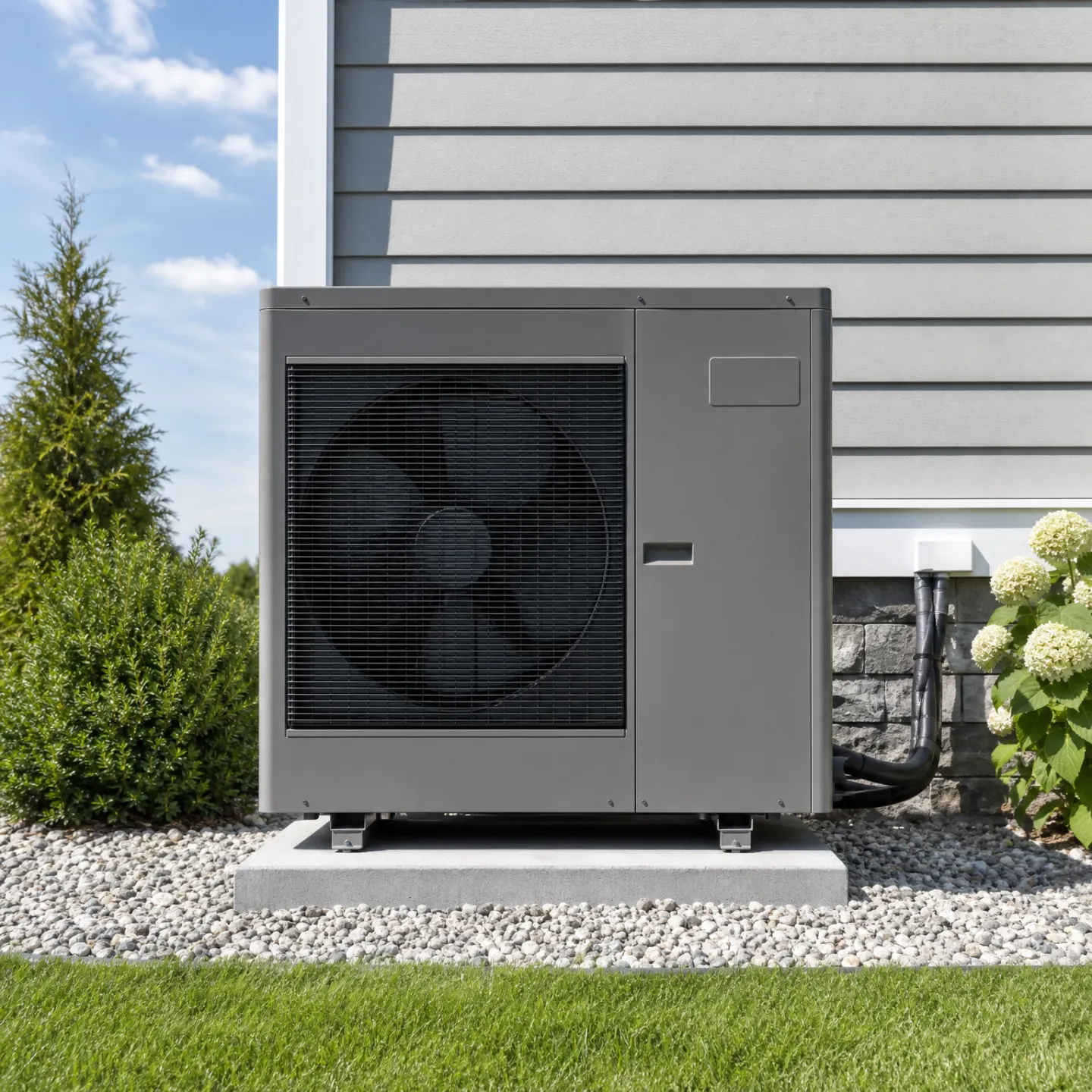
A gray air-source heat pump mounted on a concrete pad next to a house with gray vinyl siding, surrounded by gravel and flanked by green shrubs and white hydrangea flowers.

A machine that never gets the summer off

A heat pump works all year, so it wears in different spots than a furnace that rests for months at a time. The reversing valve is the part unique to this machine, and it earns its keep every time the system switches between heat and cool. Over time that valve can stick, leaving the system stuck in one mode or hunting between them. The defrost board is another common failure point. It tells the unit when to clear frost off the outdoor coil, and when it quits, ice builds up until the coil can't pull in heat at all. The outdoor coil itself takes a beating sitting outside through wind and debris, and a coil caked with dirt or ice can't move heat the way it should. Refrigerant leaks tend to show up slowly. A system running low on charge has to work longer to do the same job, and that extra runtime wears the compressor faster than normal use would. The compressor is the part worth protecting, since it carries most of the weight of a repair when it fails. Capacitors and contactors simply wear out from constant cycling, the start-stop load of a system that never really gets to shut down for a season.

What you can check yourself

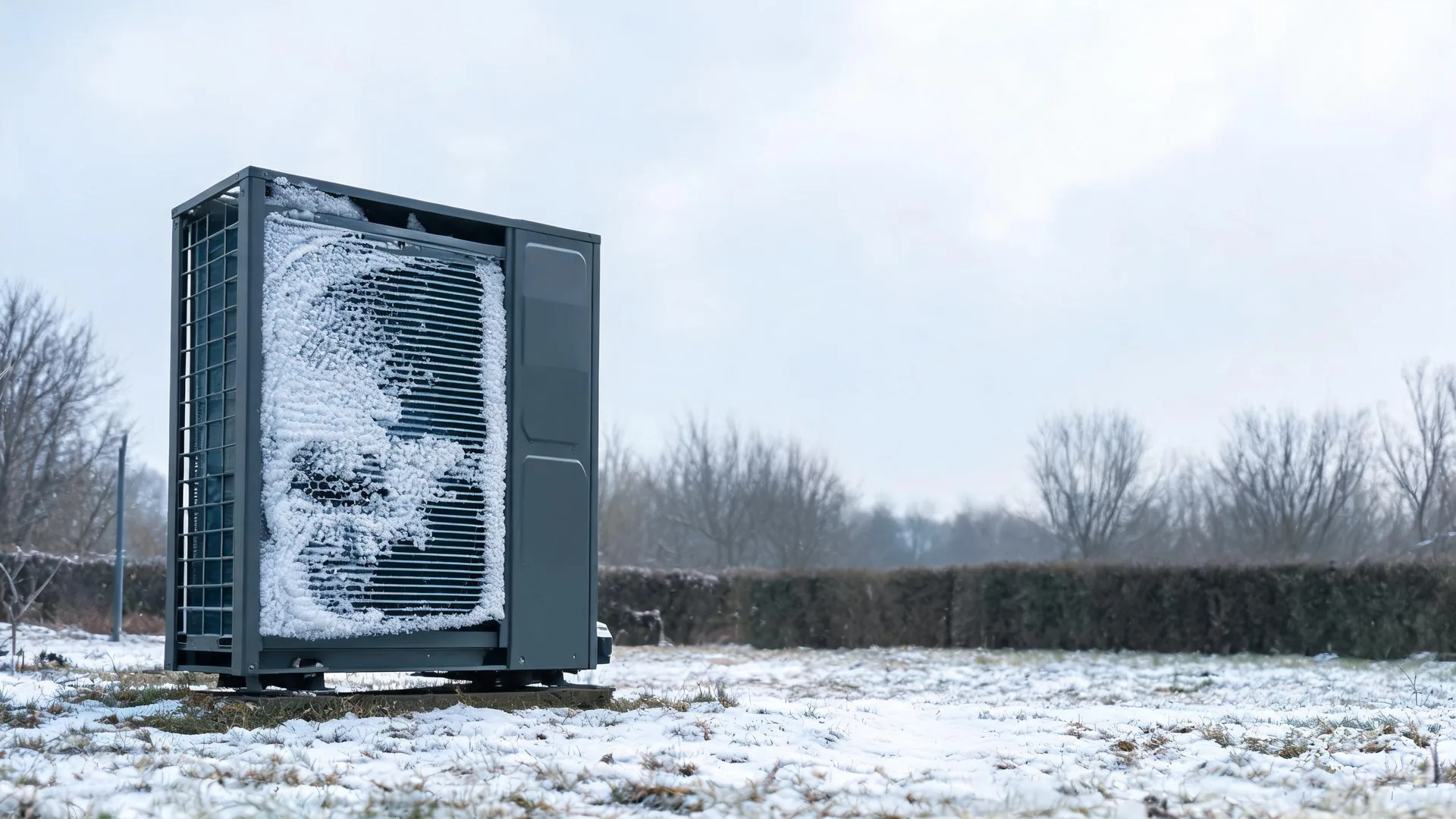
Look at the outdoor unit. Ice on the coil or leaves and debris packed into it will stop the system from moving heat, and so will anything crowding the sides, a fence, stacked wood, a snow drift. Inside, check the air filter and swap it if it's dirty, and make sure every supply vent is open. Confirm the thermostat is set to heat and the batteries are good. None of this takes long, and it rules out the simplest causes before anyone has to come out.
What to leave alone

Don't open the outdoor unit's panel or touch the refrigerant lines. Finding a leak or a low charge takes gauges and training, and refrigerant isn't safe to handle without the right equipment. If the breaker trips more than once, stop resetting it. That usually means a short or a failing part pulling too much current, and forcing a restart can take out the compressor. Ice on the coil that won't clear, or the system blowing cold air while set to heat, points to the reversing valve or the defrost control. That's a call for a contractor, not something to wait out.

A heat pump that's low on charge or stuck in the wrong mode doesn't just run poorly, it runs harder to make up for it. The compressor has to work longer to move the same amount of heat, and that extra runtime is what wears it out early. A reversing valve stuck halfway doesn't fix itself by staying on. It just keeps forcing refrigerant through the wrong path. Ice on the outdoor coil behaves the same way. Once it builds up, the coil can't pull in heat, so the system runs longer trying to compensate, and the ice gets worse instead of better. None of these problems improve with time. Shutting the system off and getting someone out protects the compressor, which is the part that takes the real damage if the system keeps running like this.

A diagnostic visit starts outside at the unit, checking the coil for ice or buildup and making sure nothing is blocking airflow. From there a contractor connects gauges to check refrigerant pressure. A leak and a stuck reversing valve both show up there, just in different ways. Electrical readings come next. The capacitor, the contactor, and the compressor windings each get checked to see if they're drawing current the way they should. The defrost control gets tested too, forcing a cycle to see whether the board actually clears the coil on command. A tech who knows what each reading means can usually tell within a few checks whether the problem is refrigerant, a failed control, or a part that's simply worn out.