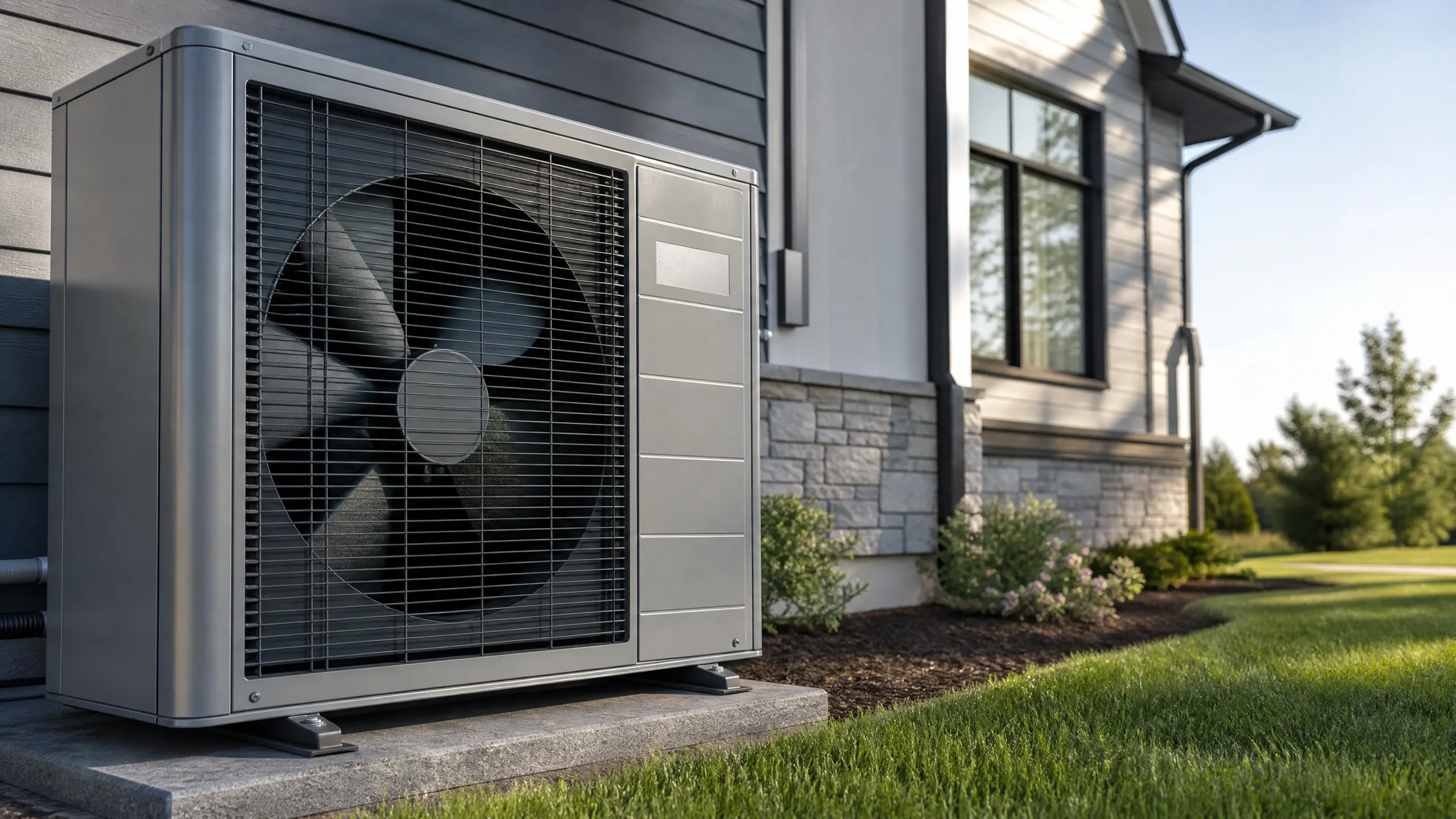




A grey heat pump outdoor unit mounted on a concrete pad against the exterior wall of a house with grey siding and stone veneer.

Heat Pump Repair in Aurora, CO

Tell us about the job

Takes about a minute. No obligation.

Step 1 of 3: Equipment

Heat pumps here run heat from October through May, about eight months of the year. September is the last easy month, the one where the system can limp along on a weak part and nobody notices. Once the switchover to heat happens, that same part gets asked to do more. A low charge or a failing reversing valve that held up through summer often won't hold up through the first cold morning. If your heat pump is struggling now, the timing is not a coincidence.

8 months
October through May, your system heats
3 months
June through August, it cools
16°F
the average winter night it heats against
86°F
the average summer afternoon it cools against
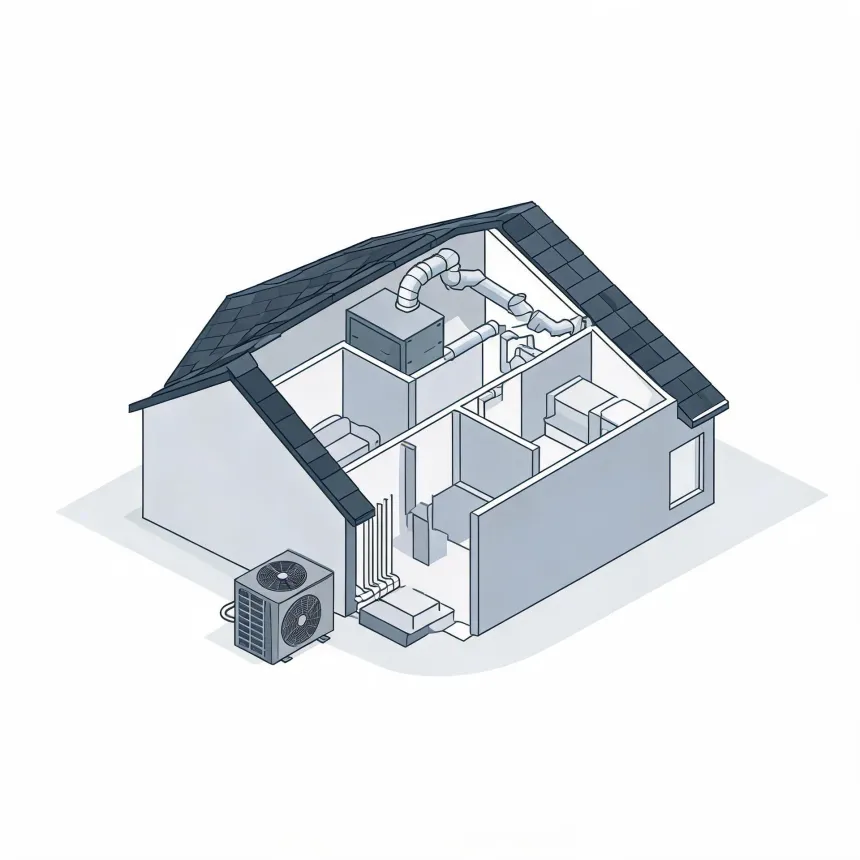
Isometric line illustration of a cutaway house showing interior rooms, an air handler with ductwork in the attic space, and an outdoor condenser unit beside the exterior wall.
Your system heats October through May and cools June through August.

NOAA nClimDiv, 1991–2020 normals

Aurora gets hail, wind and winter storms most years, same as the rest of the county.

None of that is what's wrong with your heat pump. Look at the part that's actually failing.

Arapahoe County sees its share of rough weather. Your heat pump breaking down isn't about that.

360 severe weather events from 2015 to 2024
13% of homes statewide lost power a day or more in 2024
97 damaging wind events from 2015 to 2024

Colorado electricity ran 14.92 cents per kilowatthour in 2024. A heat pump that's short on charge or running a weak compressor pulls more power to do the same job, and it keeps pulling that extra power every single day it's left alone. You won't see it as one bad number. You'll see it as every bill this winter sitting a little higher than it should. A tech can check the charge and the amp draw in one visit and tell you whether that's what's happening here. The part that's struggling now is the same part driving the cost up, so fixing it does both jobs at once.

A newer home usually means a heat pump worth fixing

Half the homes in Arapahoe County were built in 1986 or later. If your house falls on that side, your heat pump likely isn't old enough to be the problem. A unit with plenty of working life left is worth repairing.

Find a contractor
A man in a cap, dark shirt and tan work pants walks up stone steps toward a dark blue front door, carrying a canvas tool bag, with a potted shrub beside the entry.
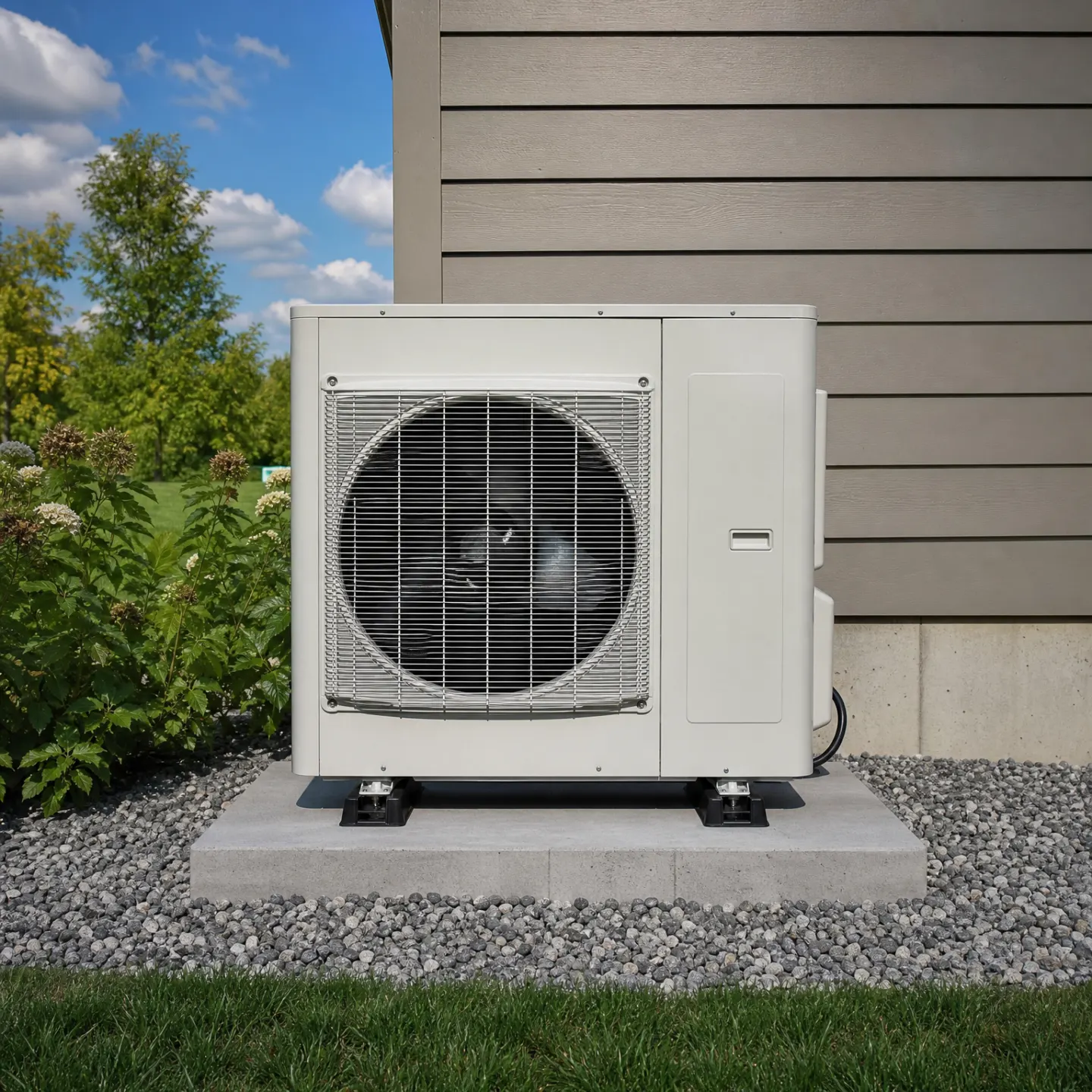
A white mini-split heat pump outdoor unit mounted on a concrete pad beside a gray-sided house, surrounded by gravel and green shrubs.

Worth finding out before you decide anything

Check the paperwork from the install, or the sticker on the unit itself. If the system is newer than the house, that date matters more than the house's age. Either way, a tech can look at the compressor and the coil and tell you in one visit whether this is a repair or something bigger. On a unit with years left in it, that visit almost always ends in a repair.

A failing part doesn't fail on its own schedule

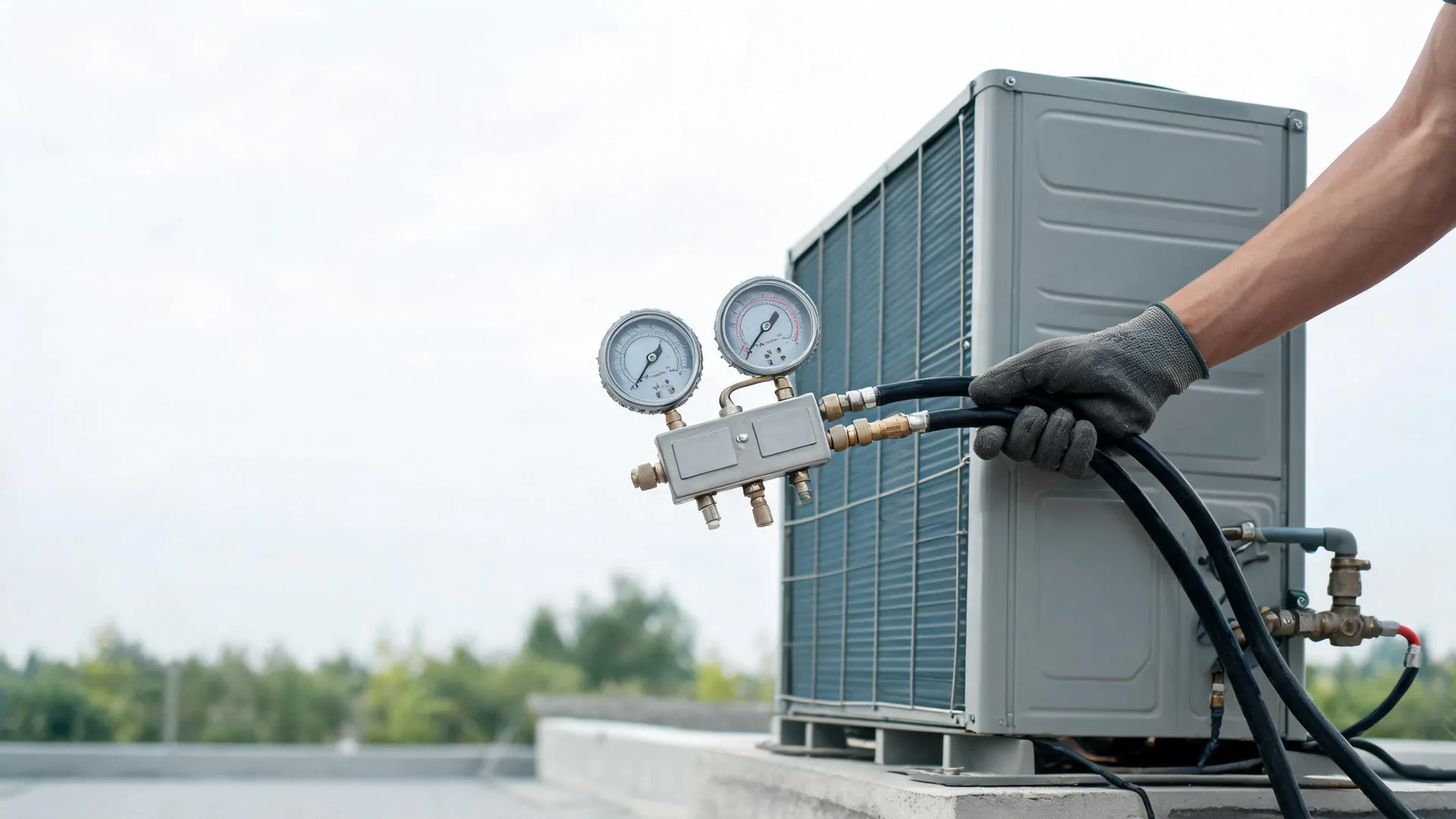
A compressor running low on refrigerant works harder to move the same amount of heat. That extra strain shows up as more heat building in the motor windings, and heat is what breaks them down for good. Left alone, a problem that started as low charge can end with a compressor that won't start at all.
Some parts can still be saved if you catch them in time

A reversing valve that sticks only sometimes can often be freed up or replaced on its own. One that gets forced open and shut while it's already failing can gall or wear internally until it has to come out along with the lines around it. The same system, caught a week later, can mean a bigger job.

Before anyone comes out, there are a few things worth looking at yourself. Check the thermostat is set to heat and the temperature is actually above room temperature, since a setting bumped by accident looks exactly like a dead system. Go to the breaker panel and look for a tripped breaker on the heat pump and the air handler both, since they're often on separate circuits. Look at the outdoor unit and clear away anything piled against it, leaves, snow, a cover left on by mistake, so air can move through the coil. Check your air filter, because one that's clogged chokes airflow and can shut the system down on its own. If the outdoor unit is running but caked in ice beyond a light morning frost, don't chip at it or run a hose on it. That's worth telling the tech before they arrive, not fixing yourself.

Age is one way to think about this, but the pattern of the failure tells you more. A part that fails once, cleanly, is usually worth fixing. The compressor trips on high head pressure, a tech finds a low charge, they fix the leak and recharge it, and the unit runs fine for years after. A part that's failed before, or that's failing in a way that's hard to pin down, is a different question. A compressor that's gone low on charge more than once has likely taken some internal damage each time, even if it starts back up fine. A reversing valve that sticks, gets freed, then sticks again a season later is wearing out, not malfunctioning once. The second kind of failure costs about the same to fix today, but it doesn't buy back the same years of use. That's the real comparison. Not how old the unit is, but whether this failure stands alone or whether it's the latest one in a pattern.