




Illuminated timber-and-stone luxury homes along a residential street at dusk, with snow-capped mountains visible in the background.

Heat Pump Repair in Idaho Springs, CO

Tell us about the job

Takes about a minute. No obligation.

Step 1 of 3: Equipment

Winter nights in Idaho Springs average 12°F, cold enough that your heat pump leans on backup heat more than it would somewhere milder. That's normal operation, not a sign something's wrong. Clear Creek County gets heavy snow, ice and wind most winters, but none of that does anything special to a heat pump that good service doesn't already cover. If yours is short cycling, running nonstop, or blowing air that isn't warm enough, the cause is usually one of a handful of things. A low refrigerant charge. A failing defrost sensor. A dirty outdoor coil. A reversing valve stuck in one position. A tech with a gauge set and a multimeter can usually narrow it down fast.

12°F
the average winter night it heats against
68°F
the average summer afternoon it cools against
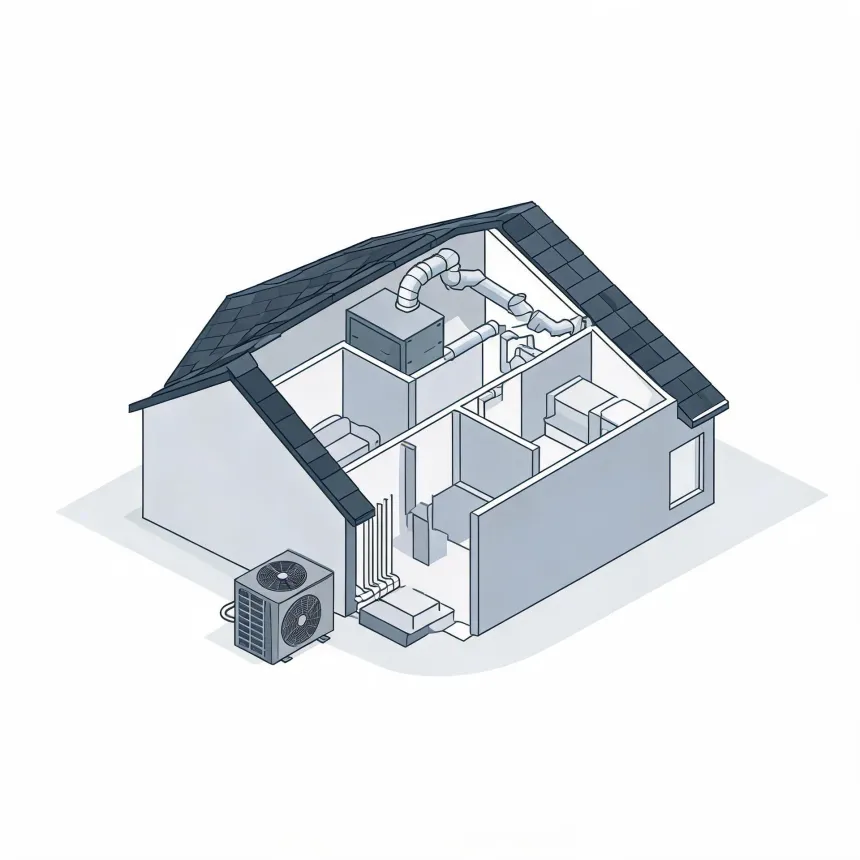
Isometric line illustration of a cutaway house showing interior rooms, an air handler with ductwork in the attic space, and an outdoor condenser unit beside the exterior wall.

Clear Creek County sees heavy snow and wind most winters.

Your heat pump is built to handle that, so trouble usually traces back to a part, not the weather.

At 14.92 cents a kWh, a heat pump running wrong drains money every day it's not fixed

Power costs 14.92 cents a kWh statewide
Climate zone 7
72 damaging wind events from 2015 to 2024
Old house or new, the fix is the sameHalf the homes here were built in 1976 or earlier, half later, and a heat pump fails the same way in either one

A heat pump that's short cycling or leaning too hard on backup heat isn't just uncomfortable, it's running up your bill while it sits broken. Backup heat strips cost more to run than the compressor ever does, and at 14.92 cents a kWh here, that difference shows up fast. Waiting it out doesn't fix a stuck reversing valve or a dirty coil. It just means paying more each month for a system that still isn't heating right. Getting a tech out to diagnose it now beats a winter of running it broken.

Get the usual fix

Nothing about this area is especially hard on it. It's most likely the usual problem with the usual fix.

Find a contractor
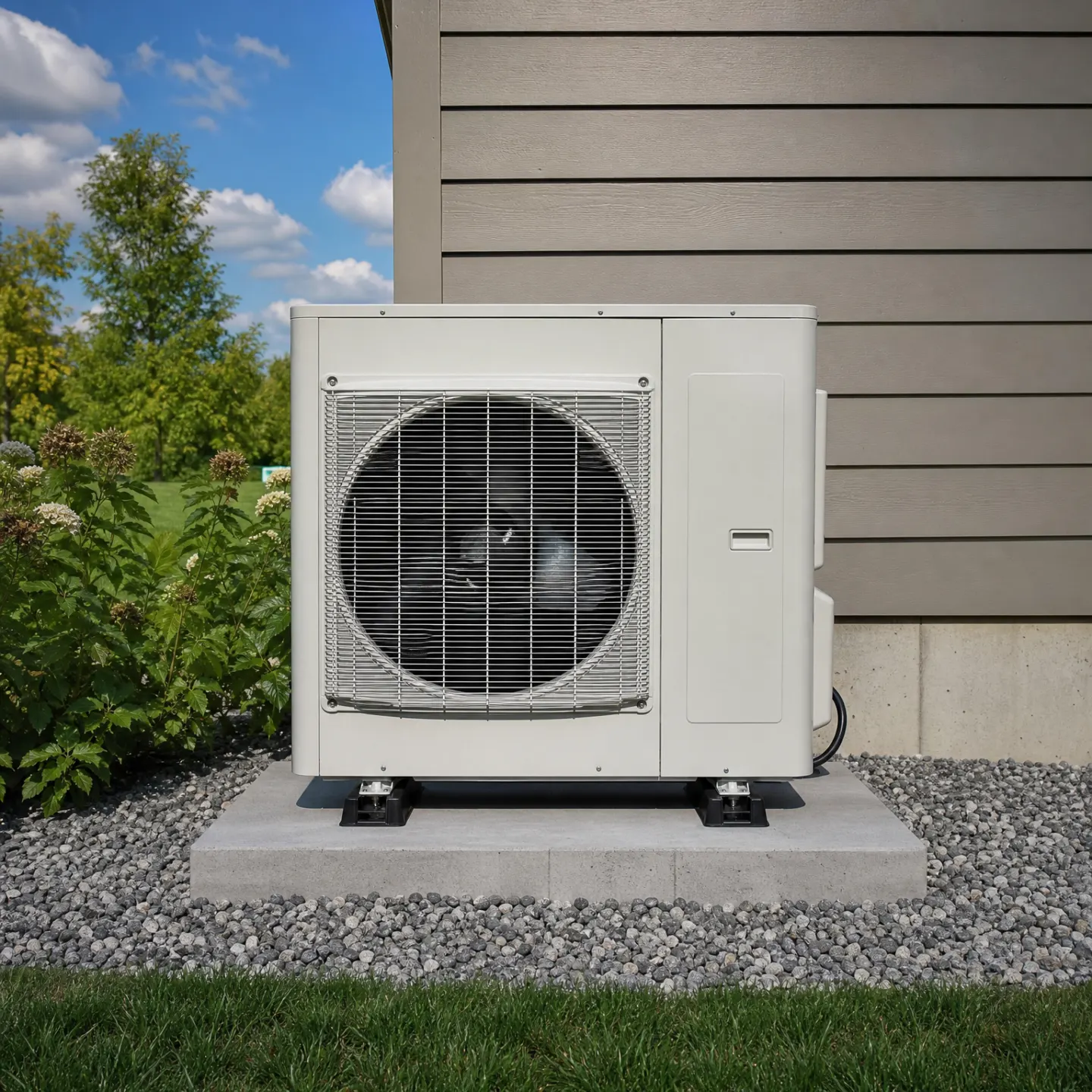
A white mini-split heat pump outdoor unit mounted on a concrete pad beside a gray-sided house, surrounded by gravel and green shrubs.

It runs all year, so wear shows up as behavior, not just breakdown

A heat pump runs every day of the year, not just in the cold months, since the same system handles cooling too. That nonstop duty cycle is why the signs of wear show up as changes in behavior before they show up as a total failure. A unit that used to run in long, steady stretches and now kicks on and off every few minutes has a problem, maybe a dirty coil, maybe a refrigerant charge that's dropped. A unit that runs constantly without ever shutting off is struggling to satisfy the thermostat, often because the outdoor coil is iced over and not cycling out of defrost like it should. Air coming out lukewarm instead of warm usually means the reversing valve isn't fully switching between heating and cooling, or the system is stuck relying on backup heat strips to do a job the compressor should be doing. None of these show up overnight. They build over weeks, which is why catching the early sign, the odd cycling, the weak airflow, the frost that doesn't clear, matters more than waiting for the system to quit outright.

Most failures start outside

The outdoor unit takes the beating. Ice builds on the coil, the defrost board that's supposed to clear it fails, or the fan motor that pulls air through it seizes up. Any of these stops the coil from doing its job, and the system either can't pull heat from the air or can't shed it fast enough.
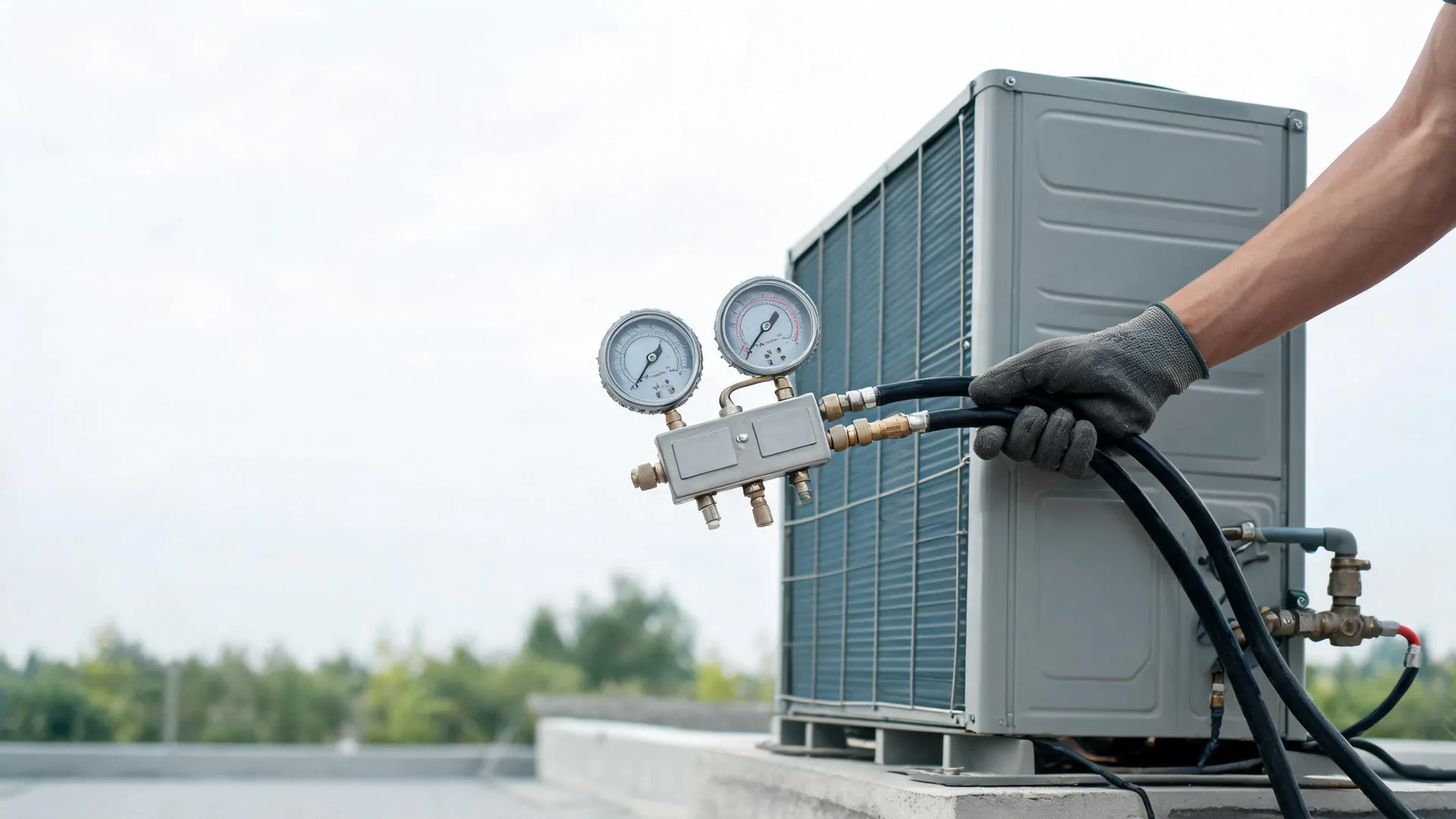
The reversing valve is the usual suspect for wrong-temperature air

A reversing valve is what lets a heat pump switch between heating and cooling, by changing which way refrigerant flows through the system. When the coil inside it wears out or it sticks halfway between positions, the system keeps running but delivers air at the wrong temperature, or falls back on backup heat to cover for it.

Before anyone comes out, there are a few things worth checking yourself. Look at the outdoor unit first. If the coil is caked in ice or buried in snow and debris, clearing it can get the system running again on its own. Check the air filter next. A filter clogged with dust chokes airflow and can make the system short cycle or struggle to keep up. Walk through the house and check that no vents are closed or blocked by furniture. Last, check the thermostat is set to heat and the temperature is actually set above room temperature, since a setting bumped by accident looks exactly like a broken system. None of this fixes a bad reversing valve or a low refrigerant charge, but it rules out the simple stuff before anyone has to put a gauge on it.

A heat pump is worth fixing more often than people expect, because most failures are one part giving out, not the whole system wearing down. A bad capacitor, a failed sensor, a stuck valve, these get replaced on their own without touching the compressor or the coils, and the system runs like normal once it's done. What changes the math is the compressor itself. It's the most expensive part in the system and the one nobody wants to replace, so when it's the compressor failing, a lot of owners put that money toward a new system instead. Age matters too, but not the way people think. It's not that an old system is doomed, it's that an old system has had more years for several parts to wear down close to the same time, so one repair this year can turn into another next year. A tech who's actually looked at the unit can tell you which situation you're in. Guessing from the symptoms alone can't.