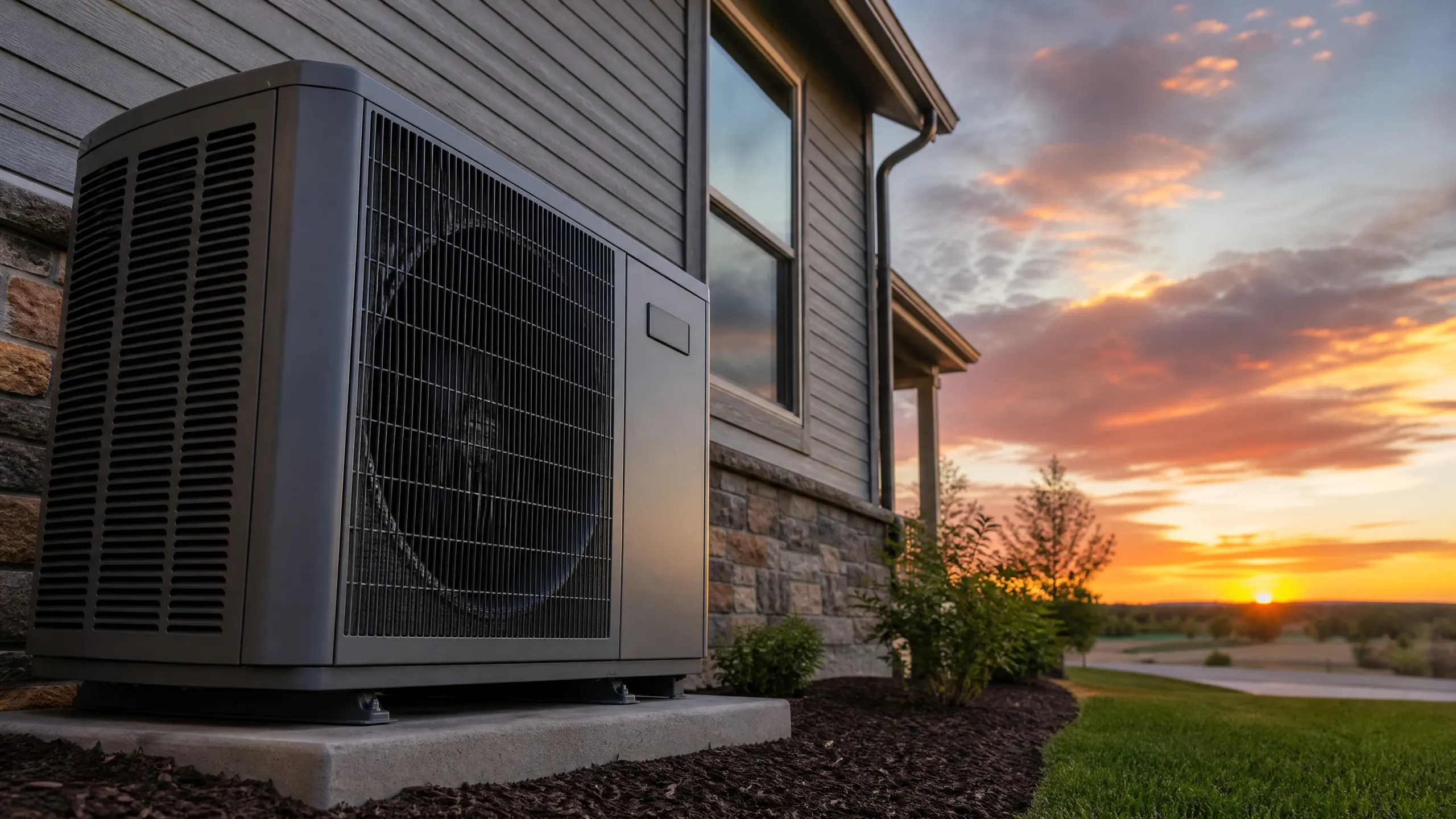




An outdoor air conditioning condenser unit mounted on a concrete pad next to a residential house at sunset.

Heat Pump Repair in Thornton, CO

Tell us about the job

Takes about a minute. No obligation.

Step 1 of 3: Equipment

A heat pump that's struggling usually gives some warning before it quits outright. Ice on the outdoor coil, short cycling, a breaker that keeps tripping, air that never gets quite warm. Keep running it through those signs and a small problem turns into a bigger one. A refrigerant leak left alone lets the compressor run low on lubrication, and the compressor is the hardest part to replace. A failing capacitor makes the motor strain to start, and that strain heats the windings until the motor seizes for good. Even a clogged filter forces the system to pull air through a restriction, and that stresses the coil and the blower motor both. None of this fixes itself by running longer. Shutting it down and getting a tech to look is the better move than running it until something gives out.

8 months
October through May, your system heats
3 months
June through August, it cools
16°F
the average winter night it heats against
87°F
the average summer afternoon it cools against
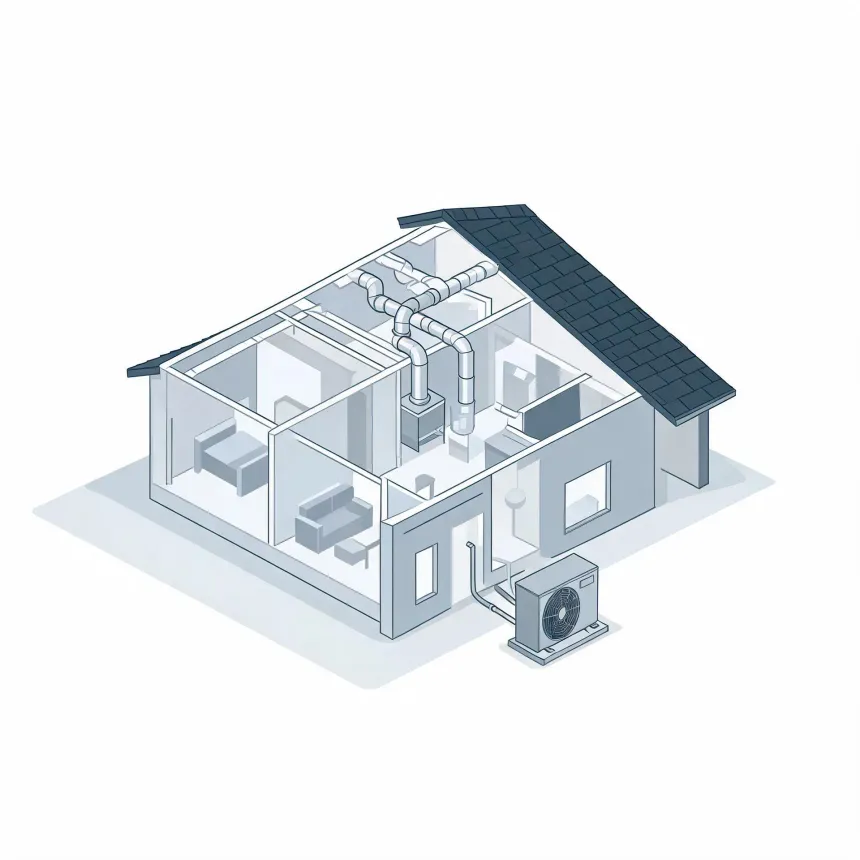
Isometric line illustration of a cutaway house showing interior rooms with furniture, ceiling ductwork connected to an indoor air handler, and an outdoor condenser unit linked by refrigerant lines.
Your system heats October through May and cools June through August.

NOAA nClimDiv, 1991–2020 normals

Adams County sees its share of hail and hard winter storms, same as the rest of the region.

A heat pump here wears out from a low charge or a failing capacitor, same as anywhere else.

292 severe weather events, and the usual failures still win

292 severe weather events from 2015 to 2024
13% of homes statewide lost power a day or more in 2024
85 damaging wind events from 2015 to 2024

Half the homes in Adams County were built in 1991 or later. If yours is one of them, your heat pump is probably newer too, especially if it's the one the house came with. A unit that age isn't done just because a capacitor failed or the charge is low. Those are repairs, not signs the system is finished. Worth finding out what actually broke before you assume the worst.

A heat pump running wrong costs you every month it stays that way

Colorado homes paid 14.92 cents per kilowatt-hour in 2024, on the high side for this region. A heat pump that's short cycling or running low on charge works harder and heats less, and that difference shows up on the bill every month it runs that way. Finding the actual cause now is what stops the extra cost.

Find a contractor
A man in a dark long-sleeve shirt and tan work pants, seen from behind, carries a worn canvas tool bag up steps toward a navy blue front door of a gray clapboard house, with a large blue planter and shrub to the right.
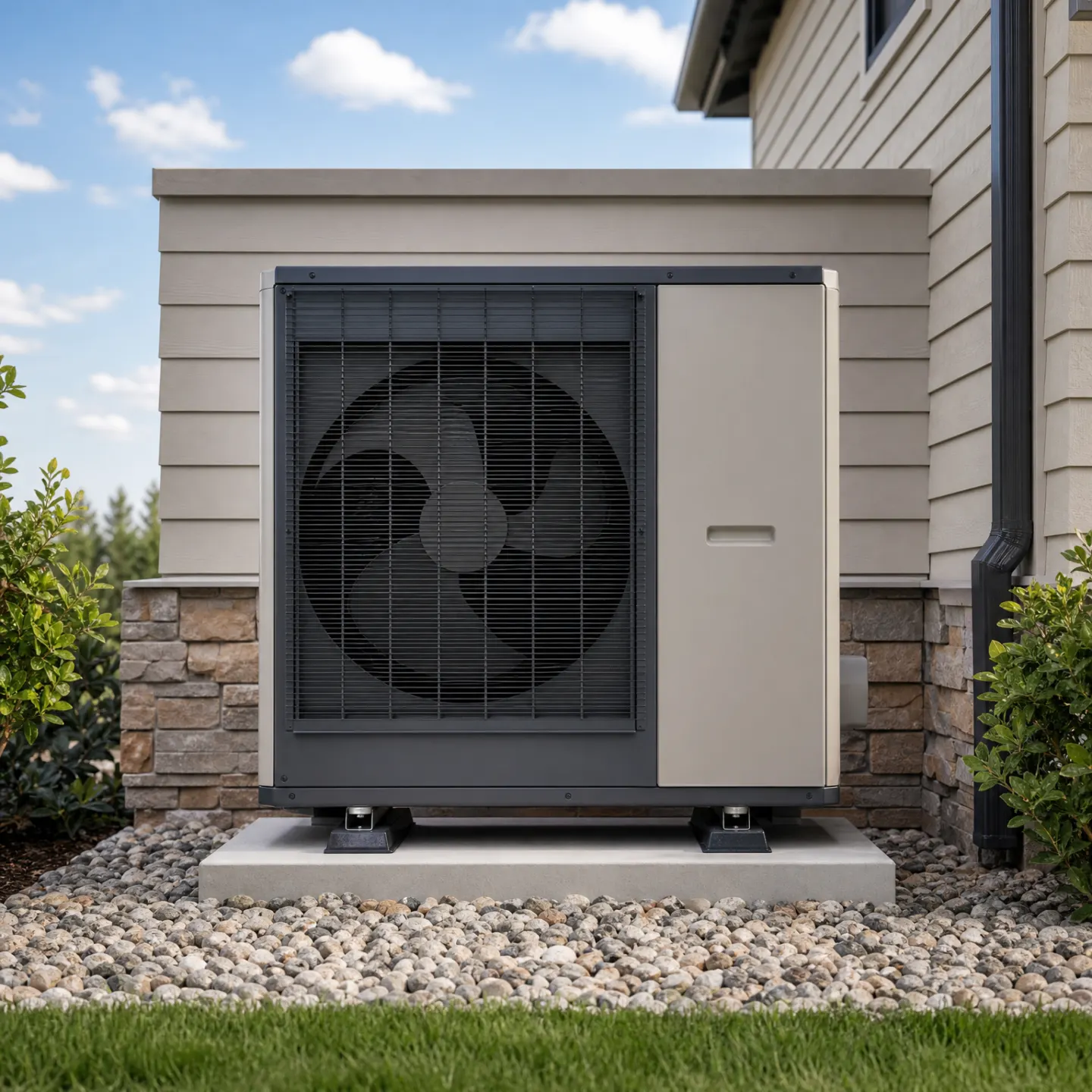
A gray heat pump outdoor unit mounted on a concrete pad next to the stone-accented exterior wall of a house.

Finding the one part that's actually wrong

A diagnostic visit starts outside, not at the thermostat. A tech checks the refrigerant charge with gauges on the lines, because low refrigerant looks like several other problems once you're standing inside the house. They'll check the capacitor with a meter rather than guess from how the fan sounds, since a weak one can still spin the motor, just not for long. The contactor gets a look too, for pitting on the points, because a worn contactor can make a unit short cycle in a way that mimics a bigger electrical fault. Inside, they'll pull the filter and check airflow across the coil, since restricted air shows up as the same lukewarm-air complaint a refrigerant problem does. They're also checking the reversing valve, making sure it actually switches when commanded, because a valve stuck partway can make a heat pump try to heat and cool at once without either one working right. None of this is guesswork. Each check rules something in or out, and by the end a tech can tell you which part failed and why, not just that something did.

What you'll actually notice first

Most of the time it starts with the air itself. Heat comes out lukewarm instead of warm, or the system runs a long time without catching up to the thermostat. You might hear it switch into defrost and stay there longer than it used to, with the outdoor fan stopped and steam coming off the coil. A hissing or bubbling sound near the lines outside is worth paying attention to. None of these mean the unit is done. They mean something specific is wrong, and that's what a tech is there to find.
What's worth a call sooner rather than later

A breaker that trips more than once isn't something to reset and ignore. That's usually a motor drawing too much current or a short somewhere in the electrical side, and running it again can finish off a part that was still repairable. Same with ice that keeps coming back on the outdoor coil after you clear it. The system is telling you it can't do the one job it has. Catching it at the warning stage is almost always a smaller repair than waiting for the breaker to stop tripping because something inside finally gave out.

Before calling anyone, a few things are worth a look yourself. Check the thermostat first. Make sure it's set to heat and the set point is actually above room temperature, since a setting bumped by accident gets mistaken for a broken system more often than you'd think. Go outside and look at the unit. If the coil is caked in ice outside of a normal defrost cycle, or buried in leaves and debris, that's worth noting but not worth chipping at yourself. Check the air filter. A filter clogged with dust chokes airflow and can make the whole system struggle, and it's the one part you're meant to handle on your own. Walk around inside and feel the vents. Cool air at the registers in heating mode isn't always a problem, since heat pumps put out air that's warm but not hot, but air with no warmth to it at all is different. Look at the breaker panel too. If the breaker's tripped, leave it off and call rather than resetting it more than once.

A repair makes sense when what failed is one part doing one job, a capacitor, a contactor, a fan motor, a low charge from a leak that's been found and sealed. Swap or fix that part and the rest of the system, the compressor, the coils, the reversing valve, goes back to work the way it was built to. Replacement starts looking better when the compressor itself is the problem. That's the part that actually moves refrigerant and does the heating and cooling, and it's not something a tech swaps in an afternoon the way they would a capacitor. A system that's needed a few repairs in close succession is also telling you something, even if each repair was small and did its job. One failure is a part wearing out. A pattern of them is a system that's tired across the board, and the next failure is as likely to be something else as a repeat of the last one. A good tech will tell you plainly which kind of problem you've got before recommending either path.