A gravel road curves between dark wood cabins with metal roofs and a split-rail log fence, surrounded by tall conifer trees under an overcast sky.

Heat Pump Repair in Fairplay, CO

Tell us about the job

Takes about a minute. No obligation.

Step 1 of 3: Equipment

Winters here are cold, not strange

Overnight lows in Park County average 9°F through December, January and February. A heat pump is built to run in cold like this, drawing heat from outside air even when it's well below freezing. If yours is struggling, the cold itself usually isn't the reason.

So look for the usual causes

A heat pump that won't keep up in winter is more likely dealing with low refrigerant, a failing defrost control, or a reversing valve stuck in one position. These are the same problems that show up on heat pumps anywhere. A technician can check these directly instead of assuming the weather is to blame.

9°F
the average winter night it heats against
72°F
the average summer afternoon it cools against
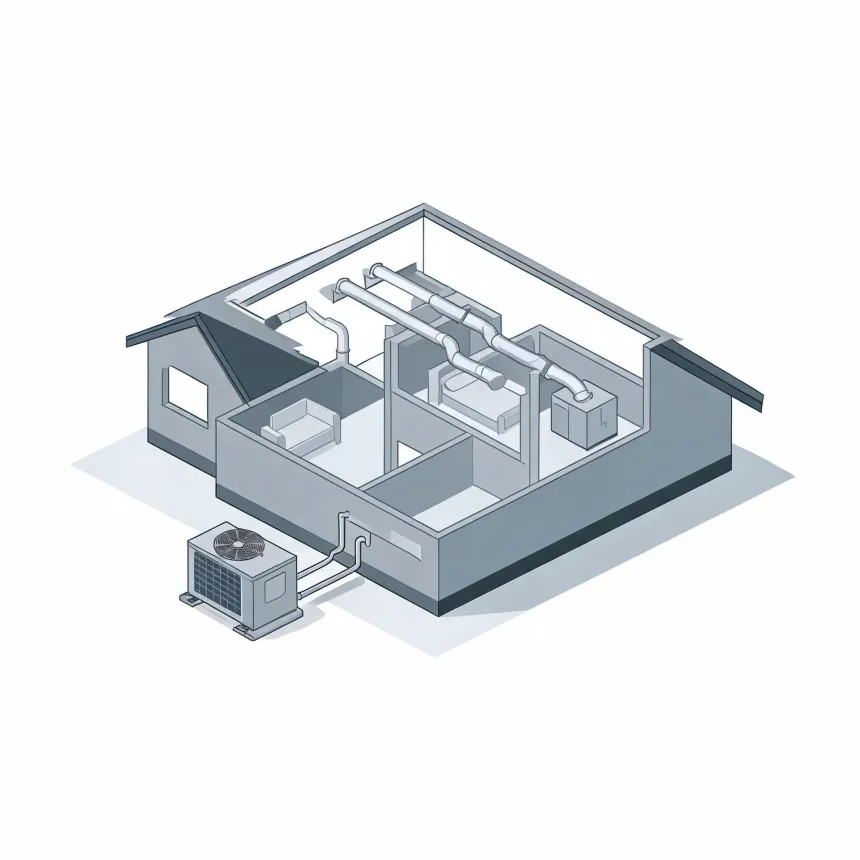
Isometric grayscale illustration of a cutaway house showing interior rooms, ceiling ductwork and an air handler, connected by lines to an outdoor condenser unit on a pad outside.

Colorado electricity runs 14.92 cents per kilowatthour.

A heat pump that's short on refrigerant or stuck mid-defrost draws on that power without heating your place right.

Park County gets its share of storms, same as anywhere nearby

171 severe weather events from 2015 to 2024
13% of homes statewide lost power a day or more in 2024
74 damaging wind events from 2015 to 2024

Half the homes in Park County were built in 1992 or later. If yours is one of them, your heat pump is probably well within its working life. These systems are built to run for well over a decade, and a newer system acting up is usually dealing with one bad part, not a machine that's worn out. That changes how you should think about a repair call. A failing capacitor or a stuck reversing valve is a straightforward fix on a system this age, worth doing rather than working around. Check when your system went in, if it came with the house or close to it.

A heat pump drawing power without heating costs you every day it runs this way

A stuck defrost cycle or a low refrigerant charge doesn't just leave you cold. It keeps pulling power at 14.92 cents a kilowatthour the whole time it's running badly. Getting the actual cause checked stops that waste instead of letting it run through another month.

Find a contractor
A man in a cap, gray jacket and tan cargo pants, seen from behind, carries a worn canvas duffel bag up steps toward a dark navy front door, with a potted shrub beside the entry.
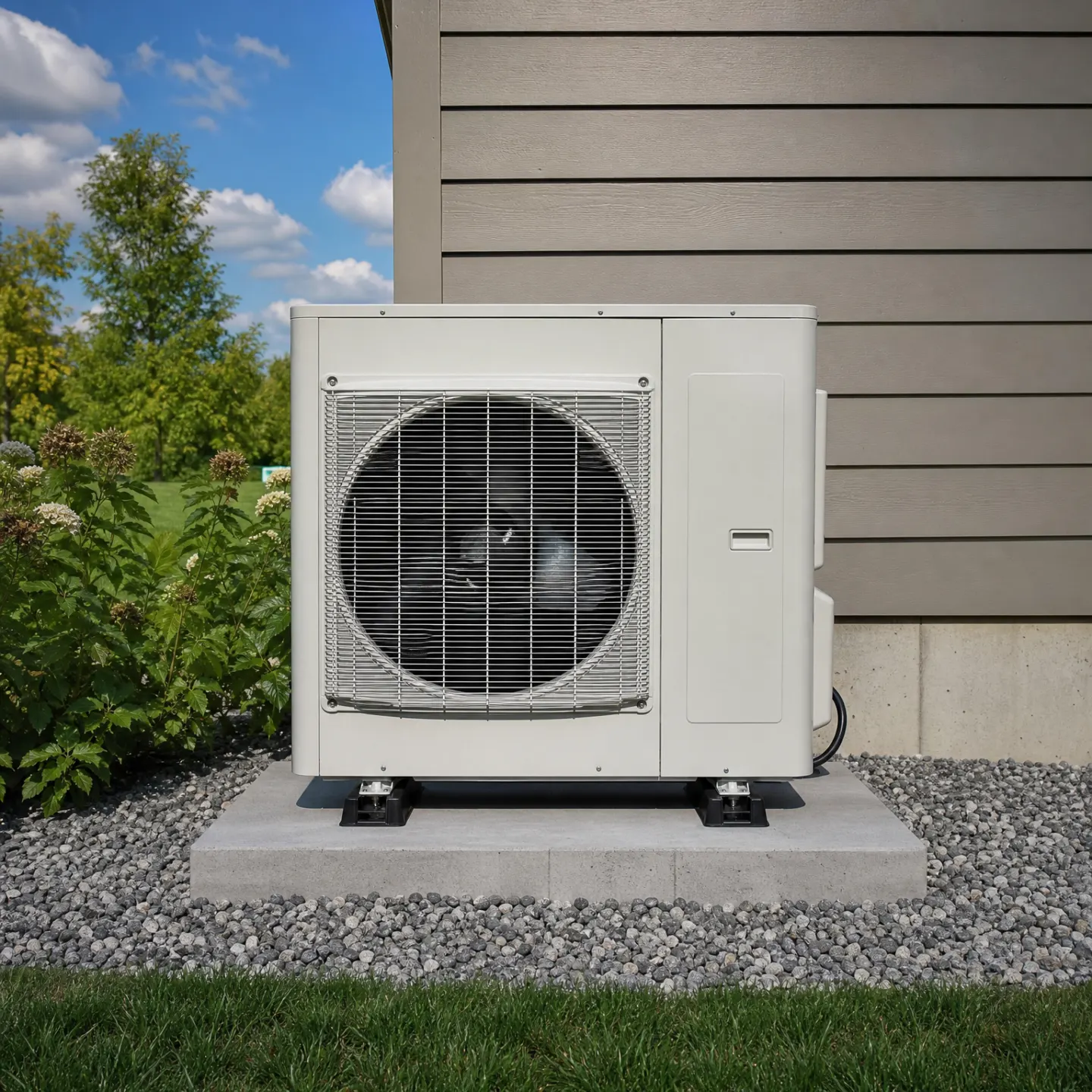
A white mini-split heat pump outdoor unit mounted on a concrete pad beside a gray-sided house, surrounded by gravel and green shrubs.

A young system still earns a repair call

Nights into days, your heat pump either holds its cycle or it doesn't, and a system a few years old should hold it. If yours is cutting in and out, or running long without catching up, get the part replaced instead of planning around it. Find the install date first. A system put in with the house, or close to it, has the age on its side.

Most failures are a handful of parts, not the whole system

A heat pump that won't heat or cool right usually comes down to one of a few things. A capacitor too weak to start the compressor. A contactor with burnt points. A low refrigerant charge. A reversing valve that won't shift between heating and cooling. Each one shows up its own way. A failing capacitor often means the outdoor unit hums but the fan won't spin. A stuck reversing valve means the system blows cold air when it should be heating, or the other way around.

Knowing which part failed decides whether to fix it today

A bad capacitor or contactor is a quick swap and the system is back to normal. Low refrigerant is different. It means there's a leak somewhere in the line set or coil, and adding refrigerant without finding the leak just means doing it again in a few months. A technician checking refrigerant pressures and electrical components can tell you which kind of problem you have before any work starts.

There are a few things worth looking at before you call anyone out. Check the thermostat first. Make sure it's set to heat, not auto, and that the temperature is actually set above room temp. Next, look at the outdoor unit. If it's covered in ice or buried in snow, that's worth knowing, since restricted airflow around the coil can make a heat pump struggle even when nothing's broken. Check your air filter too. A clogged filter cuts airflow through the whole system and can make it run constantly without catching up. Walk around the house and check your vents are open and not blocked by furniture or rugs. If you've got a breaker panel you can safely check, see if anything's tripped. None of this requires opening the unit or touching refrigerant lines. If everything checks out and the system still isn't heating right, that points to something mechanical, and it's time to get a technician on it.

A diagnostic visit starts with the thermostat and the readings at the unit, not guesswork. A technician checks the refrigerant pressures first, since that alone separates a leak problem from an electrical one. From there it's gauges on the lines, a meter on the capacitor and contactor, and a look at the reversing valve to see if it's actually shifting when it's told to. Outdoors, the coil gets checked for ice, since a frozen coil changes the readings and has to be worked around rather than mistaken for the failure itself. Most of this is done before any panel comes off or any part gets replaced, because the readings tell you which part is bad before you go looking for it. Once the cause is clear, the technician can tell you straight whether it's a quick part swap or something that needs tracking down further, like a slow leak in the line set.