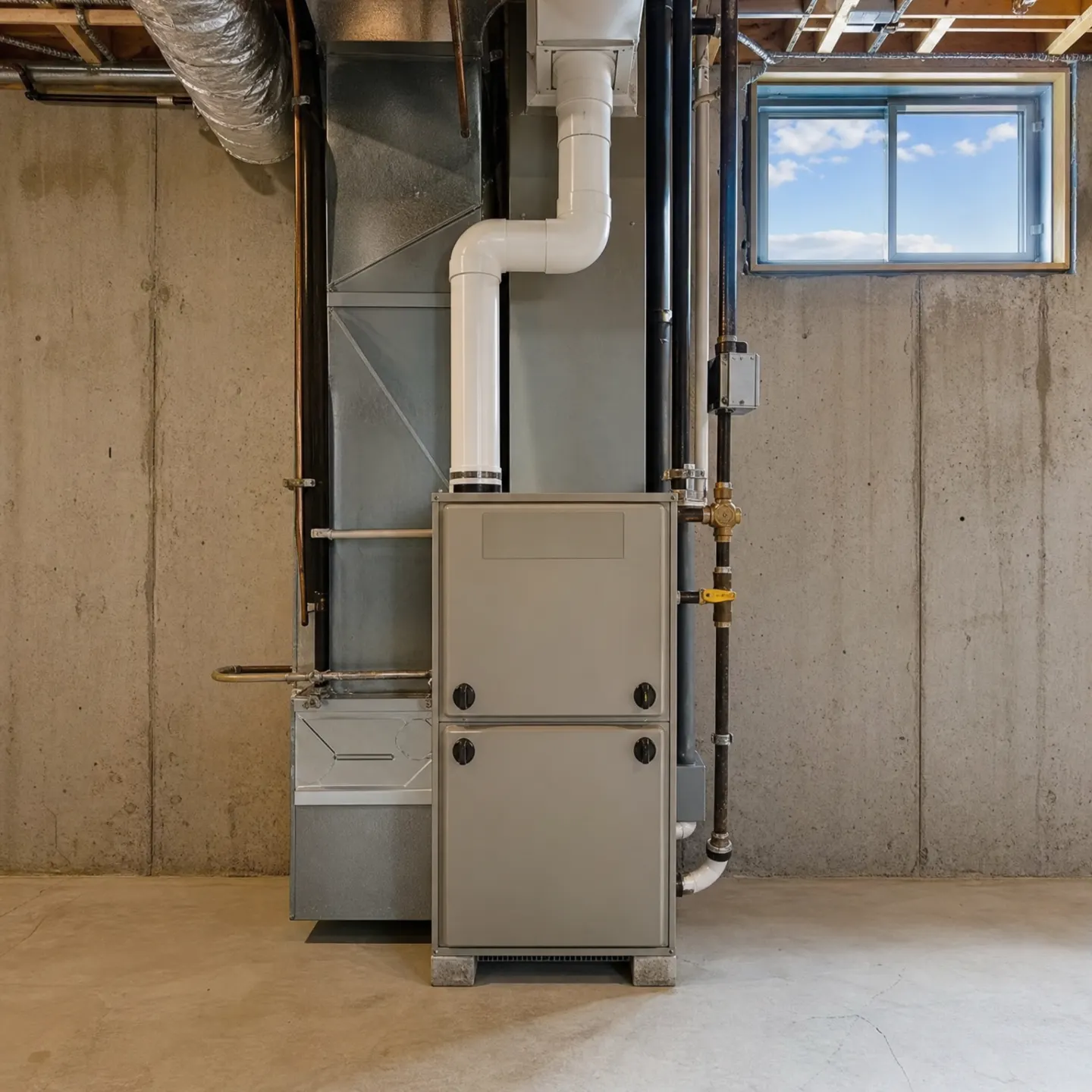
A gray forced-air furnace with metal ductwork stands in an unfinished basement with exposed wooden joists, concrete walls, and a single hanging light bulb.

Furnace Maintenance in Fairplay, CO

Tell us about the job

Takes about a minute. No obligation.

Step 1 of 3: Equipment

Gas here runs $10.09 per million Btu

Colorado households paid that rate in 2024, and a furnace that has to work harder to heat the same rooms burns through more of it. A dirty burner or a clogged filter makes the furnace run longer to reach the same temperature, and every extra minute it runs is more gas at that price.


A tune-up is what keeps that cost down

A technician cleaning the burner, checking the igniter, and clearing the flue lets your furnace heat the house without working harder than it has to. Skip it for a few winters and the furnace doesn't fail right away, it just quietly costs more to run every one of those winters.

This furnace runs every month of the year here, not just the cold ones.

A furnace that never really stops wears out its parts faster, so a tune-up catches what the season already started.

Most of Fairplay heats with gas, and gas furnaces need more than a filter change

43.3% of homes heat with gas
Winter nights average 9°F
Climate zone 7
Half These Homes Were Built In 1992 Or LaterHalf the homes in Park County were built in 1992 or later, and a furnace that age still earns a yearly check.

A tune-up is where that wear gets caught before it turns into a breakdown. A technician can test the igniter, check the flame sensor, and look at the heat exchanger for cracks while the furnace is still running fine. Since this furnace runs every month of the year here, there isn't really an off season to wait for. Getting it checked before the hardest cold sets in means whatever's already worn gets fixed while it's still a small job, not a cold house and an emergency call.

A tune-up is what keeps this furnace from running up your gas bill

A furnace that's been cleaned and checked burns gas at that $10.09 rate instead of past it. Get the tune-up done and the furnace stops costing more than it has to.

Find a contractor
A gray gas furnace with attached ductwork and piping installed in an unfinished concrete basement.

A Newer Furnace Still Earns A Yearly Check

A furnace that came with a house built in 1992 or later still has good years left in it. A yearly check is what keeps those years on track. A technician catches a worn igniter or a weak flame sensor while it's still a small fix, not after it quits on a cold morning. Get it looked at the same time every year and the furnace keeps running the way it's running now, instead of slipping a little more each winter.

The furnace tells you before it quits

A furnace rarely fails without warning. It starts taking longer to heat the house, the burner flame turns yellow or ragged instead of steady blue, or it short cycles, kicking on and off before the room warms up. A burning smell when it starts, a flame sensor that makes it shut off a few seconds in, or a pilot or igniter that struggles to catch are all signs something inside needs attention, not replacing yet.

Catching it early is a different job than waiting

A technician checking a worn igniter or a dirty flame sensor during a tune-up is a quick fix, done while the furnace is still running. The same part failing on its own means no heat until someone gets out to look at it, and sometimes a part ordered and a wait. The job doesn't change, only whether it happens on a schedule or in an emergency.

A lot of what wears out inside a furnace doesn't show up as anything the homeowner would notice, not until it's further along. The blower wheel can carry a layer of dust that throws it off balance, making the motor work harder to push the same air. A flame that's burning slightly rich leaves soot inside the heat exchanger that a glance through the cabinet won't catch. Gas pressure can drift out of range over time, low enough to run the burner cooler than it should without any obvious symptom. A technician checks these with tools built for it: a manometer on the gas valve, an amp clamp on the blower motor, a look at the flame through the sight glass instead of through the cabinet vents. None of it is guesswork, and none of it is visible from the thermostat.

A real tune-up starts before the panels come off, with a look at the furnace's history and any error codes stored in the control board. Inside, the technician pulls the burner assembly to clean off scale and corrosion, since a dirty burner burns unevenly and leaves the heat exchanger working harder than it should. The flame sensor gets cleaned or tested, because a coated sensor is one of the most common reasons a furnace shuts off a few seconds after starting. The inducer motor and its housing get checked for cracks or blockage, since that part has to pull exhaust out before the burner is allowed to fire at all. Belts aren't part of the picture on most furnaces built in the last few decades, the blower motor drives the wheel directly, so that check is about the bearings and the wiring instead. Gas pressure gets measured and set to the furnace's rating, not guessed at, because pressure that drifts even a little changes how clean the flame burns.