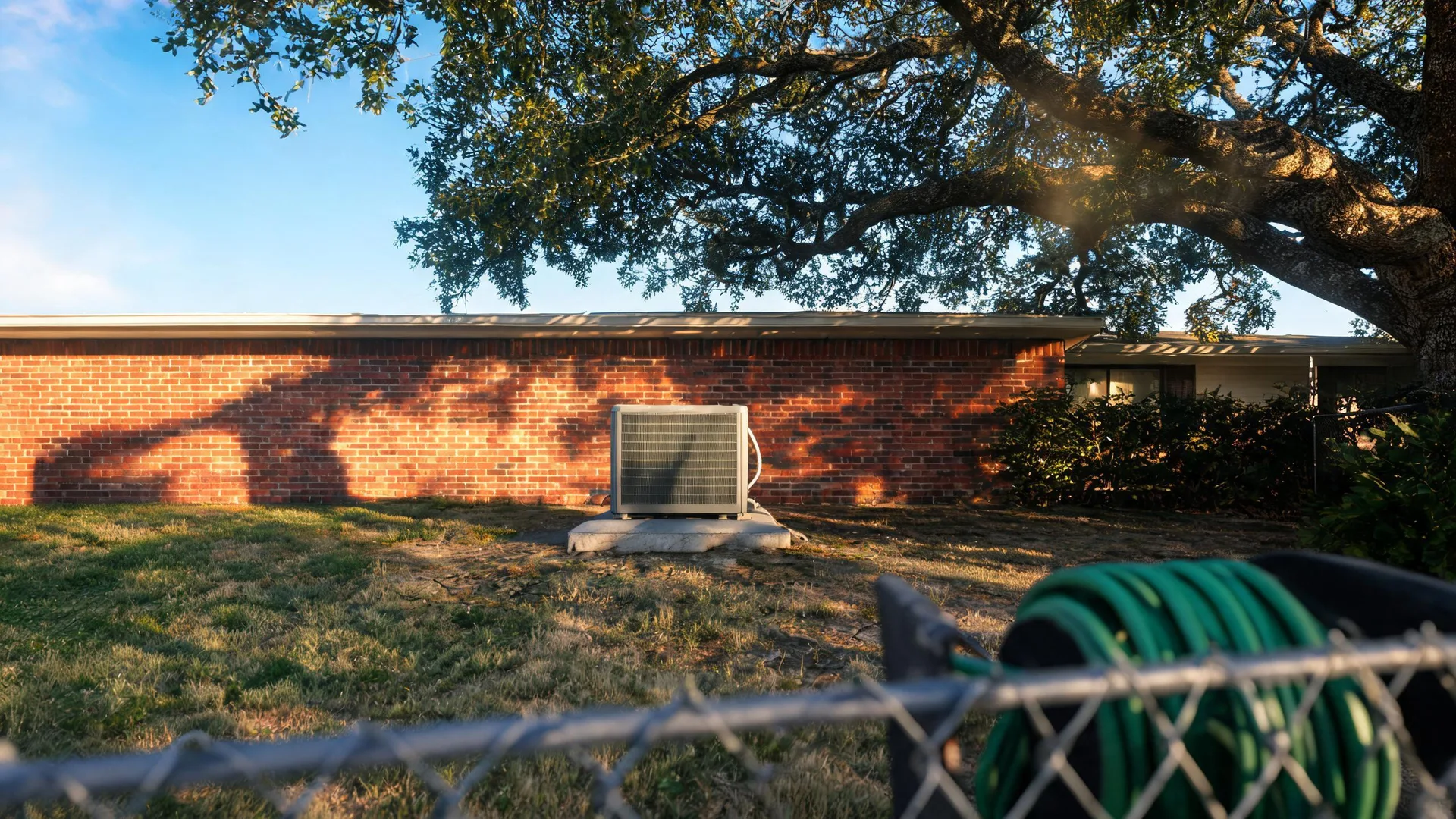
An outdoor air conditioning condenser unit mounted on a concrete pad in front of a single-story suburban house.

Heat Pump Repair in Cañon City, CO

Tell us about the job

Takes about a minute. No obligation.

Step 1 of 3: Equipment

Winter nights here are ordinary cold

Overnight lows in Cañon City average 15°F through December, January and February. A heat pump is built to run in that range. A system struggling to keep up on a 15 degree night is telling you something is wrong with it. The night is not asking too much of it.

So look at the unit, not the weather

When a heat pump underperforms here, the cause is usually ordinary. A low refrigerant charge. A failing defrost control. A dirty coil. A stuck reversing valve. These are the same problems a heat pump develops anywhere it's installed. Start with the equipment itself, not the climate.

9 months
September through May, your system heats
15°F
the average winter night it heats against
80°F
the average summer afternoon it cools against
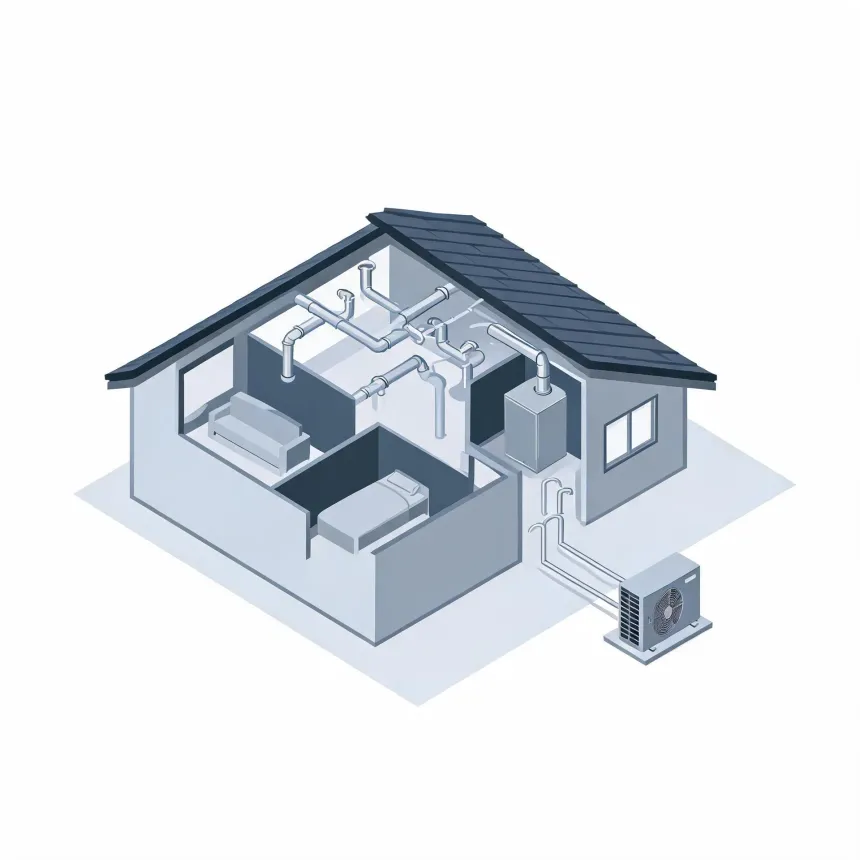
Isometric cutaway illustration of a small house showing ducted air distribution, an indoor air handler, and an outdoor condenser unit connected by lines, with a sofa and bed in the rooms.

Heat pumps here start working in September.

If a weak part is going to fail, the first cold weeks of September are when it happens.

Weather here is routine. Most breakdowns are too.

487 severe weather events from 2015 to 2024
13% of homes statewide lost power a day or more in 2024
165 damaging wind events from 2015 to 2024

Half the homes in Fremont County were built in 1981 or earlier, half in 1981 or later. That split does not tell a tech much. A heat pump put in last year works the same whether the house around it is old or new. Mobile homes make up 14 percent of the housing stock here, and a heat pump on a mobile home gets diagnosed the same way as one on any other house. Check the charge, check the airflow, check the controls. The house is not the patient. The unit is.

A heat pump working harder than it should is costing you now

Colorado electricity ran 14.92 cents per kilowatt-hour in 2024, and a heat pump that's struggling pulls more of it just to fall short. A bad defrost control or a low charge doesn't fix itself, and every week it runs like that shows up on the bill. Worth getting a tech on it.

Find a contractor
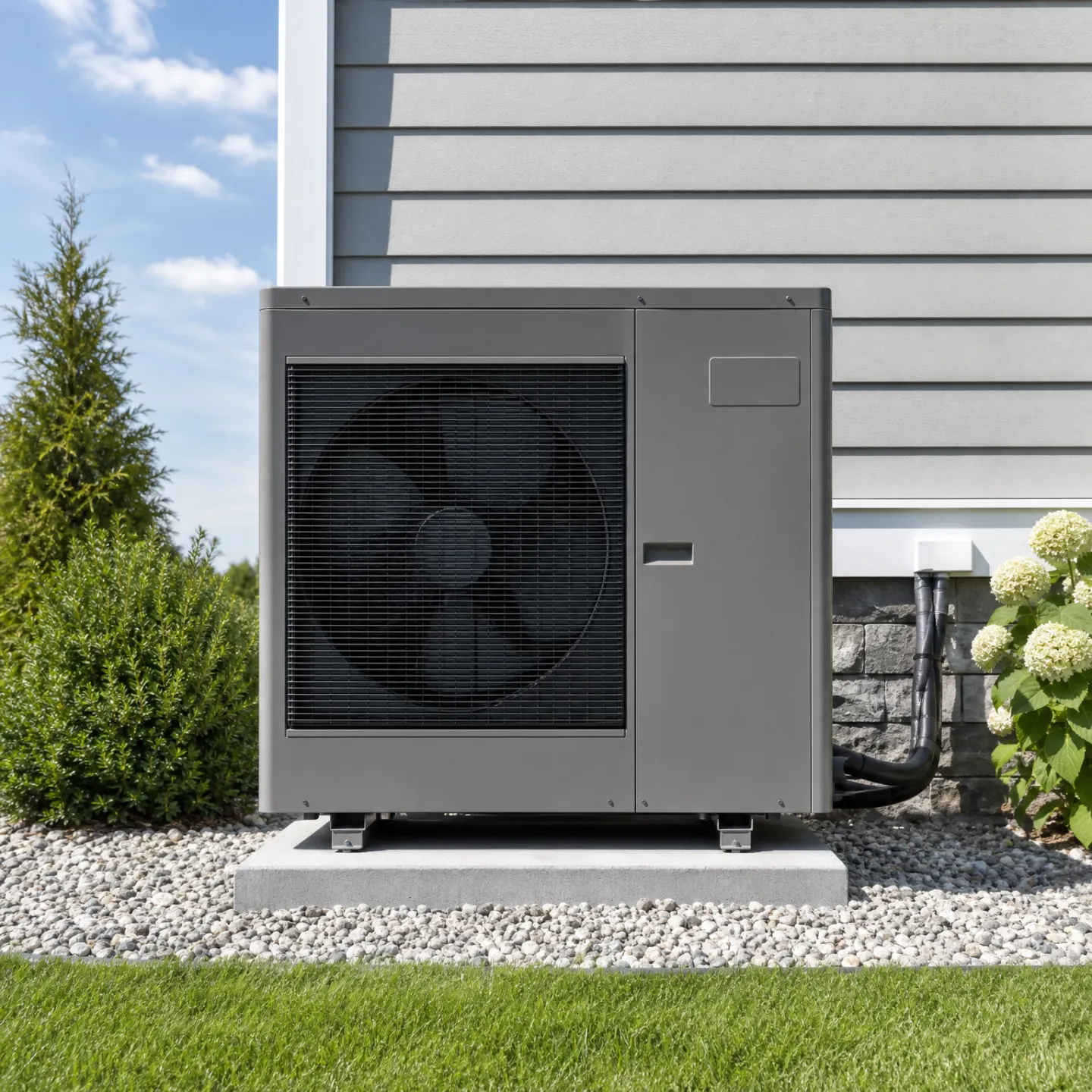
A gray air-source heat pump mounted on a concrete pad next to a house with gray vinyl siding, surrounded by gravel and flanked by green shrubs and white hydrangea flowers.

What you can check before anyone comes out

Before you call anyone, go look at the outdoor unit. If it's caked in ice beyond a thin frost layer, or the fan isn't spinning at all, that's worth noting. A heat pump defrosts itself on a cycle, so some frost melting off is normal. A solid block of ice that stays is not. Check the air filter too, since a clogged one starves the system of airflow and can mimic a much bigger problem. Walk around the house and feel the vents. Air that's barely moving or stone cold when the system should be heating points to the indoor blower or the ductwork, not necessarily the heat pump itself. Look at the thermostat and make sure it's set to heat, not auto in a way that's confusing it, and check that the batteries aren't dead if it's the battery type. None of this requires touching refrigerant lines or opening the cabinet. If the outdoor fan is running, the indoor air is moving, and it's still not keeping the house warm, that's the point to stop checking and start calling.

What the tech checks first

A diagnostic starts outside, at the unit itself. The tech checks refrigerant charge with gauges, since a heat pump that's low on charge will run long and still underheat. They'll check the reversing valve, the part that switches the system between heating and cooling, because a stuck valve can leave it pushing cold air when it should be pushing warm. They'll watch a full defrost cycle if frost is the complaint, since a bad sensor or control board can keep the unit from clearing ice it should shed on its own.

Why they check the air handler too

A heat pump can be working fine outside and still leave the house cold, so the tech checks the indoor side as well. They'll pull the filter and look at the blower, since weak airflow puts strain on the whole system and can look like a failing heat pump when it isn't one. They'll check the thermostat wiring and settings, because a miswired or misreading thermostat can call for the wrong mode entirely. Finding where the problem actually sits is what makes the repair that follows the right one.

A heat pump fails the same few ways no matter where it sits. The reversing valve sticks from wear on the coil inside it, and once it sticks the system can get locked into one mode. The capacitor that starts the outdoor fan or compressor weakens over years until one day it doesn't send enough current to start the motor. Refrigerant leaks out slowly at a fitting or a rubbed line, and the system keeps running on less charge than it needs, working harder for less heat. The defrost board or its sensor can fail, so the unit never gets the signal to melt the ice it builds up in cold, damp weather. A dirty outdoor coil blocks airflow the same way a clogged filter does on the indoor side, and either one makes the system strain to move heat it can't get to. None of these are rare or strange. They're the ordinary ways a heat pump wears out, and a tech checks for all of them before deciding what's actually wrong.

A repair is worth doing when one part has failed and the rest of the system is sound. A bad capacitor or a stuck reversing valve is a known fix, and once it's replaced the unit runs like it did before. Replacement starts to make more sense when the compressor itself is failing, since that's the most expensive part in the system and the labor to get at it isn't cheap either. Age matters less than pattern. A unit that's needed a tech out for a different problem each of the last few years is wearing out across the board, not failing at one point, and that's a different conversation than a single part giving out. A tech can tell you which situation you're actually in once they've looked at it, but the pattern of repairs is worth thinking about before you call.