

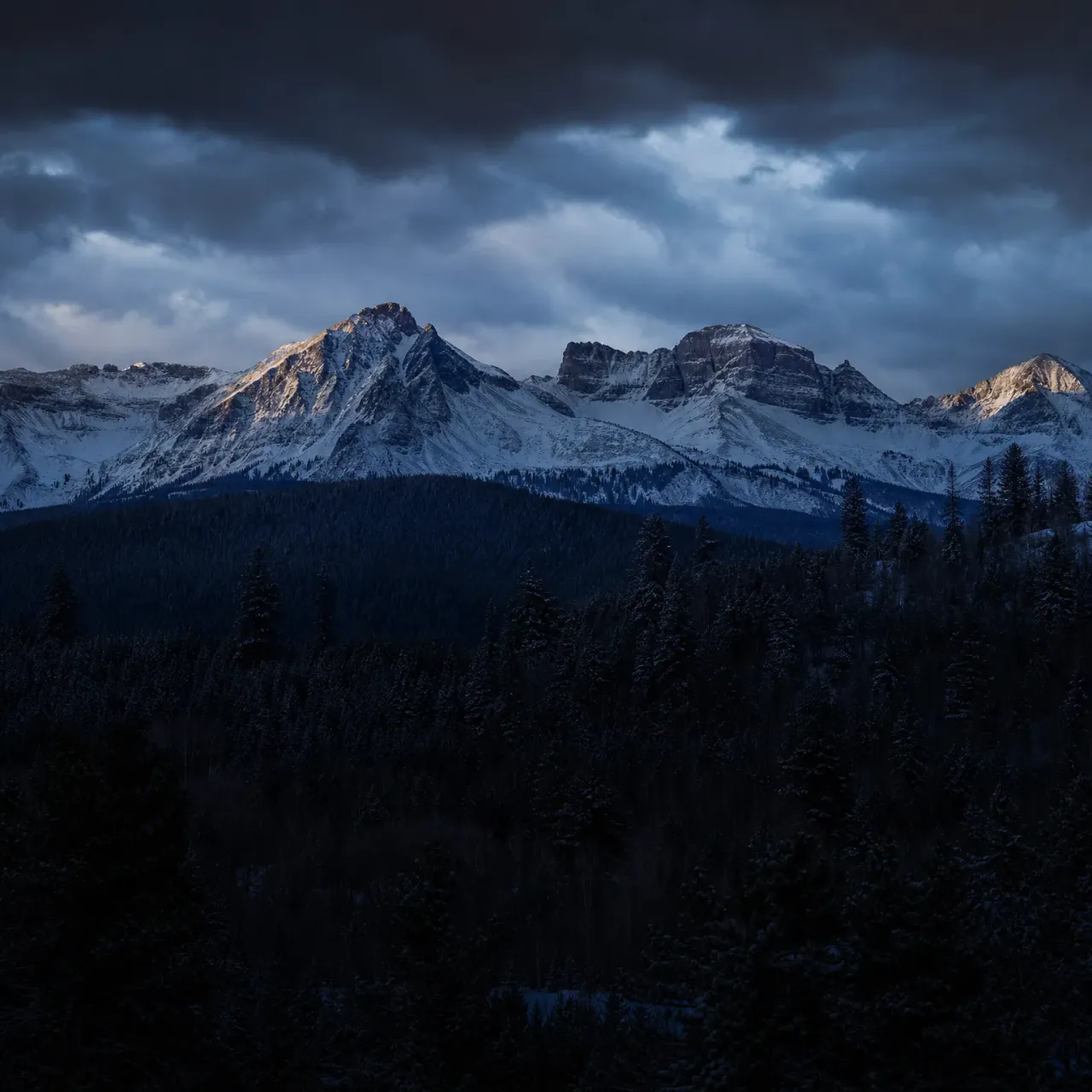

An unfinished basement featuring concrete block walls, exposed floor joists, a bare concrete floor, and a forced-air furnace with a large metal exhaust duct in the corner.

Furnace Maintenance in Boulder, CO

Tell us about the job

Takes about a minute. No obligation.

Step 1 of 3: Equipment

Your furnace in Boulder County runs about ten months a year, September through June. That's most of the calendar, not just a cold snap here and there. Overnight lows average 17°F through the heart of winter, so once it starts running in fall, it rarely gets a real break. The county also sees frequent winter storms, heavy snow and ice that pile on top of the usual cold. That kind of run time wears on an igniter or a blower motor faster than it would somewhere milder. Parts that are already weak tend to show it early in the season, right when you need the heat most.

Gas heats 69.2% of homes in Boulder County.

A furnace maintenance visit here should include the burner and venting, not just a filter swap.

September is the first cold month here, so get the furnace looked at in August

Heat runs September through June
Winter nights average 17°F
161 winter storms from 2015 to 2024

Half the homes in Boulder County were built in 1986 or later, so a lot of furnaces here aren't old by furnace standards. A newer system still wears out the same way, just slower, and a yearly check catches the small stuff before it becomes the reason you're without heat. A worn igniter or a blower motor losing its bearings shows up on an inspection long before it shows up as no heat at all. If your furnace came with the house, it's worth finding out when that was and whether anyone's looked at it since.

Check it before the season

It works hard here, so worn parts show up fast once the season starts. Get it checked before then.

Find a contractor
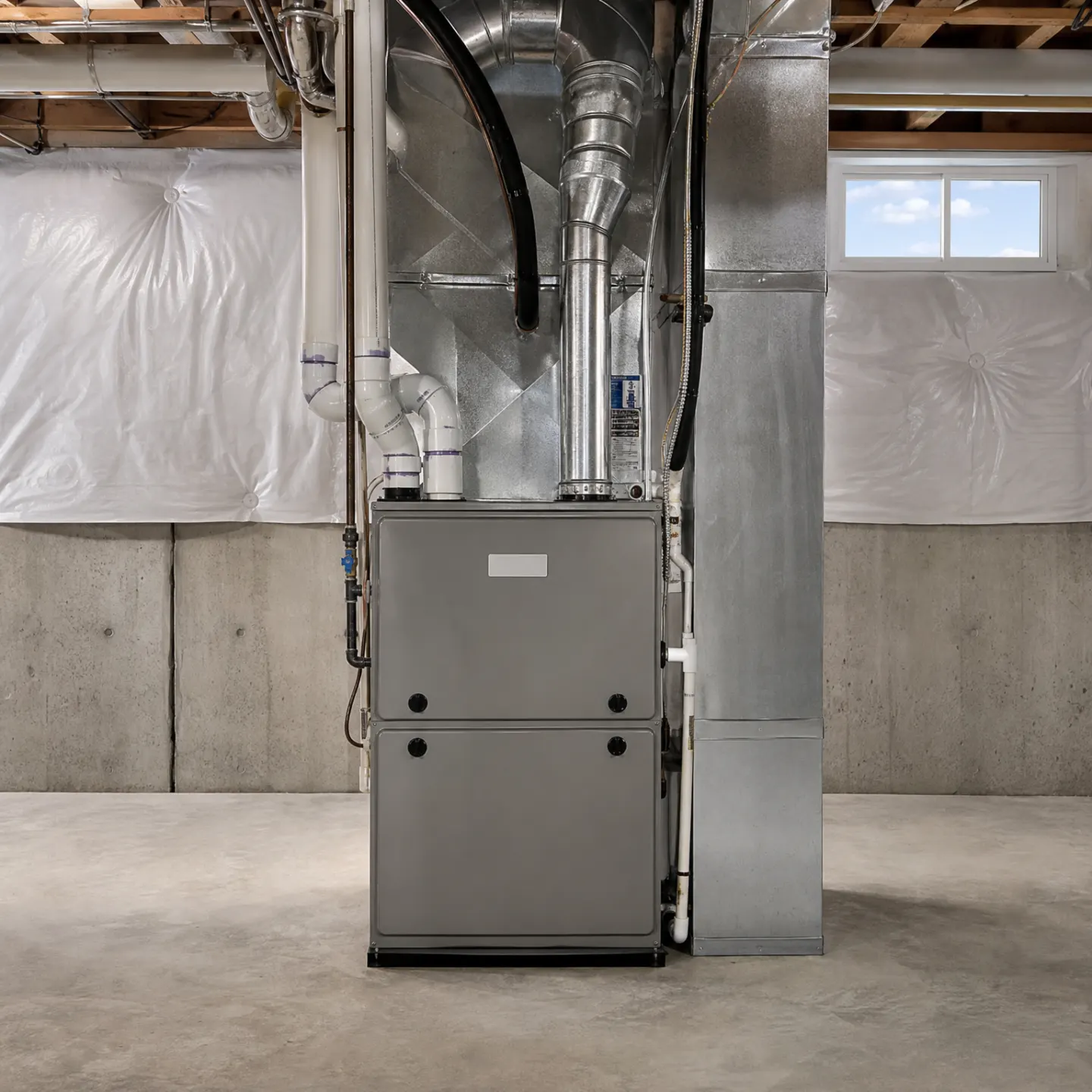
A gray residential gas furnace installed in an unfinished basement, connected to sheet-metal ductwork and PVC pipes.

Before the running starts

September is month one of ten. Get it checked before that first month, so a tired igniter or a blower motor on its way out gets caught on a bench, not during a storm when every HVAC line in the county is busy.

What gets opened up

A thorough tune-up has the panels off. The burners come out for cleaning. The flame sensor gets scraped clean, and the igniter gets checked against a resistance reading, not just a glance. The heat exchanger gets inspected for cracks, because that's the part that can put exhaust where your air should be. A quick visit skips most of this. It checks that the furnace turns on and blows warm, and leaves it there.
What it means for your furnace

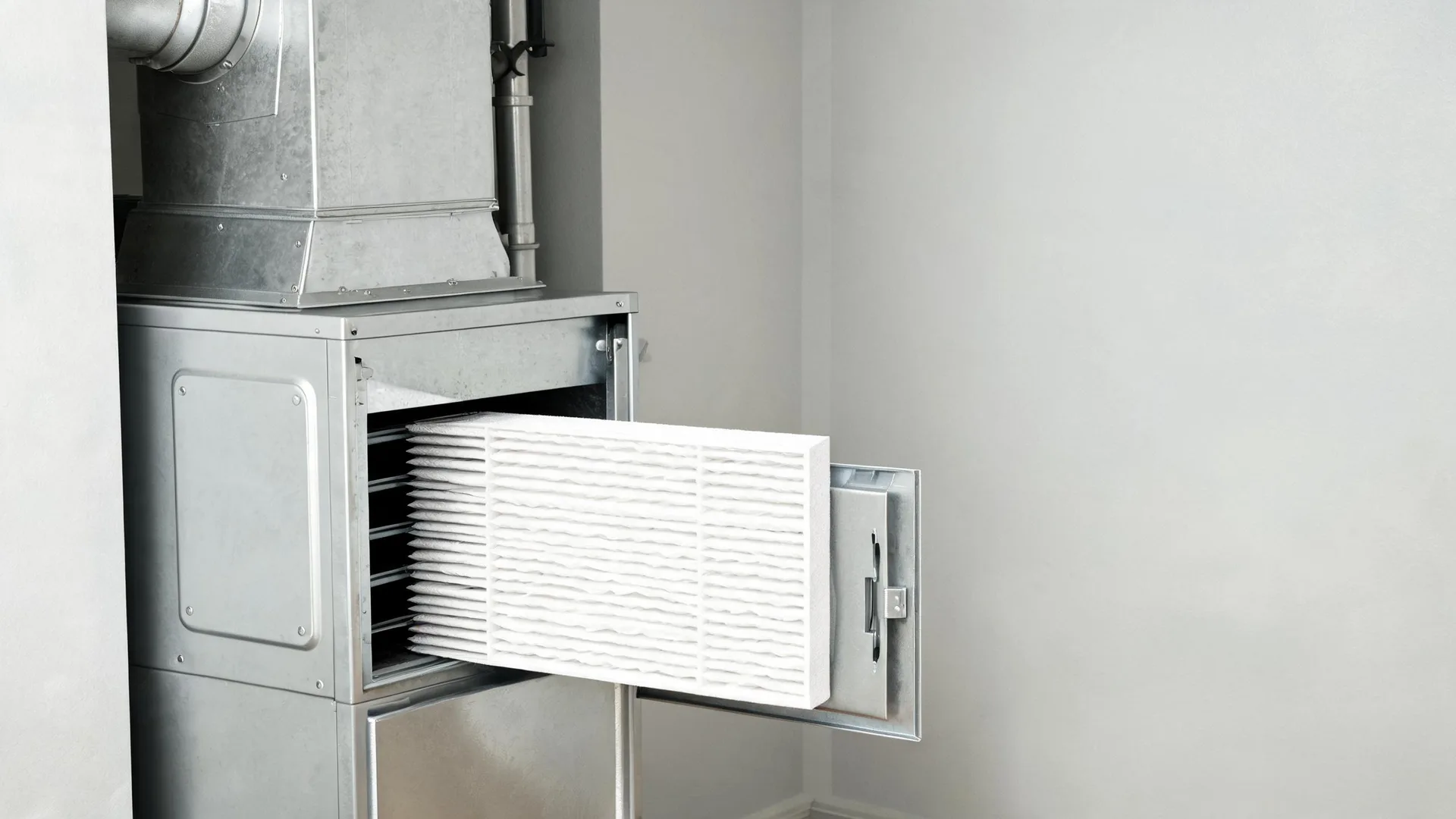
A furnace that only gets a filter swap will still run today. What that visit misses is the stuff that fails mid-season. A flame sensor too dirty to hold a signal, a pressure switch on its way out, a blower wheel caked with dust that makes the motor work harder than it should. None of that shows up unless someone actually checks for it.

A furnace that never gets looked at doesn't fail all at once. Dust builds up on the blower wheel, so the motor works harder to push the same amount of air, and a motor working harder runs hotter and wears faster. A flame sensor coated with a film of carbon stops reading the flame right, so the furnace shuts itself off as a safety measure, sometimes on the first cold night, sometimes a month in. Burners that never get cleaned burn dirty, and dirty burners can crack a heat exchanger over time. None of that announces itself ahead of time. It just stops working, usually on the coldest night of the stretch, because that's when a weak part finally gives out.

A real tune-up checks the furnace while it's off, not just while it's running. A technician pulls the static pressure on the duct system, because a blower pushing against too much resistance wears out early no matter how clean it is. The gas pressure gets measured at the manifold and set to spec, not eyeballed. Wiring at the control board gets checked for a loose connection, since a bad connection causes the kind of intermittent fault that looks like a dead furnace on one call and a working one on the next. The condensate line gets checked for a clog too, on the furnaces that have one, because a blocked line backs up and shuts the system down on its own. Every one of these is a separate thing to check. Skip any of them and the tune-up is really just a filter change with extra steps.