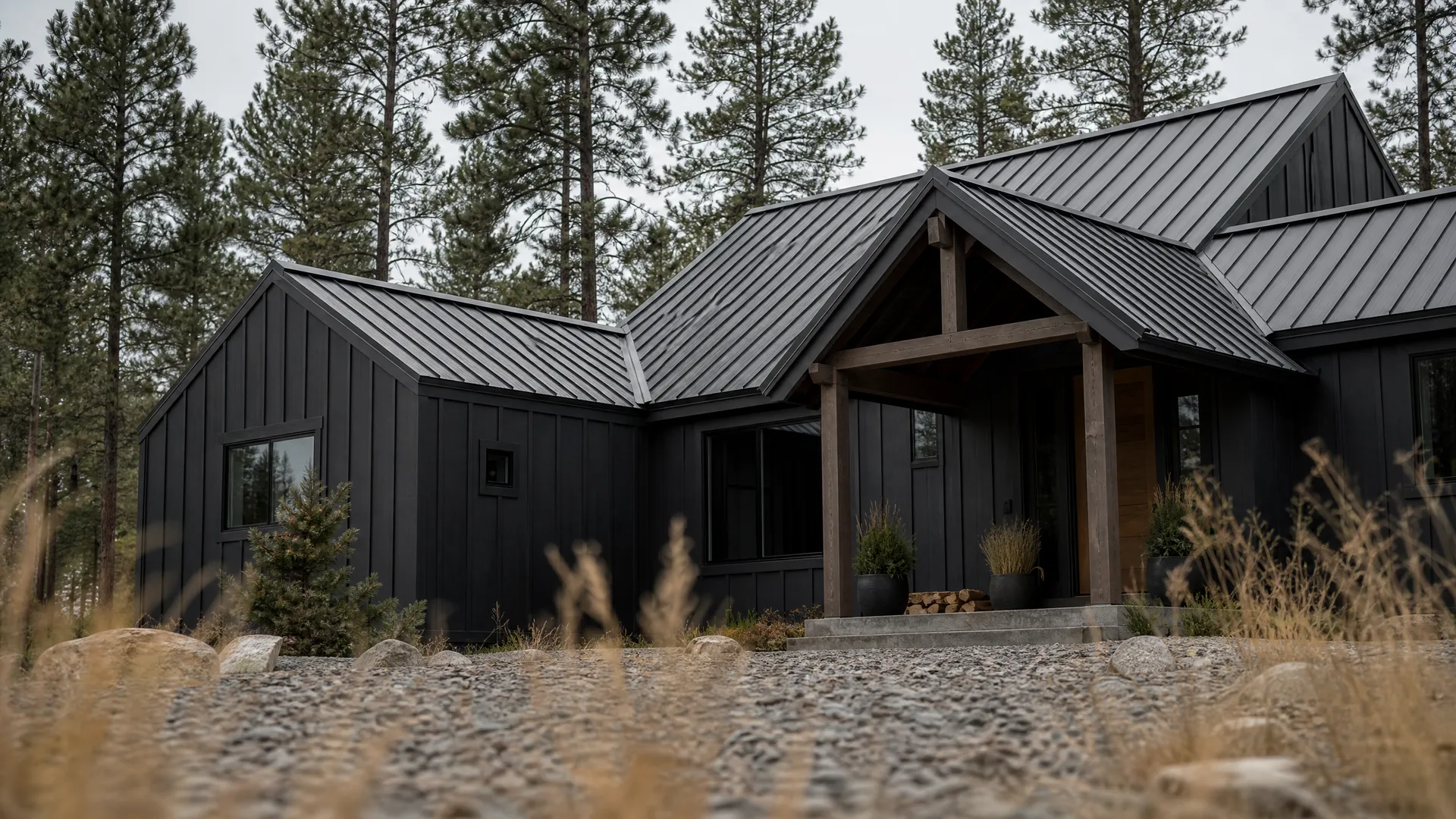

A single-story black board-and-batten house with a standing-seam metal roof and timber-post covered entry, surrounded by pine trees, dry grasses and a gravel foreground.

Furnace Maintenance in Granby, CO

Tell us about the job

Takes about a minute. No obligation.

Step 1 of 3: Equipment

A furnace that has to work harder burns more gas to put out the same heat. Colorado homes paid $10.09 per million Btu for natural gas in 2024. That price holds whether your furnace is clean or clogged. What changes is how much gas it burns to heat your house through a Granby winter. A dirty burner or a clogged filter makes the furnace run longer to reach the same setting on the thermostat, and every extra minute it runs is gas you paid for. That difference shows up on the bill whether or not you ever see what's causing it.

Gas heats half the homes in Grand County.

A furnace tune-up here means checking the burner and venting, not swapping a filter.

Eight below outside means the furnace doesn't get a season off

Winter nights average 8°F
Climate zone 7
50.3% of homes heat with gas
Half These Furnaces Are Still YoungHalf the homes in Grand County were built in 1990 or later, so a lot of furnaces here still have years of work ahead of them.

A furnace doesn't have coils or a drain, that's the air conditioner's job, but the filter still belongs to both. Airflow across the heat exchanger depends on that filter staying clear, and the same blower that pushes warm air through the ducts in winter pushes cool air across the evaporator coil in summer. A filter clogged with a season of dust chokes both jobs. On the furnace side it means the heat exchanger runs hotter than it should, which shortens its life and can trip the limit switch. On the cooling side, dirty airflow lets the coil frost over, and a frozen coil stops moving air entirely. The condensate drain only matters for cooling, carrying off the water that coil pulls out of the air. If it clogs, that water backs up and finds the nearest place to leak. One filter, one blower, two systems depending on both staying clean.

A clean furnace burns less gas to do the same job

A tune-up gets the burner and igniter checked before a hard stretch of cold asks more of them. That keeps the furnace from running longer than it needs to just to hit the temperature on your thermostat. Worth doing before winter asks for it.

Find a contractor
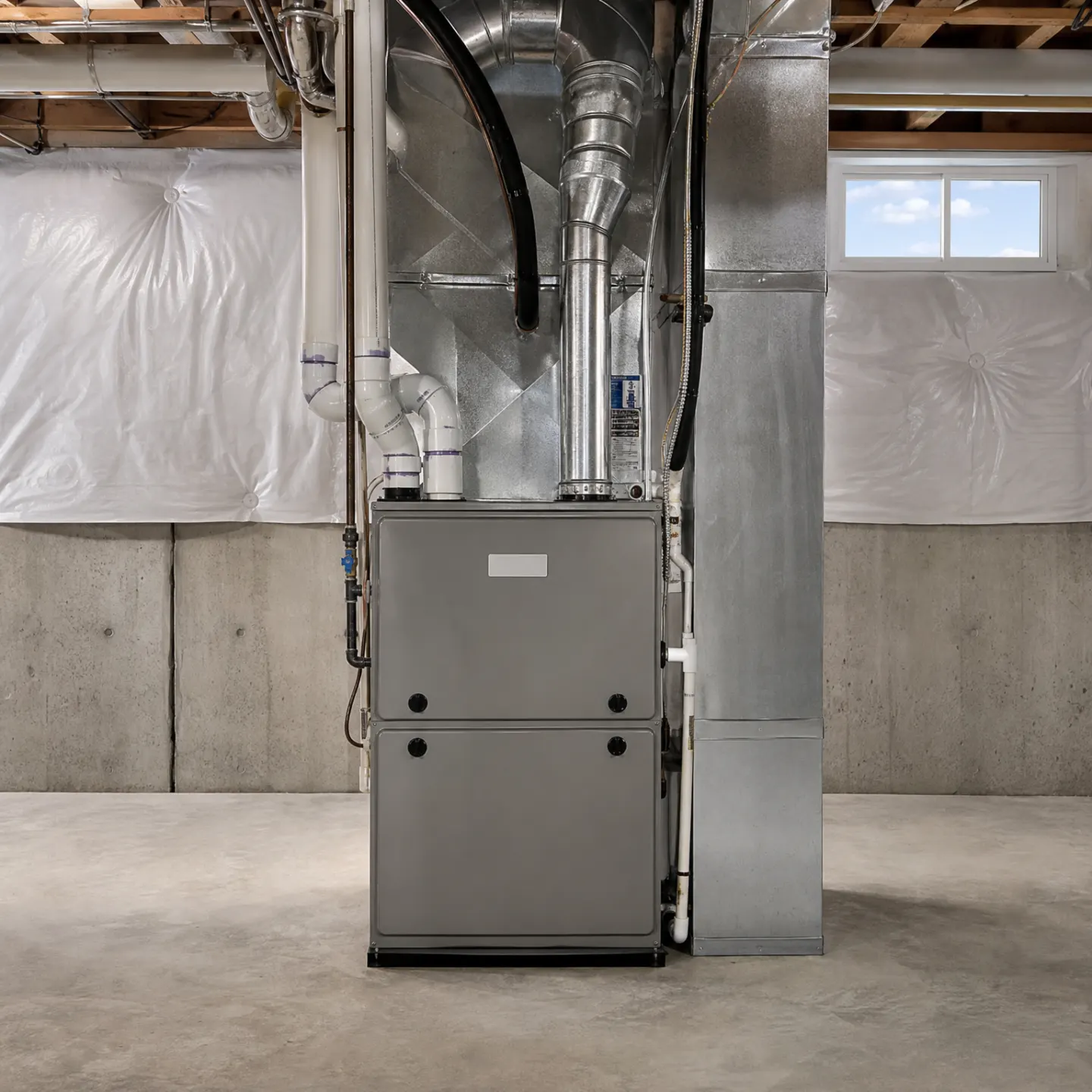
A gray residential gas furnace installed in an unfinished basement, connected to sheet-metal ductwork and PVC pipes.

A Young Furnace Stays Young With Yearly Checks

If your furnace was put in when the house was built, and the house went up in 1990 or later, it still has years ahead of it. A yearly check is how it gets there without a breakdown forcing an early replacement. The tune-up is what finds a cracked heat exchanger or a worn igniter while it's still a small fix. Skip a few years of checks and a young furnace starts racking up the same wear as an old one.

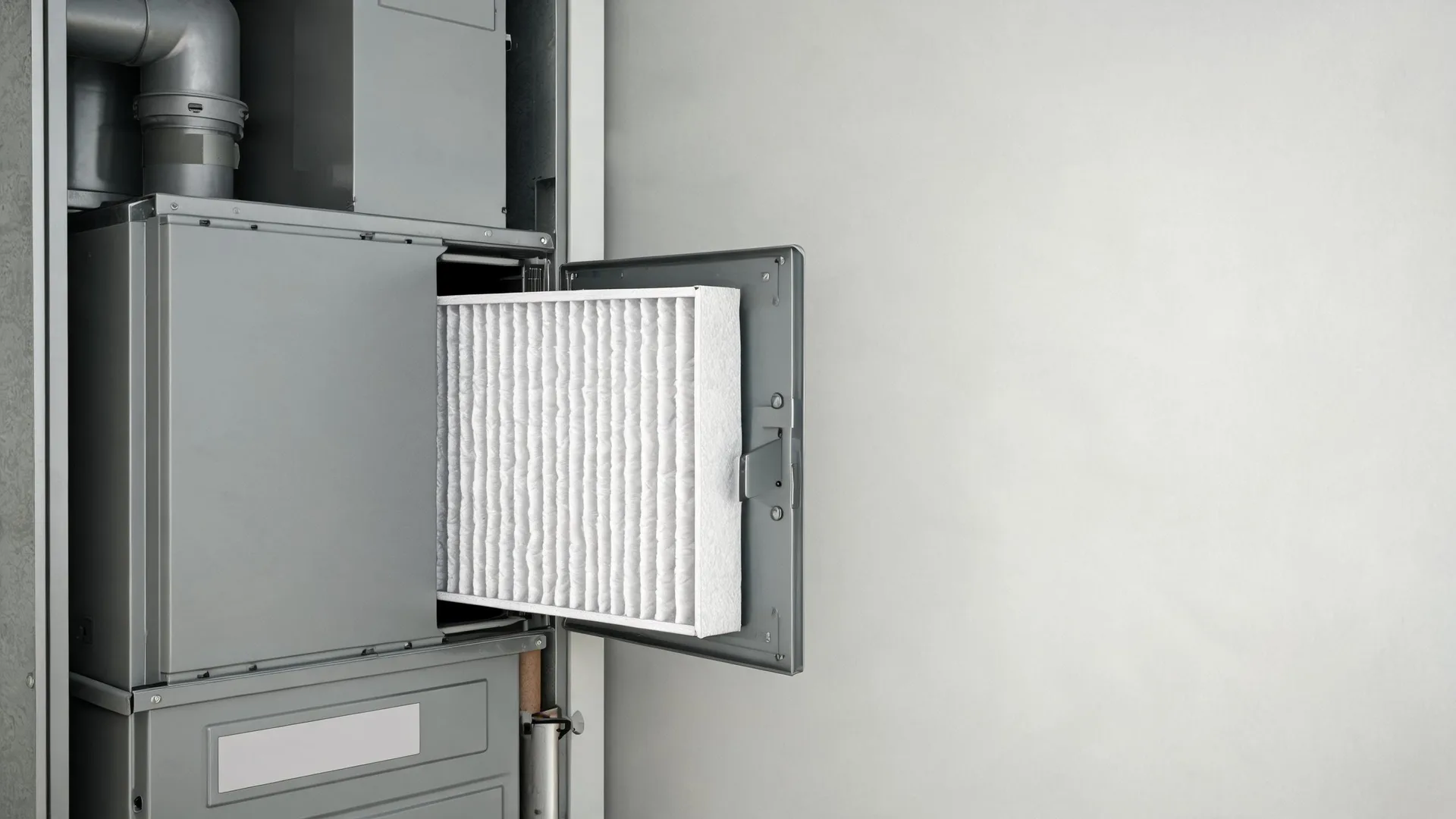
Change the Filter Yourself

A dirty filter is the one thing worth checking without waiting for a tech. Slide it out, hold it to the light, and if you can't see through it, swap it. A clogged filter starves the furnace of airflow, which makes the heat exchanger run hotter than it should and can trip the limit switch mid-cycle.
Leave the Burner and Flue Alone

The burner assembly, the igniter and the venting need a trained eye, not a homeowner with a flashlight. A cracked heat exchanger or a loose flue connection can leak exhaust into the house with no smell and no warning. If the flame looks yellow instead of blue, or you notice soot near the furnace, that's a reason to call someone, not a project for between visits.

A tune-up starts before the panel ever comes off, with a tech listening to how the furnace starts and runs. A delayed ignition, a rattle on startup, a blower that cycles oddly, these point to wear that hasn't failed yet. Inside, the flame should burn steady and blue. If it leans yellow or flickers unevenly, something is off in the combustion and that gets checked right there. The heat exchanger gets inspected for hairline cracks, which won't show up as a smell or a symptom you'd notice from the next room. The flue gets checked too, since a loose connection lets exhaust find its way back into the house instead of outside. None of this shows up on the thermostat or the bill until it's already a problem. That's what the visit is for, catching it while it's still small.

The blower gets its own look too. Every furnace has one blower wheel pushing air across the heat exchanger and out through the ducts, and if it's coated in dust the airflow drops even with a clean filter. A tech pulls it and checks the wheel for buildup, then checks the motor bearings for play or noise. The igniter gets tested under power, not just eyeballed, since a hot surface igniter can glow and still fail to light the burners reliably. Gas pressure gets checked at the manifold, because too high or too low both cause problems that won't show up until the furnace is already struggling to keep up. Every connection on the gas line gets checked for a leak with a proper tool, never just a sniff test. Small checks, but each one is something that fails quietly if nobody looks.