Gas is the default here
Almost 7 in 10 homes in Boulder County heat with utility gas. If your house already has a gas line run to a furnace, putting in another gas furnace is usually the straightforward option.
Takes about a minute. No obligation.
Almost 7 in 10 homes in Boulder County heat with utility gas. If your house already has a gas line run to a furnace, putting in another gas furnace is usually the straightforward option.
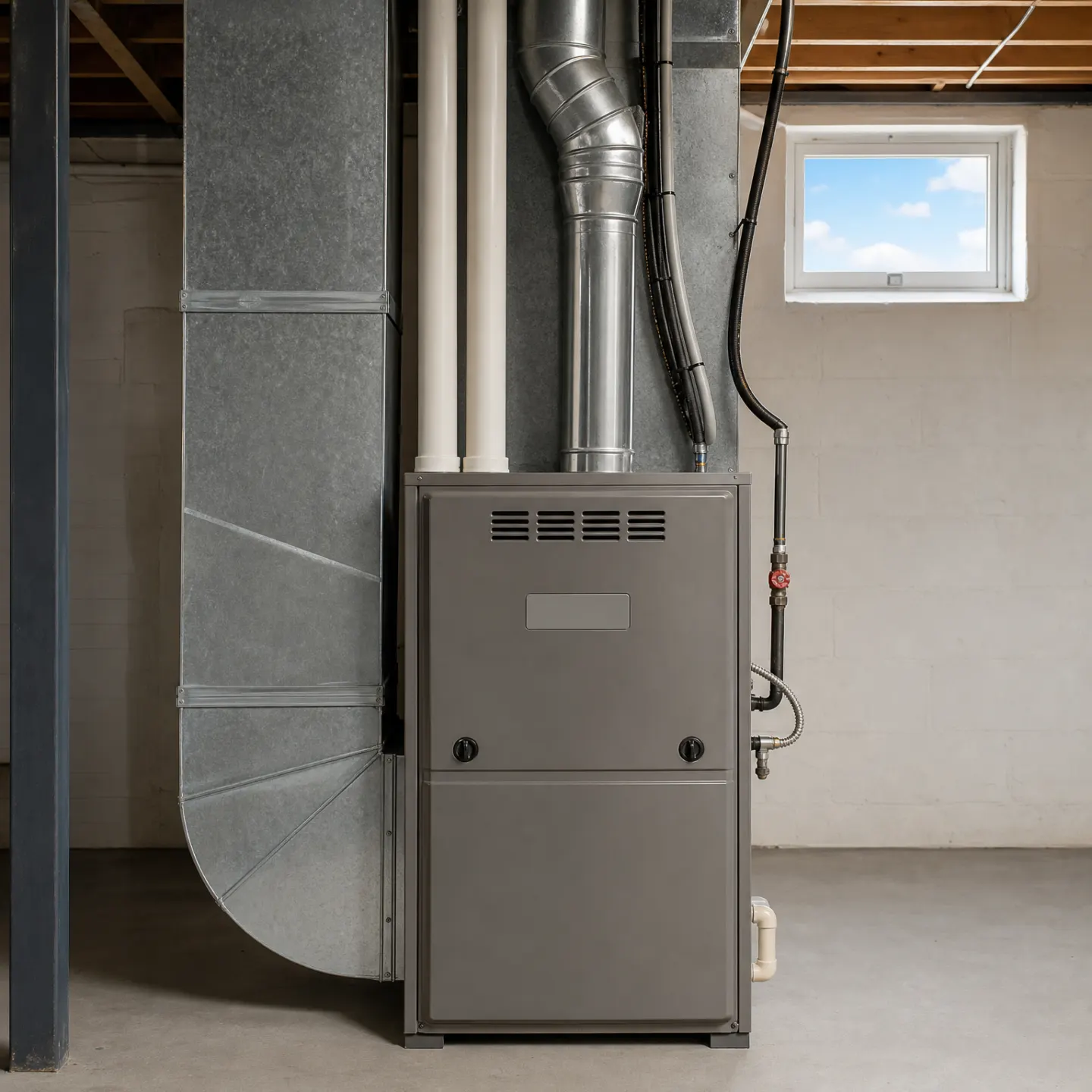
A gas furnace needs venting and a gas connection already sized for it. If your home was built for gas heat, that work is mostly done. Switching fuel types is a bigger job, since it means new venting or new electrical capacity.
NOAA nClimDiv, 1991–2020 normals
A standard furnace sized to your house is what gas costs in Colorado, $10.09 per million Btu, calls for.
There's no reason tied to this place to pay for extra capacity or a higher tier than your house needs.


Furnace in Boulder County runs from September through June, about ten months of the year. August is really the only quiet month left before that starts. Getting the install scheduled then means it happens when it's convenient to shut off heat for a day, not during the first cold snap when you need it most. It also means no waiting behind everyone else who didn't plan ahead. Once September hits, installers here get busy fast.
A standard size and efficiency fit fine here. There's no local reason to go bigger or pricier.
Find a contractorA heat load calculation works off how fast a house loses heat on the coldest night, not how many square feet it covers. Houses the same size can call for different sized furnaces depending on the windows, the ceiling height, and how much wall faces outside. A contractor measures the house to get that number, then matches a furnace to it. Skip that step and go by a guess, or by matching the old unit, and you're carrying someone else's mistake into the new install. A furnace too big for the load heats the air fast, hits the thermostat setting, and shuts off before it's pulled moisture out of the air or warmed the walls and furniture, so the room feels cold again soon after. That start and stop pattern is hard on the igniter and the heat exchanger, since both take the most stress at startup. A furnace too small never gets ahead of the load. It runs constantly on the coldest days and still struggles to hold the temperature. Getting the size right the first time means the furnace spends most of its time doing what it's built to do, which is run a full cycle and rest.
The gas line gets capped or rerouted to the new unit, the flue or vent pipe comes down, and the old cabinet gets cut loose from the ductwork and carried out. None of that scrap goes back into the new install. It leaves with the old unit.
The vent pipe sizing, the gas line connection, and sometimes the ductwork transition all get checked against the new unit's specs, not assumed from what was there before. An old furnace that vented one way doesn't mean the new one vents the same way.
Estimates for a typical Boulder County home, from EIA household energy data, Colorado fuel prices and NOAA climate normals. Your home will differ.
Once the old furnace is out, the crew runs new connections rather than reusing the old ones as is. The gas line gets pressure tested before the new unit ever fires. The vent pipe gets dry fit and checked for the right pitch and length, since a furnace that vents well needs that pipe sloped and sized to match it, not just hooked back up the old way. Electrical gets tied in for the blower and control board, and the thermostat wire gets checked or replaced if it's not up to running the new controls. Only after all of that gets tested does the furnace actually fire for the first time, and a good installer lets it run through a full cycle before calling the job done.