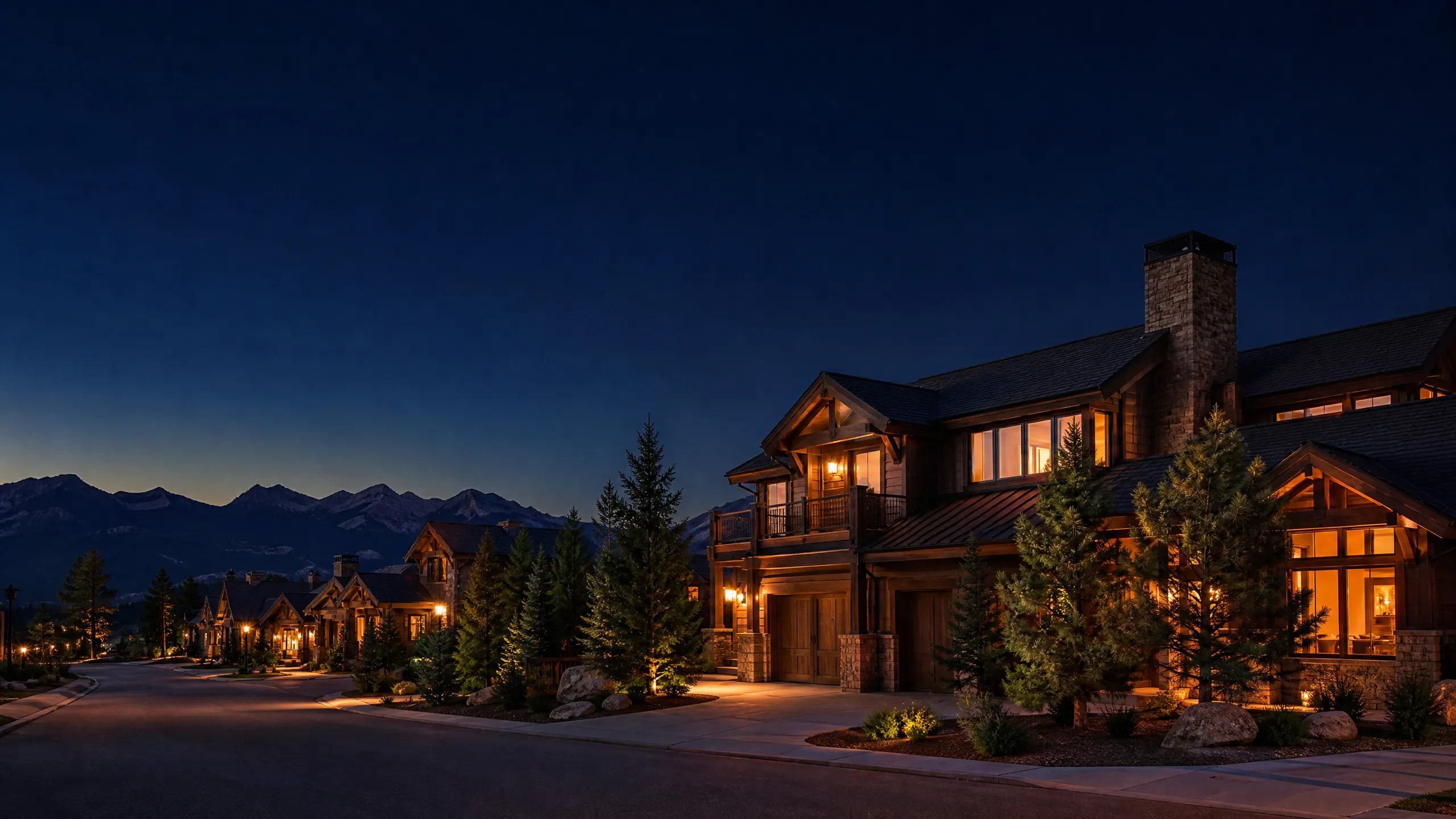

Illuminated timber-and-stone luxury homes along a residential street at dusk, with snow-capped mountains visible in the background.

Furnace Repair in Boulder, CO

Tell us about the job

Takes about a minute. No obligation.

Step 1 of 3: Equipment

A furnace in Boulder County runs about ten months of the year, September through June. That's most of the calendar, not a short stretch of cold snaps. Winter storms hit the county 161 times between 2015 and 2024, and each one means hours of nonstop run time to keep a house warm through the snow and wind. A furnace doesn't get much of a break here. The igniter, the blower motor, the heat exchanger, all of it logs more hours than it would somewhere milder, and that's usually what's behind whatever problem brought you here.

10 months
September through June, your furnace is on duty
17°F
the average winter night it heats against
69%
of homes here heat with gas, so most furnaces here burn gas
161 winter storms
in ten years, the nights a failure hurts most
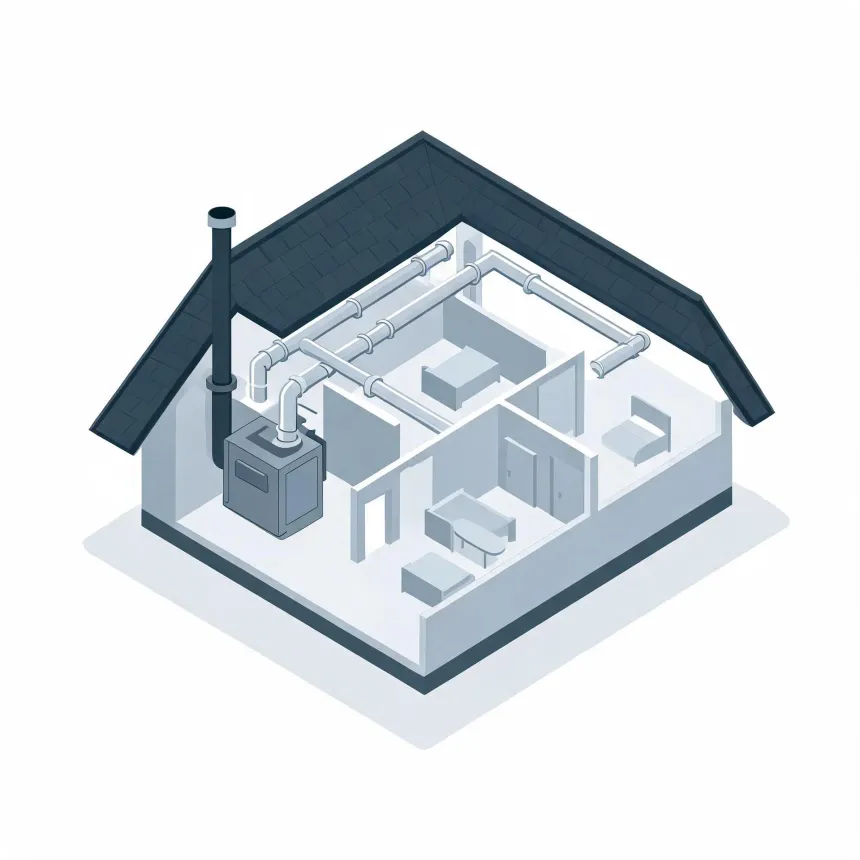
Isometric illustration of a cutaway house showing a dark furnace unit with a flue pipe and branching ductwork running through rooms with simple furniture under a dark gabled roof.
Your furnace works hardest from October through April.

NOAA nClimDiv, 1991–2020 normals

Winter storms hit Boulder County 161 times between 2015 and 2024.

A furnace that still runs after a storm can be running with hail-dented coils or a clogged outdoor unit, so it's worth a check, not just a glance.

Ten months of heat means a weak part fails right when you need it most

Heat runs September through June
Winter nights average 17°F
161 winter storms from 2015 to 2024

Half the homes in Boulder County were built in 1986 or later. If yours is one of them, the furnace inside it hasn't necessarily logged the hours you'd expect from winters like these. A newer build usually means a newer system, and a newer system still has plenty of working life left in it. That changes the math on a repair. A part failing on a furnace that came with a newer house is just a part failing, not a sign the whole unit is near the end. Worth checking when your system went in, if you know it, before you decide how far to take the fix.

Get the part that's actually failing fixed right

Ten months of run time a year wears parts down faster than a diagnosis made over the phone can account for. A tech who gets eyes on the igniter, the blower motor, the heat exchanger can tell you which one is actually failing, and fix that part instead of guessing at it.

Find a contractor
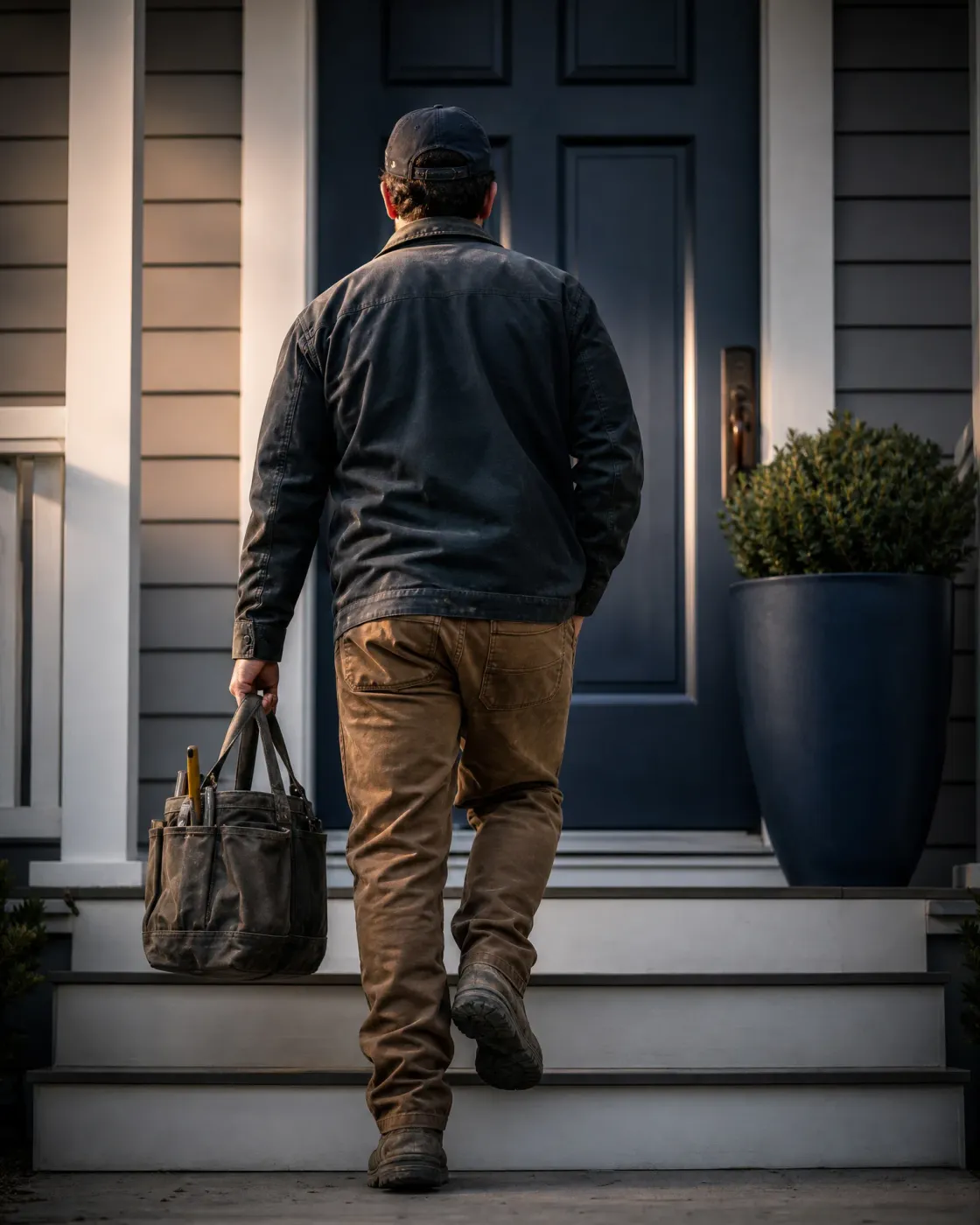
A man in a cap, dark jacket and tan work pants carries a canvas tool bag up white porch steps toward a dark blue paneled front door, with a potted shrub beside the entry.
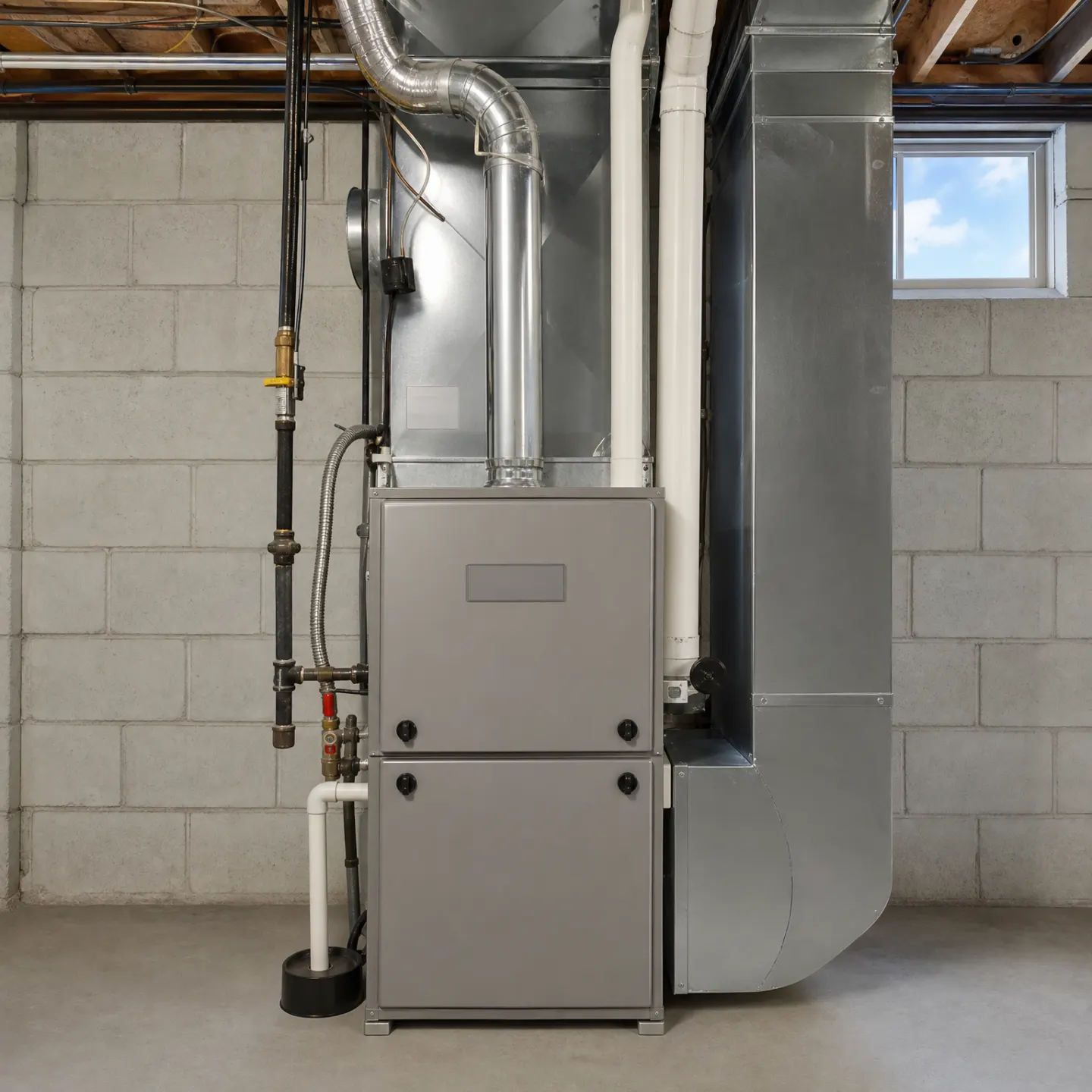
A gray high-efficiency gas furnace installed in an unfinished basement, surrounded by gas lines, a condensate drain, and sheet-metal ductwork.

Know the system's age before you decide how far to go

If your furnace went in when the house was built, and the house is one of the newer ones in the county, replacing the whole unit over one broken part usually isn't the move. Get the broken part diagnosed and fixed. The age of the system is worth knowing before anyone talks you into more than that.

What's safe to check yourself

Check the thermostat is set to heat and the temperature is actually above room temperature. Look at the filter and swap it if it's gray or caked, a clogged filter can starve the system enough to trip it off. Make sure the furnace switch, it looks like a light switch near the unit, hasn't been bumped off. Check the breaker it runs on. If you have a standing pilot, see whether the flame is lit. None of this needs tools, and it rules out the simple stuff before anyone comes out.

What to leave alone

Don't take any panels off the furnace or reach near the burners or heat exchanger. Don't try to relight an electronic ignition system, it's supposed to light itself, and repeated attempts can put gas into the space. If you smell gas, don't flip switches or check anything, leave the house and call the gas company from outside. A furnace that shuts itself off and won't restart is often doing that on purpose, protecting itself from a fault, and that's a sign for a tech to look at it, not a switch to reset.

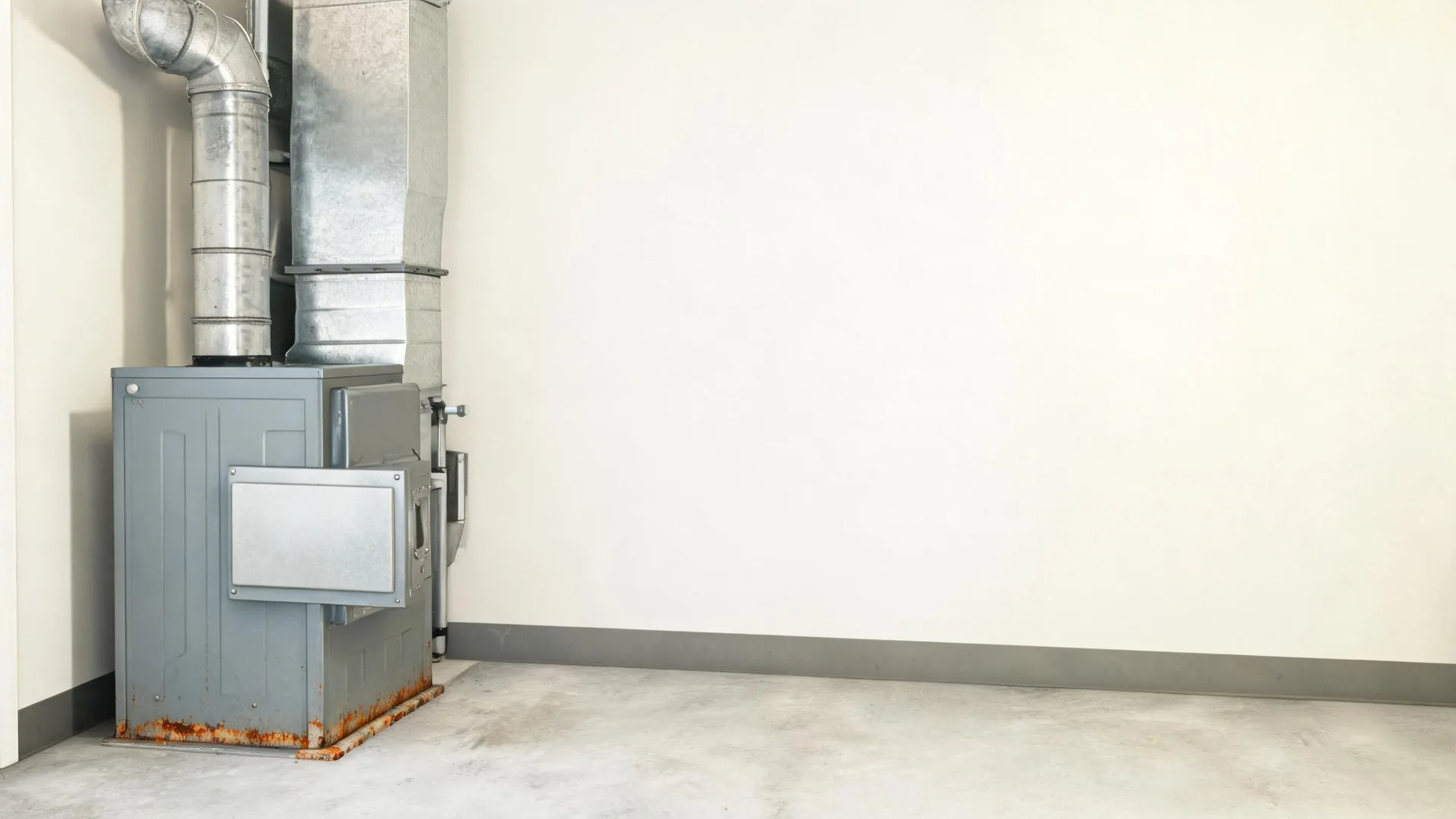
A gray forced-air furnace with ductwork stands in an unfinished concrete basement surrounded by storage items and clutter.

A new furnace would cut about $110 a year off heating for a typical Boulder County home.

  • A new high-efficiency furnace$470 a year
  • An older furnace$580 a year

Estimates for a typical Boulder County home, compared with an older unit built to the previous federal minimum, from EIA household energy data, Colorado fuel prices and NOAA climate normals. Your home will differ.

Repair makes sense when one part has failed and the heat exchanger is sound.

Replacement makes sense when the heat exchanger is cracked or the furnace keeps needing parts.

A failed igniter or a bad flame sensor is usually just that part giving out, and swapping it brings the furnace back to normal. A cracked heat exchanger is a different kind of problem. That's the part that keeps the flame and exhaust separate from the air moving through the house, and a crack there usually means the whole furnace needs to go, not just that piece. What failed matters as much as how it failed. A furnace that's run hard for years and finally needs a part is doing what heavily used equipment does. One that's needed several different parts replaced in a short stretch is wearing out across the board, and that's worth knowing before paying for another single fix.