Eight months of runtime
Furnaces in Broomfield County run from October through May, and overnight lows average 20°F through December, January and February. That's a long stretch of steady use, not an occasional cold snap.
Takes about a minute. No obligation.
Furnaces in Broomfield County run from October through May, and overnight lows average 20°F through December, January and February. That's a long stretch of steady use, not an occasional cold snap.
Winter storms hit Broomfield County 71 times between 2015 and 2024. A furnace running through that kind of weather leans on its igniter and blower harder than one in a milder place, and the wear shows up sooner.
Furnaces in Broomfield County start running in October, right when the weather turns.
Have yours checked in September, before it has to work for the first cold night.




A check before the season starts is looking for the same things that eight months of runtime will wear down. The igniter either glows and lights the burner or it doesn't, and a weak one usually fails on the first cold morning, not before. The blower motor and its bearings take the brunt of a long stretch of steady use, and a tech can hear or feel wear in them before it leaves you without heat. Flame sensors coat with residue over a season of runs and start misreading the flame, which shuts the furnace down on its own. None of this takes long to sort out when the furnace is sitting idle. It takes a lot longer when it quits during a storm and the overnight low is already near 20°F.
A furnace with most of its life still ahead of it is worth keeping on schedule. A yearly check catches wear while it's still minor, so the furnace you have now is the one still running years from now.
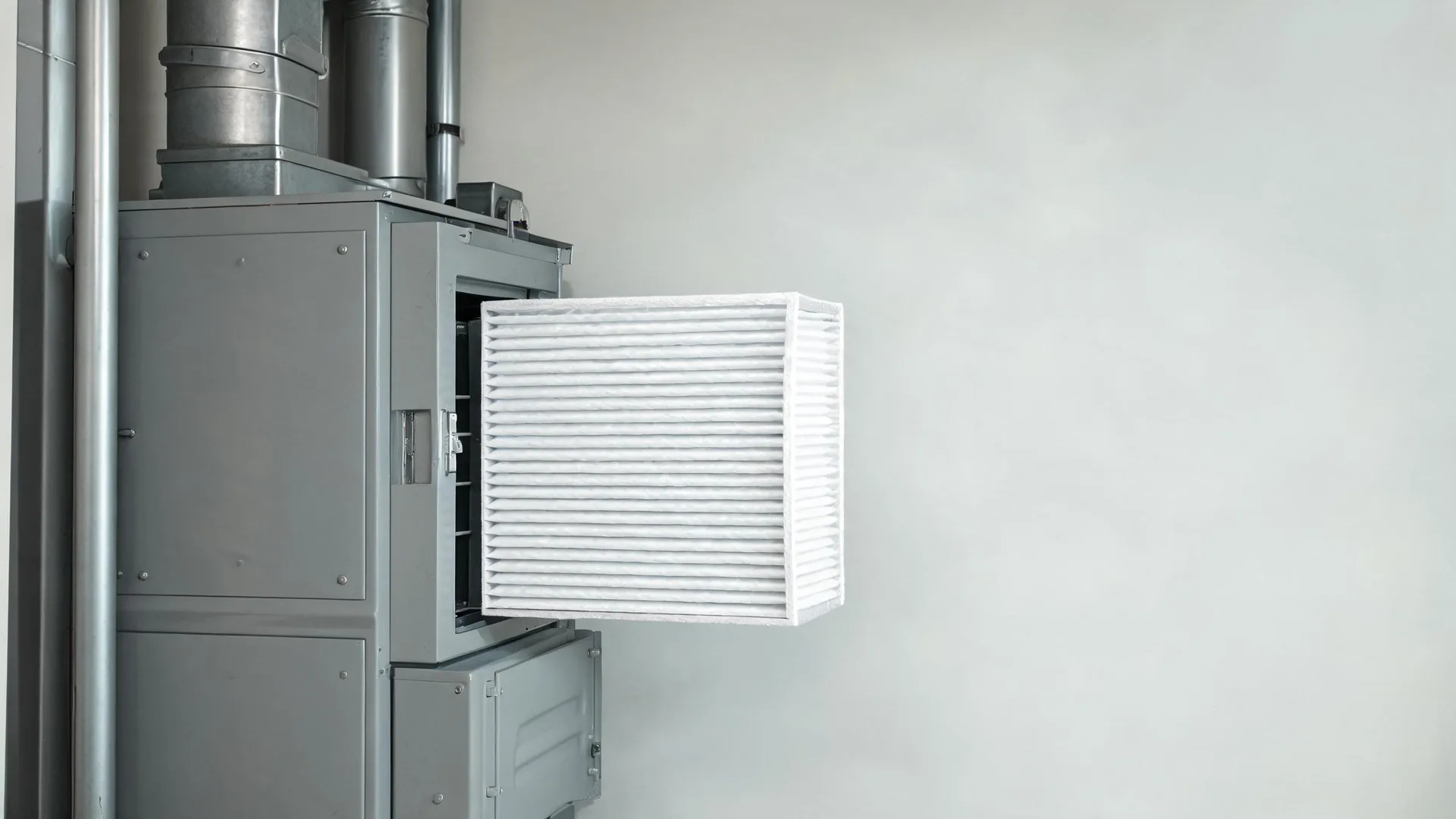
Find a contractorThe filter is the one job that's yours. Check it once a month during the stretch the furnace runs steady, and swap it when it's gray and matted instead of waiting for a set schedule. A clogged filter starves the burner of airflow, and the furnace works harder to push air through it, which only adds to what the season already demands of the blower. Keep the area around the furnace clear too, nothing stacked against it or blocking the vents in the room. Past that, leave the igniter, the flame sensor and the blower bearings to a tech. Those need a meter and a trained eye, not a homeowner with a rag.
A furnace that's been sitting idle since spring can throw off a burning dust smell the first few times it fires. That clears in a few minutes. A sharp or sour smell that lingers, or anything like rotten eggs, means stop and get it looked at rather than waiting for the yearly check to come around.
A furnace that starts, heats, and shuts off normally can still be building toward a breakdown. Delayed ignition, a burner flame that's yellow instead of blue, short cycling, or a blower that runs longer than it used to are all things a tech catches on a check before they turn into a no-heat call.
A quick visit checks that the furnace turns on and heats. A thorough one takes the cabinet apart. That means pulling the burner assembly to look at the flame itself, not just hearing it light, since a flame that's yellow or uneven at the tip points to a problem a glance wouldn't catch. It means testing the flame sensor's reading on a meter instead of just wiping it down, because a sensor can look clean and still be giving a weak signal. It means checking the inducer motor and the blower wheel for wear, not just confirming the blower runs. A tech who checks the gas pressure at the manifold and the temperature rise across the heat exchanger is looking for how the furnace is actually performing, not just whether it comes on. If the visit is over before you'd have time to make coffee, ask what was actually tested.
A heat exchanger is the part a tune-up really exists for, and it's the one you can't see without taking the furnace apart. Cracked or corroded, it lets exhaust mix into the air your rooms breathe instead of venting it outside, and nothing about how the furnace sounds or heats will tell you that's happening. A tech checks it directly, along with the vent pipe that carries exhaust out, looking for rust, gaps at the joints, or a connection that's come loose. The draft has to pull correctly too, since a furnace that's venting poorly can push exhaust back into the room instead of up through the flue. Combustion air matters as much as exhaust, and a tech confirms the furnace is getting enough of it rather than assuming the room has what it needs. This is the part of the job that has nothing to do with whether the furnace starts.