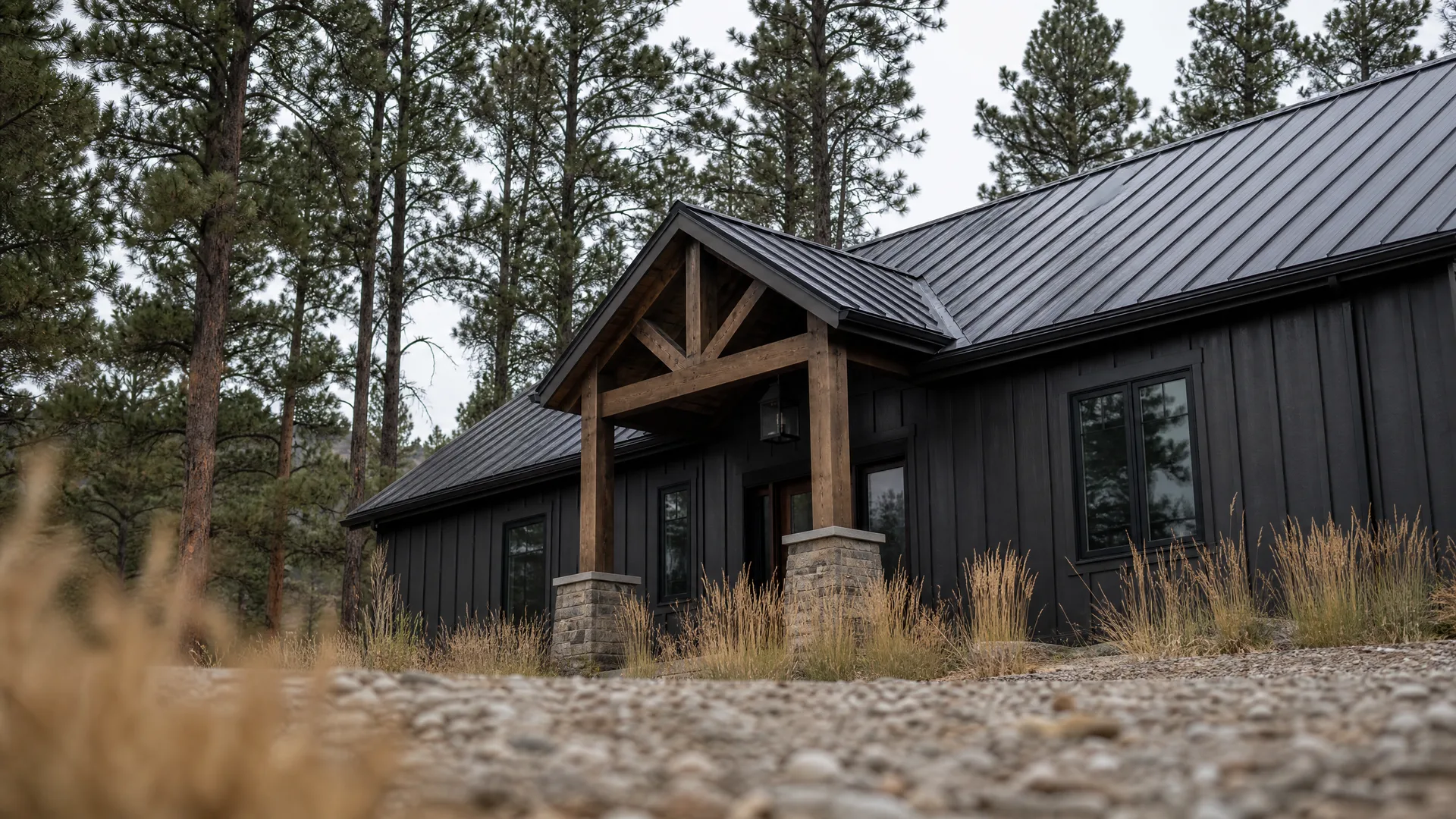

A single-story house with black vertical board-and-batten siding and a dark standing-seam metal roof, featuring a timber-framed entry porch on stone piers, photographed low from a gravel driveway with dry grasses in the foreground and pine trees behind.

Furnace Maintenance in Greeley, CO

Tell us about the job

Takes about a minute. No obligation.

Step 1 of 3: Equipment

Weld County saw 637 severe weather events between 2015 and 2024. Damaging wind came through 172 times, hail 388 times, and that's not counting the winter storms that rolled in 42 times over the same stretch. A furnace doesn't sit outside, but the blower, the ducts and the venting all depend on a system that stays intact through that kind of weather, and a chunk of ice or a branch doesn't ask permission before it hits a vent or an intake. Statewide, 13% of Colorado households lost power for a day or more in 2024. A furnace with a bad igniter or a clogged flue is one thing. A furnace that won't start at all because the power's been out for hours, in the middle of a cold snap, is another.

Half the homes in Weld County were built in 2001 or later.

A furnace that age still has a lot of working life left, and a yearly check is what keeps it that way.

Heat starts in October. Have it checked in September.

Heat runs October through May
Climate zone 5B
Winter nights average 16°F
Gas Heat Needs More Than a Filter73% of homes in Weld County heat with gas, and gas furnaces depend on correct burner and venting.

Eight months of heat a year is a long season to lean on one furnace. October through May, it's running most days, and Weld County winters bring real cold on top of that. That's a lot of cycles on the igniter, the blower motor, the heat exchanger. Parts that would hold up fine running a few months a year start showing wear sooner on a schedule like this. A furnace that's been coasting on a weak igniter or a dirty flame sensor usually makes it through the easy months. It's the long stretch of real cold that finds the part that was already failing.

Have the vents and intake checked before the next storm

A tune-up covers what the weather can reach. A tech can check the flue, the intake and the venting for the kind of damage wind and hail leave behind. Worth asking, too, how the furnace handles a power cut, since a working furnace doesn't help much if the outage is what stops it.

Find a contractor
A man in a dark shirt, tan work pants, boots and a cap walks up porch steps toward a navy front door, carrying a canvas tool bag.
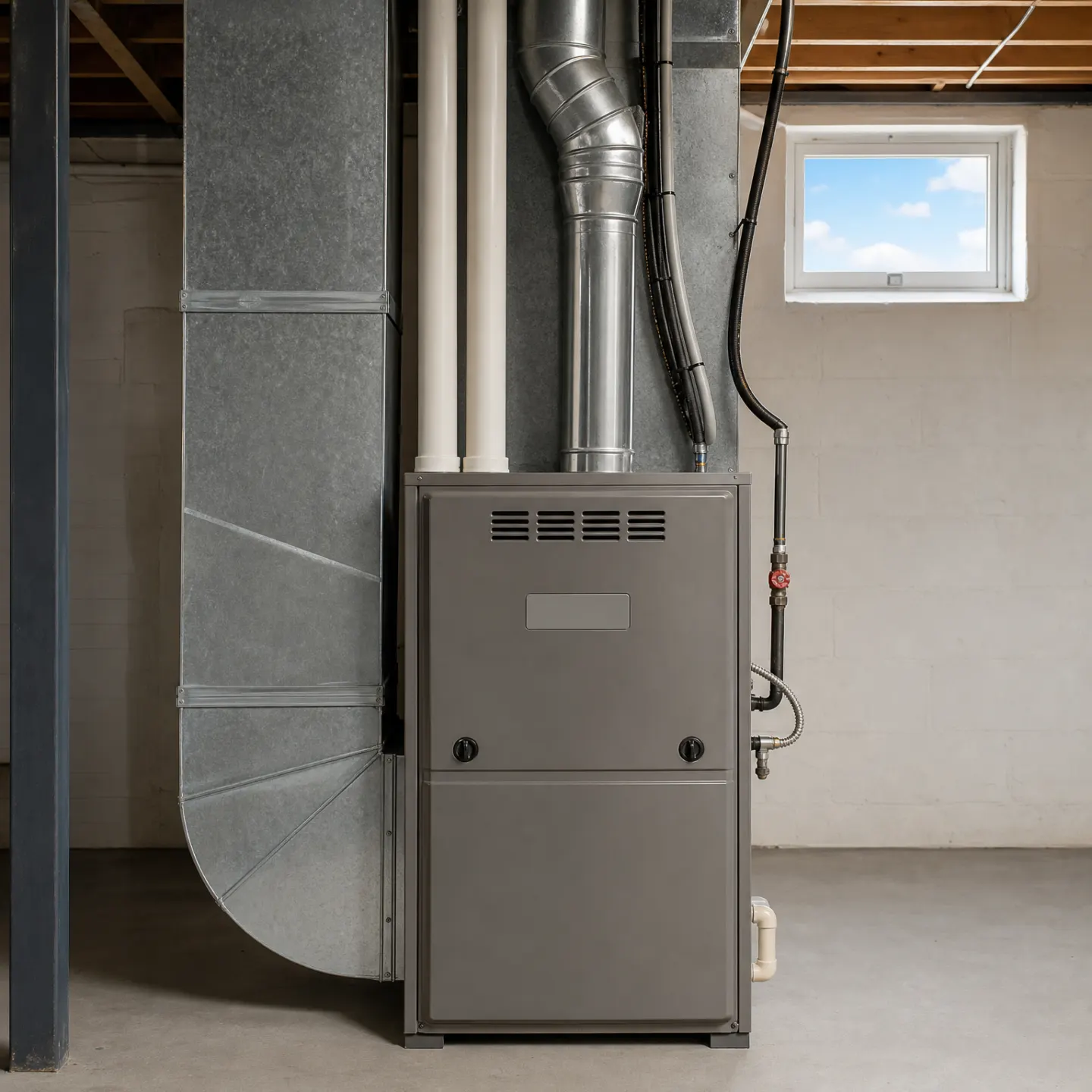
A gray residential gas furnace installed in an unfinished basement, surrounded by ductwork, a metal flue pipe, and a gas supply line.

A Newer Furnace Still Needs a Yearly Check

A furnace that came with a newer home still has most of its working life ahead of it. A yearly check is what keeps it that way. A technician cleans the burner, checks the heat exchanger for cracks, and tests the igniter and flame sensor before the cold sets in. None of that takes long, and none of it waits for a breakdown to be worth doing. Skip it for a few years and a small problem, a cracked exchanger or a sensor giving a bad reading, gets found the hard way, on a night when the temperature outside makes that a real problem.

A Cracked Heat Exchanger Doesn't Announce Itself

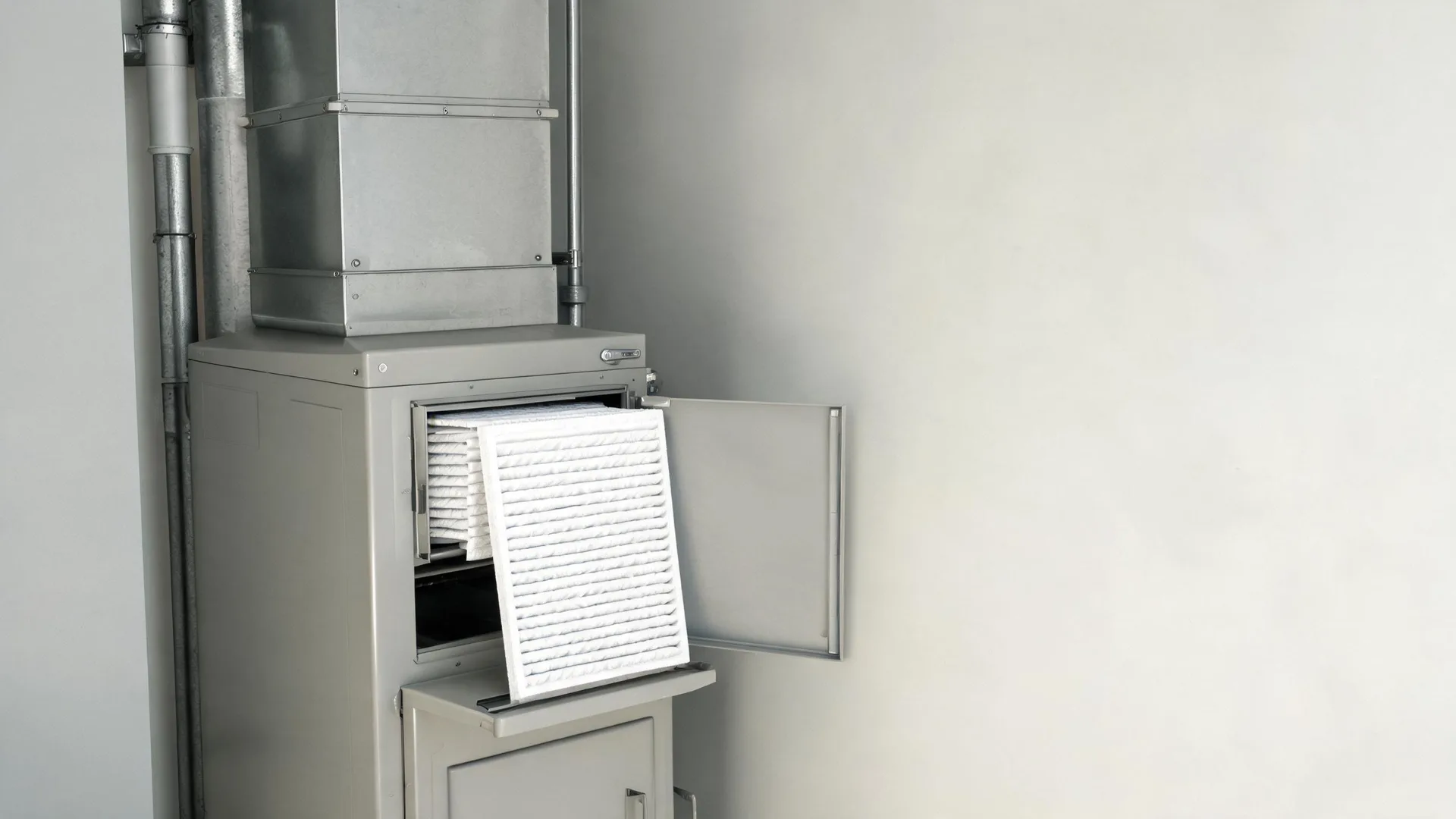
A heat exchanger can crack in a spot no homeowner would ever see without pulling the furnace apart. It won't always smell like gas or trip a carbon monoxide alarm right away. A technician checks it with a camera or a dye test, looking for the hairline crack that forms as metal heats and cools season after season. Left alone, that crack only grows.
Flame Color Tells a Trained Eye Something

A gas flame should burn steady and blue. A technician watches it under normal operation and knows what yellow tipping or flickering means: a burner that's dirty, or air mixing wrong with the gas. That reading only means something to someone who's watched a thousand flames do it right. To everyone else it's just fire in a box.

Between visits, the filter is the one thing worth checking yourself. A dirty filter chokes airflow, and a furnace that can't breathe runs its heat exchanger hotter than it should. Pull it out, hold it to a light, and if you can't see through it, swap it. Keep anything flammable away from the furnace itself, and don't stack boxes or storage in front of it where it needs air to draw from. Look at the vent pipe where it goes through the wall or roof and make sure nothing is blocking it from outside. If the furnace ever makes a new noise, a bang on startup or a screech from the blower, that's not something to wait out. Turn it off and get it looked at rather than running it until something gives.

A tune-up before heat season catches wear while it's still cheap to fix. That means cleaning the burner, testing the igniter and flame sensor, and checking the heat exchanger before the furnace has to run every day from October through May. A weak igniter or a flame sensor giving a bad reading doesn't usually stop the furnace cold. It just fires less cleanly than it did last year, and that gets worse the longer it's left. Have it looked at before the cold sets in, not after it's already running every day.