
A lit mountain lodge-style home at night with evergreen trees, stone accents, and snow-capped mountains in the background.

Furnace Installation in Broomfield, CO

Tell us about the job

Takes about a minute. No obligation.

Step 1 of 3: Equipment

Gas heats 71 percent of homes in Broomfield County, and that's the furnace most contractors here install and service. A gas furnace needs a gas line already run to it, a vent to the outside, and in most cases a condensate line if it's a high-efficiency model. If your home already heats with gas, that infrastructure is in place, and swapping an old furnace for a new one is a straightforward job. Electric heat is the next most common fuel here, usually paired with a heat pump or an air handler instead of a furnace. Worth checking which one you have before you assume the replacement is a like-for-like swap.

8 months
October through May, your furnace is on duty
20°F
the average winter night it heats against
71%
of homes here heat with gas, so most furnaces here burn gas
80% AFUE
the federal minimum any new unit must meet
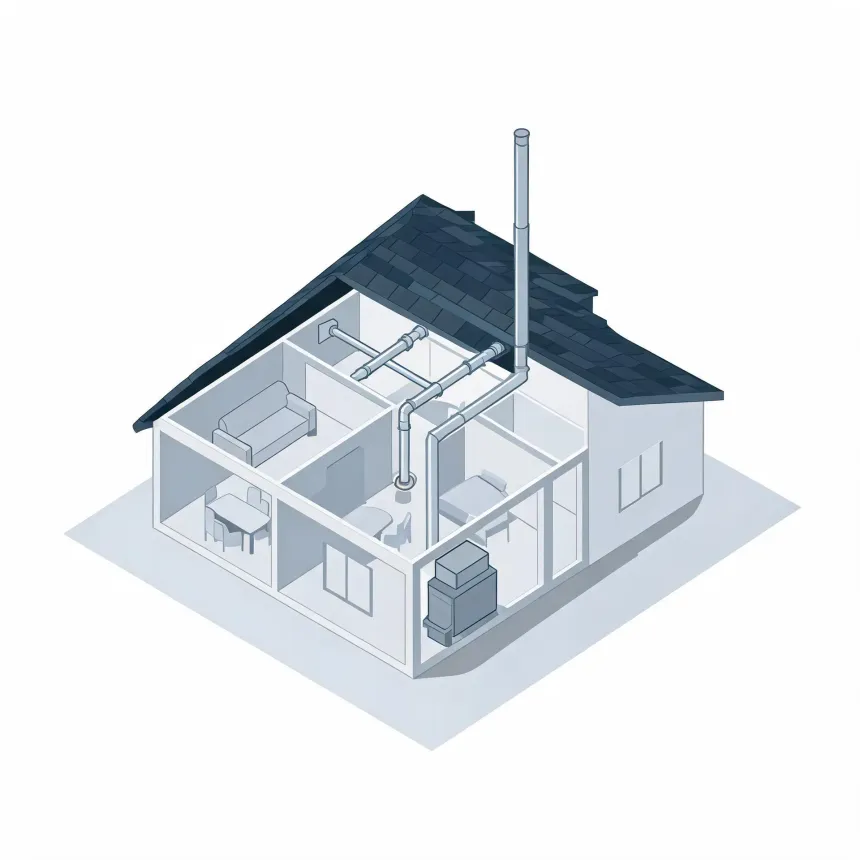
Isometric cutaway illustration of a single-story house showing interior rooms with furniture, ductwork and piping running to a tall vertical flue through the dark shingled roof, and a furnace-like appliance unit on the floor.
Your furnace works hardest from November through April.

NOAA nClimDiv, 1991–2020 normals

Natural gas ran $10.09 per million Btu in Colorado homes in 2024, cheaper than in most states.

A high-efficiency furnace costs more up front and takes longer to earn that back here, so pick one for how long it lasts and how well it fits your house.

Eight months of heat start in October. September is when to replace it.

Heat runs October through May
Winter nights average 20°F
71 winter storms from 2015 to 2024

So if the payback math won't settle it, let the rest of the decision do the work. Ask what size the old furnace was, and whether it was actually right for your house, before matching the new one to it. Ask how long the main parts are warrantied, since that tells you what the manufacturer thinks of its own build. A single-stage furnace runs at full output every time it fires. A two-stage one runs low most of the time and only opens up on the coldest days, which means steadier heat and less noise, apart from what it costs to run. If you're keeping the place a long time, that's worth more here than a slightly lower gas bill.

A furnace here works eight months straight. Choose one built for that.

Furnace here runs from October through May, and overnight lows average 20°F through December, January and February. Add 71 winter storms in that stretch, and the furnace going in has to hold up through real weight, not just keep the house comfortable on mild days. Get it sized for your house, not just for the old unit, and weigh the build quality along with everything else.

Find a contractor
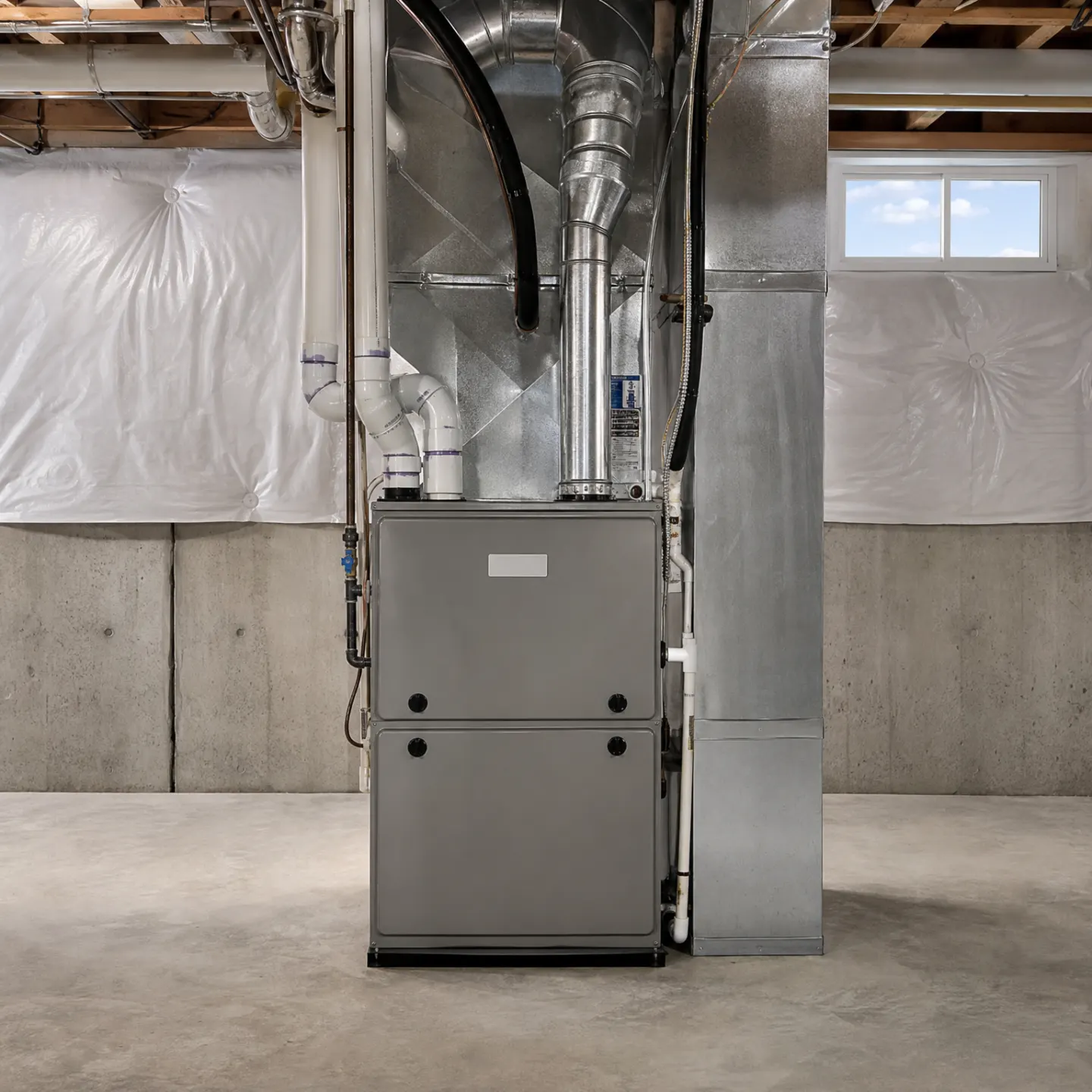
A gray residential gas furnace installed in an unfinished basement, connected to sheet-metal ductwork and PVC pipes.

Start with a load calculation, not the old unit's size

The load calculation is what gets skipped when people size by the old unit instead of the house. Ask the contractor to run one. It accounts for the walls, the windows, the square footage, not just a number stamped on the equipment you're replacing. With storms shutting roads and dropping temperatures fast enough to spike demand overnight, an undersized furnace falls behind right when you need it most, and an oversized one short-cycles and wears out its parts sooner. Get the size right first. Everything else about the unit matters less than that.

Ask what the AFUE rating means for venting

A furnace with a lower efficiency rating vents like an older unit, through a metal flue, and loses some heat up the chimney. A high-efficiency furnace pulls so much heat out of the exhaust that it vents through PVC pipe instead, and needs a drain for the condensate it produces. That changes what the installer has to run, not just what you pay for gas.

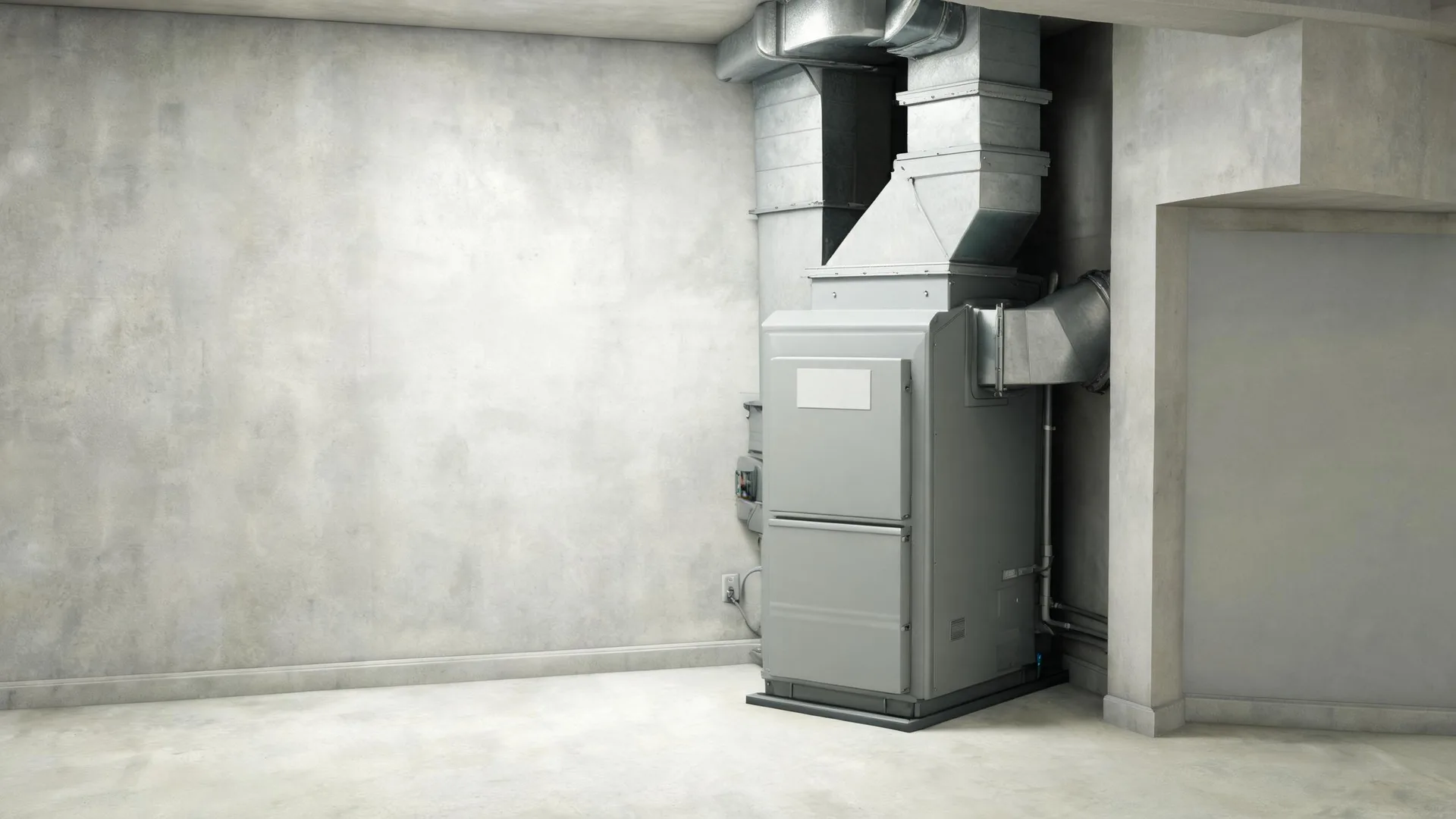
Ask how the blower motor is controlled

A fixed-speed blower runs at one speed whenever it's on. A variable-speed one ramps up and down to match what the furnace is doing, which keeps airflow steadier through the ducts and lets the thermostat hold a temperature more evenly. It also runs quieter at low speed than a fixed motor ever does.

An unfinished basement featuring a forced-air furnace, exposed wooden ceiling joists, bare concrete walls, and miscellaneous items including cardboard boxes and coiled cables on the floor.

A high-efficiency gas furnace would save about $70 a year to run in Broomfield County compared with a gas furnace.

  • A high-efficiency gas furnace$370 a year
  • A gas furnace$440 a year

Estimates for a typical Broomfield County home, from EIA household energy data, Colorado fuel prices and NOAA climate normals. Your home will differ.

Installation day starts with the old furnace coming out, along with the old vent pipe and sometimes the old ductwork connections if they don't match the new unit. The new furnace gets set in place and leveled. Then the gas line, vent and ductwork all get connected to it, not just dropped in. A high-efficiency furnace needs a condensate drain run from it, since it's going to produce water the old furnace never did. Once everything is connected, the system gets fired up and checked. Gas pressure, airflow across the coil, temperature rise through the furnace, and the venting, to make sure exhaust is actually leaving the house instead of backing up. That last check matters more than people think. A furnace that's venting wrong can put combustion gas into the house instead of outside it. Most of the time on site goes to getting those connections right, not setting the box in place.