


Stone and timber luxury homes with glowing windows line a mountain street at dusk, with evergreen trees and a rocky mountain range in the background.

Furnace Installation in Central, CO

Tell us about the job

Takes about a minute. No obligation.

Step 1 of 3: Equipment

Natural gas ran $10.09 per million Btu across Colorado homes in 2024. That is the fuel cost behind every therm a furnace burns here. A unit that wastes less of that gas turning it into heat for your rooms shows the difference on your bill every month it runs. In Central, that is most of the year. The efficiency rating on the furnace you install is not a sticker number, it is what you pay to stay warm.

15°F
the average winter night it heats against
54%
of homes here heat with gas, so most furnaces here burn gas
80% AFUE
the federal minimum any new unit must meet
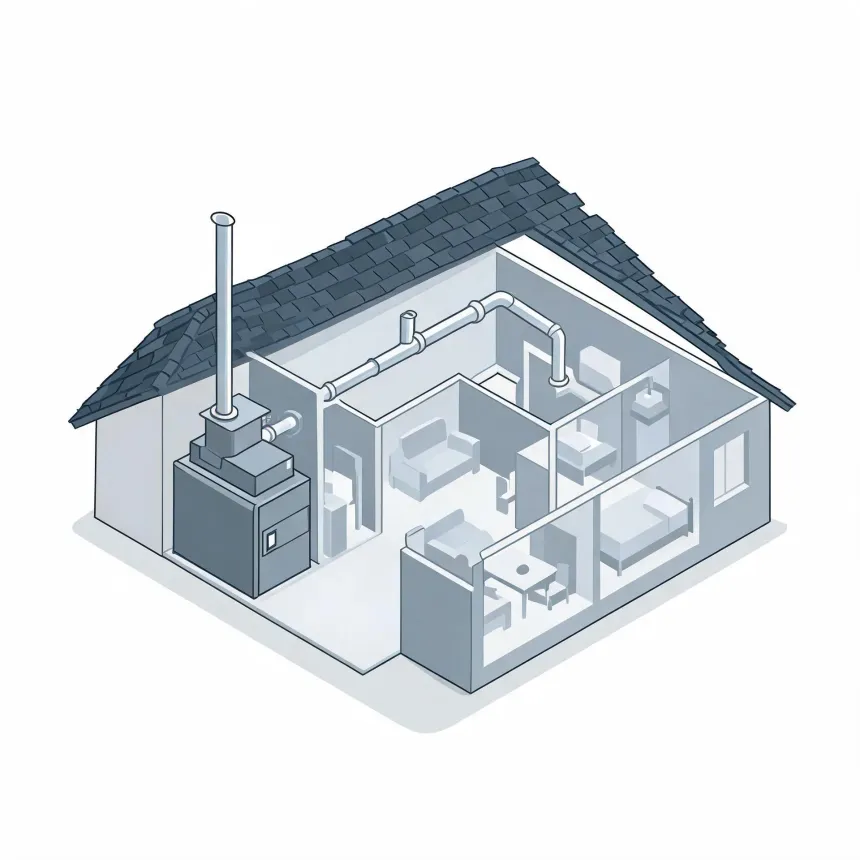
Isometric cutaway illustration of a single-story house showing interior rooms with furniture, ceiling ductwork, and a large furnace unit with a tall flue pipe in a corner room.
Your furnace works hardest from October through April.

NOAA nClimDiv, 1991–2020 normals

Gas heats 54.2% of homes in Gilpin County, more than any other fuel.

If your old furnace runs on gas, putting in another gas furnace is the straightforward call.

Winters here don't let up, and your furnace runs through all of them

Winter nights average 15°F
74 winter storms from 2015 to 2024
Climate zone 5B
What you pay to stay warmAsk about the AFUE rating before you pick a furnace, not after

Gilpin County falls in climate zone 5B, where heating carries most of the load. Any non-weatherized gas furnace installed today has to hit at least 80 percent AFUE, the federal minimum that's been in place since late 2015. That floor is set to rise to 95 percent in a few years. A furnace installed now will still be running when that change takes effect, so it's worth asking a contractor where the unit you're considering falls.

Efficiency pays here

Power costs more here, so an efficient system pays you back on every bill.

Find a contractor
A man in a gray shirt and tan work pants, seen from behind, climbs porch steps toward a dark blue front door while carrying a canvas tool bag, with a potted shrub to the right.
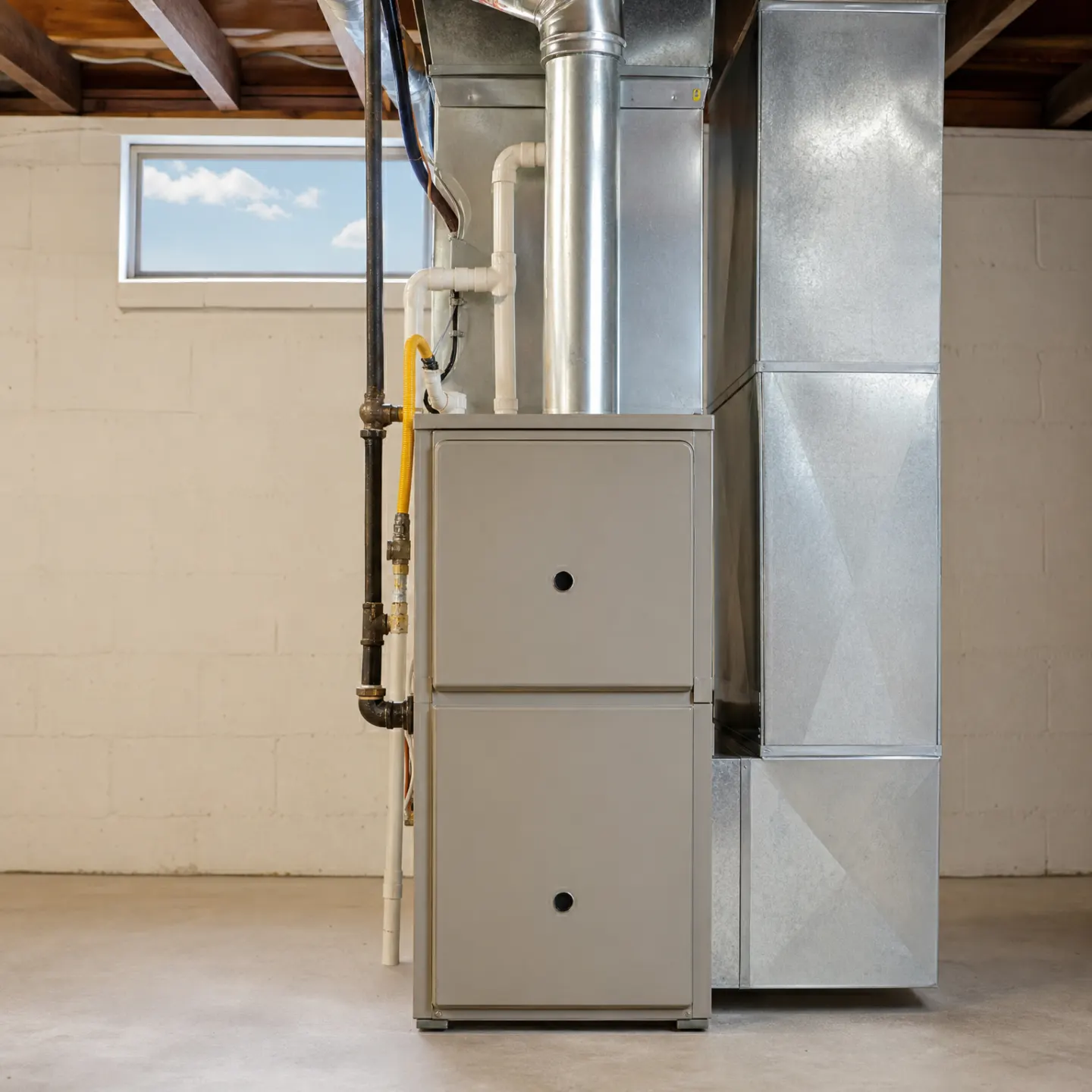
A gas furnace with attached ductwork, gas piping, and condensate lines installed in a concrete-block basement.

The right size matters more than the rating

A furnace that gets sized right will run long, steady cycles that keep the house even. One that's too big for the space fires up, blasts the room past the thermostat setting, and shuts off, then does it again a few minutes later. That short-cycling wears on the igniter and the blower motor faster than a long steady run does, and it still leaves cold spots because the air never gets a chance to mix through the house. Ask how the contractor sized the unit, not just what size they're quoting. A room-by-room heat loss calculation accounts for your windows, your insulation, and how the house holds heat, where guessing off the old furnace's size just repeats whatever mistake was already there. Ask too about the blower motor, whether it runs at one fixed speed or adjusts on its own, since a variable-speed motor holds temperature steadier and tends to last longer under the lower, steadier load. The furnace with the better rating on paper isn't the better furnace if it's the wrong size for the house it's heating.

The old furnace gets disconnected and hauled out

The gas line gets capped or rerouted, the flue or vent pipe comes down, and the old cabinet goes out the door. If it's a gas furnace, the connection has to be sealed properly so there's no leak left behind once the new unit is in place.

The venting usually changes with the furnace

A higher-efficiency furnace cools the exhaust more before it leaves the house, so it can't always use the same metal flue the old one did. Many installs call for new PVC venting run out a wall or through the roof, which means the old vent path may end up capped off for good.

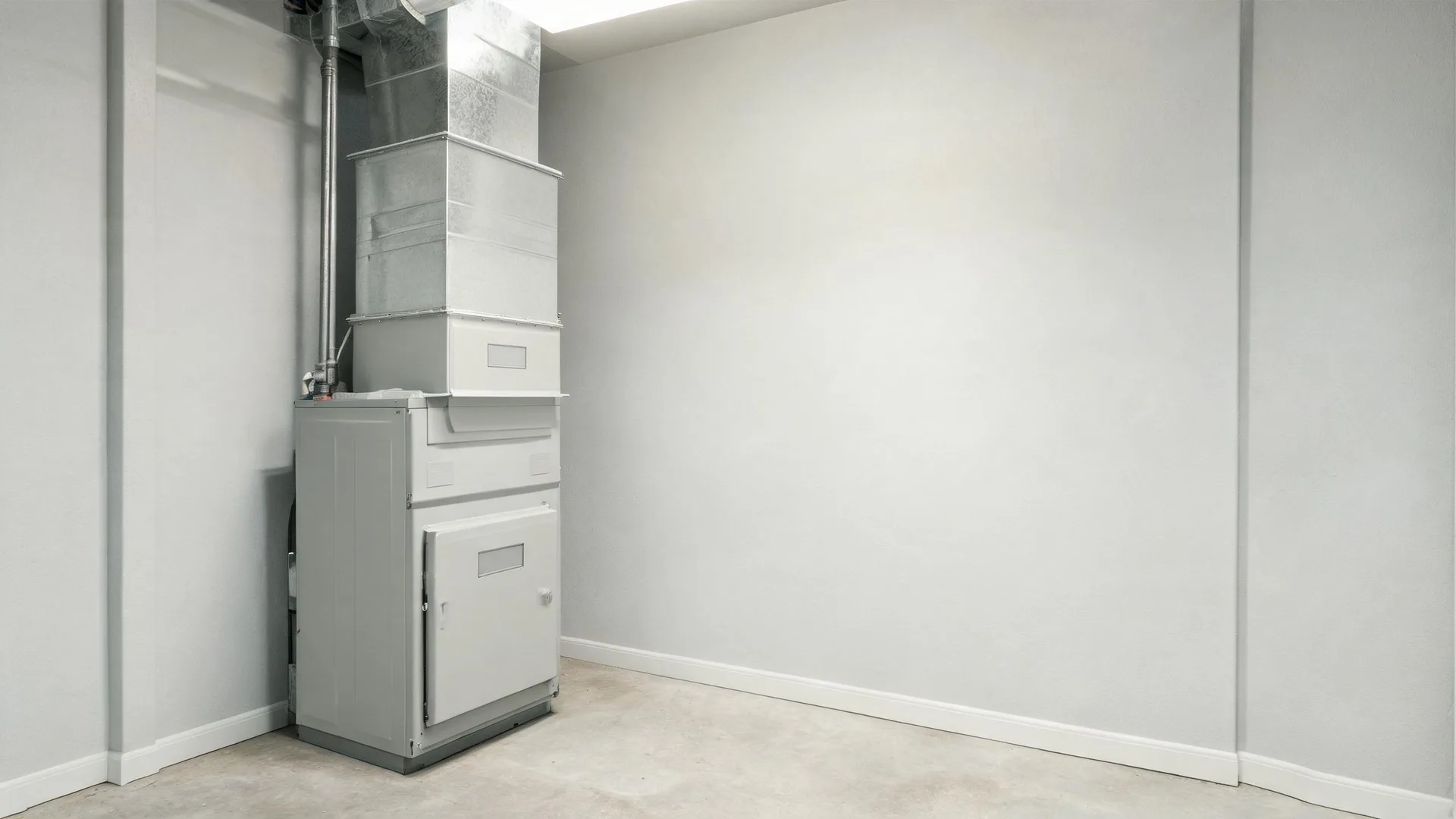
An unfinished basement featuring a grey forced-air furnace with metal ductwork, concrete block walls, exposed wooden joists, and a single hanging bare bulb.

A high-efficiency gas furnace would save about $120 a year to run in Gilpin County compared with a gas furnace.

  • A high-efficiency gas furnace$590 a year
  • A gas furnace$710 a year

Estimates for a typical Gilpin County home, from EIA household energy data, Colorado fuel prices and NOAA climate normals. Your home will differ.

Installation day starts with the old furnace coming out and ends with a test run, but most of the time in between goes to things you won't see once the cabinet's back on. The gas line gets pressure tested after it's reconnected, because a fitting that's slightly off can leak slow enough to miss otherwise. The new furnace gets wired into the thermostat and the blower door gets set so the panel switch engages, a safety feature that cuts power the moment someone pulls that panel for service. Ductwork often needs an adapter or a transition piece where it meets the new unit, since cabinet sizes aren't all the same even at the same output. Once it's buttoned up, a tech runs it through a full cycle, checking flame color, checking draft at the vent, checking that the temperature rise across the furnace falls where the manufacturer says it should. That last check matters more than it sounds like it would. It's how you know the furnace is burning clean and moving the right amount of air, not just that it turns on.