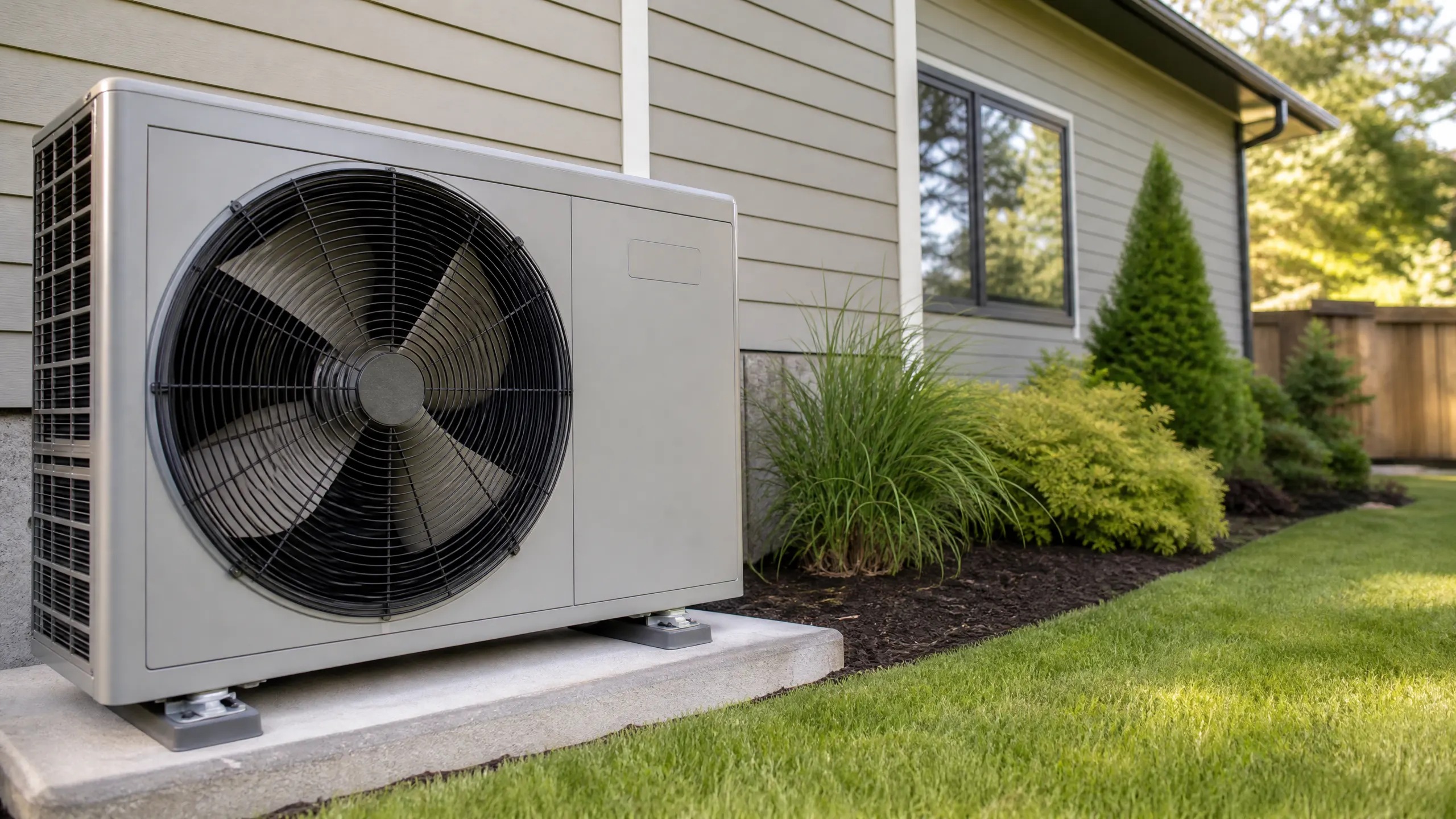



An outdoor heat pump unit mounted on a concrete pad beside a house with beige siding and a landscaped garden bed.

Heat Pump Repair in Fort Morgan, CO

Tell us about the job

Takes about a minute. No obligation.

Step 1 of 3: Equipment

A tech starts outside at the unit itself, checking the refrigerant charge, the reversing valve, and the defrost board before touching anything inside. They'll run the system in both heating and cooling mode, because a heat pump that cools fine but won't heat is telling you something specific about the reversing valve or the charge. Airflow gets checked too, since a heat pump starved for air will struggle to pull or push heat no matter what else is right. If the outdoor coil is caked with ice that isn't clearing on its own, that points to the defrost cycle, not the compressor. The tech will also check the indoor side, the air handler or furnace it's paired with, since heat pumps usually work alongside a backup heat source and a fault there can look like the heat pump's problem. By the end you should know which part is at fault and whether it's worth repairing or replacing.

8 months
October through May, your system heats
3 months
June through August, it cools
16°F
the average winter night it heats against
88°F
the average summer afternoon it cools against
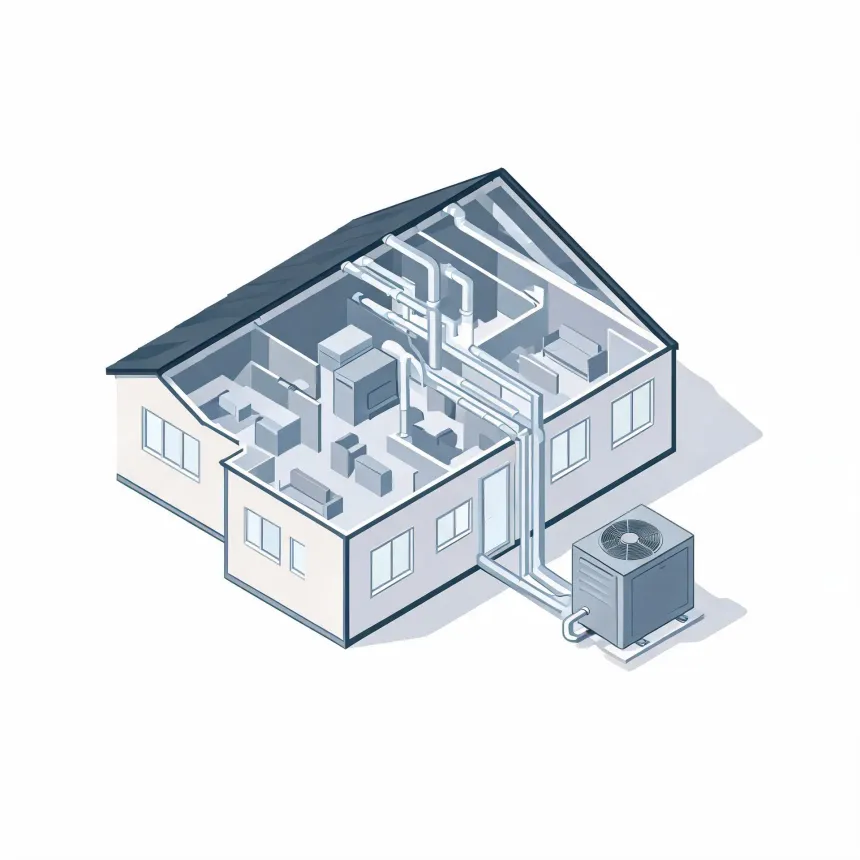
Isometric illustration of a cutaway single-story house showing interior ductwork and vents connected to an outdoor condenser unit beside the building, on a white background.
Your system heats October through May and cools June through August.

NOAA nClimDiv, 1991–2020 normals

Fort Morgan gets its share of hail and wind, same as the rest of eastern Colorado.

None of that is what's wrong with your heat pump. Look at the unit itself first.

A heat pump that's struggling costs more here every month it runs that way

Power costs 14.92 cents a kWh statewide
55 damaging wind events from 2015 to 2024
103 hail events from 2015 to 2024

Before calling anyone, go outside and look at the outdoor unit. If it's covered in ice and has been running steadily without the fan ever stopping to clear it, that's worth noting, a heat pump should shed frost on its own during normal operation. Check that nothing is blocking airflow around the cabinet, no leaves, no snow piled against the side, no shrubs grown in close. Inside, check your thermostat is actually set to heat and the temperature is set above room temperature, simple as that sounds. Listen for whether the indoor blower is running at all. If air is moving but it's cold, or barely warm, that's useful information to give the tech. If nothing is running anywhere, outside or in, check your breaker panel before assuming the worst.

The weather here isn't why your heat pump is struggling

Fort Morgan sees its share of hail, wind and winter storms, but none of that singles out your heat pump for extra wear. The unit outside is built to take weather. When it stops heating right, the cause is almost always a specific part, the charge, the reversing valve, the defrost board, or something on the indoor side working against it. Get that part found and the fix is usually straightforward.

Find a contractor
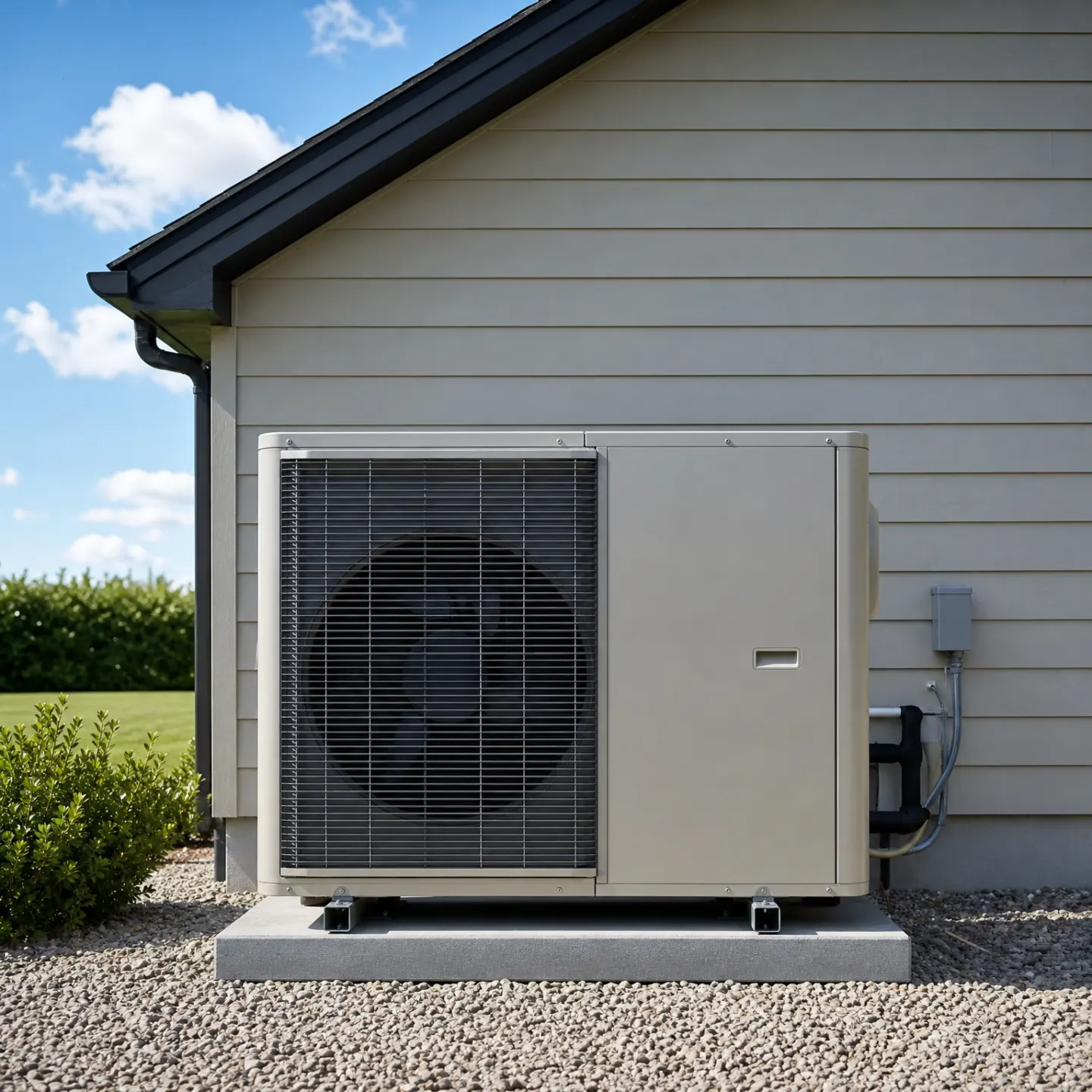
A residential heat pump outdoor unit mounted on a concrete pad next to a house with gray vinyl siding.

What actually wears out on a heat pump

A heat pump runs in both directions all year, so its parts wear differently than a furnace or an AC that only works part of the year. The reversing valve is the one part unique to a heat pump, and it takes a beating because it switches every time the system changes between heating and cooling. Over many cycles the valve can stick or fail to seat fully, and when that happens the system may blow cold air when it should heat, or get stuck in one mode. The defrost board and sensor are next, since the outdoor coil needs to go through defrost cycles whenever frost builds up, and a bad sensor or board will either skip defrost entirely, icing the coil solid, or run defrost too often, which wastes heat. Compressors fail too, usually from years of starting and stopping, from running low on charge, or from electrical faults that stress the windings. A slow refrigerant leak is common and often shows up as a system that runs constantly but never quite gets there. None of these parts fail because of one storm or one cold snap. They fail from years of normal cycling, the way any machine that runs most of the year eventually does.

What you'll hear before you see anything

A heat pump in trouble usually makes noise about it first. A hard clunk when the system switches between heating and cooling means the reversing valve. A hiss or bubbling sound near the lines can mean refrigerant escaping. Grinding or squealing from the outdoor unit points to the fan motor or a failing bearing. Short cycling, where the system kicks on and off every few minutes instead of running a full cycle, strains the compressor and shortens its life.
Why the timing matters

A reversing valve that sticks once in a while will eventually stick for good, leaving the system heating when you want cooling or not heating at all. A slow refrigerant leak gets worse on its own, and a compressor running low on charge wears out faster than one that isn't. Getting a tech out while the problem is still a sound or an occasional glitch, rather than a system that's stopped working altogether, is usually what keeps the job a repair instead of a replacement.

A heat pump that's struggling and still running is doing damage with every cycle, not just sitting there annoying you. A compressor low on charge works harder to move the same heat, and that extra strain is what burns it out early. A reversing valve that's sticking will stick worse the longer it's forced through cycles it can't complete cleanly. Ice left to build on the outdoor coil blocks the airflow the system needs to defrost itself, so the problem feeds itself instead of staying put. A system short cycling, kicking on and off every few minutes, puts more wear on the compressor with every one of those restarts than steady running ever would. None of this means shut the system off and wait. It means the part that's failing is failing faster for every hour it keeps running wrong.

A heat pump asking for repair isn't always asking for replacement. What matters most is which part failed. A capacitor, a sensor, a stuck contactor, these are cheap parts that fail on their own, often on a unit that's otherwise sound, and swapping one brings the whole system back good as ever. A compressor is different. It's the most expensive part in the unit and the hardest to replace on its own, so a failed compressor is usually the point where a tech will tell you straight that a new compressor doesn't make sense next to a new system. A reversing valve sits in between. It can be replaced, but it's enough work that it's worth asking what else on the unit is aging before you commit to the repair. The real question isn't only what broke. It's whether this same unit keeps coming back for a different failure every little while. One repair on a system that otherwise runs clean is just a repair. A pattern of them is the compressor telling you it's next.