A twilight street scene featuring illuminated timber-frame and stone houses with a mountain range visible in the background.

Heat Pump Repair in Greeley, CO

Tell us about the job

Takes about a minute. No obligation.

Step 1 of 3: Equipment

Cold nights push it hard

A heat pump has to pull warmth out of outside air, and around Greeley that air averages 16°F on a winter night. The colder it gets, the harder the unit runs to keep up, and the more wear lands on its compressor and defrost parts.

Weather adds its own toll

Weld County has had 388 hail events between 2015 and 2024, on top of regular damaging wind. An outdoor unit sits right in that path, and a dented coil or a storm-battered fan can turn into the breakdown you're dealing with now.

8 months
October through May, your system heats
3 months
June through August, it cools
16°F
the average winter night it heats against
86°F
the average summer afternoon it cools against
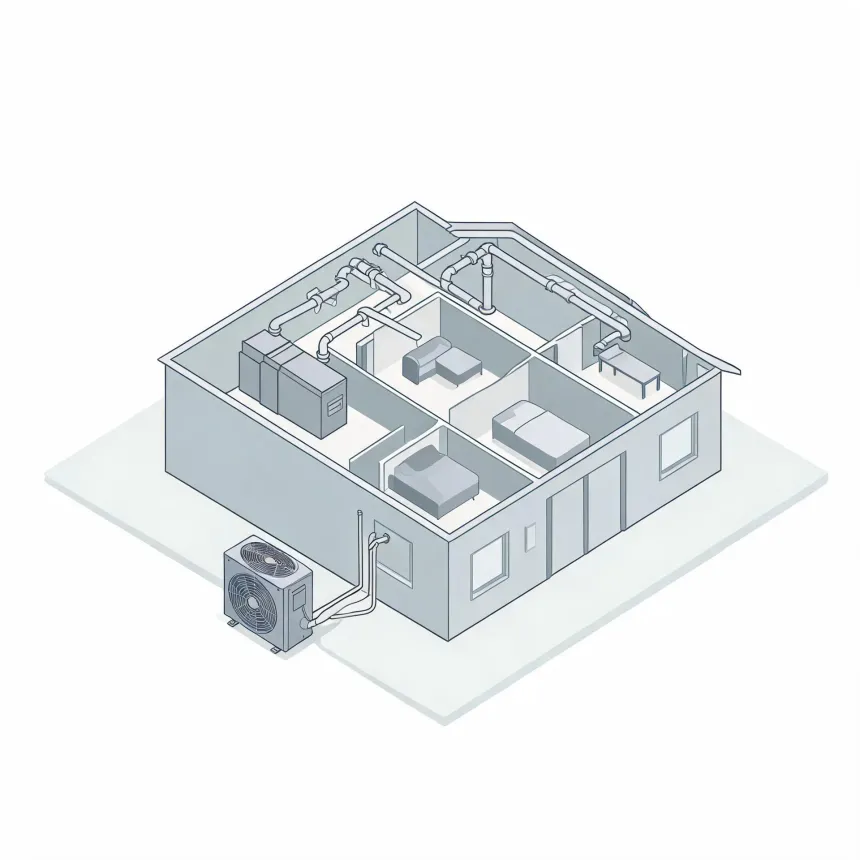
Isometric line illustration of a cutaway single-story house showing interior rooms with beds and furniture, ceiling ductwork connected to an indoor air handler, and an outdoor condenser unit linked by refrigerant lines.
Your system heats October through May and cools June through August.

NOAA nClimDiv, 1991–2020 normals

A heat pump that's low on refrigerant or iced up still tries to heat the house, so it just runs longer to do less.

The compressor is what pays for that extra runtime, and a bad capacitor or stuck reversing valve is what finally takes it down.

October is when a weak heat pump finally gives out

Cooling runs June through August
Heat runs October through May
172 damaging wind events from 2015 to 2024
A newer system, still a repairHalf the homes in Weld County were built in 2001 or later.

Colorado electricity ran 14.92 cents per kilowatthour in 2024, and a heat pump that's struggling pulls more of it every single hour it runs. A dirty coil, a low charge, a failing defrost control, any of these makes the unit work longer to put out the same heat. That's not a one-time cost. It's every cycle, every night, until someone fixes it. The sooner a contractor sorts out what's wrong, the sooner it stops costing you more than it should.

Have the real cause found before it fails for good

A heat pump working this hard, through 16°F nights and whatever hail and wind have already hit the outdoor unit, doesn't usually fail from one single thing. A contractor can check the compressor, the defrost control and the coil together and find what's actually behind it, so the fix holds instead of a part coming back to break again next month.

Find a contractor
A man in a dark shirt, tan work pants, boots and a cap walks up porch steps toward a navy front door, carrying a canvas tool bag.
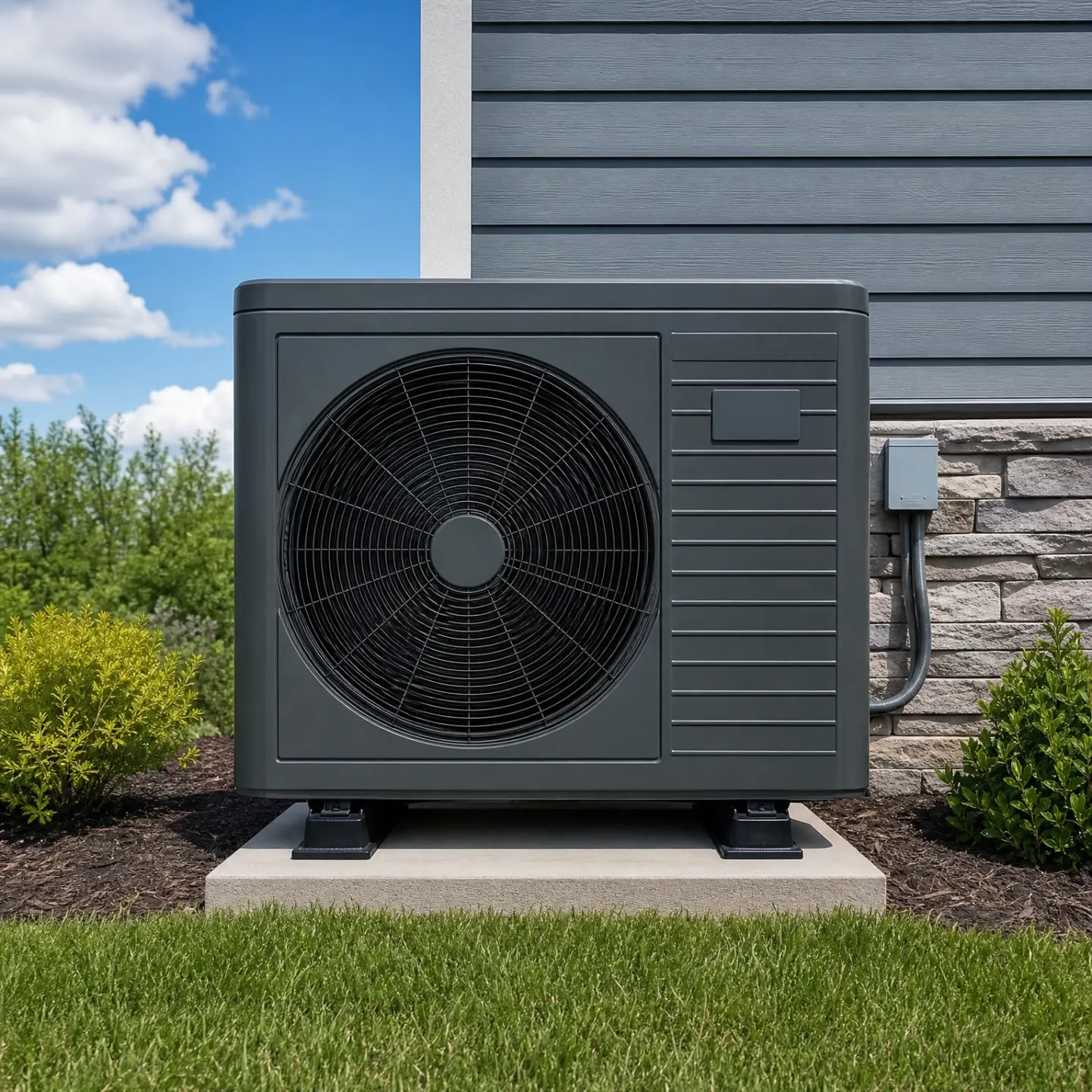
A dark gray heat pump unit mounted on a concrete pad next to a house with gray siding and a stone veneer wall.

Still within its working life

If your heat pump came in with the house, repair is worth doing first. A system from a newer build hasn't logged the years that usually bring a unit to the end of its life, so a compressor or defrost control problem is something to fix, not a reason to replace the whole unit. Worth checking when your system went in before you decide which way to go.

The reversing valve is the part unique to this machine

A heat pump switches between heating and cooling with a reversing valve, and that valve sees every cycle, every day, all year. When it sticks or a coil inside it burns out, the unit can blow cold air when it should heat, or it gets stuck in one mode. A furnace never has this part. It's usually the first place a tech looks on a heat pump that's acting up.

Defrost problems look like something else

Outside, frost builds on the coil and the system has to run a defrost cycle to clear it, using a sensor and a control board to time it right. When that sensor fails or the board won't trigger defrost, ice just keeps building on the coil until the unit can't pull heat from the air at all. It can look like a dead compressor when the compressor is fine.

Most calls start with the unit running constantly and still not keeping up, air coming out barely warm or not warm at all. Short cycling is another one, the system kicking on and off every few minutes instead of running a full cycle. Listen for it too. A clicking reversing valve, a compressor that hums but won't start, a fan motor grinding instead of spinning smooth, these all mean something inside has worn past where it should be. Ice on the outdoor coil that doesn't clear on its own points to a defrost problem rather than a lack of refrigerant. And if the breaker trips more than once, stop running the system and get someone out, because that's the unit telling you to stop before something fails harder.

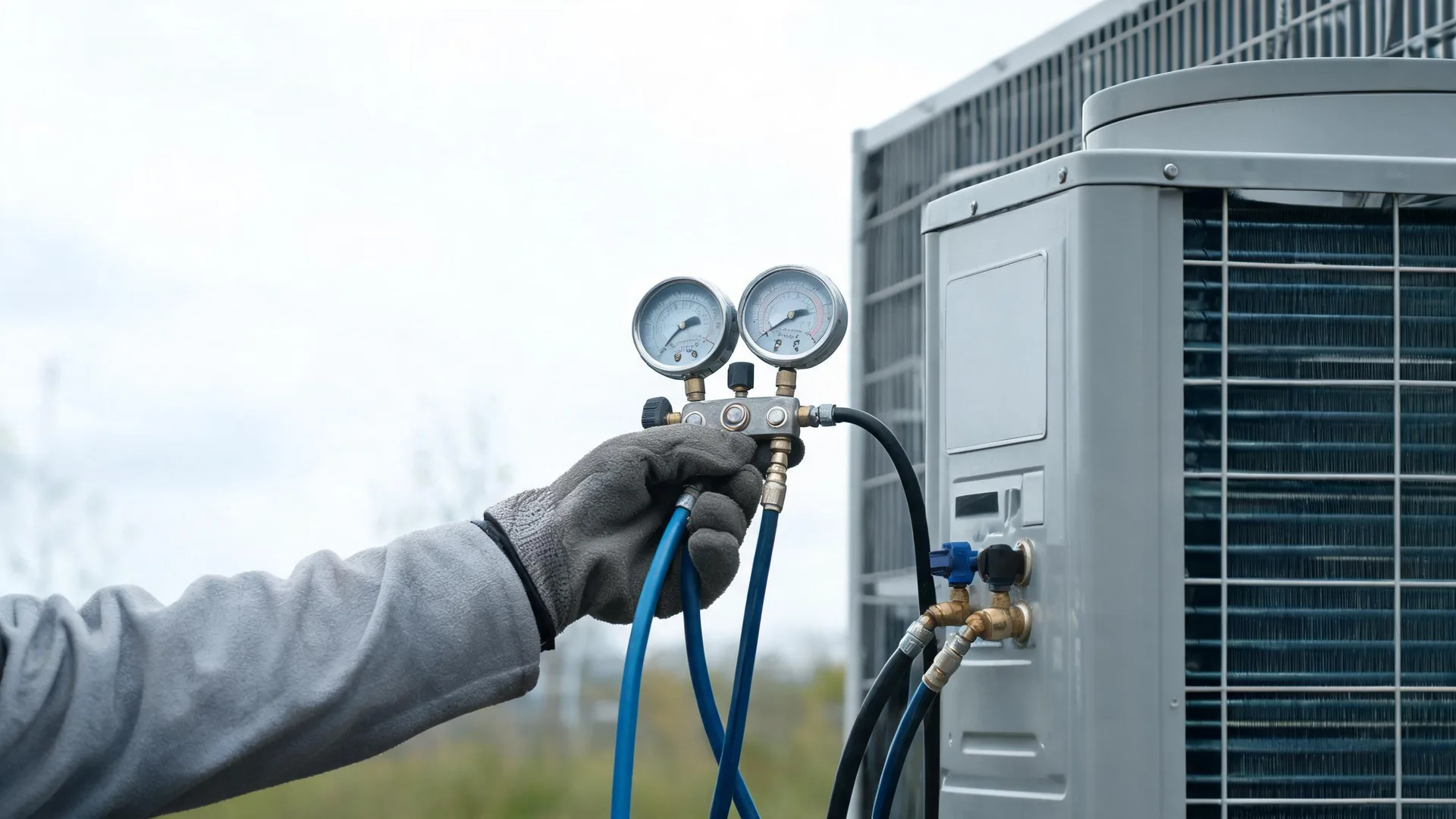
A diagnostic visit starts outside at the unit itself, checking the compressor, the reversing valve and the coil before anything gets taken apart. A tech will run the system in both modes to see where it actually fails rather than going on what it did yesterday. Gauges go on to check refrigerant pressure, because too little or too much both point to different problems. Electrical readings come next, the capacitor, the contactor, the wiring at the board, since a part can look fine and still be failing under load. Inside, the air handler and its sensors get checked too, since a defrost problem can start with a control board that never tells the unit to defrost. By the end a contractor should be able to say exactly what failed and why, not just which part to swap.