



A row of illuminated timber-frame and stone houses photographed at dusk, with evergreen trees and a mountain range in the background.

Furnace Installation in Thornton, CO

Tell us about the job

Takes about a minute. No obligation.

Step 1 of 3: Equipment

Gas heats most homes in Adams County, close to seven in ten. Electricity covers a little over a quarter, and a small number run on bottled or LP gas. If your house already has a gas line run to a furnace, putting in another gas furnace is usually the straightforward choice. The venting, the gas line and the spot in the mechanical closet are already set up for it. Switching fuel types means rethinking all of that, which is a bigger job than most people are looking for when a furnace needs replacing.

8 months
October through May, your furnace is on duty
16°F
the average winter night it heats against
69%
of homes here heat with gas, so most furnaces here burn gas
80% AFUE
the federal minimum any new unit must meet
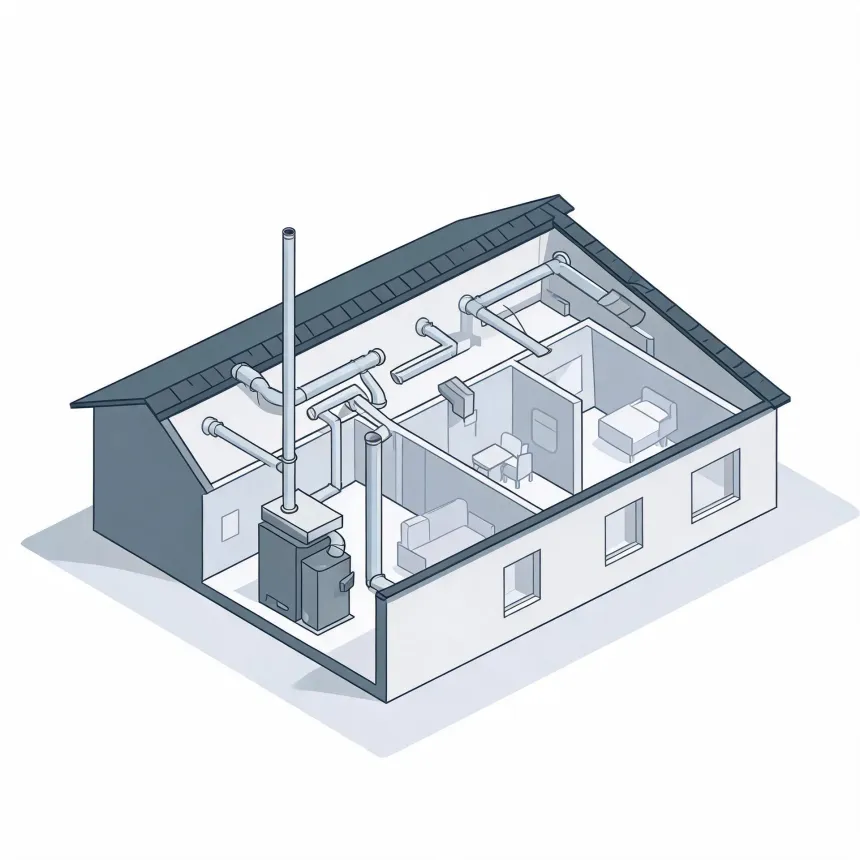
Isometric line illustration of a single-story house cutaway showing interior rooms with furniture, ductwork or piping running along the ceiling, and a boxy furnace unit with a tall vertical flue pipe.
Your furnace works hardest from November through March.

NOAA nClimDiv, 1991–2020 normals

Adams County logged 50 winter storms and 85 damaging wind events in the last ten years.

A furnace sized and installed to spec handles that without any special upgrade.

Get it done in September, before the first cold night in October

Heat runs October through May
Winter nights average 16°F
50 winter storms from 2015 to 2024

Thornton falls in climate zone 5B, where the furnace does more work over the year than the air conditioner does. Any furnace installed here has to meet the federal minimum for non-weatherized gas furnaces, which is 80 percent AFUE. That standard rises to 95 percent AFUE, but not until furnaces built in December 2028, so a furnace bought today only has to clear the 80 percent floor. Plenty on the market already run above it. If a federal tax credit applies to the system going in, that's worth asking about before you settle on a model.

Pick the furnace that's sized right, not the one with the highest efficiency number

Gas here runs $10.09 per million Btu, cheap enough that a high-efficiency furnace takes a long time to earn back the difference in price. That changes what's worth paying for. A furnace sized right for your house and installed correctly matters more here than squeezing out another few points of AFUE.

Find a contractor
A man in a dark shirt and tan work pants, seen from behind, climbs stone steps toward a navy front door while carrying a waxed canvas tool tote, with a potted lavender plant beside the entry.
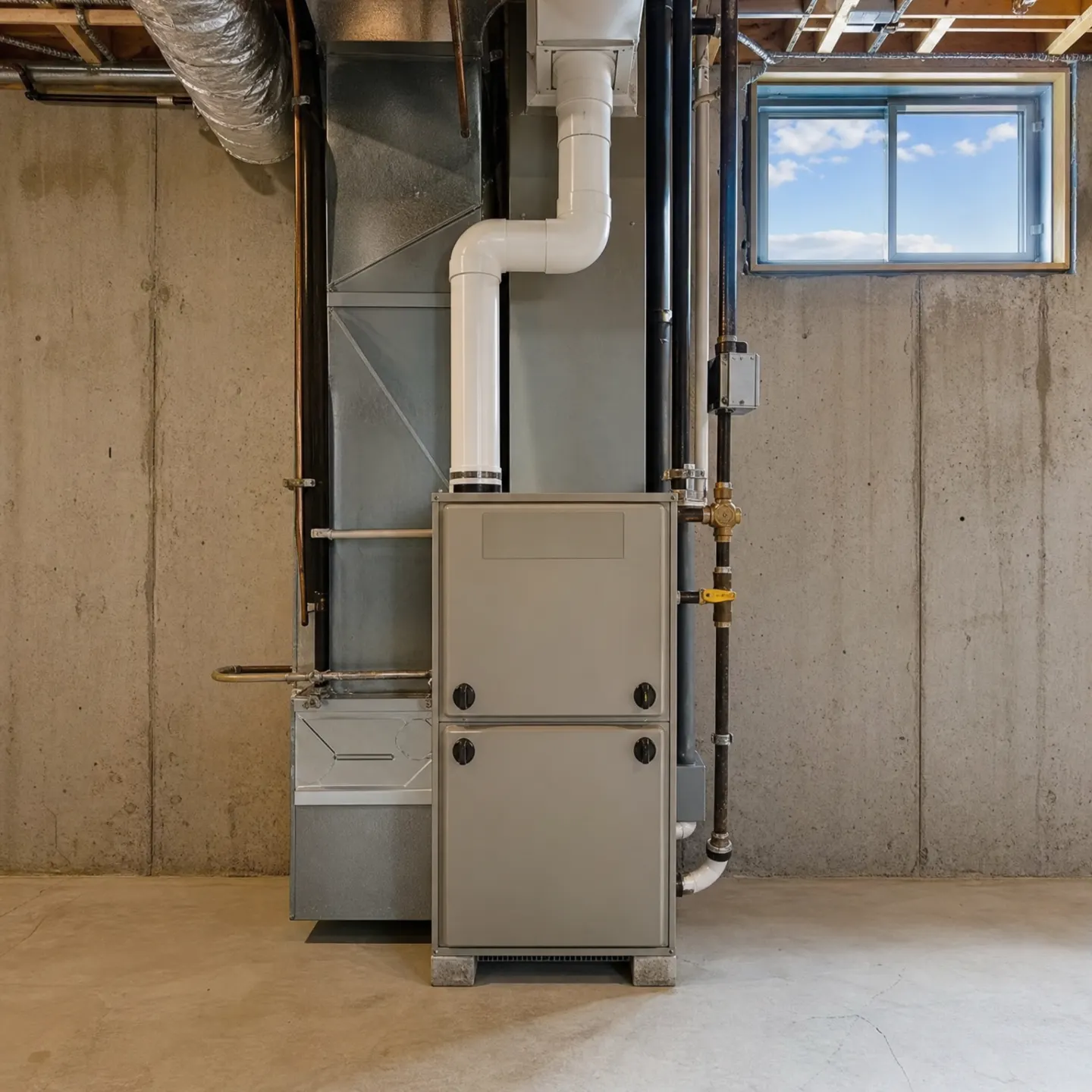
A gray gas furnace with attached ductwork and piping installed in an unfinished concrete basement.

Eight months a year, not just the cold snaps

Eight months of heat a year, October through May, with overnight lows averaging 16°F through December, January and February. That's the furnace carrying most of the year, not just the cold snaps. Winter storms in Adams County mean it does that work through heavy snow and ice too, not just quiet cold nights. A furnace built for this has to start reliably on the coldest mornings and keep running for the long stretch after. Get the sizing right for your house and the install done properly, and it holds up to that.

Ask for the load calculation, not a guess

A furnace should be sized by a room by room heat loss calculation, not matched to whatever size is already sitting in the mechanical closet. A unit that's too big cycles on and off fast and never runs long enough to heat evenly. One that's too small runs constantly and still can't keep up on the coldest mornings. Ask to see the numbers the sizing is based on, not just a model number.

Ask what the venting and gas line need to change

The venting and gas line sized for the old furnace don't always suit the new one. A vent pipe that's too wide or pitched wrong for a higher-efficiency furnace can let exhaust condense inside it instead of clearing the house. A gas line sized for a smaller furnace may not deliver enough fuel to the new one. Ask directly whether either needs to be resized or rerouted as part of the job, not found out after.

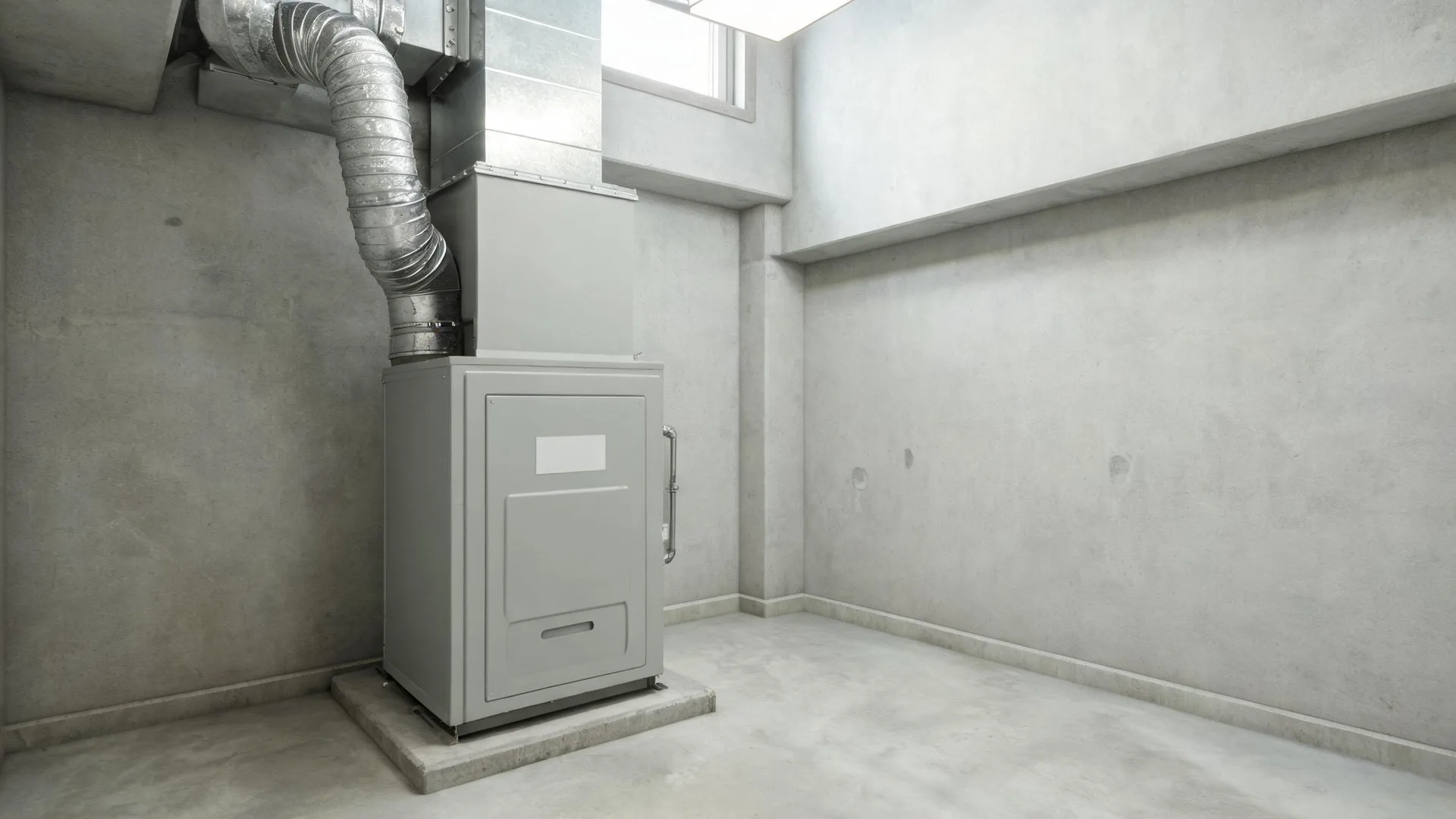
An unfinished basement containing a metal furnace with ductwork, exposed wooden joists on the ceiling, cardboard boxes, a coiled cable, and a single hanging incandescent bulb.

A high-efficiency gas furnace would save about $90 a year to run in Adams County compared with a gas furnace.

  • A high-efficiency gas furnace$390 a year
  • A gas furnace$480 a year

Estimates for a typical Adams County home, from EIA household energy data, Colorado fuel prices and NOAA climate normals. Your home will differ.

A furnace swap is usually a one day job. The old unit gets disconnected from the gas line, the vent and the ductwork, then carried out. The new one goes into the same spot. The gas line, vent pipe and ducts all get connected to it fresh, not just bolted on and left the way they were. Once it's running, a tech checks the gas pressure, the airflow across the heat exchanger and the temperature rise through the plenum. They'll also look at the burner flame itself. It should burn steady and mostly blue. A yellow or flickering flame means something is off with the fuel mix, and that gets sorted before the tech calls the job done.