Illuminated timber-and-stone mountain cabins along a curved road at twilight, with lit trees and mountain peaks in the background.

Heat Pump Repair in Pueblo, CO

Tell us about the job

Takes about a minute. No obligation.

Step 1 of 3: Equipment

Storms here take a toll on outdoor units

Pueblo County saw 552 severe weather events between 2015 and 2024, including 209 damaging wind events and 157 hail events. An outdoor heat pump unit sits outside through all of it, exposed to whatever hits the yard.

A unit that still runs can still be damaged

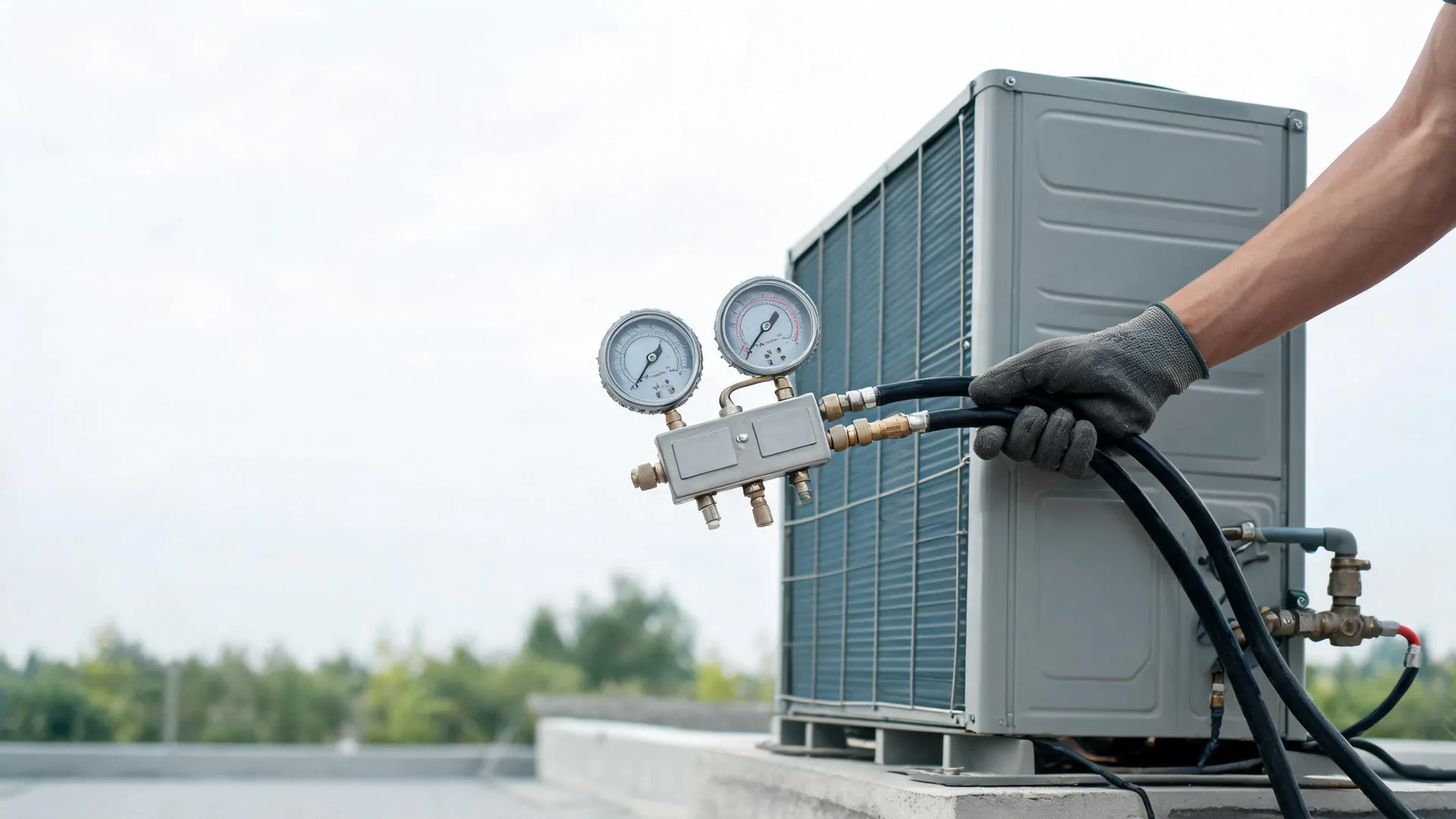
Hail can bend the fins on the outdoor coil and wind can drive debris into the cabinet without stopping the unit from turning on. If a storm came through recently, that's a reason to have the unit looked at even if you haven't noticed a problem yet.

8 months
October through May, your system heats
3 months
June through August, it cools
19°F
the average winter night it heats against
88°F
the average summer afternoon it cools against
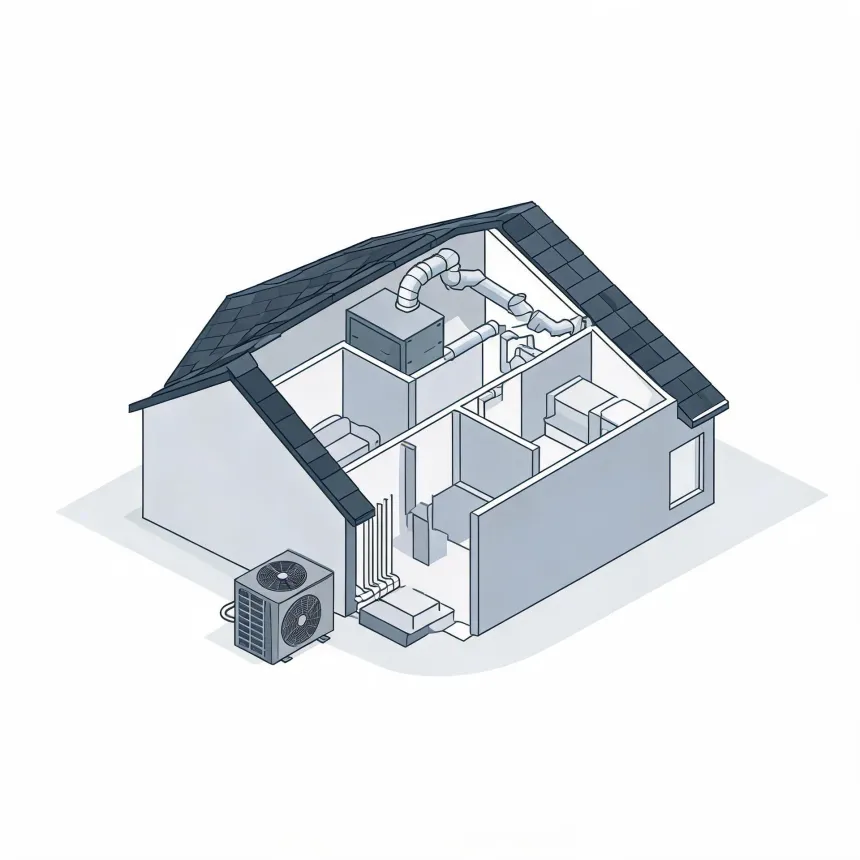
Isometric line illustration of a cutaway house showing interior rooms, an air handler with ductwork in the attic space, and an outdoor condenser unit beside the exterior wall.
Your system heats October through May and cools June through August.

NOAA nClimDiv, 1991–2020 normals

October is when heat pumps here switch over to heating after sitting idle since spring.

A weak part that made it through summer without much strain can give out once the system starts working to heat the house.

Wind, hail, winter storms: this unit sits through all of it

209 damaging wind events from 2015 to 2024
157 hail events from 2015 to 2024
184 winter storms from 2015 to 2024

Electricity here runs 18.29 cents per kilowatt-hour, higher than most of the country pays. A heat pump that's struggling, low on refrigerant, fighting a bad capacitor, icing up, has to run longer to do the same job. That extra runtime shows up on the bill before it shows up as a breakdown. At this rate, a problem that costs a little more to run each month adds up fast if it sits unrepaired through a Pueblo winter.

Had a storm come through? Get the unit checked, even if it still runs

If hail or wind came through recently, get the outdoor unit checked before you assume it's fine. A heat pump can keep running with bent fins or debris inside the cabinet, and that damage doesn't always announce itself right away.

Find a contractor
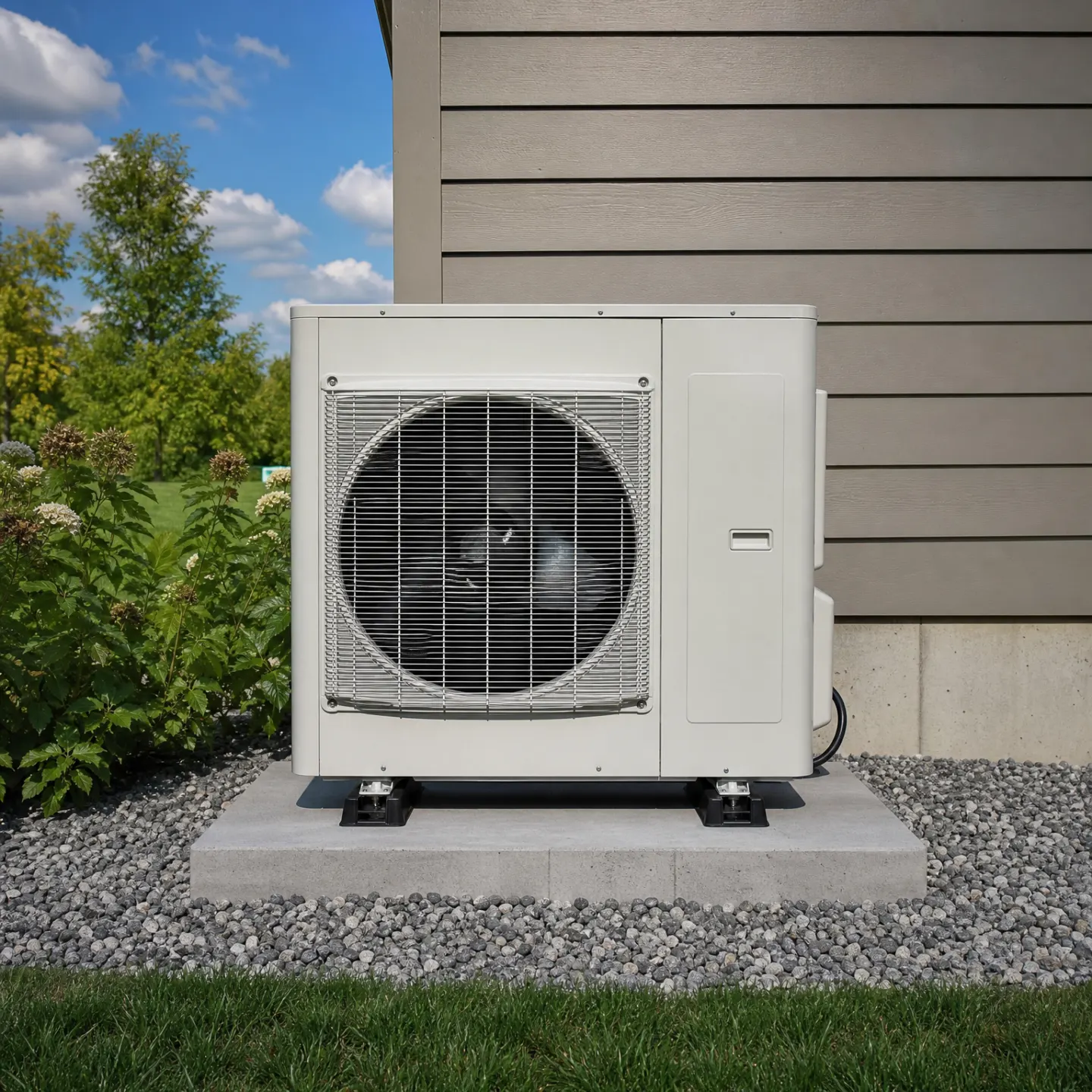
A white mini-split heat pump outdoor unit mounted on a concrete pad beside a gray-sided house, surrounded by gravel and green shrubs.

This unit has been through more than you've seen

If a storm came through this year, don't wait for the unit to tell you something's wrong. Have it checked and let whoever services it know what the unit has been through since it was last looked at. That gives them a reason to check the coil fins and the cabinet for damage instead of just the part that's acting up now. This county logged 209 damaging wind events and 157 hail events between 2015 and 2024, and a unit that sat outside through that has had plenty of chances to pick up damage nobody noticed yet.

A refrigerant leak gets worse while the system keeps going

A heat pump low on refrigerant still runs. The compressor keeps trying to move a full load with less refrigerant than it needs, and that makes it run hotter than it's built to. Left alone, that heat can break down the oil that lubricates the compressor and wear out the parts inside it. A leak that would have been a simple repair turns into a compressor replacement.

A frozen coil doesn't fix itself by running longer

Once ice starts building on the outdoor coil, the system can't pull heat through it the way it needs to. Running the unit harder to compensate doesn't melt that ice, it just makes the compressor work against a coil that can't do its job. Shutting the system down and letting it come to someone's attention early is what keeps a coil problem from turning into a compressor problem.

A few checks are worth doing before anyone comes out. Look at the thermostat first. Make sure it's set to heat, not fan only, and that the set temperature is actually above room temperature. Check the breaker for the outdoor unit and the one for the air handler, since a tripped breaker on either side will stop the system cold. Walk outside and look at the unit itself. If the outdoor coil is caked in ice or snow is packed into the cabinet, turn the system off at the thermostat and let it thaw rather than running it harder. Check the air filter while you're at it. A filter clogged with dust chokes off airflow and can cause the exact icing problem you're looking at outside. None of this fixes a bad capacitor or a refrigerant leak, but it rules out the simple stuff before someone drives out to look at the complicated stuff.

A heat pump that's struggling now will keep costing more every day it's left alone, and power here isn't cheap. Waiting a month to get it looked at is a month of paying that extra cost on top of whatever the repair runs. Winter is about to ask more of this system, not less, and a part that's already weak won't hold up better under more load. Getting it checked now is what stops the bill from climbing while the problem sits there.