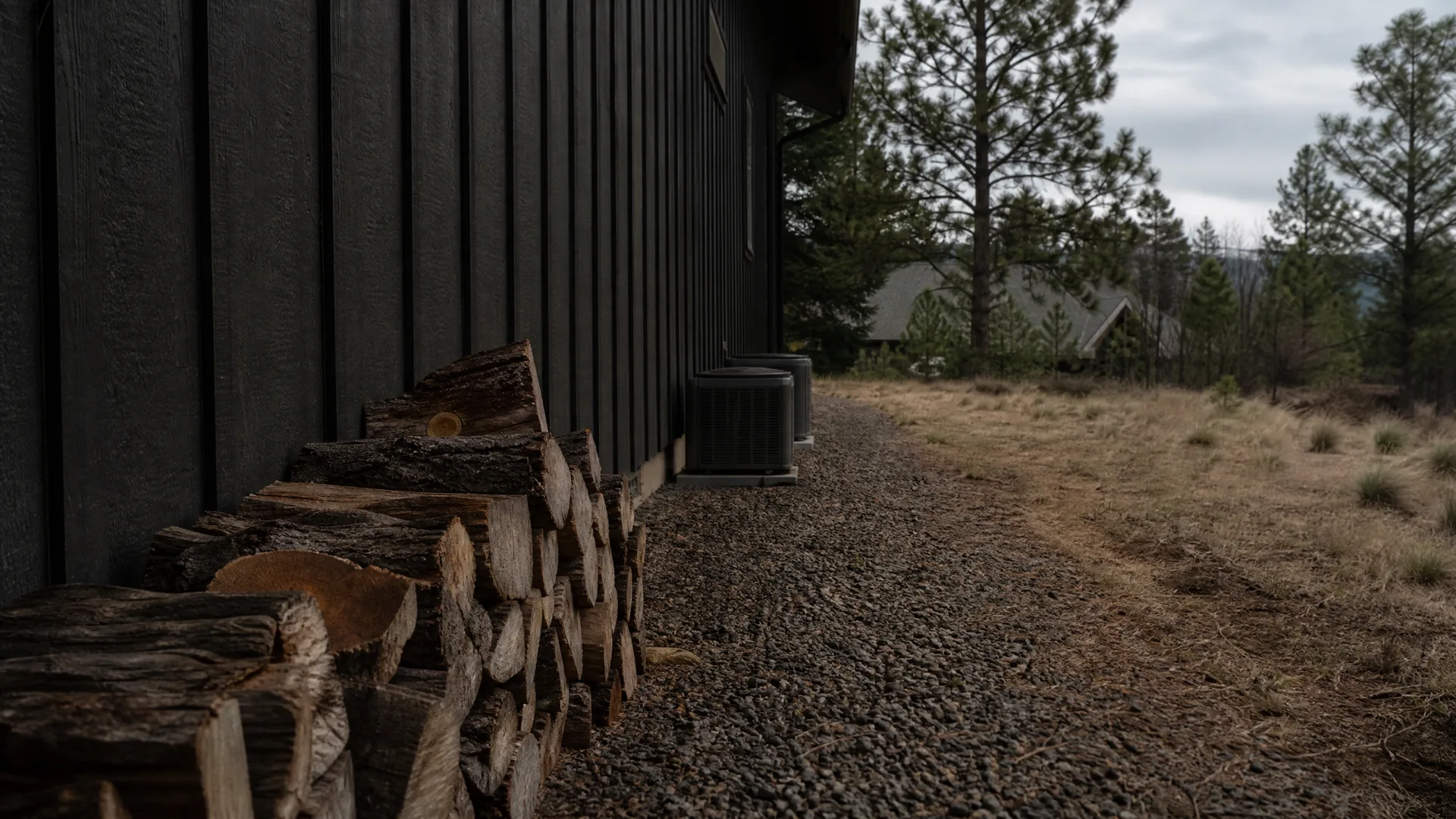
Stacked firewood along the dark vertical-board exterior wall of a house, with two outdoor condenser units, a gravel path, dry grass and pine trees under an overcast sky.

Furnace Maintenance in Cañon City, CO

Tell us about the job

Takes about a minute. No obligation.

Step 1 of 3: Equipment

A tech who pulls the burners out

A real tune-up means the burner assembly comes out so each burner can be checked for rust and cleaned of dust and spiderwebs. The flame sensor gets cleaned or swapped, not just glanced at. The igniter gets checked for cracks. Someone opens the inducer motor housing and checks the heat exchanger for cracks with a light and a mirror, because a cracked exchanger can leak exhaust into the air in your home. A quick visit skips the parts that take the furnace apart to inspect.
What a quick visit leaves on the table

A fast tune-up checks the filter, listens to the furnace run, and calls it done. That tells you the furnace turns on. It doesn't tell you the gas pressure is set right, whether the flame looks clean blue instead of yellow and flickering, or whether the blower wheel is caked with dust that makes the motor work harder than it should. Those are the things that fail first, and they get missed when nobody takes the time to check them.

Most furnaces in Cañon City burn gas.

A tune-up here has to check the burner and venting, not just swap a filter.

Nine months of heat starts in September. That is when this furnace needs to already be ready.

Heat runs September through May
Winter nights average 15°F
292 winter storms from 2015 to 2024

Fremont County sees real storms, not just wind and snow in passing. Weather records show 487 severe weather events here between 2015 and 2024, including 165 bouts of damaging wind and 28 hail events. A furnace does not have an outdoor condenser the way an air conditioner does, but the venting and any outdoor combustion air intake still sit exposed to that weather. Debris gets pulled into housings. Snow and ice pile up around vent terminations and block them. Winter storms hit this county 292 times over that same ten years, and a blocked vent keeps a furnace from venting exhaust the way it should. Power matters too. A gas furnace with electronic ignition will not fire without power even though the gas line is live, and statewide, 13% of households lost power for a day or more in 2024.

Nine Months of Runtime Wears a Furnace Down Faster

Heat runs nine months here, September through May. That is most of the year asking the same burners, igniter and blower to keep up. A furnace built for occasional use somewhere else would struggle to keep that pace, and the parts that wear do it faster when the season barely lets up. Catching that now, before the next stretch of cold, is what a tune-up is for.

Find a contractor
A man in a dark cap, navy T-shirt and tan work pants, seen from behind, carries a canvas tool bag up porch steps toward a dark blue front door, with a potted shrub in a blue planter to the right.
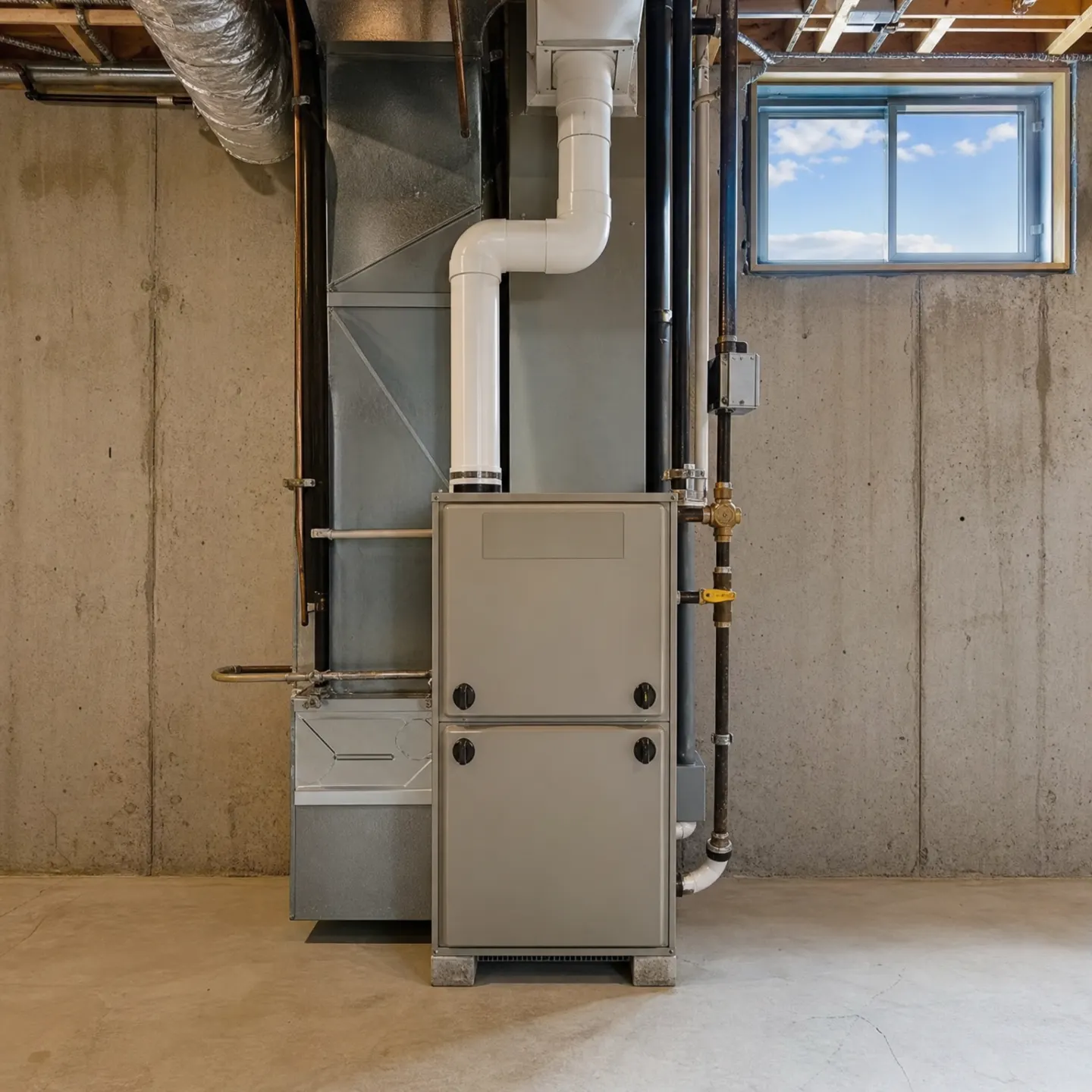
A gray gas furnace with attached ductwork and piping installed in an unfinished concrete basement.

The Wear You Can't See From the Thermostat

A furnace hides its wear inside the cabinet, not on the surface. The blower wheel spins behind a panel, and dust builds up on its blades a layer at a time until the motor has to push harder to move the same air. You won't see that from the thermostat. Neither will you see a flame sensor losing its coating, a little more each cycle, until one day the furnace lights and shuts right back off. The igniter does the same kind of slow fail. It glows, it cracks a little more each season, and it works right up until the morning it doesn't. None of that shows up as a symptom you'd notice walking past the furnace. It shows up as a cold house. A tune-up catches these mid-way, while the part still works but is close to the point where it won't.

Check the Filter Yourself

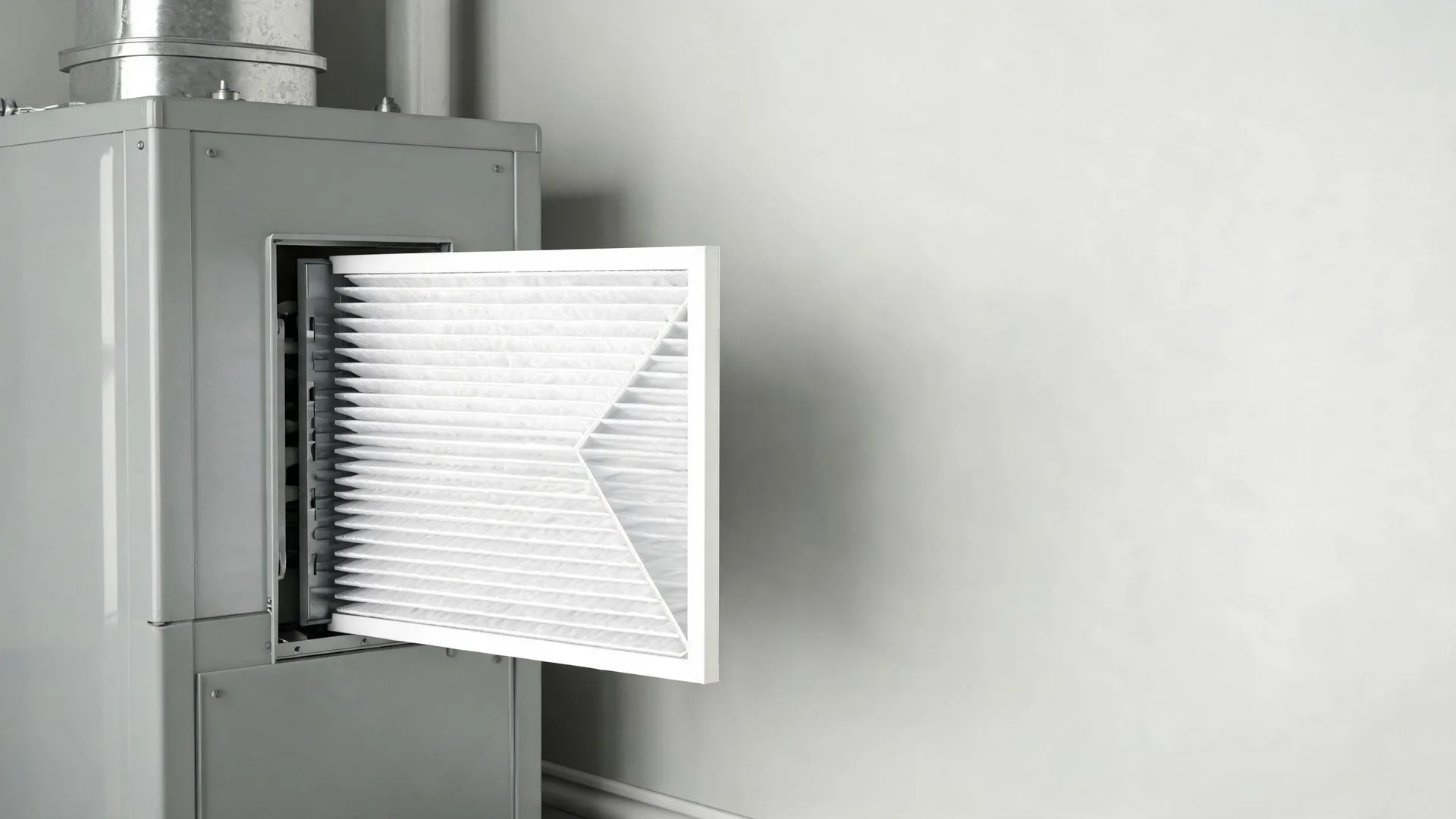
A dirty filter is the one thing worth checking between visits, and it's safe to do. Pull it and hold it up to a light. If you can't see light through it, swap it. A clogged filter starves the furnace of airflow, which makes the blower work harder and can cause the heat exchanger to overheat and shut the furnace down on its limit switch. Filters belong in the thermostat's or furnace door's size slot, with the airflow arrow pointed toward the blower.

What to Leave Alone

Don't open the burner compartment or touch the flame sensor and igniter yourself. They're fragile, and the igniter especially will crack if you so much as bump it wrong. If the furnace is short-cycling, won't light, or the flame looks yellow and uneven instead of steady blue, that's a sign for a tech to check the gas pressure and burners, not something to chase down with the panel off.

The outdoor combustion intake on a newer furnace is worth a look before winter storm season gets going. Check it for spider webs, wasp nests, or debris blown in during the fall, since a blocked intake keeps the furnace from pulling in the air it needs to burn gas cleanly. Same with any vent termination on the side of the house. Snow and ice build up around those during a storm, and a tune-up is a chance to make sure the clearance is still there before the next one hits. If the power goes out during a cold snap, a gas furnace with electronic ignition stays dark until it comes back, no matter how much gas is in the line. That is one more reason to have the igniter and flame sensor checked now, while the furnace is running and easy to test, rather than finding out they are failing during the storm itself.

A tune-up is also when a tech checks the gas valve and manifold pressure against the furnace's rating plate, not just the flame's color. Pressure that drifts low or high changes how clean the gas burns, and it won't always show up as a problem you can see. The blower gets pulled and checked too, not just run. Belts, if the furnace has one, get checked for cracking and the right tension, though most modern blowers are direct-drive and skip that part entirely. Electrical connections get tightened, since a loose wire at the control board causes the kind of intermittent fault that looks like a dozen other problems before anyone finds it. Safety switches, the ones that shut the furnace down if the blower fails or the exchanger overheats, get tested to make sure they still trip when they're supposed to. A furnace that starts and runs can still be wrong in ways none of that tells you.