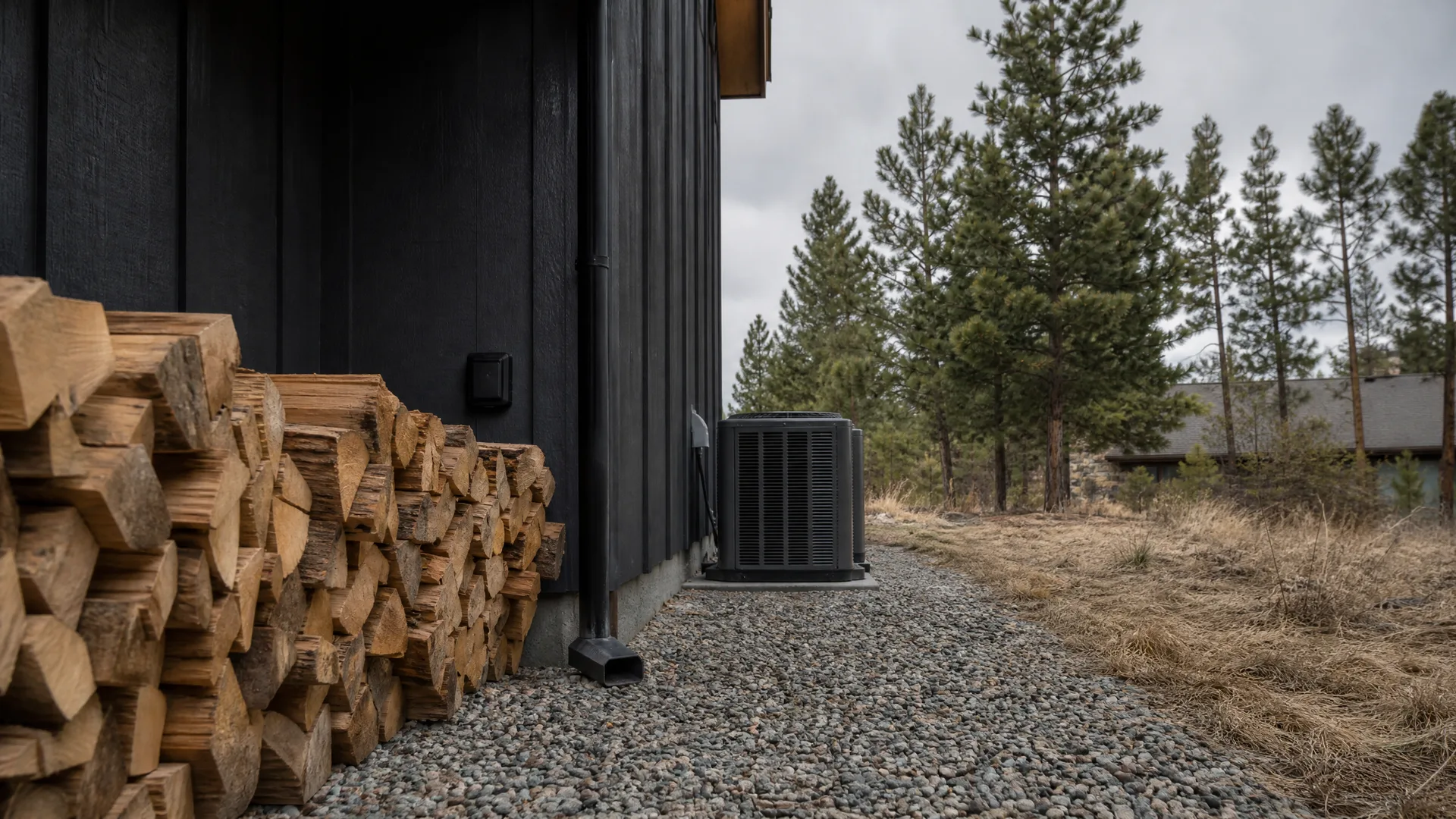





A stack of split firewood beside a dark vertical-board house wall, with an outdoor air conditioning condenser unit on a gravel path and pine trees under an overcast sky.

Heat Pump Installation in Cañon City, CO

Tell us about the job

Takes about a minute. No obligation.

Step 1 of 3: Equipment

Fremont County saw 487 severe weather events between 2015 and 2024. Most of that was winter storms, with 292 recorded, and damaging wind hit the county 165 times over the same stretch. Hail is part of the mix too, with 28 events, and one tornado touched down. An outdoor heat pump unit sits outside through all of it, taking wind-driven debris and hail that a furnace never has to face. Statewide, 13% of Colorado households went at least a day without power in 2024, and a heat pump that handles both heating and cooling is also a heat pump that goes quiet when the power does.

9 months
September through May, your system heats
15°F
the average winter night it heats against
80°F
the average summer afternoon it cools against
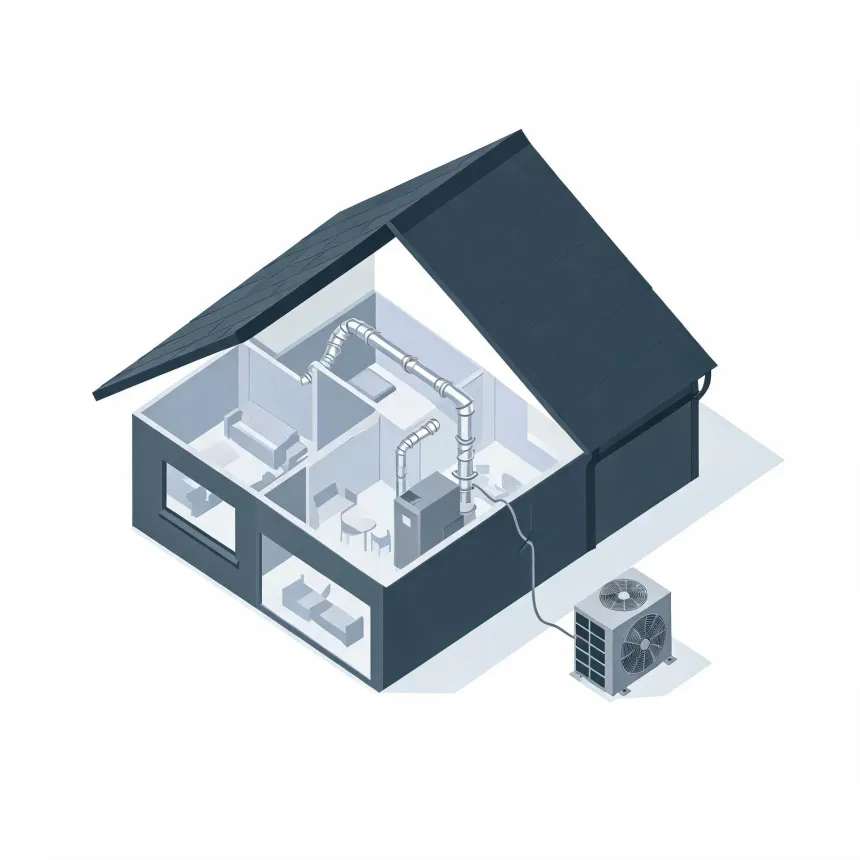
Isometric illustration of a cutaway house showing interior rooms with furniture, a furnace and ductwork, connected by a line to an outdoor condenser unit on the ground outside.

Almost two out of three homes in Fremont County heat with gas.

Swapping that furnace for a heat pump means the electric system taking over a job gas has always done here.

Nine months of heat start in September. Get the install done in August.

Heat runs September through May
165 damaging wind events from 2015 to 2024
28 hail events from 2015 to 2024
Power Here Costs MoreElectricity in Fremont County runs 18.28 cents per kilowatt-hour, more than most of the country pays.

Fremont County falls under zone 5B in the 2021 energy code, a cool, dry climate where the heating load matters more than the cooling load. Any split-system heat pump installed here has to meet a federal minimum on both ends: at least 14.3 Btu of heat moved per watt-hour of electricity in summer, and at least 7.5 Btu per watt-hour in winter. Those are floors, not targets, and they apply to any unit manufactured from January 1, 2023 onward. A heat pump rated below that line cannot legally go into a home here. The federal tax credit is available on top of that for a qualifying installation.

Plan for the outage before you need it

Where the outdoor unit goes and how it's protected from wind and hail is part of this install, not an afterthought. So is a plan for heat and hot water if the power drops, since this system runs on electricity instead of gas. Both are easier to settle now, while the install is being planned, than after a storm.

Find a contractor
A man in a gray t-shirt and tan work pants, seen from behind, carries a canvas tool bag up wooden porch steps toward a dark blue front door beside a potted shrub.
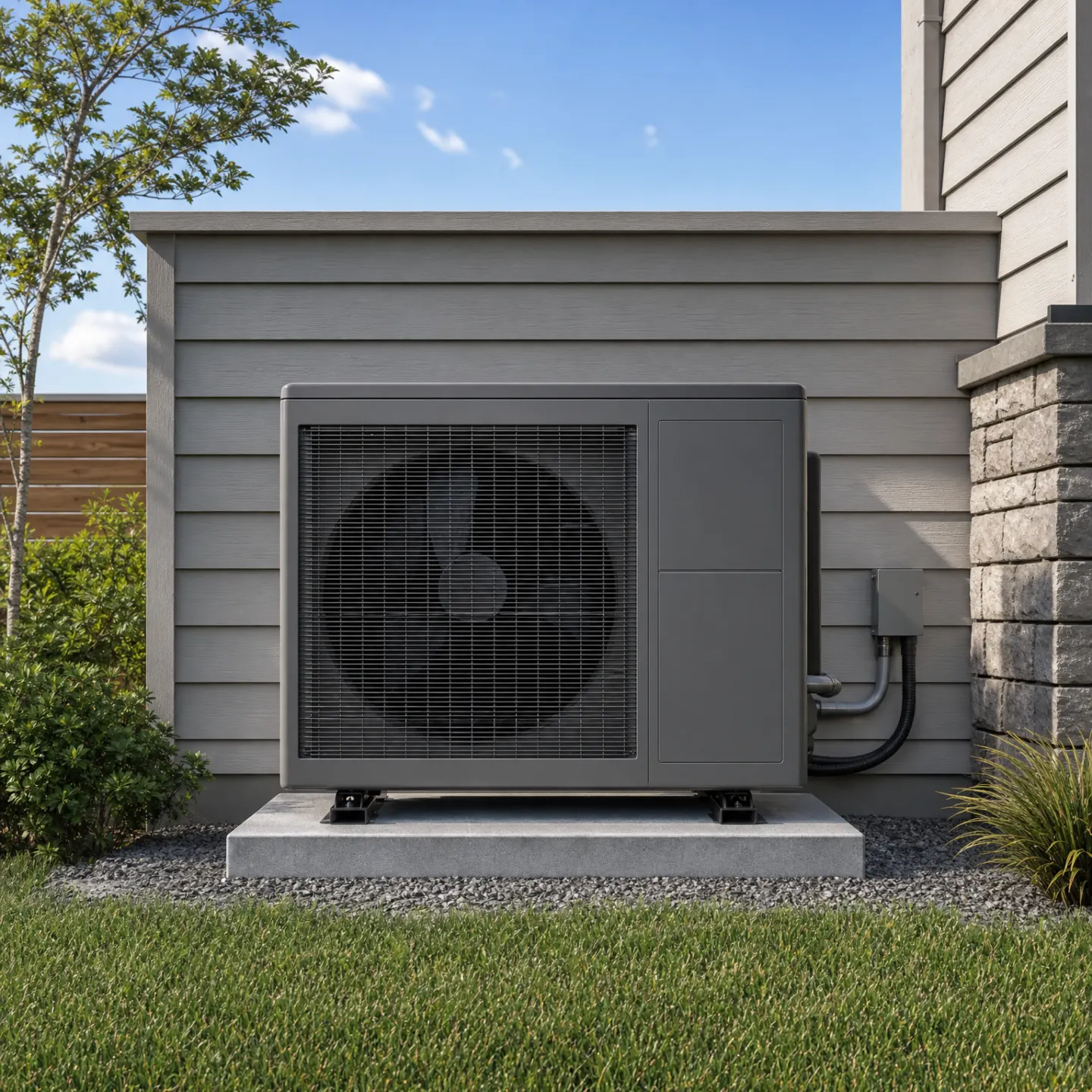
A gray heat pump outdoor unit mounted on a concrete pad next to a residential house with lap siding and stone accents.

This Unit Doesn't Get an Offseason

This isn't a system that gets a break between seasons. Summer air here runs dry, with the dew point averaging 43°F through June, July and August, so a heat pump earns its keep running the house through heat most of the year and then switches over to carry the heating load all winter. Two jobs, one unit, no offseason. That split system outside is also the thing standing in the yard when the weather listed above shows up. Years of that kind of duty cycle wear on the parts that work hardest: the compressor, the outdoor fan motor, the reversing valve that switches it between heating and cooling. None of that shows up on install day. It shows up later, as a system that needs service sooner than one running an easier climate.

Sizing drives the cost, not the brand

A heat pump has to be matched to the house through a load calculation, room by room, not picked by the size of the old furnace. Go too small and the compressor runs flat out and still can't keep up on the coldest days. Go too big and it short cycles, switching on and off fast enough that it never runs long enough to dehumidify the air right. Getting that number correct up front shapes which unit gets quoted and what the install involves.
The install is more than the outdoor unit

Setting the outdoor unit on its pad is the easy part. The job also means running new refrigerant line sets if none exist, upgrading the electrical circuit to handle the pull of a heat pump instead of a furnace blower, and checking whether the ductwork can move the air volume a heat pump needs to work efficiently. Any one of those can add work to the job that a quote based on the outdoor unit alone won't show.

When you get quotes side by side, ask what sound rating each unit carries, since outdoor compressors vary a lot in how much noise they put off at the property line. Ask what refrigerant it uses, because that affects what a contractor can service it with years from now and whether parts stay easy to get. Ask about the low-temperature performance curve specifically, not just the efficiency rating on the sticker, since that number tells you how much heating capacity the unit holds onto as the outdoor temperature drops, and two units with the same rating can perform very differently at the cold end. Ask what the warranty covers on the compressor versus the rest of the system, since compressor failures are the expensive ones. And ask whether the quote includes a line set, a disconnect, a pad, and any electrical work, or just the equipment, because that's where quotes that look close on paper end up far apart in what actually gets installed.

That duty cycle is also why sizing and equipment choice matter more here than in an easier climate. A unit picked by price alone might hit the federal efficiency floor and nothing more, which leaves less capacity in reserve for the days wind and snow hit at once and the compressor is already working hard. Ask any contractor bidding the job how the unit they're quoting holds up against wind-driven debris and hail, since the outdoor unit has no cover out there. A system sized and chosen for this county's weather costs more to get right at install. It costs less in service calls over the years than one bought to match the lowest number on a spec sheet.