



Illuminated stone-and-timber mountain homes line a quiet street at dusk, with evergreen trees and a mountain range in the background.

Heat Pump Installation in Gypsum, CO

Tell us about the job

Takes about a minute. No obligation.

Step 1 of 3: Equipment

Electricity in Eagle County runs 13.45 cents per kilowatt-hour on average, which is lower than most US counties pay. That helps, because a heat pump here is going to run a lot. It's doing the heating most houses around Gypsum still get from gas, and it's carrying the cooling load through the dry summer heat on top of that. A system that converts power into heating and cooling efficiently will show it on the bill. One that doesn't will cost you more every month it runs, even with cheaper power behind it.

11 months
August through June, your system heats
11°F
the average winter night it heats against
73°F
the average summer afternoon it cools against
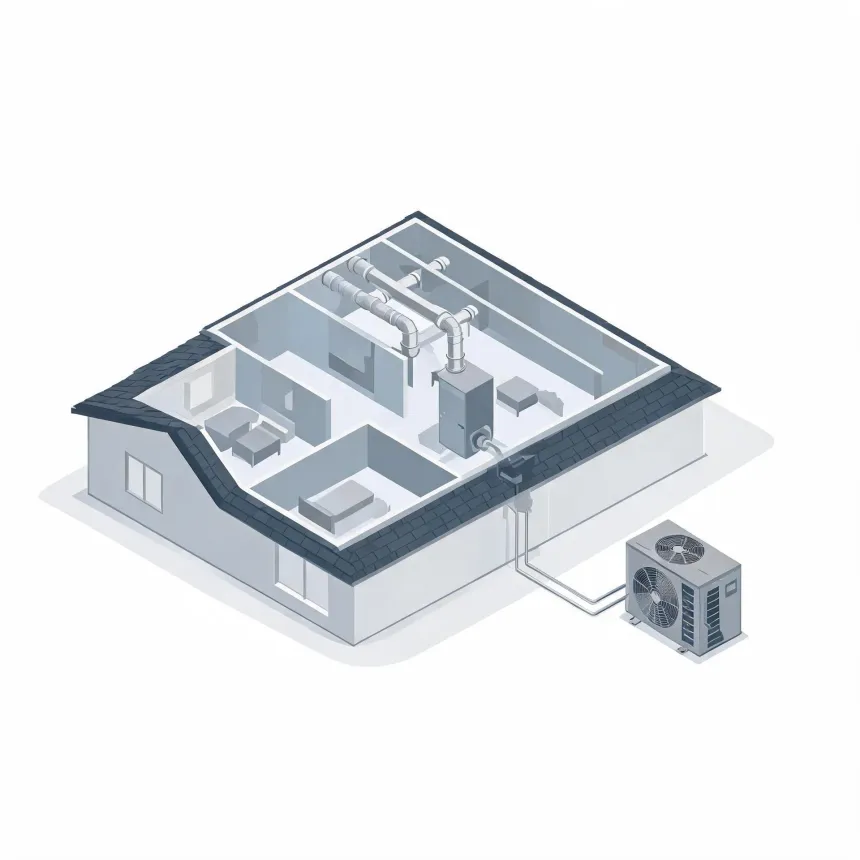
Isometric cutaway illustration of a single-story house showing interior rooms with ductwork, a furnace or air handler, and refrigerant lines running outside to a condenser unit on a pad.

Winter storms hit Eagle County 130 times between 2015 and 2024, and the wind alone caused damage 28 times.

A heat pump installed here has to hold up through that every year, not just run efficiently on a calm day.

Eleven months of heat a year leaves almost no slow season to work with

Heat runs August through June
28 damaging wind events from 2015 to 2024
130 winter storms from 2015 to 2024
Most homes around Gypsum heat with gasUtility gas heats 63.4% of homes in Eagle County, electricity another 30.1%

Gypsum falls in climate zone 6B, a cold zone with a long heating season. Any split-system heat pump installed here, if it was built from 2023 on, has to meet a federal minimum: at least 14.3 Btu of cooling for every watt-hour it uses, and at least 7.5 Btu of heating for every watt-hour in winter. That's the floor, not a target to aim for. A federal tax credit is available for equipment that clears a higher efficiency bar, which narrows the field further if you want to claim it. Between the climate zone and the standard, what you can install here is already a shorter list than what's sold nationally.

A more efficient heat pump earns its keep here

Get the efficiency rating right and it keeps paying you back, bill after bill, for as long as the system runs. Get it wrong and you're covering the difference every month, even with cheap power behind you.

Find a contractor
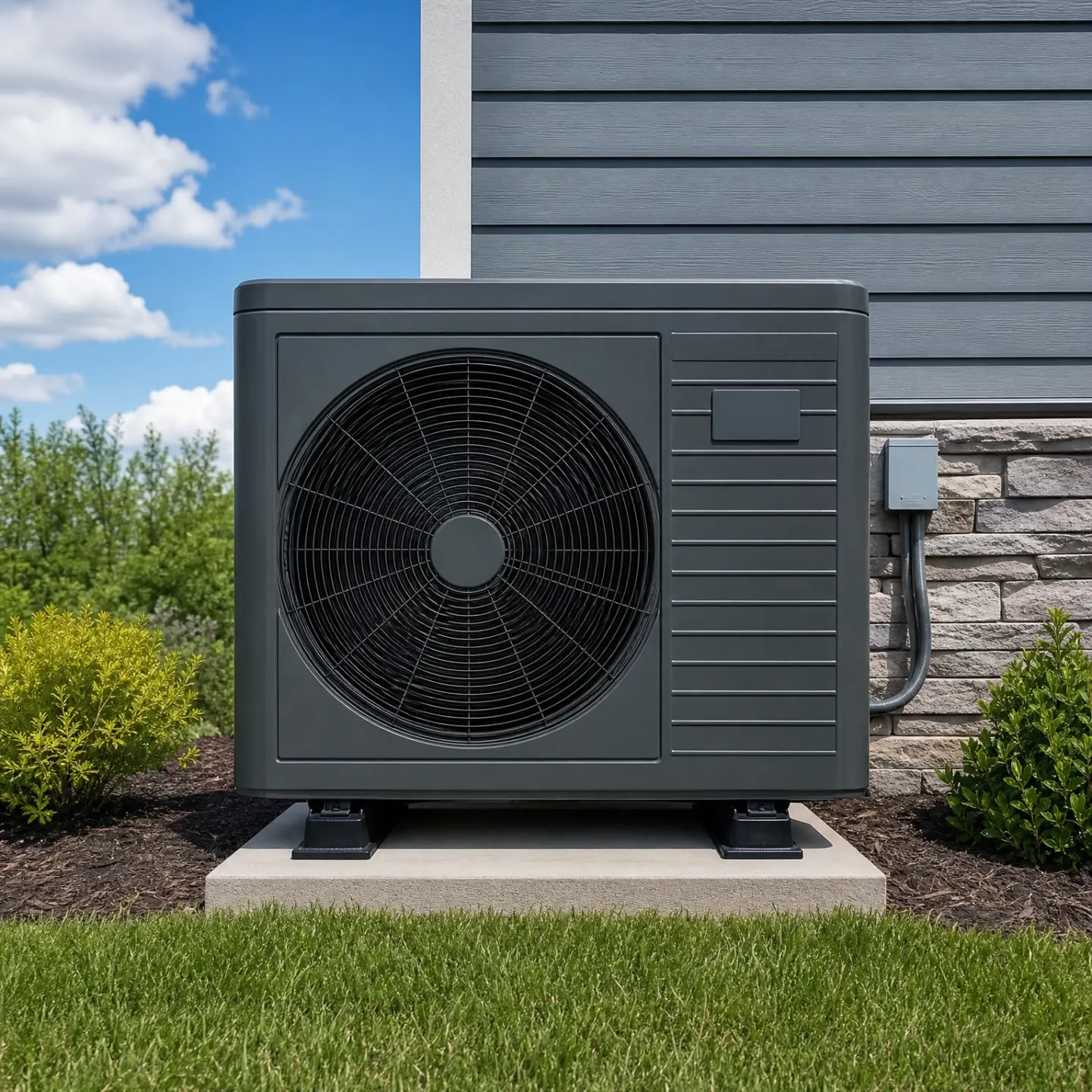
A dark gray heat pump unit mounted on a concrete pad next to a house with gray siding and a stone veneer wall.

Running this hard, sizing and setup decide what breaks first

This heat pump will run close to year round here, through storms as much as calm days. Size it to the house, not to the lowest bid. A unit that's undersized will run flat out trying to keep up on the coldest nights, and that extra strain lands on the compressor first. Ask what the contractor based the sizing on, and make sure the ductwork gets checked along with the equipment. A system sized and installed right carries that load for years without the shortcuts showing up as repairs.

Sizing comes from a load calculation, not the old system's label

A contractor works out the right size by measuring the house: the square footage, the windows, the insulation, how the walls and ceiling hold heat. What's running now doesn't factor in. A lot of systems were oversized or undersized from the start, so matching the old number just repeats whatever mistake is already there.
Oversized and undersized both wear the system out, in different ways

A heat pump that's too big satisfies the thermostat fast and shuts off before it's pulled the moisture out of the air or settled into a steady cycle. One that's too small never gets a break, running long stretches just to hold the temperature. Both end with the same result: parts working harder than they should and wearing down sooner than they need to.

Installed cost comes down to what has to change to make the house ready for the equipment, not just the equipment itself. A straight swap, same spot, same line set, same electrical, costs less than a first-time install where a disconnect has to go in, wiring has to be run to the outdoor unit, or ductwork needs rework to handle the air flow a heat pump moves. Ducts built for a gas furnace were sized for hotter air moving at a certain rate, and a heat pump often needs more volume moving at a gentler temperature to heat the house evenly. If the ducts are undersized or leaky, fixing that adds to the job but keeps the system from working harder than it should for the life of it. The outdoor unit's placement matters too, since it needs clearance for airflow and a spot it won't get buried by anything falling or drifting around it. None of that shows up on the equipment's price tag, but all of it shows up in what the install takes to do right.

Installation day starts with the outdoor unit and the indoor coil, and most of the time goes to the connections between them, not the boxes themselves. The line set gets run, brazed, and pressure tested before anything is charged with refrigerant, because a joint that leaks slowly can take months to show up as poor performance otherwise. The electrical disconnect gets mounted and wired to the outdoor unit, and if the panel needs a new circuit for it, that gets pulled too. Indoors, the coil ties into the ductwork or the air handler, and the condensate line gets sloped and tested so it drains instead of backing up. Once everything's connected, the system gets charged to the exact weight the manufacturer specifies, not just run until it feels cold, because an overcharged or undercharged system wears on the compressor from day one. The last part of the day is commissioning: checking airflow, checking the charge against the manufacturer's numbers, and running the system through a full cycle before anyone calls it done.