


A multi-story timber-frame and stone house glows with warm interior and exterior lighting on a dark residential street, with mountain peaks and pine trees visible in the background.

Heat Pump Installation in Aspen, CO

Tell us about the job

Takes about a minute. No obligation.

Step 1 of 3: Equipment

Electricity in Pitkin County ran 14.29 cents per kilowatt-hour in 2025. That is what a heat pump here runs on, every hour it works to heat or cool the house. A unit that pulls more than it needs to turns that rate into a bigger bill every single month, not just once. The efficiency rating on the system you install decides how much of that rate you actually pay for. Two heat pumps can heat the same house and cost very different amounts to run, and the difference shows up here first.

10°F
the average winter night it heats against
70°F
the average summer afternoon it cools against
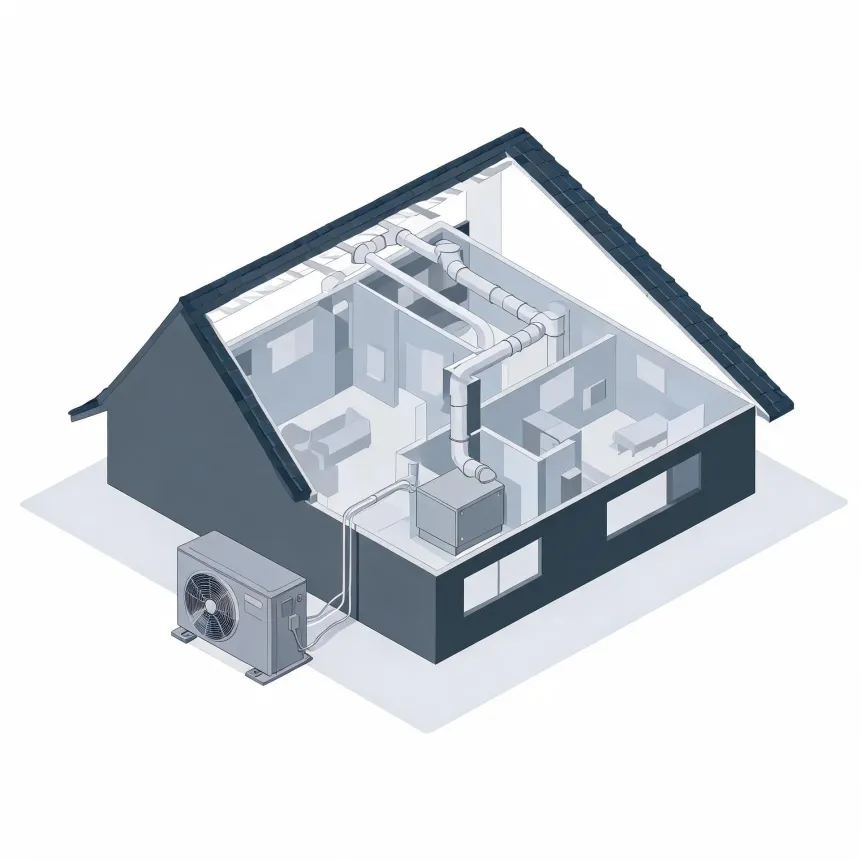
Isometric cutaway illustration of a single-story house with a dark gabled roof, showing interior rooms with ductwork leading to an indoor air handler and an outdoor condenser unit connected by lines on the ground outside.

Half the homes in Pitkin County heat with gas.

A heat pump here is usually going in alongside gas, or replacing it, not following another heat pump.

This machine earns its keep through winters like this

65 winter storms from 2015 to 2024
Winter nights average 10°F
Power here costs 14.29 cents per kilowatt-hour

Pitkin County sits in climate zone 7 under the 2021 energy code, one of the coldest zones on the map, where a heating system has real work to do most of the year. That puts a floor under what can legally go into this house. Any split-system heat pump built from 2023 onward has to deliver at least 7.5 Btu of heat for every watt-hour it uses over the winter, and at least 14.3 Btu of cooling for every watt-hour over the summer. Those are federal minimums, not a local add-on, so every unit on the market already clears them. The question for this house is not whether a system meets the floor, but how far above it the one you choose actually runs.

Choose the efficiency rating first, before anything else

The rate on your bill is fixed. The only thing left to choose is how much of it this system wastes. Pick the efficiency rating before you pick anything else about the install, since that number is what you'll live with every month after.

Find a contractor
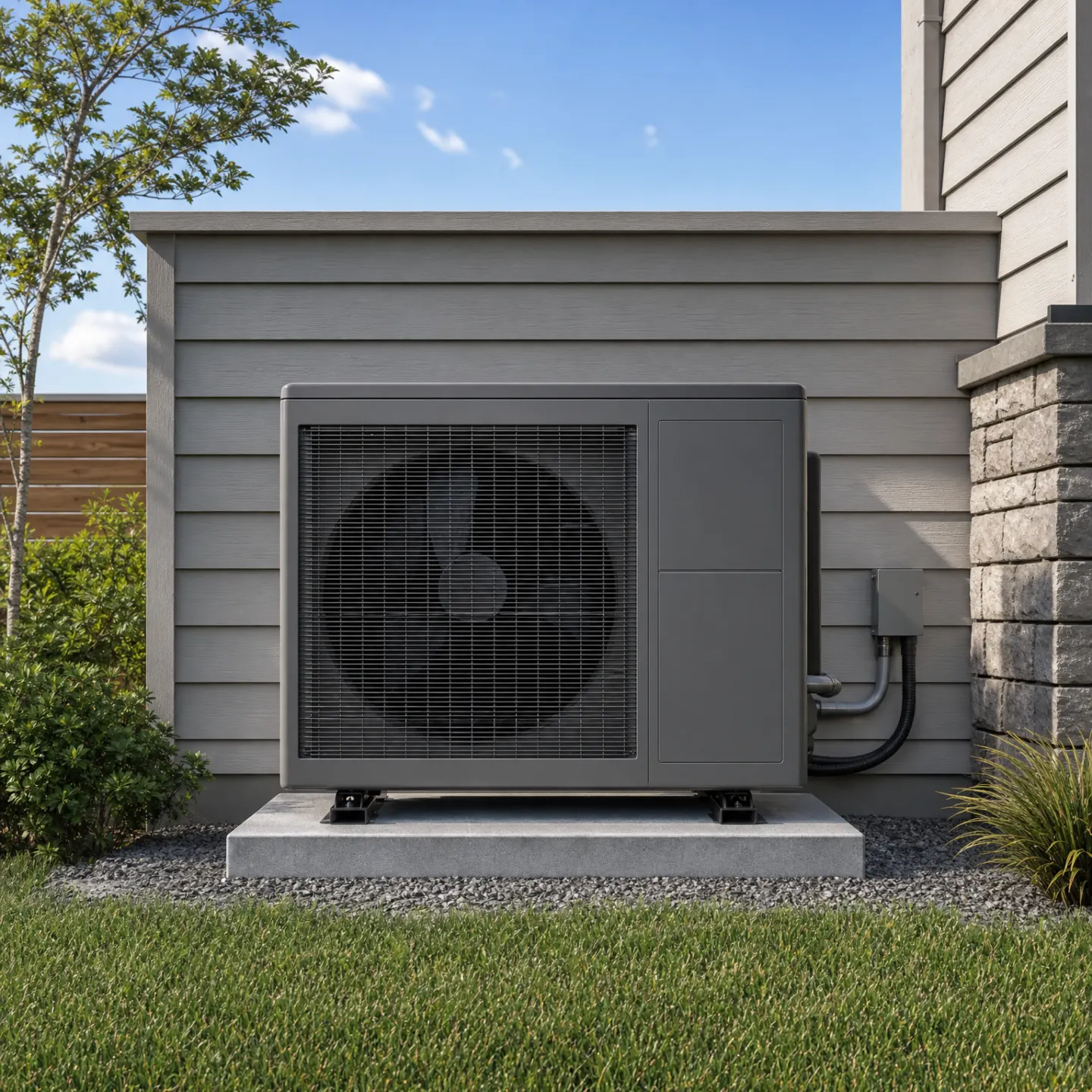
A gray heat pump outdoor unit mounted on a concrete pad next to a residential house with lap siding and stone accents.

The old equipment does not just disappear

The old system does not get the day off once the new one is in. Somebody has to deal with the refrigerant still sitting in those lines, the gas furnace it might be paired with or replacing, and the wiring and ductwork feeding both. A gas furnace that stays in place needs its venting and gas line reworked so it still operates safely alongside the new equipment. One that comes out has to be disconnected from the gas line properly, not just unplugged, because a line left live or capped wrong is a hazard that sits there until someone finds it. Refrigerant in an old system has to be recovered, never vented, since it is under pressure and regulated for a reason. The outdoor unit, the indoor coil, the line set: all of it either gets reused, if it matches what the new heat pump needs, or comes out entirely. Reusing old ductwork without checking it first is where a lot of new systems underperform from day one, because a heat pump moves a different volume of air than a furnace did and ducts sized for one don't always suit the other.

Sizing is a calculation, not a guess from square footage

The right size for a heat pump comes from a room by room load calculation, the kind contractors call a Manual J. It weighs the walls, the windows, the insulation, and how the rooms connect, not just the floor area. Two houses the same size can need different systems because one holds heat better than the other. Skipping this step and sizing off the old equipment just carries over whatever mistake was built into that choice.
Oversized and undersized both cost you, in different ways

A heat pump too big for the house cycles on and off fast, reaching the thermostat setting before it has run long enough to heat or cool evenly. That short cycling wears on the compressor and leaves rooms uneven, some warm, some not. One sized too small runs constantly in the hardest weather and still can't keep up, leaning on backup heat more than it should. The right size runs longer, steadier cycles and holds the temperature without either problem.

Two systems can carry the same efficiency rating and still behave differently in the house, so the rating is where the comparison starts, not where it ends. Ask what the system sounds like at the outdoor unit when it's running at full tilt, and what it sounds like at low speed, since some run almost all the time at low speed and a loud unit there gets old fast. Ask whether it has one stage, two, or a variable-speed compressor that ramps up and down instead of just switching on and off. A variable-speed system holds the house at a steadier temperature and tends to run quieter, because it's rarely working at full output. Ask what backup heat it pairs with and at what outdoor temperature that backup kicks in, since that crossover point is where your costs shift from the heat pump's rate to whatever the backup runs on. Ask what the warranty actually covers, parts versus labor, and for how long each, because those are often different numbers sold as one.

Install day starts with the outdoor unit and indoor coil going in, then the line set connecting them gets brazed, pressure tested, and checked for leaks before anything is charged with refrigerant. The electrical work runs alongside that: a dedicated circuit, a disconnect box at the outdoor unit, and a thermostat wire run back to where the old one sat, or a new run if the heat pump needs a different kind of control than the old system used. Once the refrigerant lines hold pressure, the system gets charged and the contractor checks airflow at the vents, since a heat pump moving the wrong volume of air through the ducts will run but won't heat or cool the way it should. Commissioning comes last: running the system through both a heating and cooling cycle, checking the temperature split at the vents, and confirming the backup heat kicks in at the right point rather than too early or not at all. None of that is quick work, because a heat pump wired wrong or charged off spec will run for years looking fine and costing more than it should the whole time.