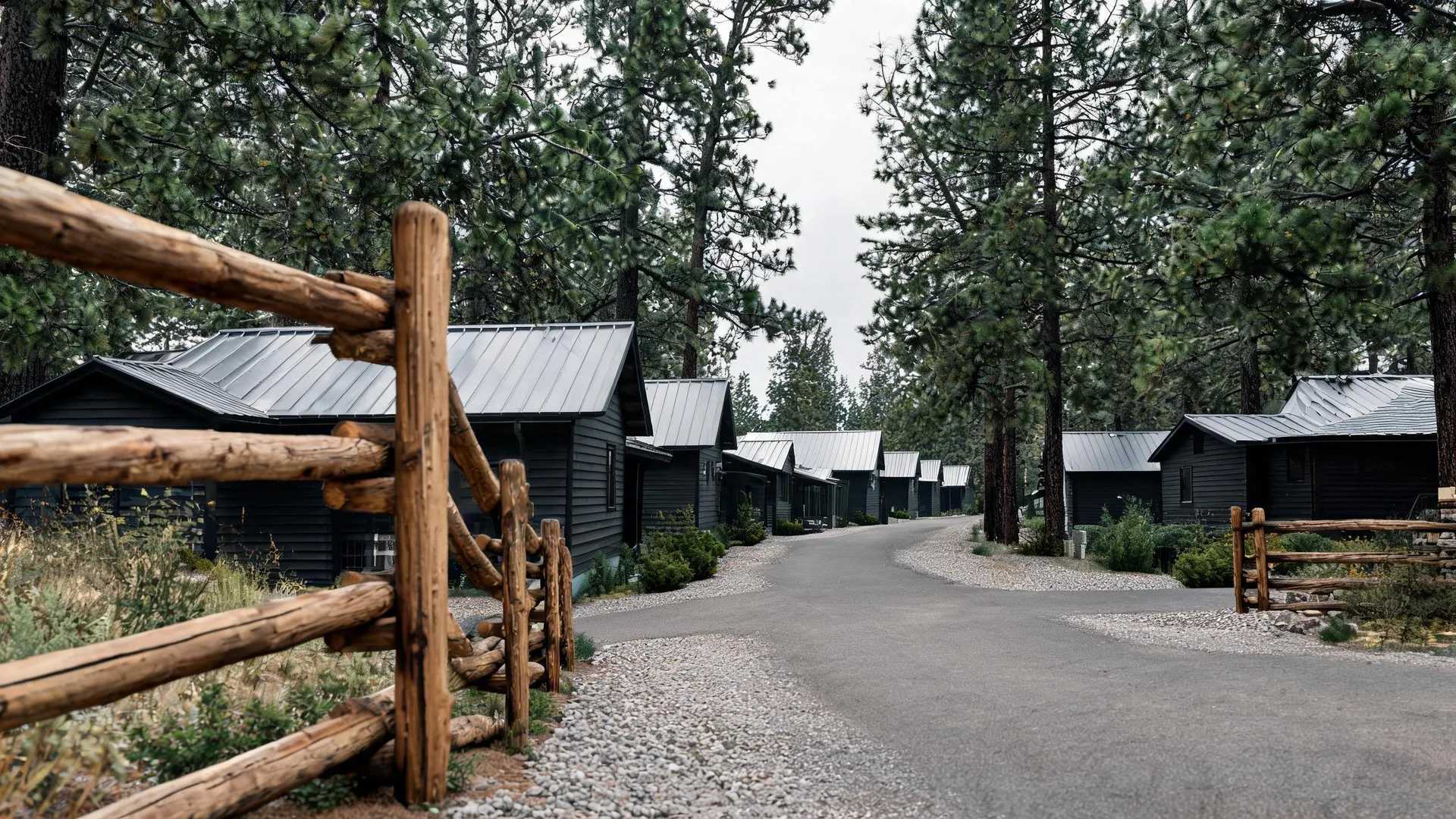




A paved lane lined with gravel shoulders passes a row of dark-sided cabins with metal gable roofs, bordered by a peeled-log fence in the foreground and tall pine trees under an overcast sky.

Heat Pump Repair in Gypsum, CO

Tell us about the job

Takes about a minute. No obligation.

Step 1 of 3: Equipment

Winters here run cold. The overnight low averages 11°F through December, January and February, and the county gets hit with heavy snow, ice or a blizzard pretty often. That's real demand on a heat pump, but it's not an unusual load for one. The unit is built to pull heat out of cold air, and at these temperatures most systems lean on backup heat strips or a dual fuel furnace to carry the rest of the work. If yours is short cycling, running nonstop without warming the house, or blowing cold air, the cause is usually a stuck reversing valve, a low refrigerant charge, a failed defrost sensor or a backup heat element that isn't kicking in. A tech can find which one it is and fix that part, not the whole system.

11 months
August through June, your system heats
11°F
the average winter night it heats against
73°F
the average summer afternoon it cools against
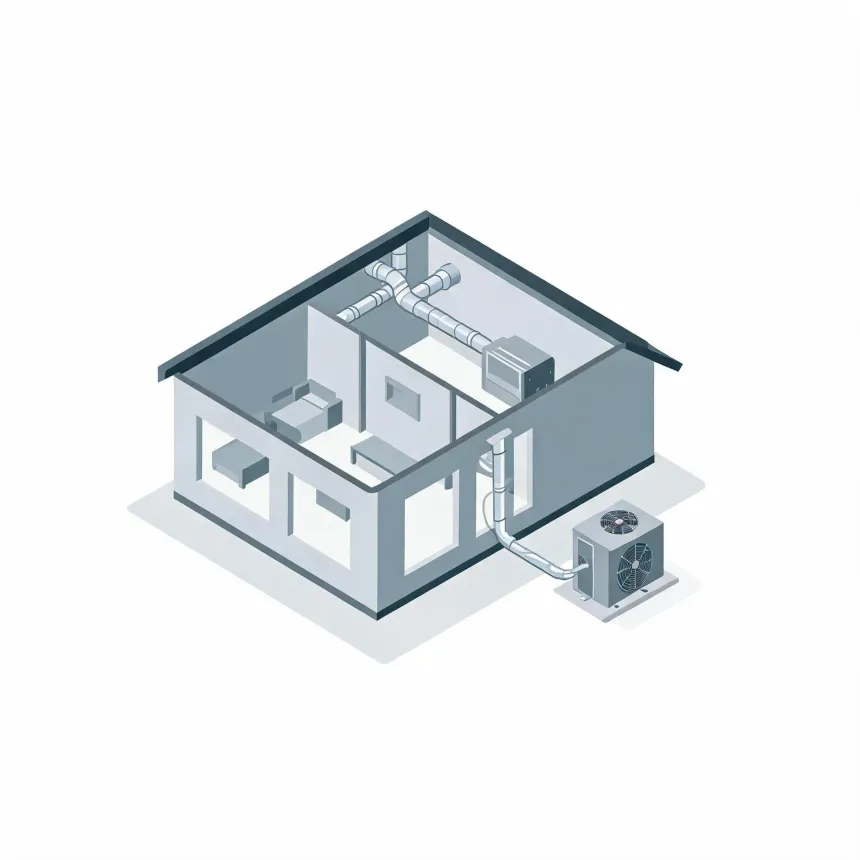
Isometric illustration of a cutaway house showing interior rooms, ceiling ductwork and an air handler, connected by lines to an outdoor condenser unit on a pad beside the building.

Heat in Gypsum starts up in August.

July is the month to get a weak part looked at, before the first cold week finds it.

A heat pump running badly here costs you every month, at 14.92 cents a kWh

Power costs 14.92 cents a kWh statewide
130 winter storms from 2015 to 2024
Winter nights average 11°F

Half the homes in Eagle County were built in 1993 or later. If yours is one of them, the heat pump itself probably isn't the problem so much as whatever part failed on it. A system installed with a newer build still has most of its working life ahead. A stuck reversing valve or a bad defrost sensor doesn't mean the unit is done, it means that one part is done, and that part gets replaced on its own. Check what year your place was built, or when the heat pump went in if it's been swapped since the house was new.

Get the usual fix

Nothing about this area is especially hard on it. It's most likely the usual problem with the usual fix.

Find a contractor
A man in a cap, dark jacket and tan work pants carries a canvas tool bag up concrete steps toward a dark blue front door, with a potted shrub beside the entry.
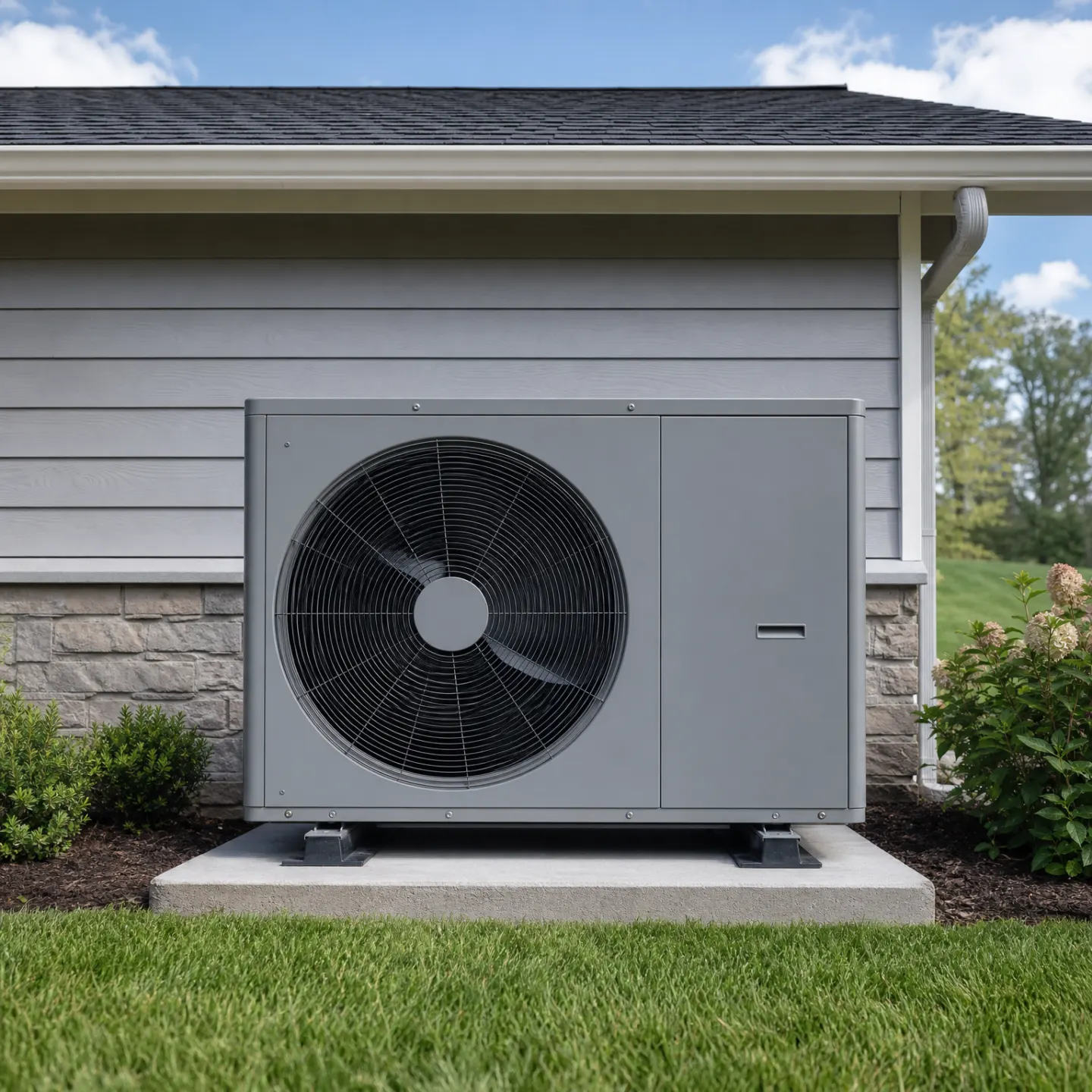
A gray outdoor HVAC unit mounted on a concrete pad beside a house with gray lap siding and a stone foundation.

Still early in its working life

If your heat pump is newer, the clock on it has barely started. Get the broken part fixed rather than pricing out a new system. A tech can pull the model and serial off the unit and tell you what's still under warranty, which matters more than the house's age once you're past that first check.

What you can check yourself

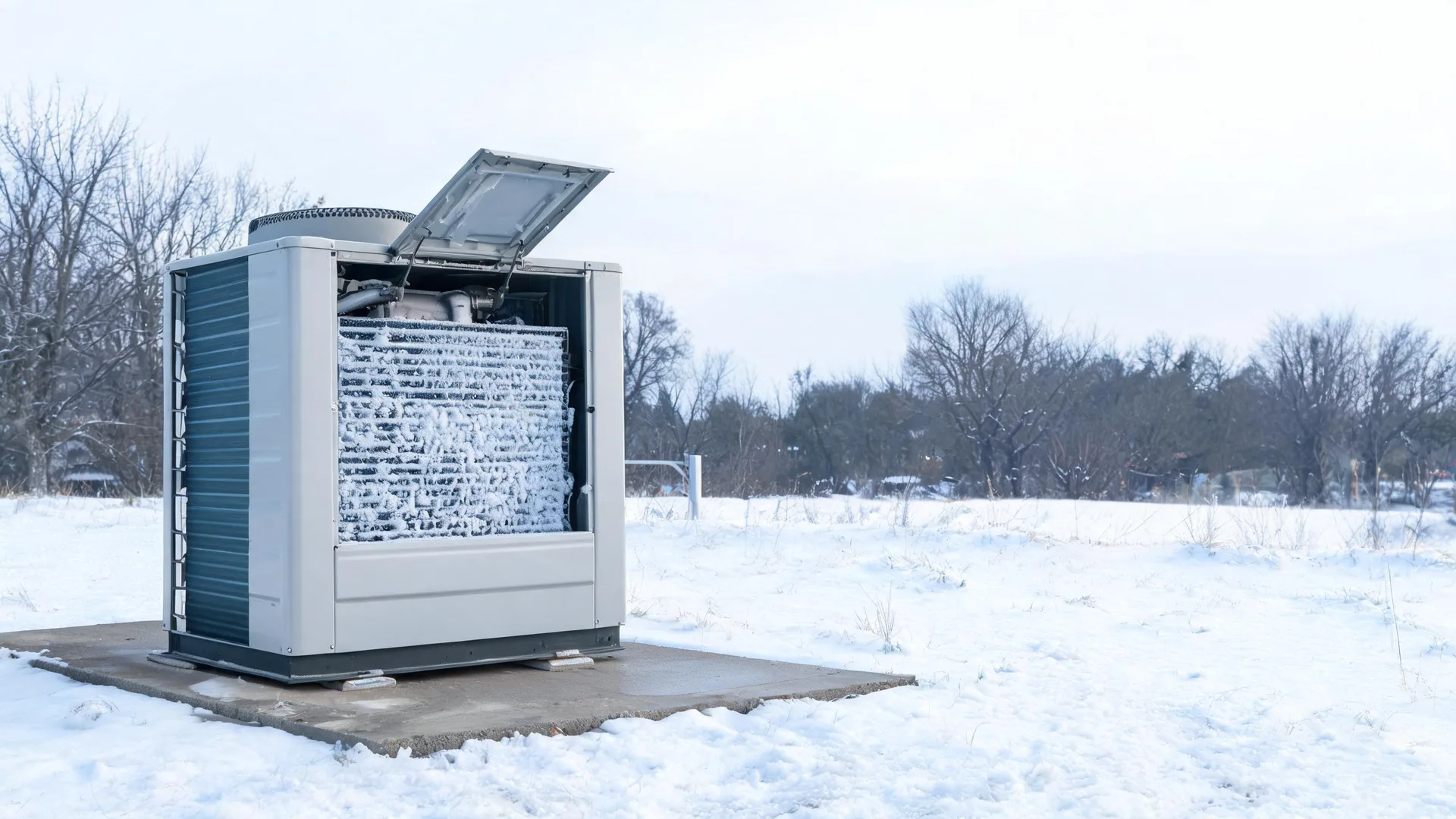
Look at the outdoor unit first. If snow or ice has built up around the base or the coil is packed solid, clear it away so air can move through. Check the air filter inside, a clogged one chokes airflow and makes the whole system work harder than it should. Walk around the house and make sure no vents are blocked by furniture or closed off. Check the thermostat batteries and settings, a heat pump set to the wrong mode will blow air that feels cold even though nothing is broken.
What to leave alone

Don't open the outdoor unit's cabinet or touch the refrigerant lines, that's sealed equipment and needs a gauge set and training to work on safely. Don't keep flipping the breaker if it trips more than once, that's the system telling you to stop. And if the outdoor fan is running but making a grinding or rattling noise, turn the system off at the thermostat and leave it off until someone looks at it, a bad motor bearing can get worse fast if it keeps spinning.

Most calls start with the thermostat set to heat and the house just not getting warm. Sometimes the air coming out of the vents feels cool to the hand even though the system is running, and that alone doesn't mean it's broken, a heat pump's supply air runs cooler than a furnace's. What matters more is whether the house actually climbs to temperature or sits short of it no matter how long the system runs. Short cycling is another one, the unit kicking on and off in quick bursts instead of settling into a steady run. Ice building up on the outdoor coil and not melting off during the defrost cycle is worth watching too, a little frost in cold weather is normal, a thick coat that never clears is not. And if you hear the outdoor unit humming like it's trying to start but the fan isn't turning, that's worth a call before you run it again.

A diagnostic visit starts outside, not at the thermostat. A tech will check the outdoor unit's pressures and temperatures with a gauge set, because that tells them more than how the air feels at a vent. They'll check the reversing valve by feel and by temperature reading, since a valve that's stuck partway can mimic other problems. They'll pull the defrost board and compare its sensor readings against what the coil is actually doing, because a board that thinks the coil is warmer than it is will skip a defrost cycle the system needs. If the compressor is cycling on its overload protector, they'll check the run capacitor and the contactor before they ever consider the compressor itself, since those parts fail far more often. Most of this gets answered early in the visit. The rest is deciding whether the failing part is worth fixing on its own, which is usually the case, or whether it's a symptom of something upstream.