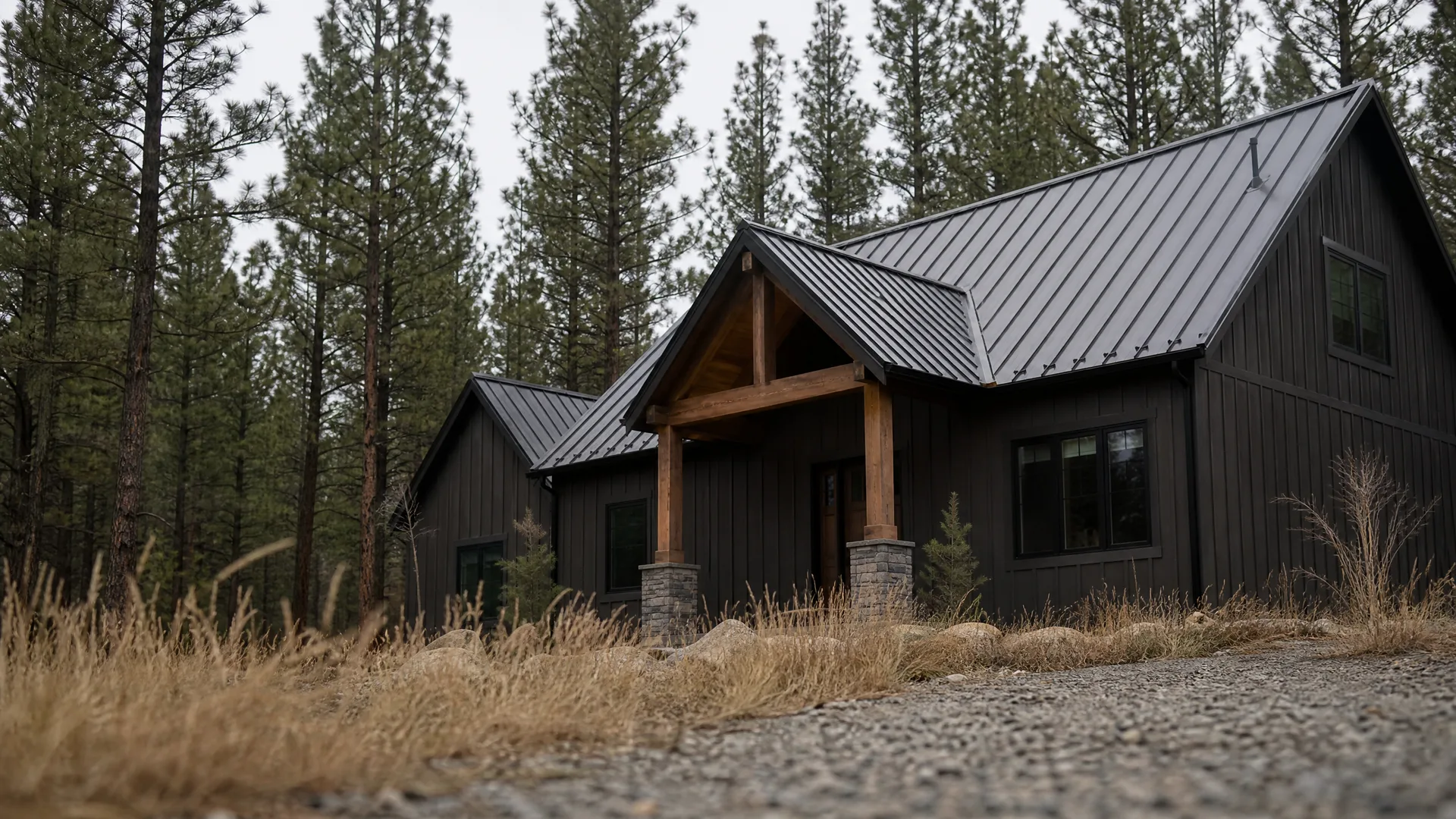





A dark-painted board-and-batten house with a standing-seam metal roof, timber entry porch and stone column bases, set among pine trees behind dry grass and a gravel drive.

Heat Pump Installation in Rifle, CO

Tell us about the job

Takes about a minute. No obligation.

Step 1 of 3: Equipment

Winter storms hit Garfield County 258 times between 2015 and 2024. Damaging wind came through 144 times in that same stretch. That is weather a heat pump's outdoor unit has to sit through, year after year, and it sits outside by design. A statewide survey found 13% of Colorado households lost power for a full day or longer in 2024 alone. When that happens here, it's not just the lights. It's your heat and your hot water too, depending on how your home is set up.

10 months
September through June, your system heats
16°F
the average winter night it heats against
77°F
the average summer afternoon it cools against
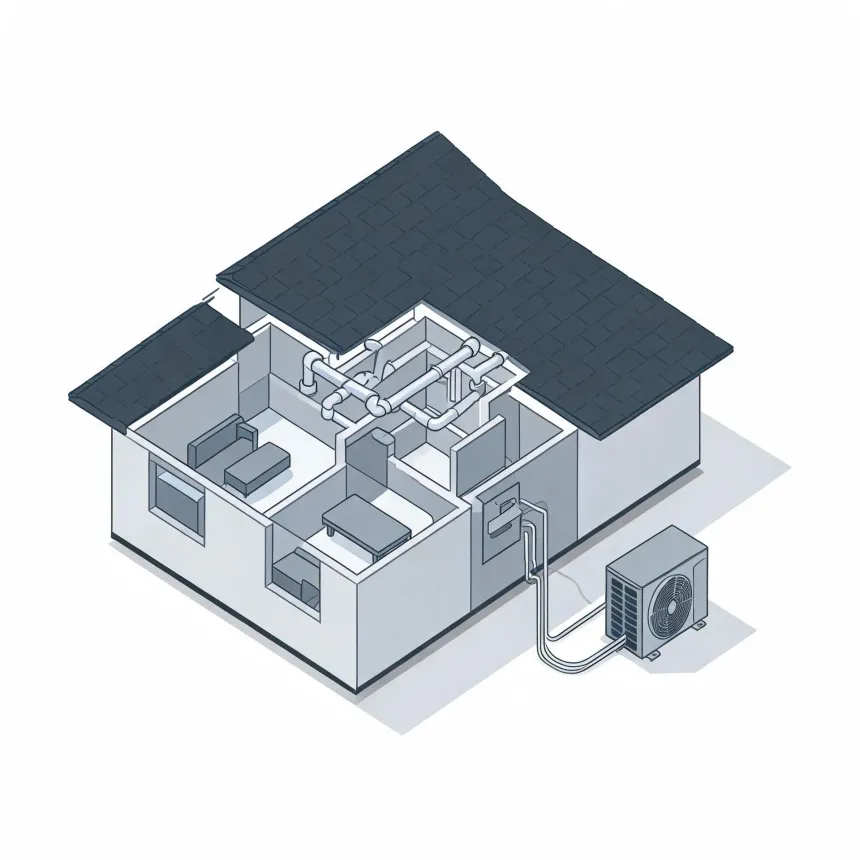
Isometric line illustration of a cutaway house showing interior rooms with furniture, ceiling ductwork under a dark shingled roof, and an outdoor condenser unit connected by lines on the right.

Gas heats close to two out of three homes in Garfield County.

A heat pump replacing a gas furnace is still an added system here, not a straight swap, so the install has to account for both.

Ten months of heat a year leaves a short window to get this installed right

Heat runs September through June
144 damaging wind events from 2015 to 2024
3 hail events from 2015 to 2024
Cheap power changes the math hereElectricity in Garfield County runs 12.72 cents per kilowatt-hour, below most of the country.

Garfield County falls under zone 5B in the 2021 energy code, a cool, dry zone where heating carries the bigger load over the year. Any split-system heat pump installed here has to clear federal minimums set for that kind of duty: at least 14.3 Btu of heat moved per watt-hour of electricity in summer, and at least 7.5 Btu per watt-hour in winter. Those numbers rule out older or stripped-down equipment on the market. A contractor sizing a system for this county is already working inside that floor, not above it.

Plan for the outage before it happens, not during it

Where the outdoor unit goes matters here, and so does what's protecting it. Talk to a contractor about placement, a cover or windbreak for hail and wind, and how the system handles a day without power before the install goes in.

Find a contractor
A man in a faded olive work shirt and dark trousers climbs porch steps toward a navy front door, carrying a green canvas tool bag in his right hand, with a potted shrub in a blue planter beside the door.
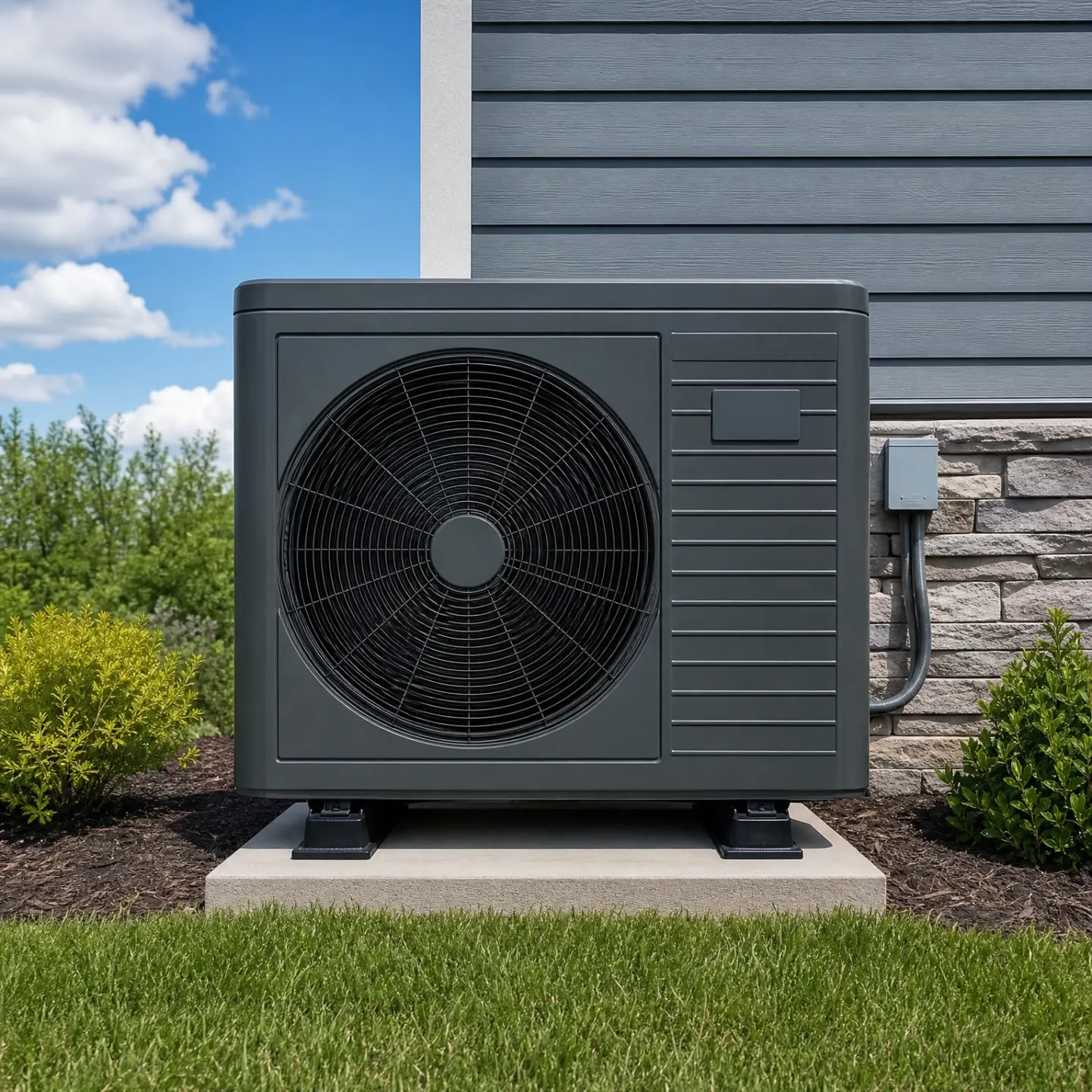
A dark gray heat pump unit mounted on a concrete pad next to a house with gray siding and a stone veneer wall.

The install is the job, not just the unit

The size of the job is what sets the price, more than the equipment itself. A heat pump has two halves, an outdoor unit and an indoor coil, and both have to be matched to each other and to the house. If the ductwork already there is too small or leaky, it has to be reworked before the new system can move the air it needs to move. A house with no ductwork at all, heated by something like baseboard or a wall furnace, needs it built from scratch, which is a bigger job than swapping one unit for another. Electrical work adds to it too. A heat pump draws differently than a gas furnace did, and the breaker panel has to be able to carry that load, which sometimes means panel upgrades before the unit ever gets set. Where the line set runs between the outdoor unit and the indoor coil, and how far it has to travel, changes the labor too. None of this shows up in a price tag at the store. It shows up when a contractor walks the house and figures out what has to happen to make the system work the way it's supposed to, for as long as it's supposed to.

The rating is measured over a full season, not a single day

That efficiency number on the label comes from testing the system across a range of outdoor temperatures, not at one ideal setting. A heat pump works harder and pulls more power on the coldest and hottest days than the rating alone suggests. The number is an average, useful for comparing one system to another, not a promise of what it draws on the worst day of the year.
A higher rating buys a smaller margin than people expect

Going up a step in efficiency lowers running cost some, but it does not change what the system needs to work right. It still needs the right size for the house, a return air path that moves enough air, and a clean filter and clear outdoor coil. A high-efficiency system that is sized wrong or starved for airflow will run worse than a modest one installed correctly.

With power this cheap, paying extra for the highest efficiency tier on the shelf will not earn its keep the way it might somewhere else. That money is better spent on the parts of the install that decide whether the system holds up here: a unit matched correctly to the house, an outdoor coil that is protected from wind and hail, and a setup a contractor can get back online fast after an outage. Ask what happens to the system on a day the power is out and the wind is up. Ask how it restarts once power comes back. A contractor who can walk through that with you is worth more here than one who leads with a number on a label.

Install day starts with the equipment already sized and chosen, so most of the work is physical. The outdoor unit gets set on a pad, leveled, and anchored so wind can't rock it loose over time. Indoors, the coil goes in above or beside the furnace, tied into the ductwork that's already there or newly built. Copper line set runs between the two halves, carrying refrigerant, and that line gets evacuated and tested for leaks before any current flows. Electrical work usually means a dedicated circuit, sometimes a breaker panel upgrade, since a heat pump draws current differently than what was there before. Once everything's connected, a tech checks refrigerant charge, confirms airflow at the vents, and runs the system in both heating and cooling modes before calling it done. A straightforward swap can wrap in a day. One that needs new ductwork or panel work takes longer, because each of those steps has to happen in order, not at once.