Electricity here isn't cheap
Colorado homes paid 14.92 cents per kilowatthour in 2024. A heat pump runs on electricity for every degree it moves, so that rate applies to every hour it works.
Takes about a minute. No obligation.
Colorado homes paid 14.92 cents per kilowatthour in 2024. A heat pump runs on electricity for every degree it moves, so that rate applies to every hour it works.
Two heat pumps can heat the same house and use different amounts of power doing it. In Silverthorne, that difference shows up on the bill every month the system runs.
Gas heats 58.3 percent of homes in Summit County, the most of any fuel here.
If your furnace runs on gas now, a heat pump installed alongside it can take over the mild days and let the furnace handle the cold snaps.



Summit County sits in zone 7, the coldest tier in the energy code. Any split-system heat pump put in here has to meet a federal minimum. 14.3 SEER2 for cooling and 7.5 HSPF2 for heating. That floor assumes heating runs most of the year here, because in Summit County it does. It rules out the stripped-down units built for mild climates, the ones that get by on less because they are rarely asked to work hard. A system rated for zone 7 has to hold up through the kind of winter this valley actually gets.
Power costs more here, so an efficient system pays you back on every bill.
Find a contractorA heat pump that's too big cools the house fast, shuts off, then starts again a few minutes later. It never runs long enough to pull moisture out of the air or settle into a steady rhythm. One that's too small just can't keep up when the temperature drops, and it ends up running flat out around the clock, leaning hard on backup heat to make up the difference. Either way the system is working against itself instead of for you. Sizing it right starts with a load calculation, not a guess based on square footage. A contractor measures the walls, the windows, the insulation, how the rooms are laid out, and figures out exactly how much heat the house loses on the coldest night and gains on the hottest day. That number tells them what the equipment actually needs to do. It's the same math whether the house is old or new, the only thing that changes is the answer.
A heat pump built to work hard in cold weather costs more than one built for a mild climate, because it needs a compressor that can still pull heat from outside air when the temperature drops and a defrost system that can keep up with it. The size of the house decides how much capacity you need, and capacity is most of what you're paying for. Everything else is built around that choice.
If the ductwork is in good shape and sized right, a contractor connects to it. If it's undersized, leaky, or was built around an old furnace, it has to be reworked before the new system can perform the way it's rated to. The electrical panel matters too. Some homes have the circuits a heat pump needs already in place, others need the panel upgraded first. None of that shows up in the price of the unit itself, but it's part of the install.
A couple of numbers worth asking for before you decide between systems. Ask for the HSPF2 rating, not just the SEER2. SEER2 tells you how it cools, HSPF2 tells you how it heats, and heating is the harder job a heat pump does. Ask what happens at low outdoor temperatures specifically, not just how the unit performs on an average day. Some compressors lose capacity fast as it gets colder outside and lean hard on backup heat to compensate. Others hold their output much further down. Ask how the contractor backs the compressor and the labor, not just the parts, since a compressor failure years in is a labor job either way. And ask what the defrost cycle does, because every heat pump frosts up in winter and has to pause and clear it. How often it does that, and how it recovers, tells you more about real-world performance than the rating plate does.
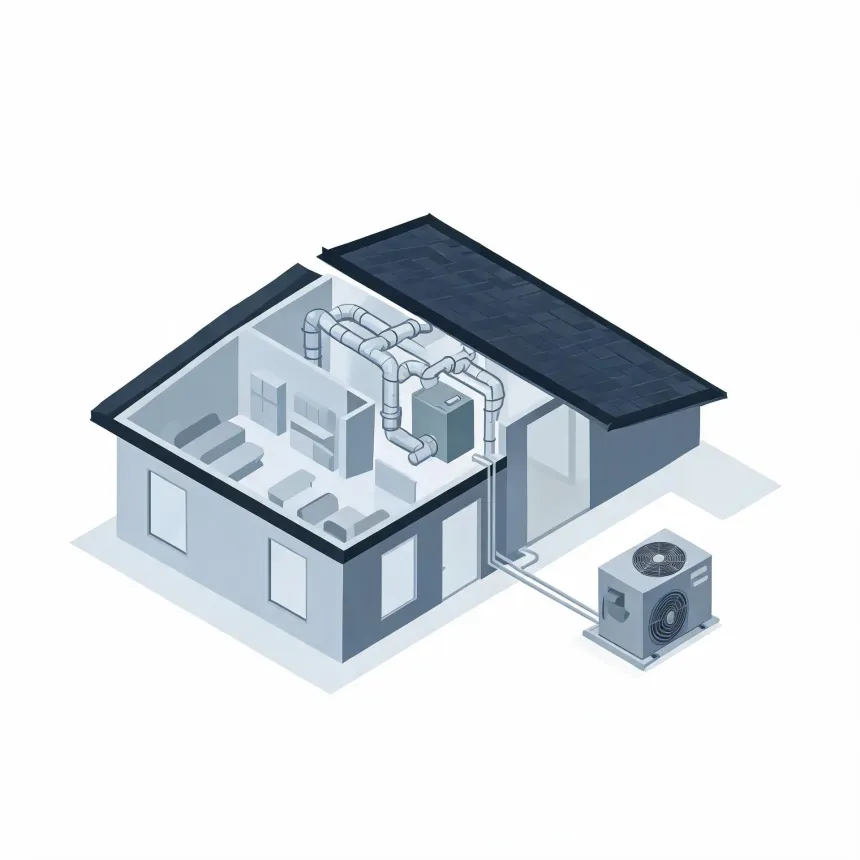
Installation day starts with the old equipment coming out, not the new one going in. The contractor disconnects the refrigerant lines, the electrical, and if there's a furnace involved, the ductwork tied to it. The outdoor unit gets set on a pad, leveled, with enough clearance around it for air to move through the coil. The indoor unit or air handler goes in wherever the old one sat, unless the load calculation called for something different. Refrigerant lines get run, connected, then pressure tested before anything gets charged, because a leak found after the system is running is much harder to trace. Once the lines hold pressure, they get charged to the amount the manufacturer specifies for that length of line set. Then the electrical gets tied in, the thermostat gets set up, and the contractor runs the system through a heating cycle and a cooling cycle to check the temperature split across the coil and confirm the defrost cycle kicks in and clears the way it should. Rushing the charge or skipping the pressure test is how a new system ends up with a problem down the road that nobody can trace back to install day.