


Heat pump vs furnace in Eagle County, Colorado

Find a Pro Near You

Heat pump or furnace, one form

Which costs less to run in Eagle County?

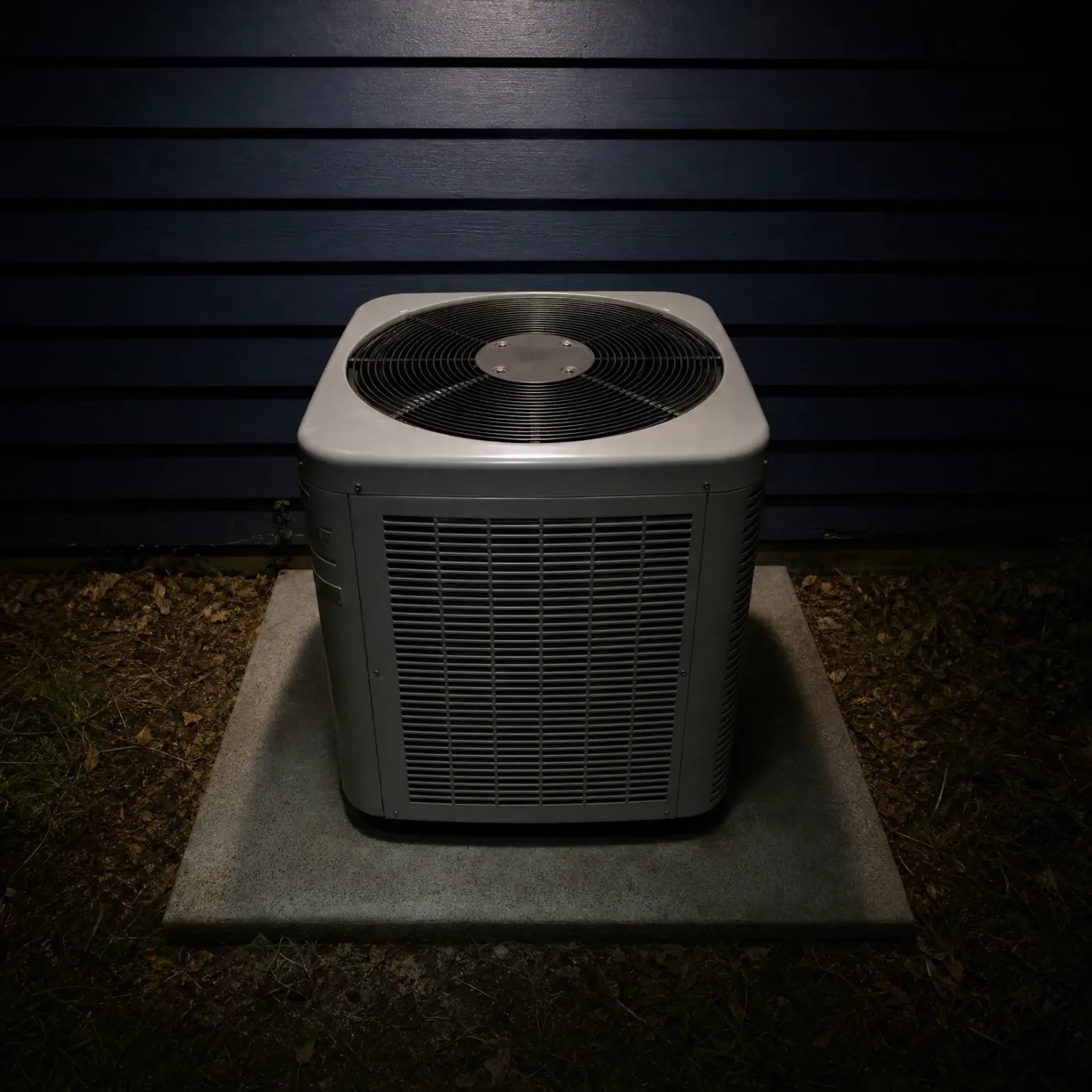
A gray outdoor condenser unit with a top-mounted fan grille sits on a concrete pad against dark horizontal lap siding, photographed at night with surrounding bare soil and leaf litter.

Heat pump

To heat your home here$1.99per 100,000 Btu

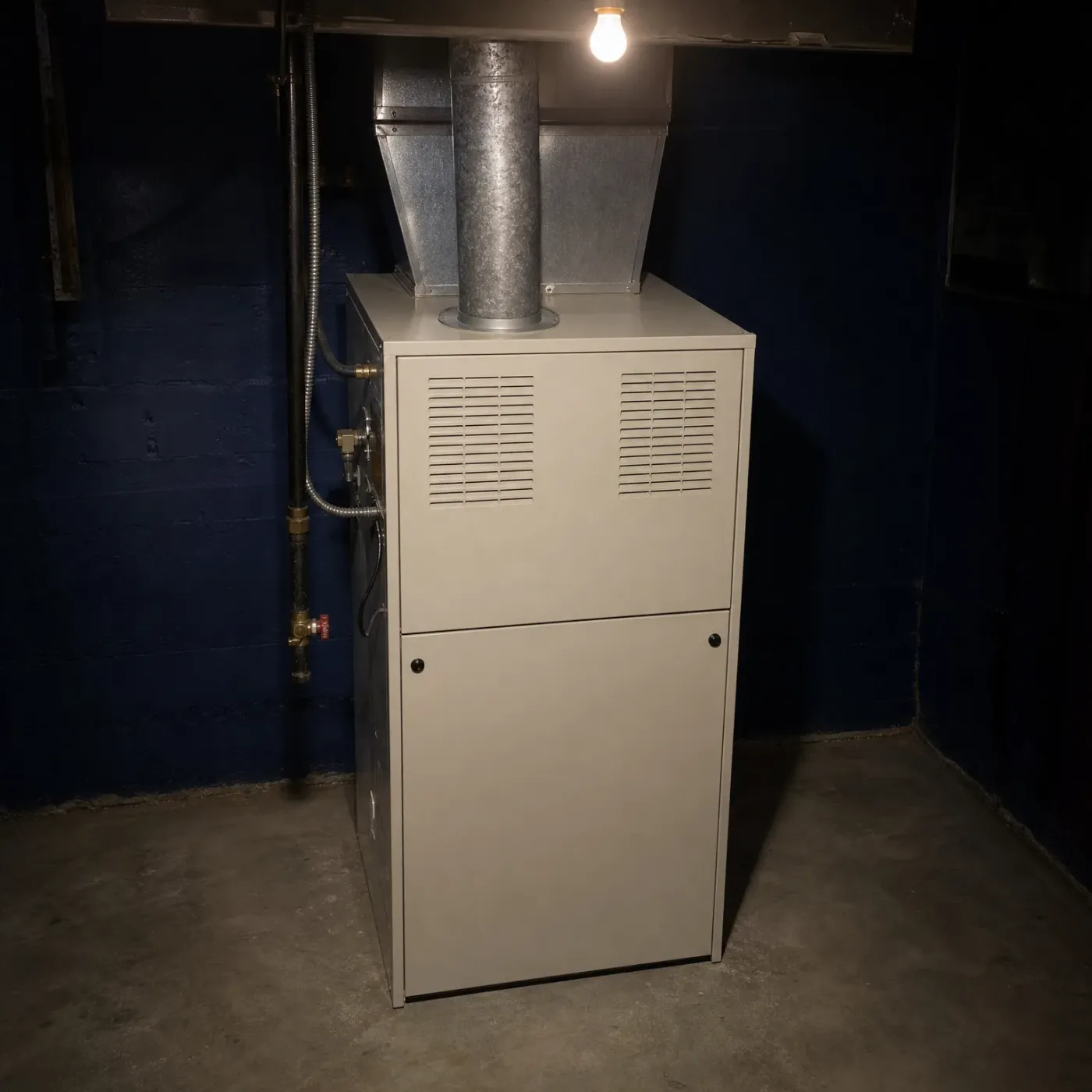
A beige furnace with louvered upper panel and metal flue duct stands against a dark blue painted block wall in a basement, with pipes at left and a bare light bulb overhead.

Furnace

To heat your home here$1.26per 100,000 Btu

At Colorado's gas and electricity prices, a gas furnace makes the same heat as a heat pump for at least 36% less.

Btu stands for British thermal unit, the standard measure of heat energy.

Where does a heat pump shine?

  • No gas line, nothing burning in the house

    It moves heat instead of making it from fire. That means no combustion, no flue and no gas bill for heat.

    A kitchen island with a white countertop holding a black induction cooktop, a stainless steel kettle, a blue mug, a bowl of lemons and a potted plant, with navy cabinets, a wood shelf with plants and books, cutting boards and a blue bowl in the background.
  • Steady, even comfort

    It eases up and down with the weather. There are fewer swings between too warm and too cool.

    A dimly lit living room with a light blue armchair holding an open book and a navy knit throw, beside a lit table lamp, a navy built-in bookshelf, a fireplace with candles on the mantel, a snow-covered view through a window, and a light-colored dog curled asleep on a woven rug.
  • Heats and cools in one system

    Winter and summer are covered by the same outdoor unit. That's one machine to service instead of two.

    A living room with a white sofa and blue throw, navy built-in shelves holding pottery and books, a wooden coffee table with a bowl and green hydrangeas, and a large curtained window overlooking a garden.

Where does a furnace shine?

  • Strong, steady heat in hard cold

    Winter nights here average 11°F, and a furnace puts out the same hot air no matter how far it drops outside. You're not waiting on a cold night for it to catch up.

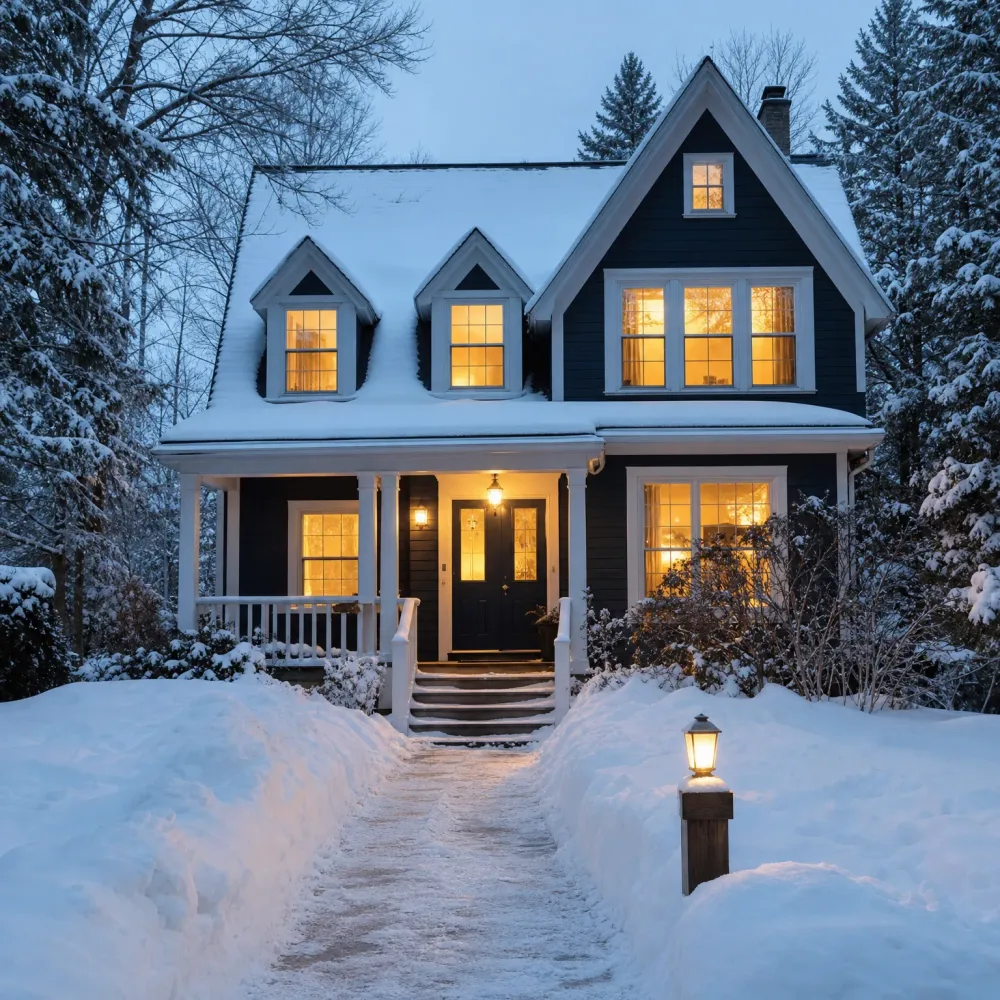
    A dark navy two-story house with white trim, dormer windows and a covered porch, its windows glowing yellow at dusk, with a shoveled path through deep snow leading to the steps and a lit lamp post at right.
  • Runs on the gas most homes here already use

    Most homes in Eagle County already heat with gas, so the line is likely already run to your house. A furnace just taps into that instead of asking you to set up something new.

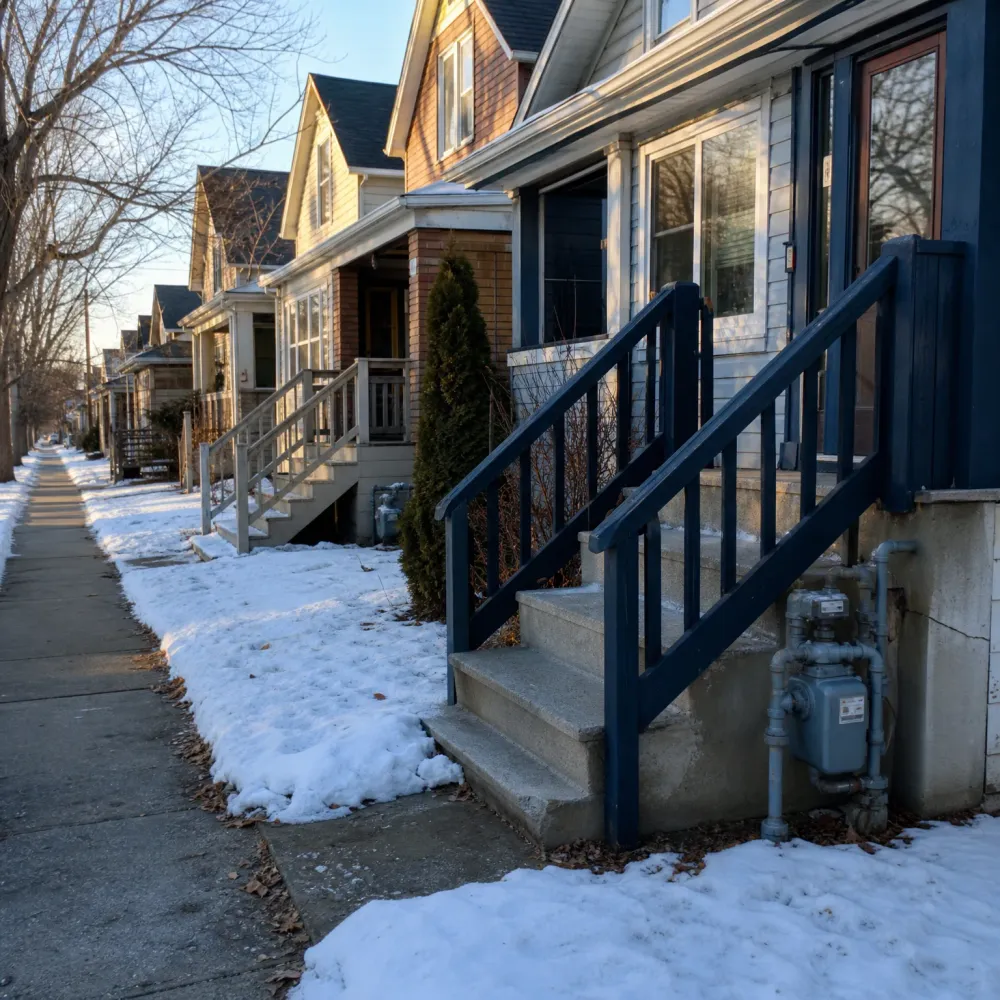
    A row of closely spaced two-story houses along a sidewalk with patchy snow, the nearest with concrete steps and dark blue wooden railings and a gas meter at the foundation.
  • Pairs with any central AC

    A furnace's blower and ducts carry cooled air too. Adding central AC uses the same system.

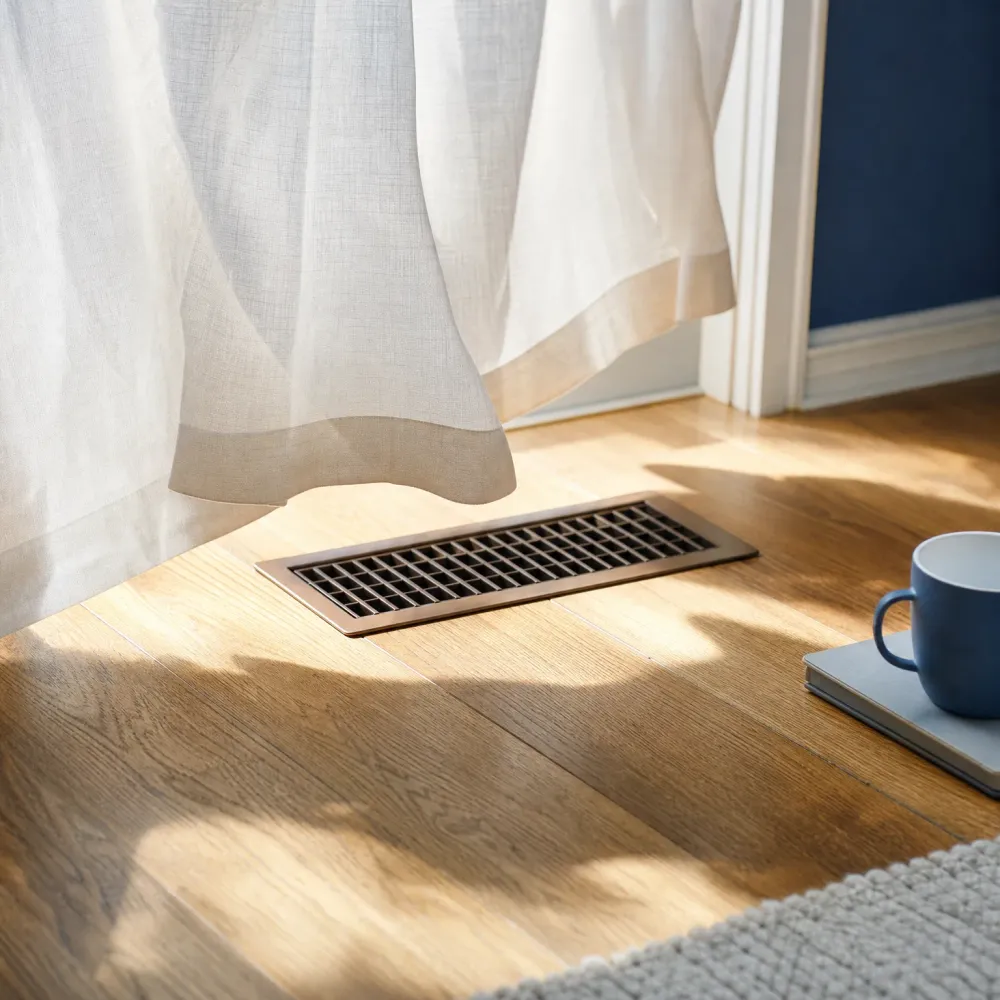
    A metal floor vent set into a light wood plank floor beside a sheer white curtain, with a blue mug on a gray notebook and a knit rug at the lower right.

What the cold does to a heat pump here

Eagle County runs heat eleven months a year, and the winter nights are the real test for a heat pump. The average overnight low from December through February is 11°F. A standard heat pump starts losing ground well before that. Below 40°F it puts out less heat than its rating says. Below about 35°F it usually needs backup heat to keep up. Here, the average winter night is already below both marks, and so is every single one of the roughly 240 nights a year that drop to freezing or colder.

That doesn't rule out a heat pump. It rules out a standard one running alone. A unit built to the ENERGY STAR Cold Climate spec has to prove it still makes 1.75 units of heat per unit of electricity at 5°F, and hold onto most of its capacity at that temperature, under third-party testing. Field tests of these cold-climate units back that up: over two winters in occupied homes, backup heat covered only a small share of the load between 0°F and 35°F, and the units rarely ran on backup alone even above 0°F. The difference between a heat pump that struggles here and one that works comes down to that rating. A homeowner looking at a heat pump for this county needs to check for the Cold Climate designation specifically, not assume any heat pump will do.
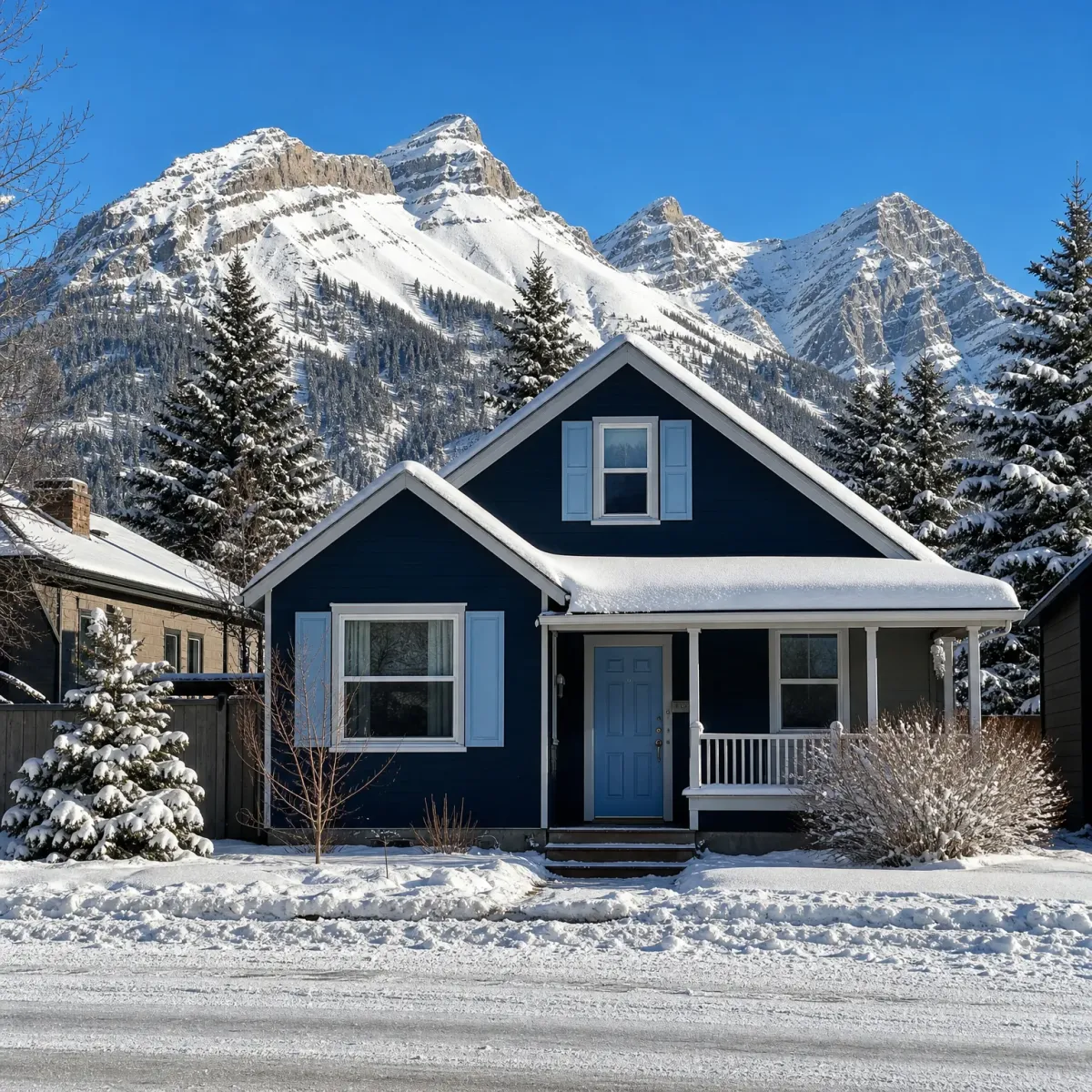
A navy blue single-story house with white trim, a light blue front door and covered porch, surrounded by snow, with conifers and snow-covered mountain peaks behind under a clear blue sky.

What it costs to run, and what that means for the choice

Run the two side by side on Colorado's fuel prices and the furnace wins on cost. A gas furnace makes 100,000 Btu of heat for $1.26. A heat pump makes the same heat for $1.99, and that figure doesn't even add anything for the backup heat it leans on below 35°F. With the heat running eleven months a year here, that gap shows up on every bill from August to June.

Gas is also just more available here. Utility gas heats close to two in three homes in Eagle County; electric heat is under one in three. That's worth knowing if a gas line isn't already run to the house, since adding one is its own cost.

A furnace only does one job, and for one month a year here it has nothing to do. A heat pump heats and cools from the same outdoor unit, which matters in a county with no real cooling season to speak of, since it means no separate AC to install or maintain. That's the actual trade. A furnace costs less to run and handles the cold here without needing a backup system behind it. A cold-climate heat pump costs more to run but adds cooling at no extra equipment, and still needs to be sized and rated for nights that hit 0°F about 30 times a year. Which one is right depends on whether that cooling is worth paying more for every month the heat runs.

Sources: NOAA nClimDiv · NOAA 1991–2020 seasonal normals · EIA SEDS 2024 · 10 CFR 430.32 · PNNL Building America guide · PNNL-37127 field study · ENERGY STAR product criteria · Census ACS 2020–2024

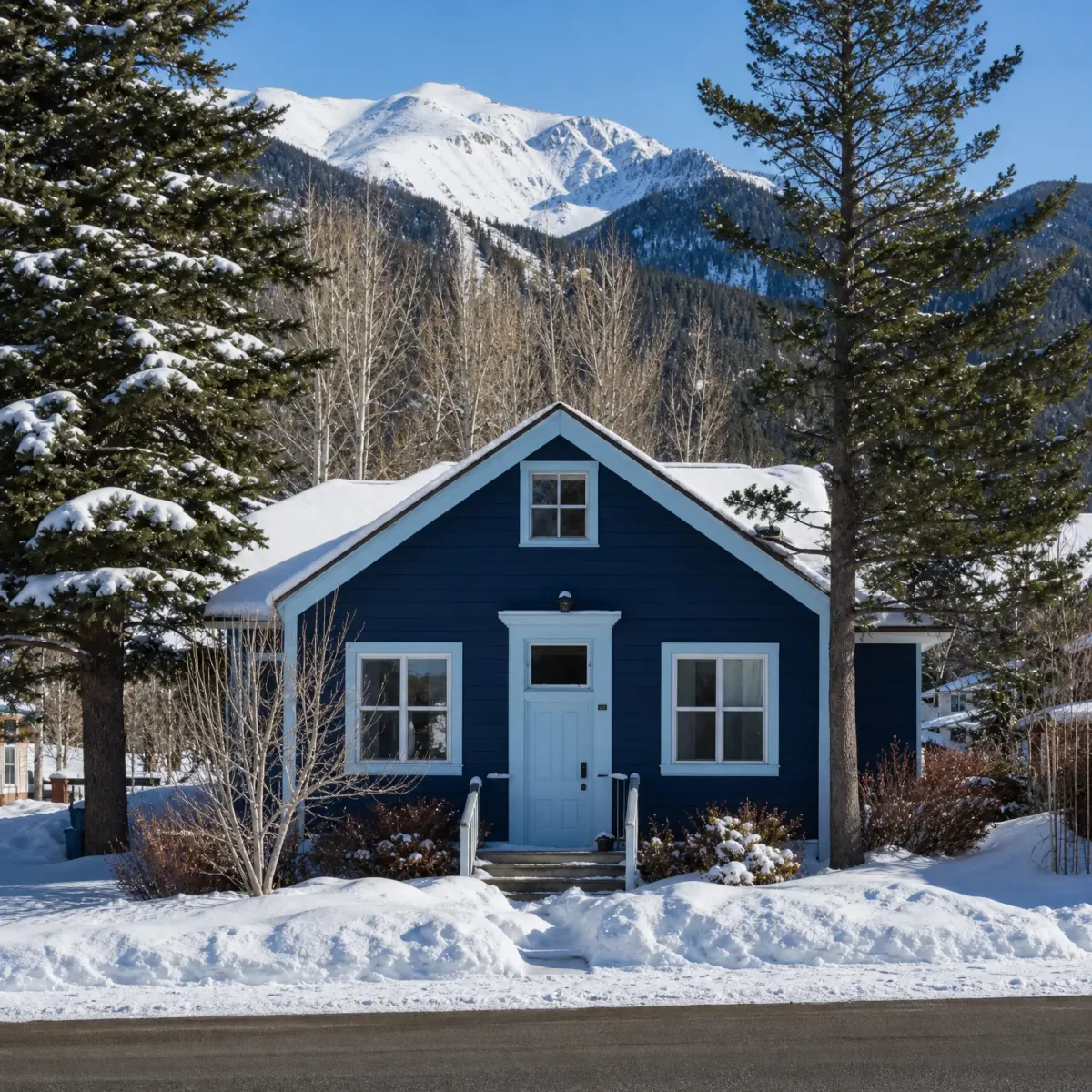
A small dark blue house with white trim and a light blue front door, surrounded by deep snow and conifers, with a snow-covered mountain in the background.

Common questions about heat pumps and furnaces

  • Can a heat pump heat a house through a Colorado winter?

    It can, but the cold cuts into what it delivers. Winter nights here average 11°F, and a standard heat pump puts out less than its rated heat once it's below 40°F outside, only a fraction of that rating in the teens. A cold-climate model is built to hold its output much better down into single digits, which matters when the overnight low falls to 0°F or below on about 30 nights a year.

  • Do I need backup heat with a heat pump here?

    In most cases, yes. A standard heat pump's heating efficiency drops below about 35°F, and the overnight low here is at or below freezing on about 240 nights a year, well past that mark. A cold-climate heat pump needs backup far less often; field testing found it supplies only a small share of the heat even between 0°F and 35°F, and running on backup alone was rare above 0°F.

  • Can I keep my furnace and add a heat pump?

    Yes, that pairing is common and it's called a dual-fuel system. The heat pump carries the heating load most of the time, and the furnace takes over on the coldest nights, of which there are about 30 a year here at 0°F or below. You get the furnace's strong output in hard cold and the heat pump's lower running cost the rest of the time.

  • Is a heat pump cheaper to run than a furnace in Eagle County?

    No, a gas furnace costs less to run here. A furnace makes the same heat for $1.26 per 100,000 Btu against $1.99 for a heat pump, both at federal minimum efficiency and Colorado's average fuel prices. Gas already heats a little under two in three homes here, against a little under one in three on electricity.

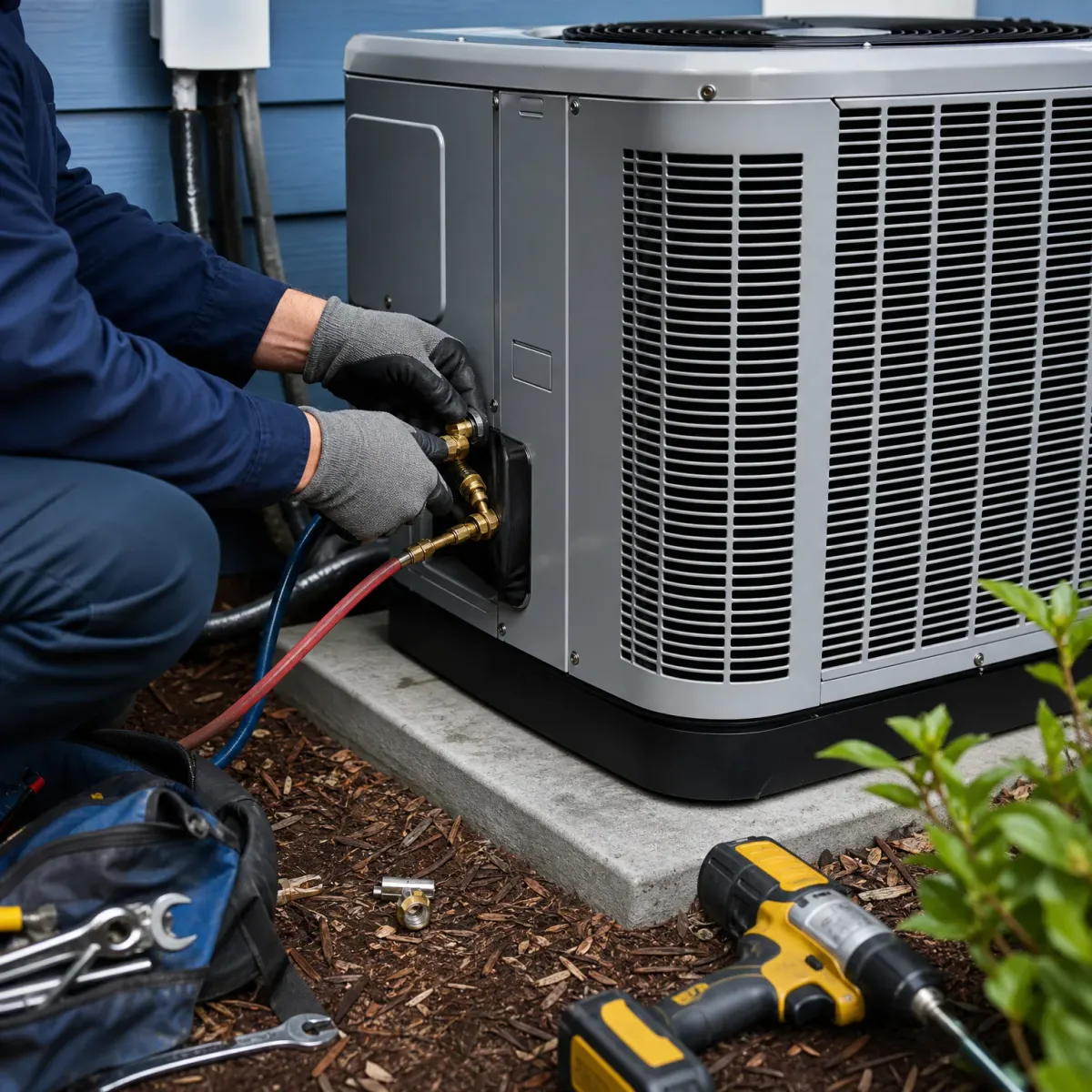
A person in dark clothing and gray gloves crouches beside an outdoor air conditioning condenser unit on a concrete pad, attaching blue and red gauge hoses to its service valves, with a tool bag, wrenches and a yellow cordless drill on the mulch in the foreground.

Tell us about the job

Takes about a minute. No obligation.

Step 1 of 3: Equipment