




An unfinished basement featuring exposed ceiling joists, a metal HVAC unit with round ductwork, a hanging light bulb, and scattered boxes and debris along the left wall.

Furnace Maintenance in Woodland Park, CO

Tell us about the job

Takes about a minute. No obligation.

Step 1 of 3: Equipment

Colorado homes paid $10.09 per million Btu for natural gas in 2024. That number is set by the state, not by your furnace, but what your furnace does with that gas isn't. A dirty burner or a clogged filter makes it work harder to put out the same heat, and every bit of extra work shows up on the gas line into your house. A furnace running clean and tuned doesn't waste what it pulls in. Here, where that gas costs what it costs, that difference matters more than it would somewhere milder.

Half the homes in Teller County were built in 1990 or later.

A furnace that age has years of work left in it, and a yearly check is what keeps it getting there.

Most furnaces here burn gas, which means the burner and venting need the same attention as the filter

56.9% of homes heat with gas
Heat runs August through June
Winter nights average 10°F
A furnace that runs eleven months a year doesn't get much chance to restFurnaces here run from August through June, carrying the house almost the whole year

Teller County saw 249 severe weather events between 2015 and 2024, and winter storms alone accounted for 121 of them. Damaging wind hit the county 99 times in that span, and hail came through 26 times. None of that touches your furnace directly if it sits in a closet or basement, but the vent pipe running out through your roof or wall does sit outside, and so does any flue cap or intake hood attached to it. Wind-driven debris and ice can block or dent that venting without you seeing it from inside the house. A tune-up includes a look at that venting from the outside, not just the burner and filter indoors. Catching a blocked or damaged vent before the cold months matters more here than somewhere with a calmer forecast.

A tuned furnace makes the most of gas that already costs more here

A furnace that's pulling in dirty or restricted air has to burn more gas to put out the same heat, and that gas is not cheap here. A tune-up gets the burner and airflow back to where they should be before the bill shows the difference.

Find a contractor
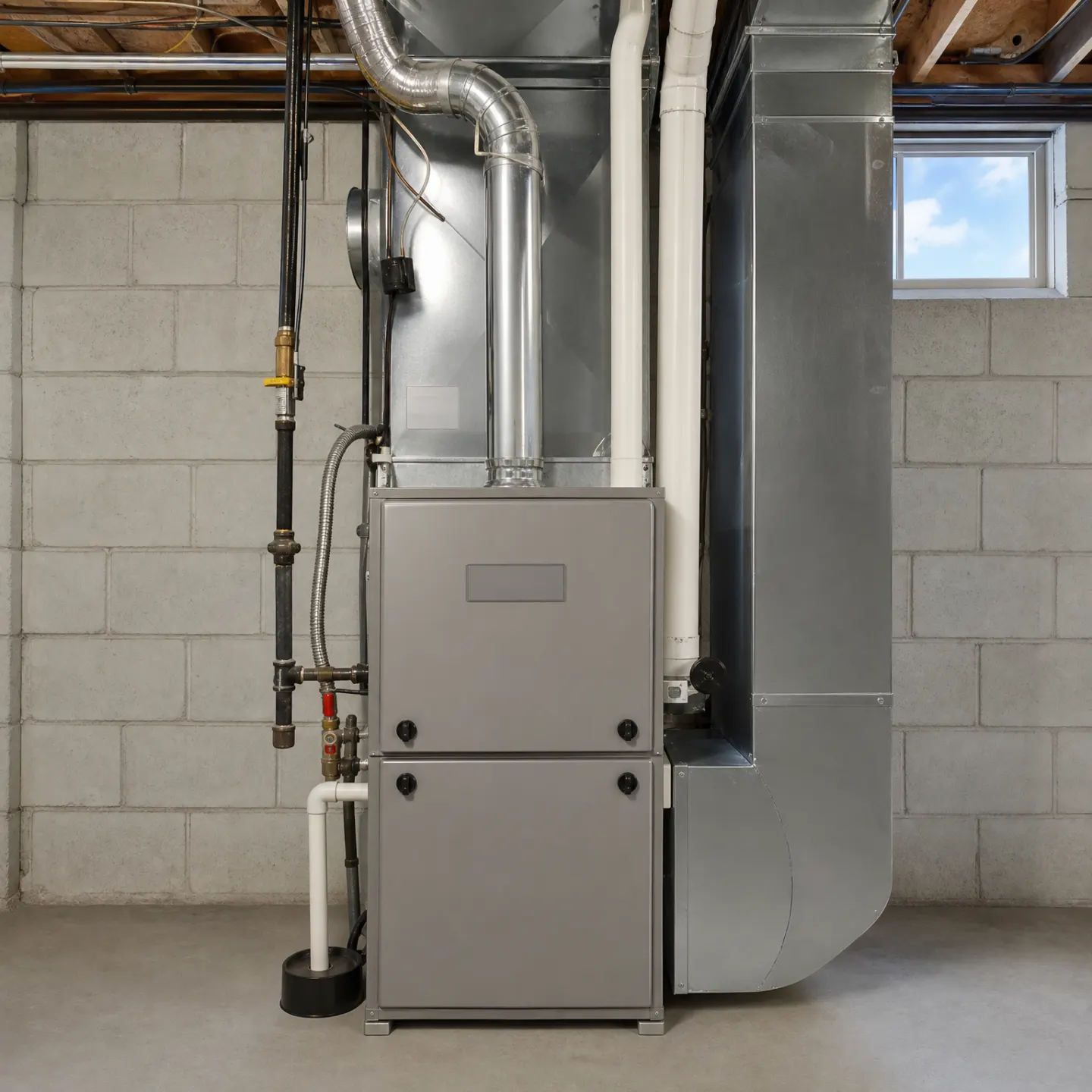
A gray high-efficiency gas furnace installed in an unfinished basement, surrounded by gas lines, a condensate drain, and sheet-metal ductwork.

Eleven months of run time starts in August. Book the check in July.

Heat runs here from August through June, eleven months out of the year. July is the only month the furnace sits idle, which makes it the month to get the check done. Whatever a tune-up would catch, it catches before the furnace is back to working every day. Wait until August and you're finding problems the same week the system needs to carry the house.

A real tune-up opens the cabinet

A tech who's thorough pulls the burner assembly out and cleans each burner, not just the one that's easiest to reach. They check flame color and shape, because a burner that's dirty or out of adjustment burns yellow and ragged instead of a steady blue. They pull the flame sensor and clean it with a light abrasive rather than wiping it on a shirt sleeve, test the igniter's resistance instead of just looking at it, and check amp draw on the blower motor against what the nameplate calls for. A quick visit skips straight to the filter and calls it done.
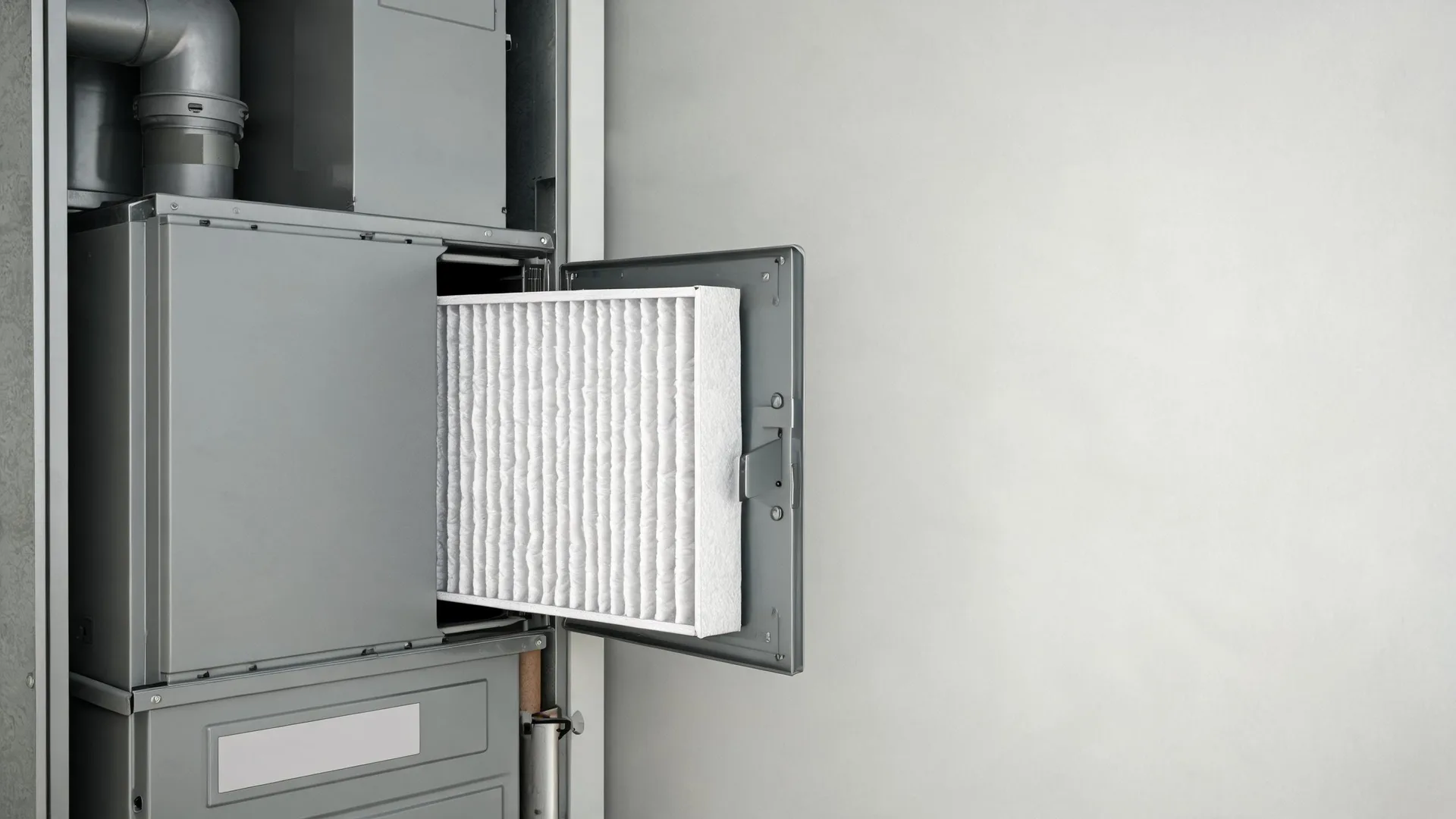
What gets skipped tells you more than what gets done

Someone rushing checks the easy things and leaves the rest. They won't test gas pressure at the manifold with a manometer, won't check the heat exchanger for cracks or rust-through, and won't pull the inducer motor to check the wheel for cracking or wear. Skipping those doesn't save you anything up front, since the furnace still fires and heats the house that day. It just means a cracked heat exchanger or a failing inducer gets found later, as a breakdown, instead of now, as a line on an inspection sheet.

A furnace that never gets looked at doesn't fail all at once. Dust builds on the burner first, then on the flame sensor, and the flame starts burning uneven instead of steady. The sensor reads that weak flame as no flame at all and shuts the furnace down, so you get a system that starts and quits a few times before it either catches or gives up. Behind that, the blower motor is pulling more amps than it should because the bearings are drying out, and a motor that runs hot like that for another season is a motor that burns out instead of just wearing. None of this shows up as a complaint on day one. It shows up as a furnace that still heats the house, right up until the morning it doesn't.

Eleven months of run time means the furnace barely gets a rest before it has to carry the house again. That short window is what a tune-up is really protecting. A part that's starting to go gets found with the cabinet open and the furnace off, not partway through a cold stretch with the house depending on it. Waiting to see what happens means finding out during the eleven months it's working, not the one month it isn't.