

Illuminated stone-and-timber mountain homes line a quiet street at dusk, with evergreen trees and a mountain range in the background.

Furnace Maintenance in Colorado Springs, CO

Tell us about the job

Takes about a minute. No obligation.

Step 1 of 3: Equipment

Nine months of heat is most of the year, not a season you flip on for a few cold weeks. A furnace in El Paso County starts up around September and doesn't rest until May. That's the burner firing and the blower running, month after month, with no real break. On top of that, winter storms have hit the county 223 times between 2015 and 2024, and those are the stretches when the furnace is working its hardest. A part that might hold up for years of light use elsewhere gets pushed hard here from the first cold snap on. The wear shows up early, and it shows up quiet: a slower start, a louder cycle, before anything actually fails.

El Paso County saw 1,277 severe weather events between 2015 and 2024, counting wind, hail, tornadoes and winter storms.

A furnace tune-up catches what that weather does to the vent, the intake and anything else exposed outside before winter puts the system to work.

Nine months of heat starts in September. Have it checked in August.

Heat runs September through May
Winter nights average 17°F
223 winter storms from 2015 to 2024

Half the homes in El Paso County were built in 1989 or later. If yours is one of them, the furnace inside it is likely well short of worn out. A newer furnace still has every reason to be checked every year, because the county doesn't go easy on it just because it's young. A yearly look catches the small stuff while the furnace still has the years left to make fixing it worthwhile. Skip that check for a few winters running and a furnace that should have had a long life ahead of it starts falling behind early.

Have it checked before September asks anything of it

A tune-up now finds the slow start or the loud cycle before nine straight months of heat turns it into a real repair. Once the system is running daily, worn parts stop being quiet about it.

Find a contractor
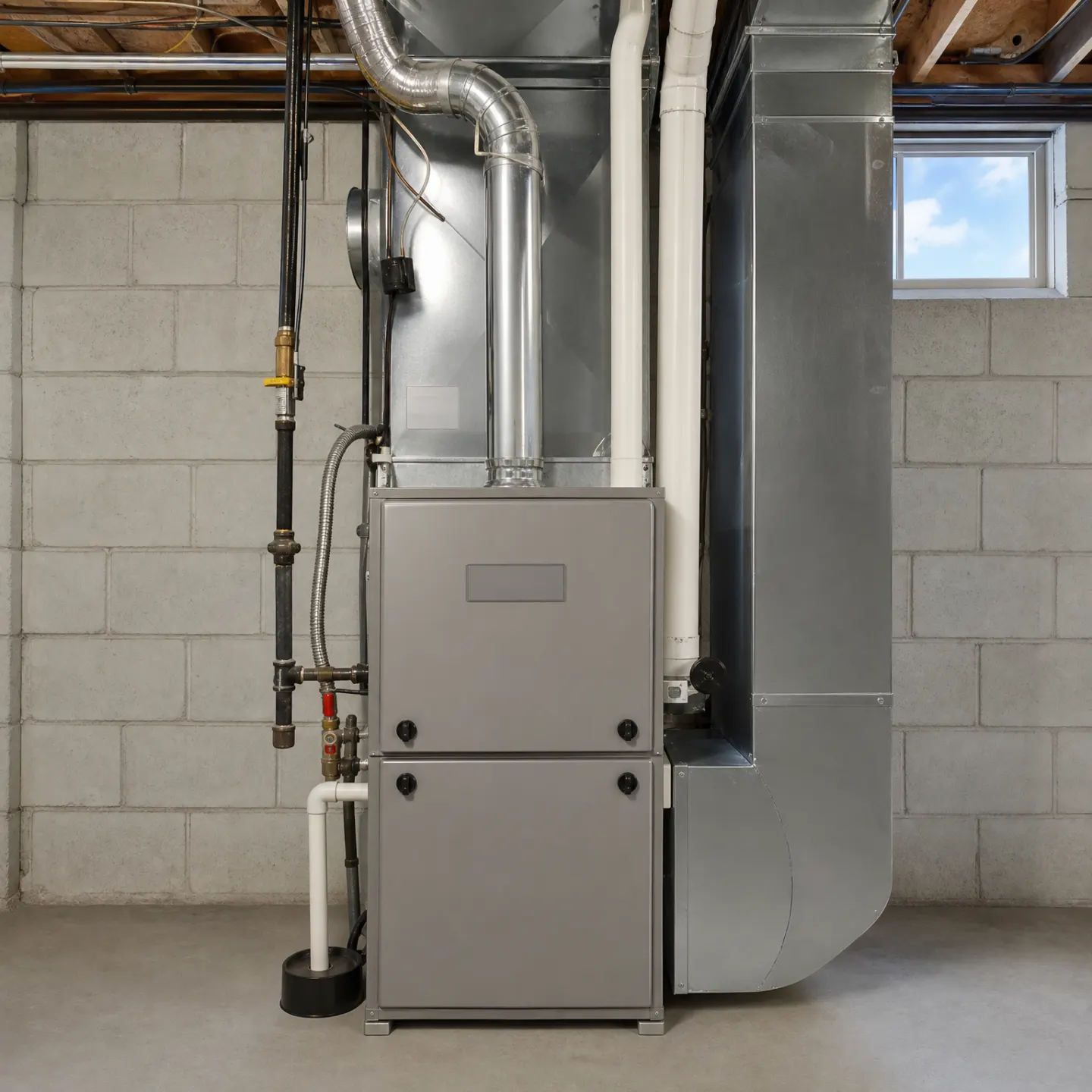
A gray high-efficiency gas furnace installed in an unfinished basement, surrounded by gas lines, a condensate drain, and sheet-metal ductwork.

Still young. Keep it that way.

A furnace with years left ahead of it is worth keeping on a yearly schedule. One check a year is what keeps a young system young. It costs nothing to the furnace to skip that check once. Skip it a few years running and small wear turns into the kind of repair that cuts into the years you were counting on.

Change the filter

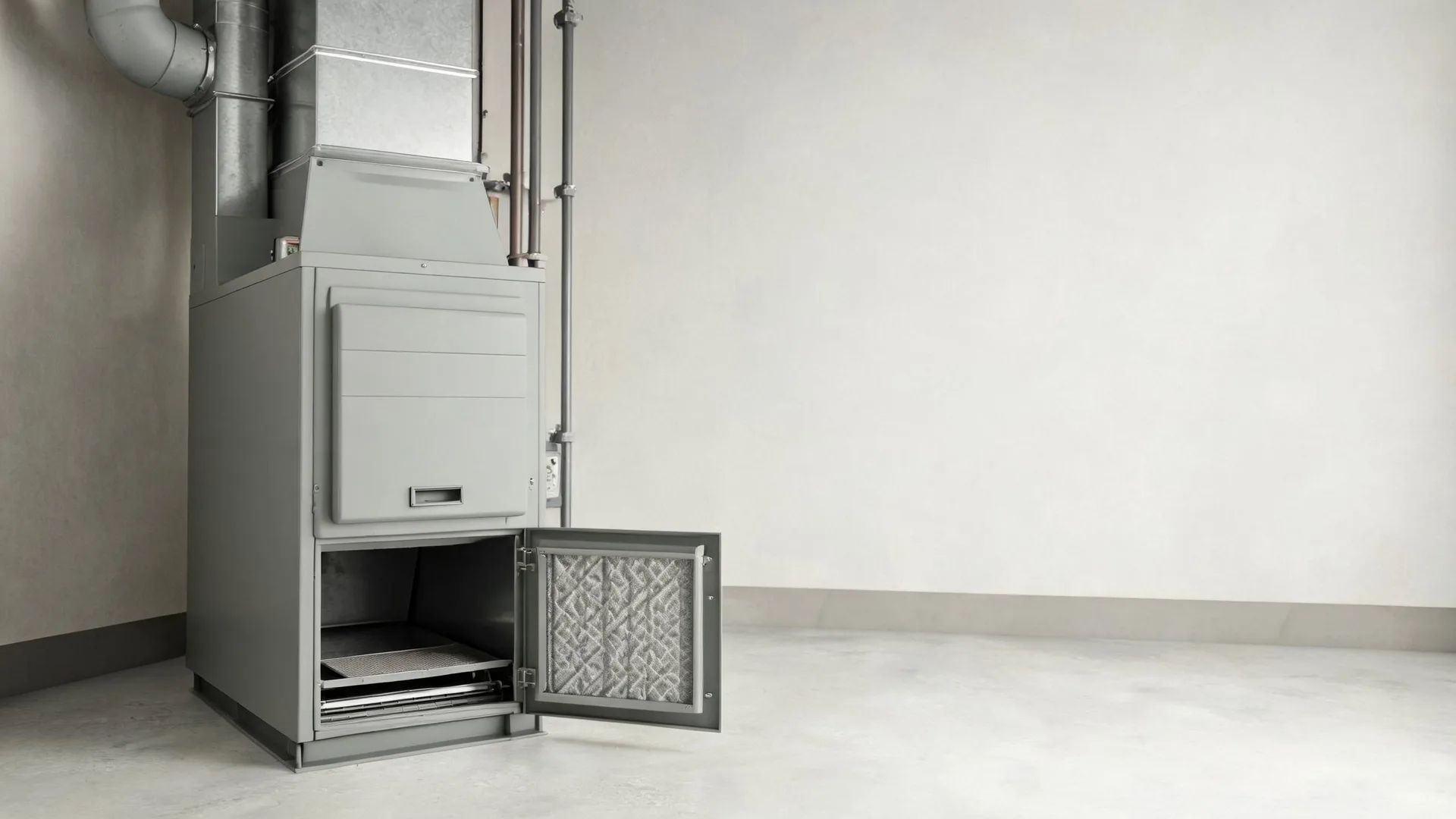
A dirty filter chokes airflow across the heat exchanger, and the furnace runs longer to push the same heat through. Check it every month the furnace is running, and swap it when it looks gray or clogged. Hold it up to a light. If you can't see through it, it's done.
Keep the area around it clear

A furnace needs open space to pull in air and breathe. Don't stack boxes or laundry against it, and keep anything flammable well away from the burner. If the vent pipe or intake pipe runs outside, make sure nothing is blocking the opening. A blocked intake can shut the furnace down or keep it from venting properly.

A furnace that never gets looked at doesn't fail all at once. Dust builds up on the burners and they stop firing clean, so the furnace works harder to put out the same heat. The flame sensor gets a coating on it and starts missing, and the furnace shuts off early or won't stay lit. Bearings in the blower motor dry out without anyone noticing until the motor whines, then grinds, then quits. A cracked heat exchanger can leak exhaust into the air a home breathes, and the only way to catch that crack is to have someone look. None of this shows up as a sudden breakdown. It shows up as a furnace running longer, firing worse, and costing more to keep up with, until the day it stops.

Gas heats 69.3% of homes in El Paso County, more than anything else. That means most furnaces here have a burner, a flue and a venting system working together, not just a heating element. A tune-up on a gas furnace has to check all three. The burner needs to fire clean, the venting needs a clear path to the outside, and the safety controls need to shut the gas off if something goes wrong. A filter change doesn't touch any of that. Skip the rest of the check and you can have clean air moving through a furnace that isn't burning or venting the way it should.