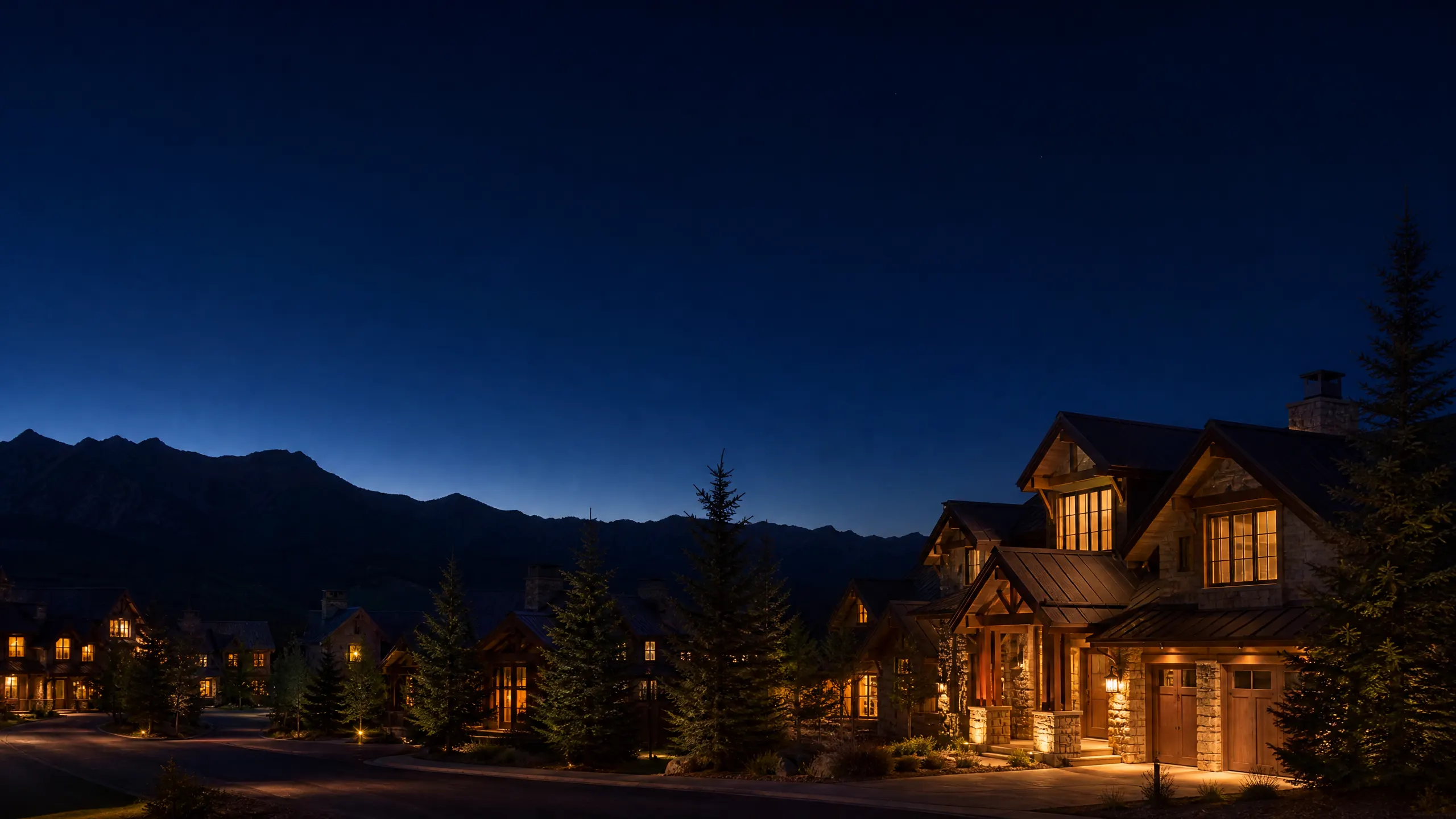

Illuminated timber-and-stone houses line a residential street at dusk, with evergreen trees in the foreground and a silhouetted mountain range behind them.

Furnace Maintenance in Castle Rock, CO

Tell us about the job

Takes about a minute. No obligation.

Step 1 of 3: Equipment

Douglas County saw 353 severe weather events between 2015 and 2024. Most of that was wind and hail, 97 damaging wind events and 158 hail events over that stretch, with winter storms adding another 92. A furnace itself sits indoors, away from the hail and the wind, but the power that runs it doesn't. Statewide, 13% of households went at least a full day without power in 2024. A gas furnace still needs electricity to run the blower and the control board, so a long outage shuts it down no matter how much fuel is in the line. A tune-up before winter is the time to find out whether the system will restart clean once the power comes back on.

Almost three out of four homes in Douglas County heat with gas.

A gas furnace tune-up means checking the burner and venting, not swapping a filter and moving on.

Nine months of heat starting in September means August is when to get it checked

Heat runs September through May
Winter nights average 17°F
92 winter storms from 2015 to 2024
Half the homes here are young enough that upkeep is what decides how long that lastsHalf the homes in Douglas County were built in 2002 or later

Nine months of heat, September through May, doesn't leave this furnace much time to rest. That kind of run time wears down an igniter or a blower motor faster than it would in a place where heat only runs half the year. Douglas County saw 92 winter storms between 2015 and 2024, and those are the days the furnace works hardest. A part that's been weakening all winter tends to fail on the coldest night, not a mild one. Checking it before the long run starts catches that wear while it's still a small fix.

Get the furnace checked before the power goes out, not after

A furnace that restarts clean after an outage is one less thing to worry about when a winter storm knocks the power out. Have it checked now, before the next one hits.

Find a contractor
A man in a cap, dark jacket and tan work pants carries a canvas tool bag up concrete steps toward a dark blue front door, with a potted shrub beside the entry.
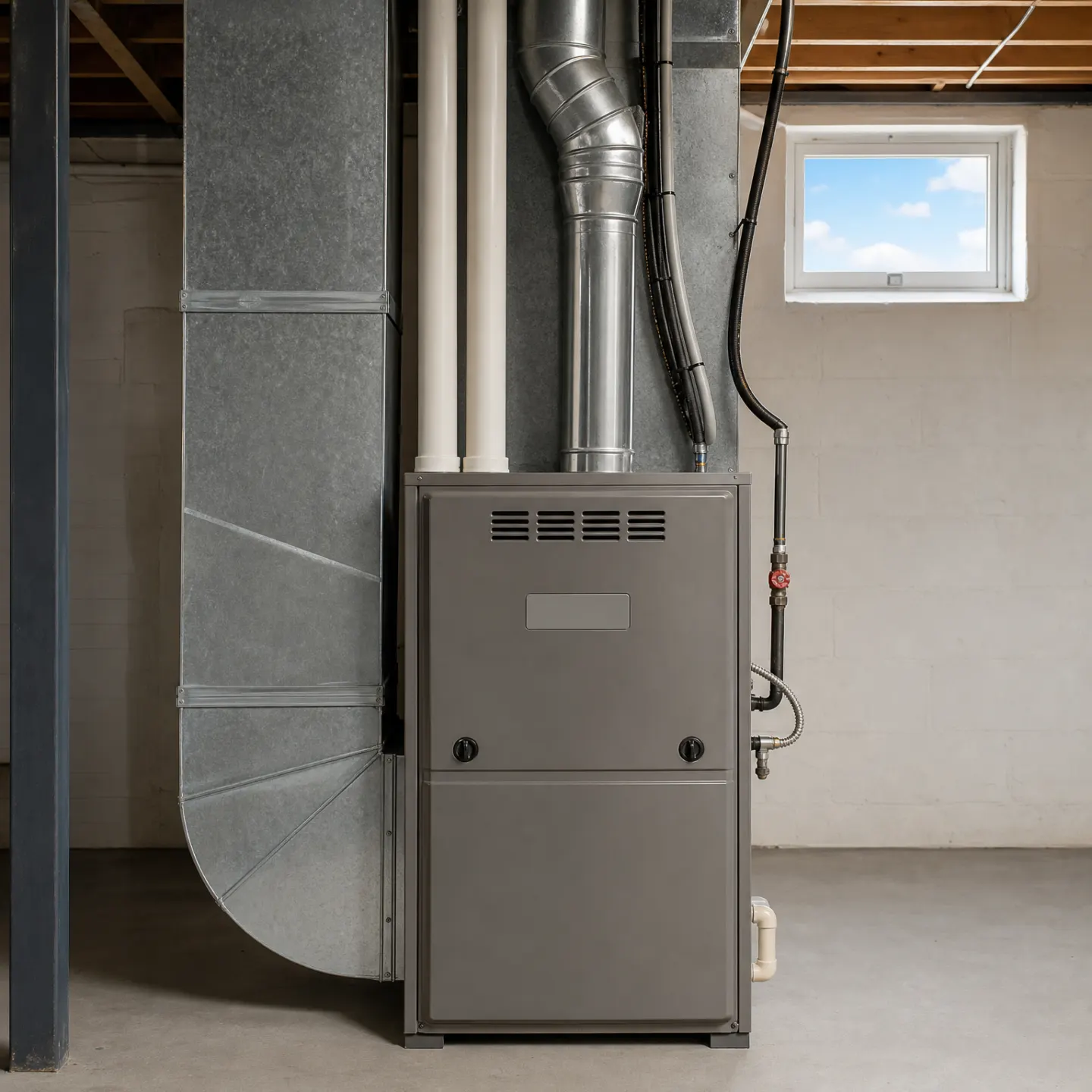
A gray residential gas furnace installed in an unfinished basement, surrounded by ductwork, a metal flue pipe, and a gas supply line.

A newer furnace still needs the yearly look

A furnace in a home built in 2002 or later still has working life ahead of it. A yearly check is what keeps that life on track instead of cutting it short. The same wind and hail that knock out power across the county put ordinary wear on a furnace over time, a burner that needs cleaning, a blower motor that needs to be heard running before it's needed. Catching that wear at a yearly visit means it gets fixed on an ordinary day, not during a winter storm.

The flame tells a story the thermostat can't

A burner flame should burn steady and blue. If it's lifting off the burner, rolling out, or tipping yellow at the edges, that's incomplete combustion, and it means carbon monoxide is forming somewhere it shouldn't. None of that shows up on a thermostat reading or in how warm the house feels. A technician pulls the burner compartment apart to look at it directly, because from the vents it looks like any other furnace running fine.
A cracked heat exchanger doesn't announce itself

The heat exchanger is the one part that separates the flame from the air blowing through the house. A hairline crack in it can run for a long time without tripping anything, especially if the blower is strong enough to keep pulling air past the leak. Finding it means pulling the exchanger and checking it with a light or a camera, not waiting for a smell or a headache to give it away.

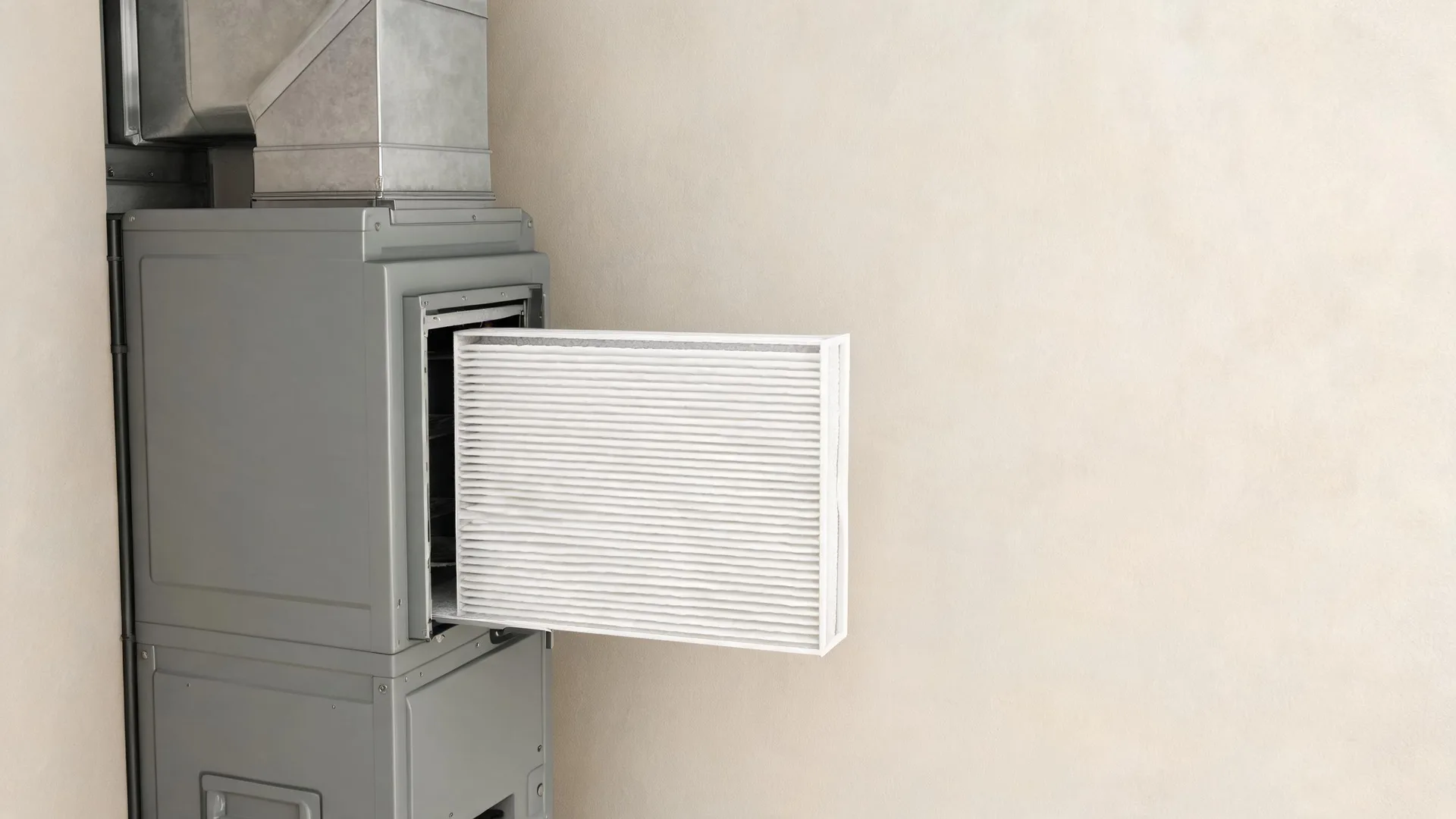
A furnace filter does one job, and it does it for the whole system, not just the air. Once it loads up with dust, the blower has to pull harder to get air through it, and that drop in airflow shows up everywhere downstream. The heat exchanger runs hotter than it should because there isn't enough air moving across it to carry the heat away. A blower motor working against a clogged filter draws more current and wears out its bearings sooner. None of this is about air quality first. It's about whether the furnace can breathe. Coils and a condensate drain belong to the cooling side, but a furnace with an evaporator coil on top shares that airflow path, and a drain that's clogged or a coil caked with dust chokes the same system from the other end. Checking the filter, the coil and the drain together is really one check: can air move through this unit the way it was built to.

By the time the first winter storm hits, this furnace needs to already be running right. A technician looking at it before the season starts can watch the igniter glow and listen to the blower with nothing riding on it yet. Wait until a cold night in the middle of the run and you're finding out whether they hold up the same time you need them to. Catching a weak part in the off months means it gets fixed on a quiet day instead of during one of the storms that knock the power out.