Gas is the default here
Utility gas heats 65.4% of occupied homes in Arapahoe County. If your house already has a gas line run to a furnace, staying with gas is the straightforward option.
Takes about a minute. No obligation.
Utility gas heats 65.4% of occupied homes in Arapahoe County. If your house already has a gas line run to a furnace, staying with gas is the straightforward option.
Electricity heats 31.1% of homes in the county. If yours is one of them, an electric furnace or heat pump is worth comparing against gas rather than assuming a switch is needed.
NOAA nClimDiv, 1991–2020 normals
Natural gas in Colorado ran $10.09 per million Btu in 2024.
At that price a high-efficiency furnace takes longer to pay back, so pick the one that fits your house, not just the one with the highest rating.
A high-efficiency furnace and a standard one both heat the house. The difference is how much gas each one burns to do it, and at $10.09 per million Btu that difference takes years to show up on a bill. So the rating sticker matters less than it looks like it should. What matters more is whether the furnace is sized for your house and whether the installer gets the ductwork and venting right. An oversized unit or a sloppy install will cost you in comfort and repairs no matter how high the efficiency number is. Ask about the heating load your house actually has before you ask about the rating.
Arapahoe County sees its share of hail, wind and winter storms, but none of that changes what furnace fits your house. A standard, correctly sized unit holds up fine here. The thing worth acting on is getting it installed before a storm knocks out power or temperatures drop, not buying past what your house needs.
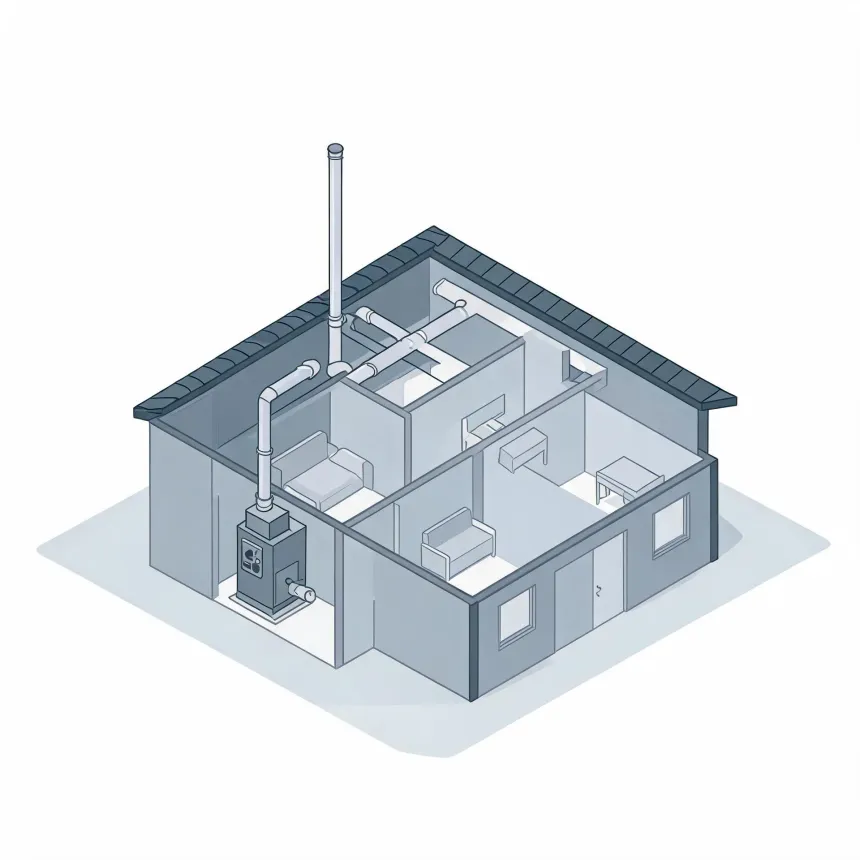
Find a contractorThe furnace itself is only part of what gets priced. Sizing takes a load calculation that looks at square footage, window area, insulation and duct layout, not a guess based on the old unit. Get that wrong and the furnace short-cycles or runs too long trying to keep up, and you pay for it every month on the bill. Venting is the other piece installers price separately. A high-efficiency furnace vents through PVC pipe and needs a condensate drain, so moving up from a standard unit usually means new venting, not a swap onto the old flue. Ductwork sometimes needs work too, especially if the new furnace moves a different volume of air than the one it replaces. None of that shows up on the sticker price of the furnace, but it shows up in the quote.
A single-stage furnace runs full blast until the house hits temperature, then shuts off completely. A furnace that can modulate its flame runs lower and longer, which keeps the air moving and the temperature steadier room to room. Ask whether your ductwork was designed around a steady blower speed, because that changes how much benefit you actually get from a furnace that can vary its output.
The manufacturer's warranty on the heat exchanger and parts is void if the unit was installed wrong, and there's no way to check that by looking at it. Ask what the installer covers on their own labor, separate from what the manufacturer covers. If something fails early, that answer tells you who you're calling and whether it costs you anything to get them back out.
Estimates for a typical Arapahoe County home, from EIA household energy data, Colorado fuel prices and NOAA climate normals. Your home will differ.
Installation day starts with the old furnace coming out, along with the old venting if the new unit changes how it vents. The new furnace gets set in place, and that's when the supply and return ducts get connected, the gas line gets hooked up, and the venting gets run. Electrical and a thermostat wire come next. Once it's all connected, the installer fires it up and checks the gas pressure, the temperature rise across the heat exchanger, and the airflow at the registers. A combustion analyzer reading tells them whether it's burning clean. Expect some drywall or framing work around the old vent if the new furnace routes differently, and expect the crew to test the system through a full heating cycle before they call it done, not just light it and leave.