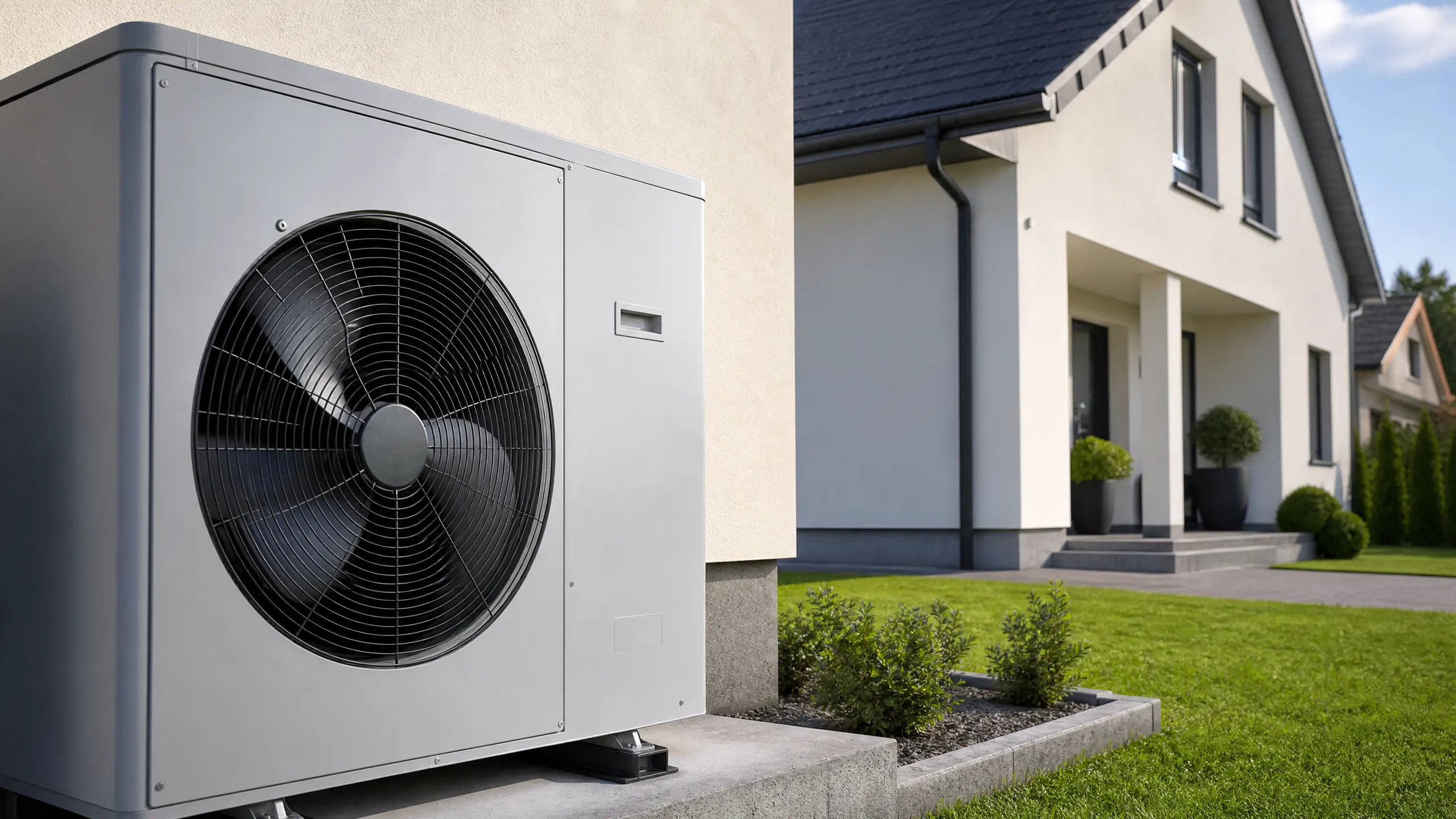




A grey air-source heat pump outdoor unit mounted on a concrete pad next to a modern white-rendered residential house.

Heat Pump Repair in Trinidad, CO

Tell us about the job

Takes about a minute. No obligation.

Step 1 of 3: Equipment

A heat pump in Las Animas County deals with the same cold as anywhere else on the Front Range, nothing more. Winters here average 20°F overnight through December, January and February. That is cold enough that the system leans on its defrost cycle and backup heat more than it would in fall or spring. Winter storms have hit the county 166 times over the past decade, and that mostly means wind-driven snow piling up around the outdoor unit rather than anything that damages it. If your heat pump is blowing cold air, cycling on and off, or not keeping up when it's near freezing outside, that points to a specific part. A stuck reversing valve. A low refrigerant charge. A failing defrost sensor. None of that is particular to Trinidad. It is the same repair a contractor would make on this same unit anywhere else.

8 months
October through May, your system heats
3 months
June through August, it cools
20°F
the average winter night it heats against
86°F
the average summer afternoon it cools against
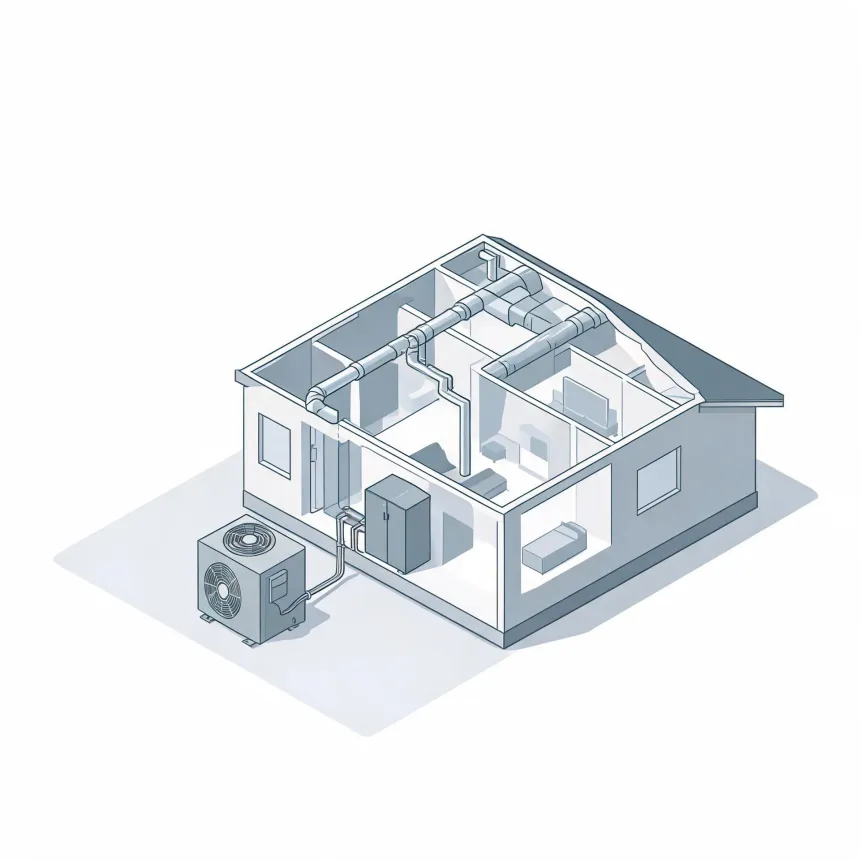
Isometric line illustration of a cutaway single-story house showing interior rooms, ceiling ductwork, an indoor air handler unit, and an outdoor condenser connected by a line set.
Your system heats October through May and cools June through August.

NOAA nClimDiv, 1991–2020 normals

Heat here runs October through May, eight months straight.

September is when a weak part gets found, before the first cold morning asks the system to work.

Half the homes in Trinidad were built in 1972 or earlier, and a heat pump doesn't outlast the house around it

Half the homes here were built by 1972
151 damaging wind events from 2015 to 2024
65 hail events from 2015 to 2024

Las Animas County has seen 390 severe weather events over the past decade, counting wind, hail, tornadoes and winter storms together. Damaging wind accounts for 151 of those, hail another 65. Those are roof and siding problems. They do not explain why an outdoor heat pump unit stops running. The unit sits outside through all of it regardless, built to handle wind and hail without issue. What actually wears on a heat pump is the ordinary load of a long winter, the compressor and reversing valve cycling for months at a stretch. So when one quits in Trinidad, the cause is almost always one of a few things a contractor checks on any heat pump, anywhere. The valve. The charge. A sensor gone bad. Worth fixing first, in most cases. Replacement only makes sense once the unit is old enough that another repair isn't a good bet.

A heat pump running wrong costs you every month it stays that way

Electricity here runs 14.92 cents per kilowatt-hour. A heat pump that's low on charge or stuck in the wrong cycle burns through that all winter long, not just on the coldest days. A reversing valve or a bad sensor doesn't fix itself. Get it looked at.

Find a contractor
A man in a cap, gray T-shirt and tan work pants carries a canvas tool bag up porch steps toward a dark blue front door of a gray clapboard house, with a potted plant at left.
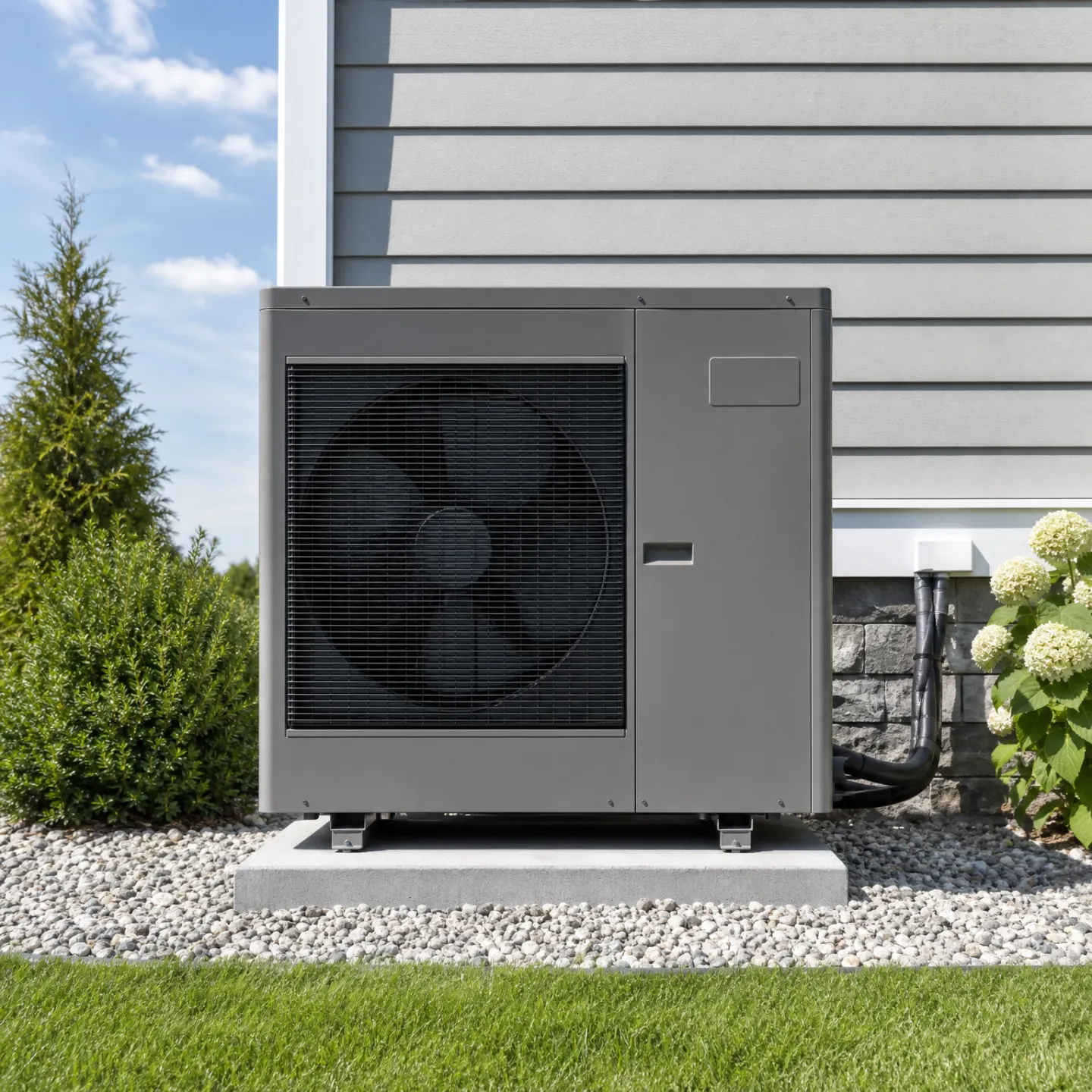
A gray air-source heat pump mounted on a concrete pad next to a house with gray vinyl siding, surrounded by gravel and flanked by green shrubs and white hydrangea flowers.

A struggling heat pump doesn't recover on its own, it just runs toward failure

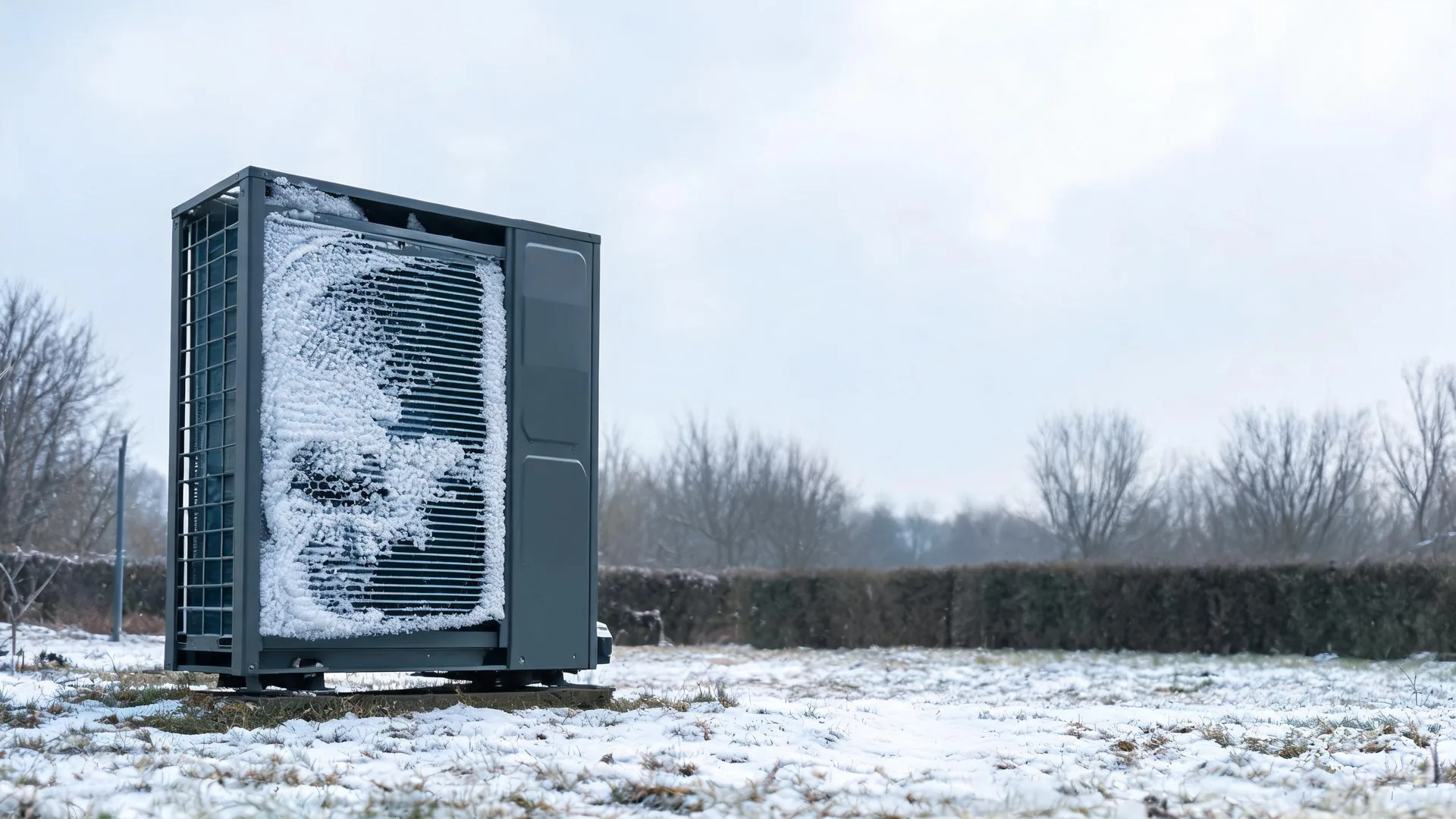
A heat pump that's struggling still moves heat, it just works harder to do it. Low refrigerant charge makes the compressor run longer to move the same amount of heat, and that extra runtime is what wears a compressor out early. A reversing valve that's starting to stick gets worse the more it's forced to switch, until one day it stays put. Ice on the outdoor coil during a defrost cycle is normal. Ice that doesn't clear means the defrost cycle isn't finishing, and a coil that stays iced over blocks airflow, which makes the system run longer and fall further behind. None of this fixes itself by running more. Each cycle leaves the part a little worse than the last one did, until it quits outright.

What you can check yourself

Look at the outdoor unit. Clear away any leaves, ice or debris stacked against it so air can move through the coil. Check the air filter inside and swap it if it's gray with dust, a clogged filter starves the system and makes it look like a bigger problem than it is. Look at the thermostat setting and batteries if it has them. Check that the breaker for the outdoor unit hasn't tripped. These take a few minutes and rule out the simple causes before anything else gets blamed.
What to leave alone

Don't open the outdoor unit's cabinet or touch the refrigerant lines. Don't pour water or chip at ice built up on the coil, that ice points to a defrost or charge problem that forcing it off won't solve. If the system is tripping its breaker repeatedly, stop resetting it and get someone out, a breaker that keeps tripping is telling you something is actually wrong with the compressor or wiring, not asking to be reset again.

Most heat pump failures trace back to the same handful of parts, worn down by the sheer number of cycles the system runs through a season. The reversing valve is usually first. It switches the system between heating and cooling every time defrost kicks in, and a valve that's cycled thousands of times eventually sticks, leaving the system blowing cold air or stuck in one mode. Refrigerant charge is the other common failure, not because it burns off on its own but because a slow leak at a fitting or coil lets it drop a little more each season until the compressor is straining to move heat it can't move efficiently. The defrost sensor and control board fail less often but cause bigger symptoms, since a bad sensor tells the system it isn't icing over when it is, and the coil stays frozen until airflow chokes off entirely. Capacitors weaken with age and heat, and a weak one makes the compressor or fan motor struggle to start, which shows up as hard starts or a unit that hums without running. None of these parts fail because of one bad day of weather. They fail from the ordinary wear of a long season of cycling on and off.

A repair is worth making when one part failed and the rest of the system is sound. A reversing valve, a capacitor, a defrost sensor, these get replaced on their own without touching the compressor, and the unit runs like new once it's done. Replacement starts to make more sense when the compressor itself is the problem. That's the most expensive part in the system, and the labor to swap it gets close to what a new unit costs anyway. Age matters too, not because a number of years makes a machine fail, but because a unit old enough to need one major repair is old enough that the next part is probably close behind it. A contractor checking a heat pump that's acting up is really asking whether this is one failed part or a system failing all over. That answer decides which way to go, more than anything else does.