Winters here are cold, not strange
Overnight lows in Pitkin County average 10°F through December, January and February. A heat pump is built to run in weather like this. That kind of cold doesn't point to anything unusual going on with yours.
Takes about a minute. No obligation.
Overnight lows in Pitkin County average 10°F through December, January and February. A heat pump is built to run in weather like this. That kind of cold doesn't point to anything unusual going on with yours.
When a heat pump in Aspen stops heating or starts short cycling, the usual causes are the same ones a technician sees anywhere. A failing defrost control. Low refrigerant charge. A reversing valve stuck in one position. Someone can track down which one it is and fix it.
Half the homes in Pitkin County were built in 1985 or later.
A heat pump in a house that age has likely got years left in it, so repair is the right first call.



If your heat pump came with the house, find out when that was built. A system that age is probably still within its working life, especially in a newer home. That's worth knowing before you decide anything. A tripped defrost control or a reversing valve stuck in one position doesn't mean the unit is done, it means one part failed. Replacing a heat pump that still has years ahead of it skips past the part that actually needs attention, which is finding what broke.
At 14.92 cents a kWh, a stuck reversing valve or a bad defrost control doesn't just leave rooms cold. It runs the system harder than it should, and that shows up on the bill before it gets fixed. Get the actual cause found.
Find a contractorA heat pump doesn't get the winter off the way a furnace does. It runs on the hottest days and the coldest nights, so the parts that fail are the ones working every month of the year. The reversing valve switches each time the system changes between heating and cooling, and the slide inside it can stick or stop sealing after enough of those switches. The defrost control watches the outdoor coil and calls for a defrost cycle when frost builds up on it. If the sensor drifts or the board behind it fails, the unit either skips defrost and ices over, or runs defrost when it doesn't need to and blows cold air inside. The outdoor fan motor sits outside in all weather, and its bearings wear with hours logged, not with age on the system. None of this means the unit is near the end of its life. A heat pump with years left ahead of it can still throw a bad defrost control or a stuck reversing valve, because those parts fail from use, not from the system getting old.
If the slide inside is partway stuck, the valve isn't sealing right either way. Running the system more just means it spends more hours moving refrigerant the wrong direction, or mixing both directions at once, and that extra work falls on the compressor.
A defrost cycle that doesn't fire on schedule lets frost build past what the coil was designed to shed. Once ice covers enough of the coil, airflow across it drops, the system pulls harder to compensate, and the compressor ends up running against a coil that can't do its job.
A few things are worth checking before anyone comes out. Look at the outdoor unit and see if the coil is caked in ice or buried in snow. Check the air filter, a clogged one starves the system and can trigger problems that look electrical but aren't. Go to the thermostat and make sure it's set to heat and the temperature is actually above room temperature. Check the breaker panel for a tripped breaker, especially if the unit stopped dead rather than just running poorly. If you've got a disconnect box near the outdoor unit, make sure it's pushed in all the way. None of this fixes a bad reversing valve or a failing defrost control, but it rules out the simple stuff first.
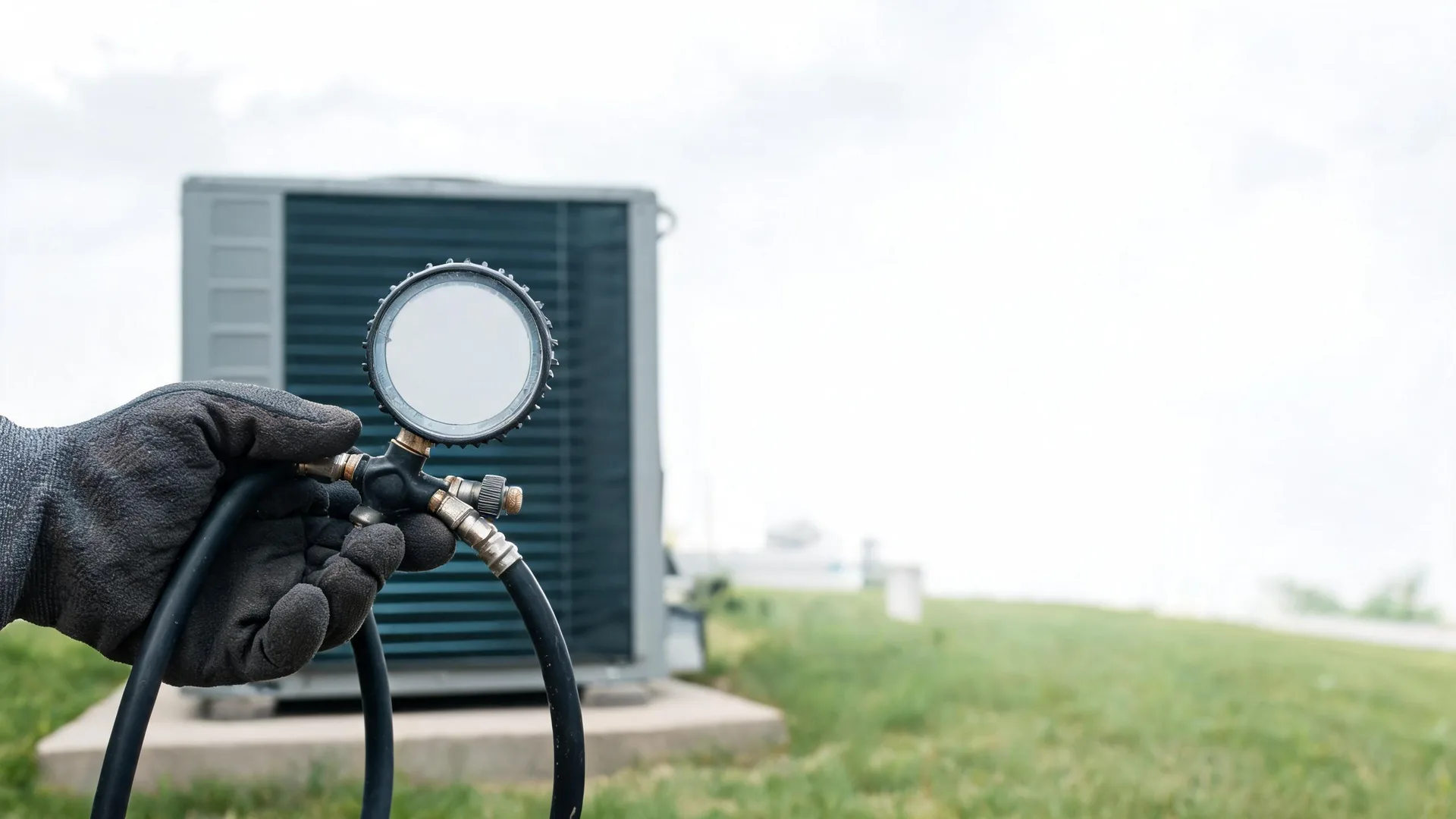
A diagnostic visit starts outside, at the unit itself. A technician checks refrigerant pressures, because that number tells them whether the charge is right or whether there's a leak to find. They'll run the system in heat mode and watch how it responds, listen to the compressor, check whether the reversing valve actually shifts when it's told to. The defrost control gets checked too, since a sensor that's drifted or a board that's failing won't always show itself just by looking at it. Electrical connections get tested, because a loose wire or a failing capacitor can cause symptoms that look like something bigger than they are. By the end, the goal isn't just naming a part. It's knowing why that part failed, so the fix holds.