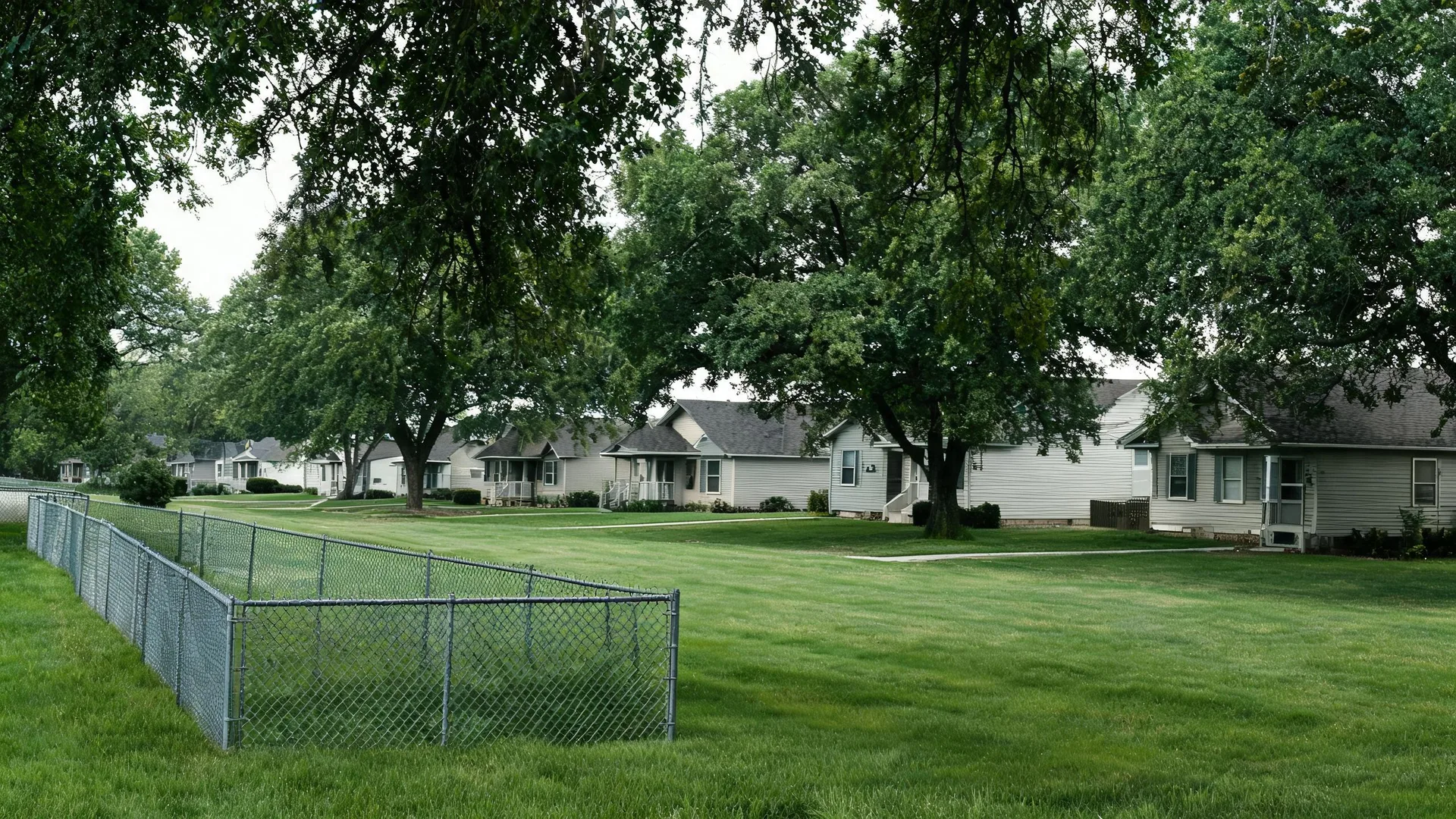
A row of single-story light-colored houses behind large mature trees, fronted by a wide mowed lawn and a chain-link fence in the foreground.

Heat Pump Repair in Sterling, CO

Tell us about the job

Takes about a minute. No obligation.

Step 1 of 3: Equipment

September is when a weak heat pump shows itself

Heat here runs October through May, about eight months straight. The first real cold snap in September and October is when a heat pump that's been struggling quietly all year finally gets asked to work hard, and that's when a bad capacitor or a low charge turns into no heat at all.

Get it looked at before the system has to lean on it

A heat pump with a developing problem can often still limp through mild days. Once it's running daily against real cold, there's no slack left for a weak part to hide behind. Having it checked before that point means a repair instead of an emergency call on the coldest night.

8 months
October through May, your system heats
3 months
June through August, it cools
17°F
the average winter night it heats against
87°F
the average summer afternoon it cools against
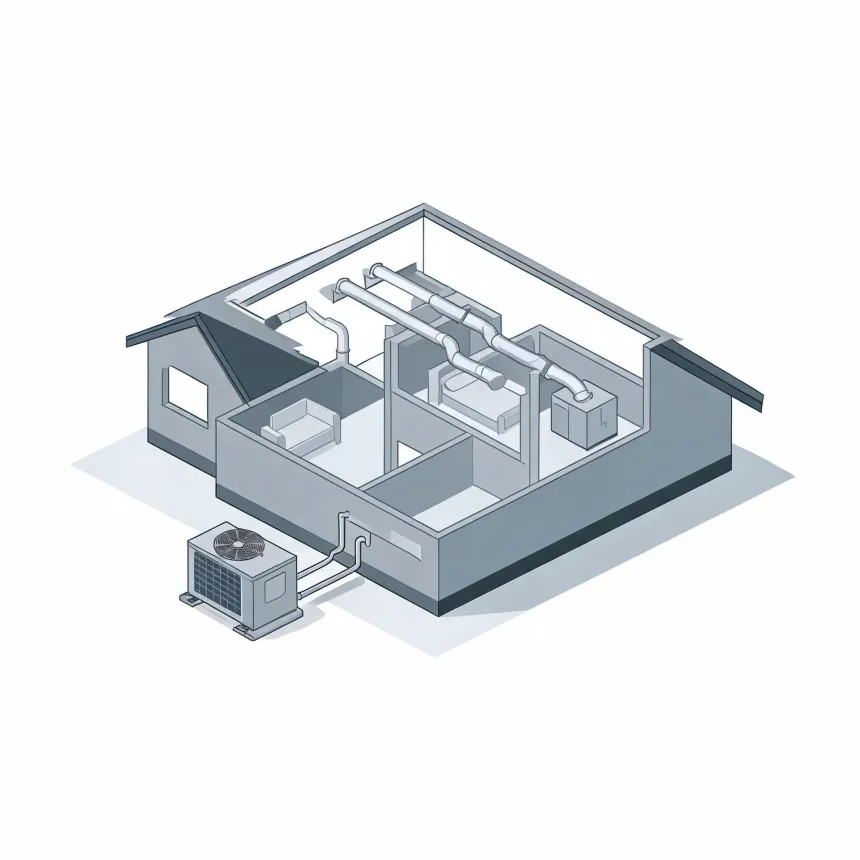
Isometric grayscale illustration of a cutaway house showing interior rooms, ceiling ductwork and an air handler, connected by lines to an outdoor condenser unit on a pad outside.
Your system heats October through May and cools June through August.

NOAA nClimDiv, 1991–2020 normals

Logan County sees its share of hail and wind, but none of that is what wears out a heat pump.

When a heat pump in Sterling stops heating, the cause is almost always a part inside it, not the weather outside.

104 wind events, 153 hail events, and none of them are why your heat pump quit

289 severe weather events from 2015 to 2024
13% of homes statewide lost power a day or more in 2024
104 damaging wind events from 2015 to 2024

A heat pump running badly costs you today, not someday

Every day it runs like this adds to the bill without adding any heat. Have it looked at and get the real cause fixed.

Find a contractor
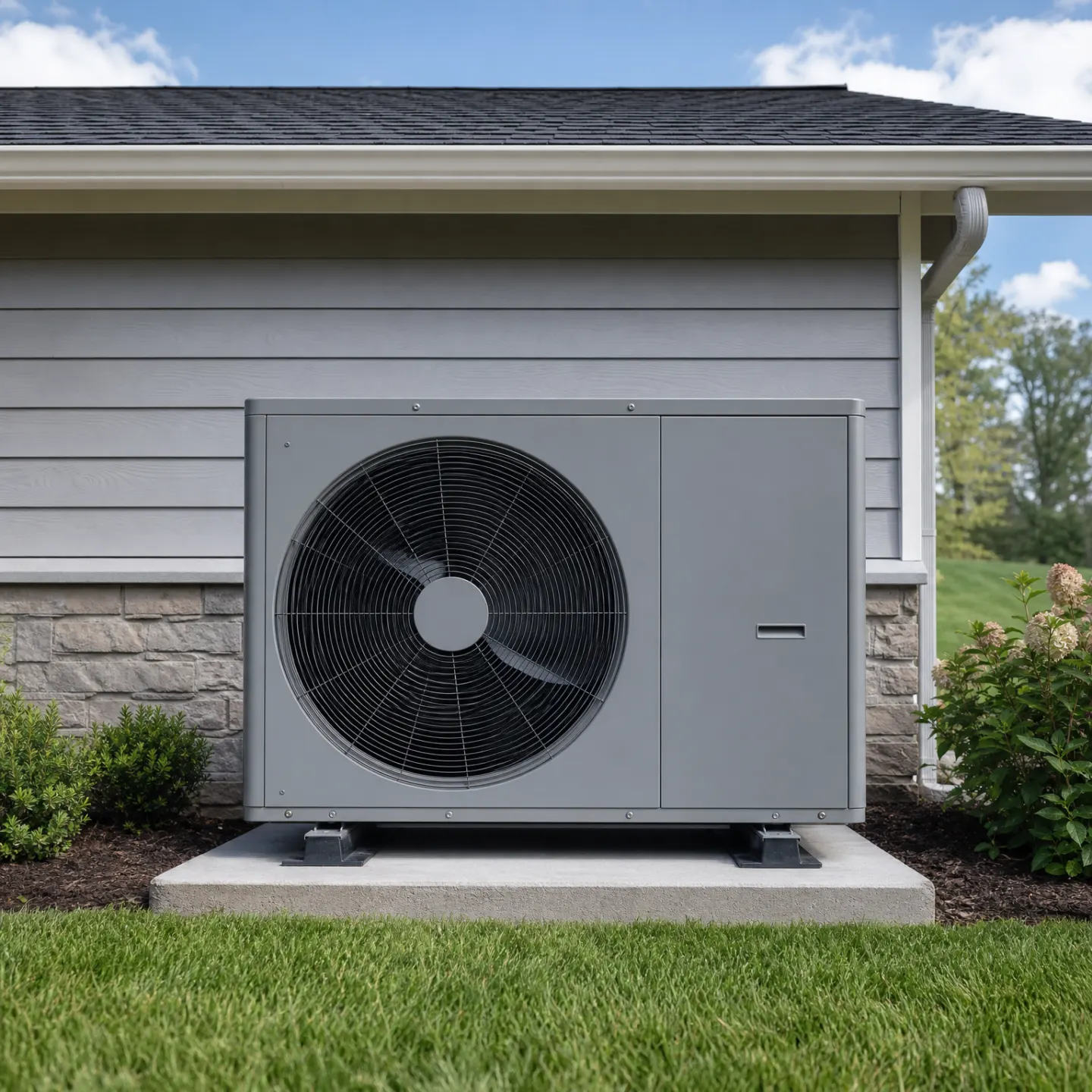
A gray outdoor HVAC unit mounted on a concrete pad beside a house with gray lap siding and a stone foundation.

Running it while it struggles is how a small problem becomes a dead compressor

A heat pump that's losing charge or running on a weak capacitor doesn't fail all at once. It keeps cycling, trying to hit the setpoint, and every cycle that doesn't quite get there means the next one starts from further behind. A refrigerant leak gets worse under load, not better, because the compressor keeps working against a charge that's already short. A failing capacitor weakens a little more every time it has to kick the compressor on, until one start it can't finish. Running the system hard while any of this is happening doesn't give a part a chance to recover. It just uses up whatever life was left in it.

It's blowing air that isn't warm

A heat pump in heating mode should feel warm at the vent. Room temperature air or cooler usually means it's switched over to backup heat because the compressor side can't keep up. It can also mean the system is low on refrigerant and isn't moving enough heat to matter.

It won't stop running, or won't start at all

A heat pump that cycles on and off every few minutes is working against something, maybe a weak capacitor or a charge that's too low to do the job. One that runs nonstop without ever hitting the setpoint has the same problem, it just hasn't quit yet. One that won't start at all, maybe just a hum or a click, usually points to the capacitor or the compressor itself.

Most heat pump failures trace back to a handful of parts, not the system as a whole. The capacitor is the one that goes most often. It gives the compressor and fan motors the jolt they need to start, and it weakens with every cycle until one day it can't deliver enough. Refrigerant leaks are the other big one, usually at a fitting or a coil, and a system low on charge has to run longer to do the same job, which puts more wear on everything else. The reversing valve is what switches a heat pump between heating and cooling, and when it sticks, the system can get stuck in the wrong mode or stop switching at all. Outdoor coils take a beating too, since they sit outside year-round and anything that blocks airflow across them makes the whole system work harder than it should.

Not every failure means a new system. A capacitor or a reversing valve can be replaced on its own, and the rest of the heat pump keeps going like nothing happened. What matters more is the compressor. It's the most expensive part to replace, and often the labor alone makes it not worth doing on an older unit, so a compressor failure is usually the point where repair stops making sense. The age of the system matters less than what's actually failed. A system with a bad capacitor is an easy fix no matter how long it's been running. The same system with a failed compressor is a harder call, and the honest answer depends on what a tech finds when it's open, not on a guess made over the phone.