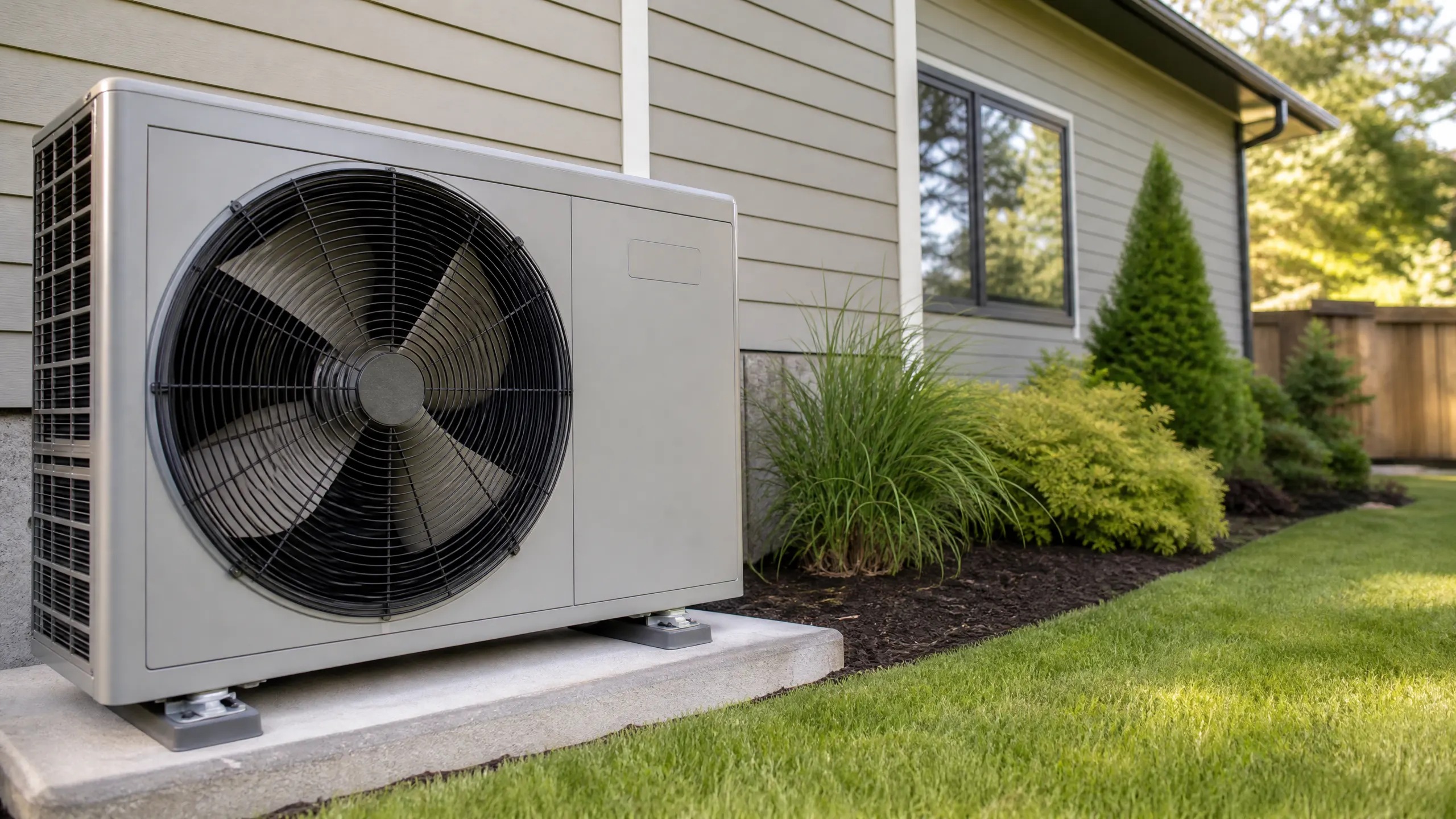




An outdoor heat pump unit mounted on a concrete pad beside a house with beige siding and a landscaped garden bed.

Heat Pump Repair in Fort Collins, CO

Tell us about the job

Takes about a minute. No obligation.

Step 1 of 3: Equipment

Heat here runs from September through June, about ten months a year. August is the one month it gets a real rest, which makes it the time to have a heat pump looked at before the load comes back on. Trouble usually shows up in the first cold snap, not partway through winter. A part that was already weak gets found out the first morning it has to work hard. Having it checked in August means the repair happens before the season needs the system every day.

10 months
September through June, your system heats
15°F
the average winter night it heats against
76°F
the average summer afternoon it cools against
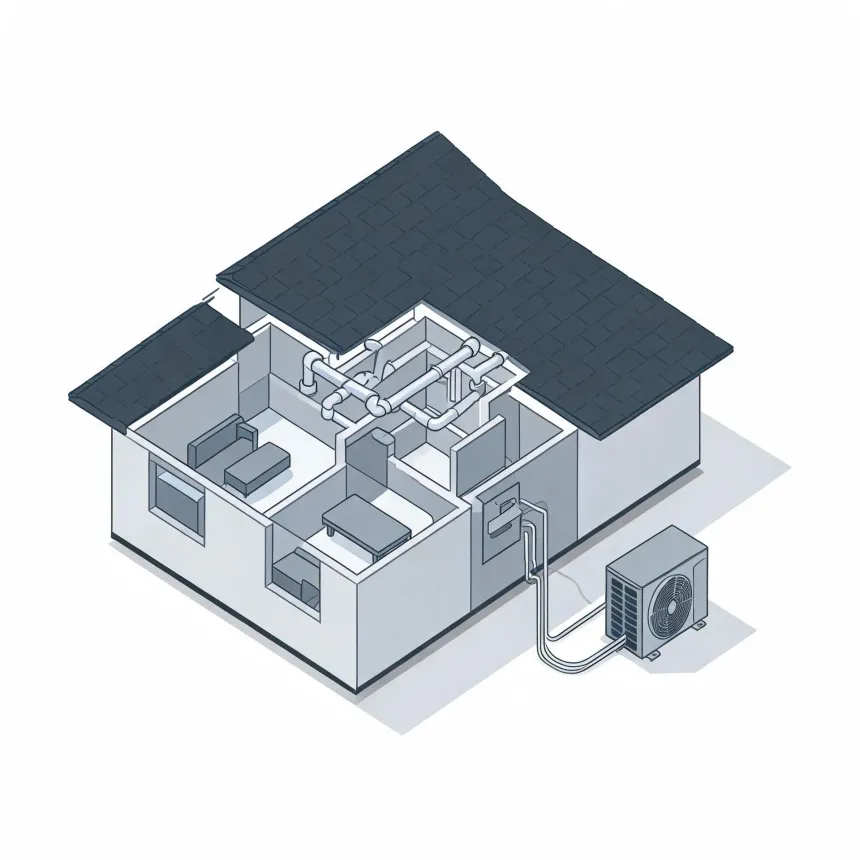
Isometric line illustration of a cutaway house showing interior rooms with furniture, ceiling ductwork under a dark shingled roof, and an outdoor condenser unit connected by lines on the right.

Winters here hold a 15°F average overnight low from December through February.

A heat pump has to work for that every night, and the usual parts wear out the usual way.

Larimer County weather doesn't wear out a heat pump any faster. A worn part still fails the usual way.

359 severe weather events from 2015 to 2024
13% of homes statewide lost power a day or more in 2024
102 damaging wind events from 2015 to 2024
A bad heat pump costs more hereColorado power ran 14.92 cents a kilowatt-hour in 2024, and a struggling heat pump eats it fast.

Half the homes in Larimer County were built in 1993 or later. If yours is one of them, your heat pump probably isn't old enough to be failing on its own. A newer house usually means a newer system, and a system that age still has working life left in it. That changes what a breakdown means. It's more likely one worn part than the whole unit reaching the end. Worth finding out which part before anyone brings up replacing it.

Fix it now, before it runs up your bill all winter

A heat pump that's running wrong doesn't pace itself. It keeps pulling power at the higher rate while it struggles. The longer the real problem sits, the more it shows up on the bill.

Find a contractor
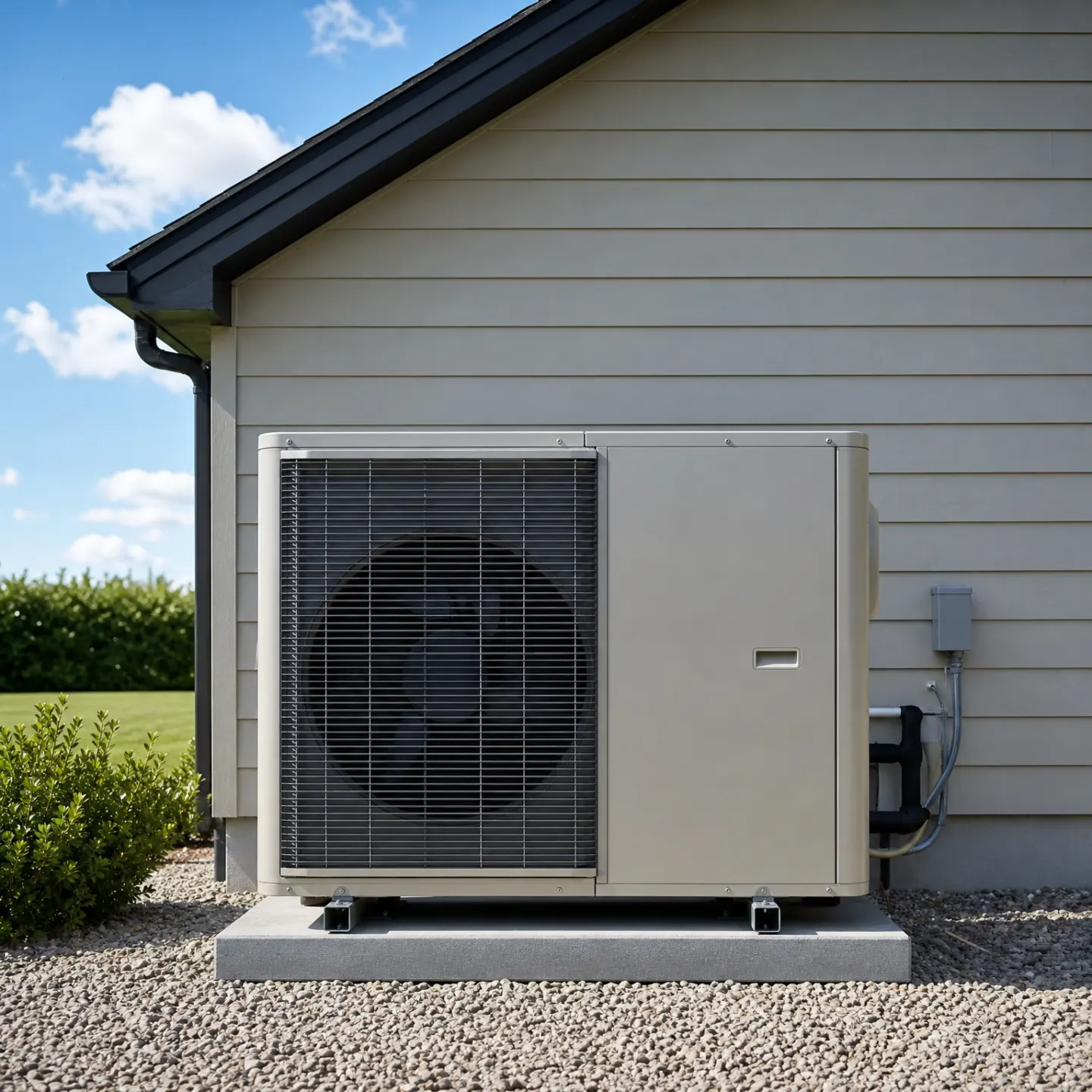
A residential heat pump outdoor unit mounted on a concrete pad next to a house with gray vinyl siding.

What to check before anyone comes out

Before anyone comes out, a few things are safe to check. Look at the outdoor unit first. If the coil is caked in ice or buried in leaves and debris, that alone can stop a heat pump from heating right, and clearing it sometimes solves it on the spot. Check that the outdoor fan is actually spinning when the system runs. A fan that's iced up or jammed means the unit isn't moving air the way it needs to. Inside, check the thermostat is set to heat, not auto, and that the batteries aren't dying, since a weak signal can leave the system stuck in the wrong mode. Check the filter. A filter packed with dust chokes airflow on both sides of the system, and it's the one thing a homeowner can replace without a tool. Walk the vents and make sure none are closed or blocked by furniture. Last, check the breaker. A heat pump that won't start at all sometimes just needs a reset, not a repair. None of this fixes a bad reversing valve or a weak compressor, but it rules out the easy stuff before anyone gets billed for finding it.

The reversing valve gets blamed first

When a heat pump stops heating or gets stuck in one mode, the reversing valve is usually the first thing checked. It switches the refrigerant flow between heating and cooling, and it moves every time the system changes modes. A valve that's stuck or leaking inside will either trap the system in cooling or make it run backwards.
Most other failures sit in the outdoor unit

The outdoor unit holds the compressor, the fan motor and the defrost sensor, and each one carries the hardest load. A failing capacitor can keep the compressor or fan from starting. A bad defrost sensor leaves the coil icing over instead of clearing itself. Either one shows up as weak heat or a unit that runs without warming the house.

A heat pump that's struggling still tries to keep up, and that's what causes the damage. A low refrigerant charge makes the compressor run longer to move the same amount of heat, and it was never built to run that long. A failing capacitor makes the compressor pull hard on every start instead of spinning up clean, and each hard start wears the windings a little more. Ice on the outdoor coil blocks airflow, so the system runs longer to push the same heat through, and a defrost sensor that isn't clearing it lets the ice build with every cycle. None of this fixes itself by running more. The part that's struggling keeps struggling until it quits, usually the compressor, and the rest of the system depends on it.

A diagnostic visit starts outside, at the unit itself. A contractor will check the refrigerant charge, look at the reversing valve, and watch how the compressor and fan start up. Gauges show whether the system is low on refrigerant or moving it the way it should. Inside, they'll check the air handler and the thermostat signal, since a heat pump that won't switch modes sometimes traces back to a bad control signal rather than the outdoor unit at all. Electrical readings on the capacitor and the compressor windings tell whether a part is weak now or still has life in it. Most of this gets answered without taking anything apart. Only once the readings point somewhere does a part get pulled and replaced.