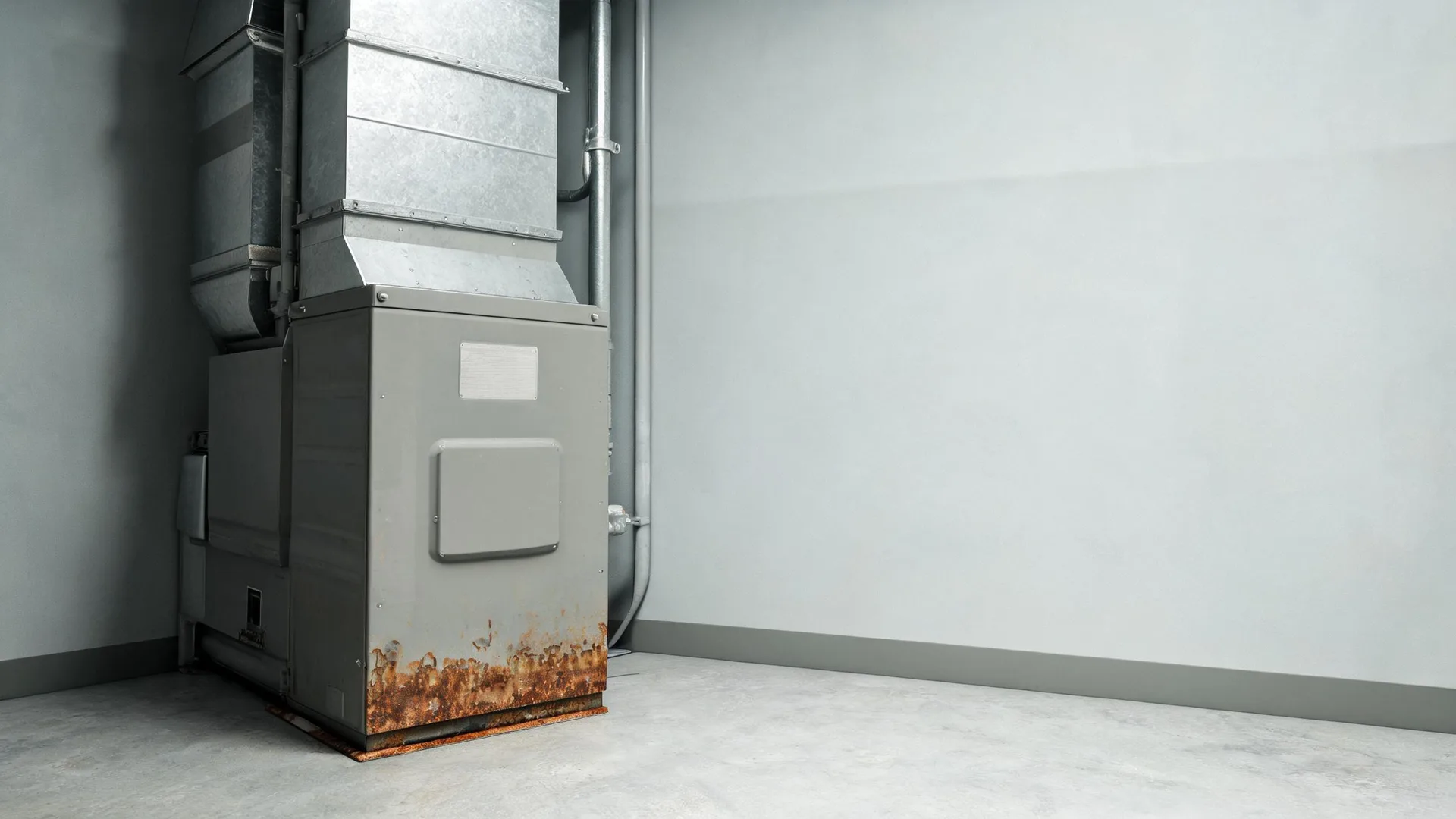
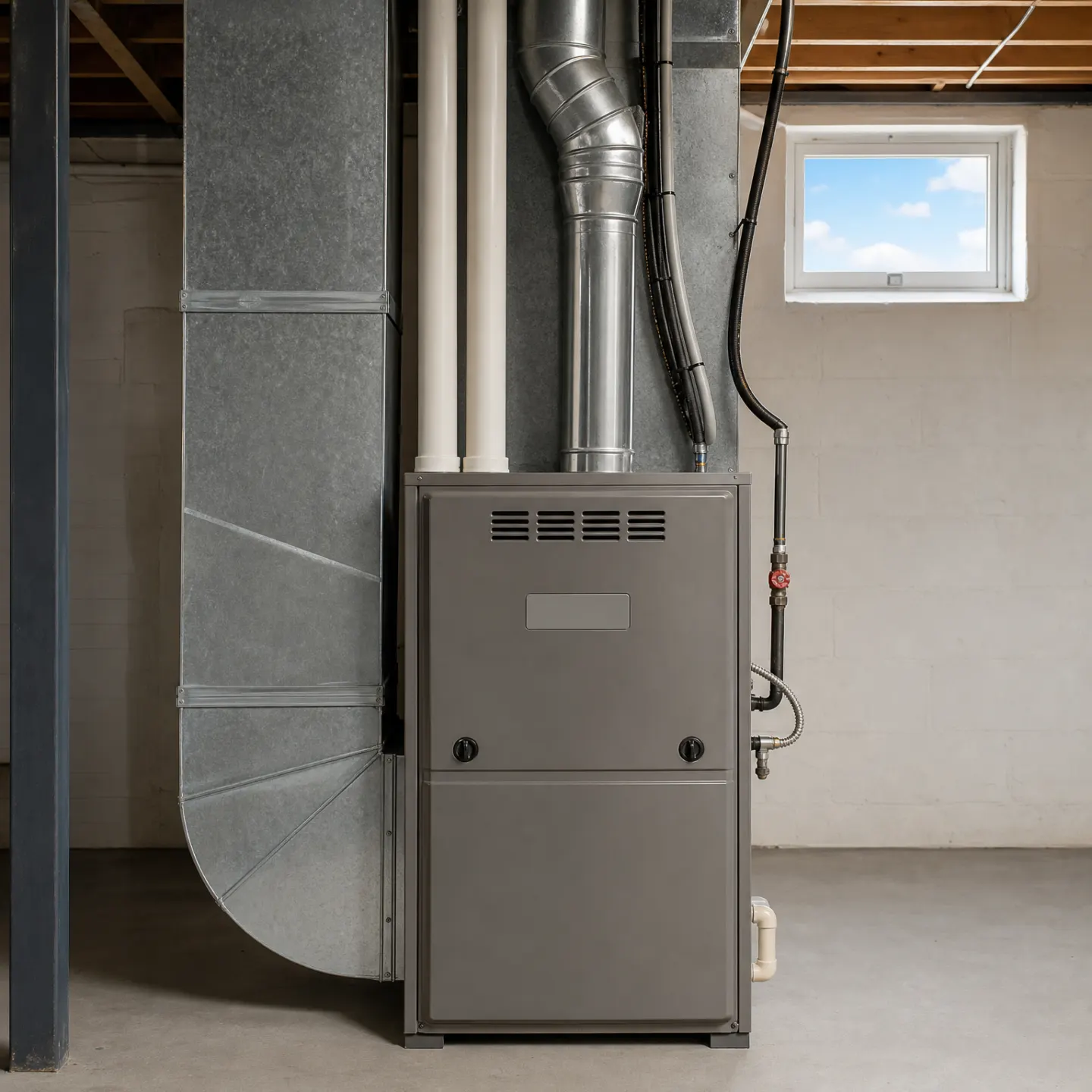
Eight months of work a year
A furnace in Broomfield County runs from October through May. Overnight lows average 20°F through December, January and February, so the burner is firing most nights for a long stretch of winter.
Takes about a minute. No obligation.
A furnace in Broomfield County runs from October through May. Overnight lows average 20°F through December, January and February, so the burner is firing most nights for a long stretch of winter.
A furnace running eight months a year wears its parts sooner than one that only kicks on for a few cold snaps. When something acts up here, it's worth having a contractor find the actual cause rather than patching the symptom, since whatever strain caused this failure is still there.
NOAA nClimDiv, 1991–2020 normals
Furnaces here start their first cold nights in October, right after sitting idle since spring.
September is the month to get yours looked at, before it has to carry a full night's load.

A cracked heat exchanger is the clearest example. Once that crack is there, it doesn't heal itself, and every cycle the furnace runs pushes combustion gas through it a little longer. A limit switch that's starting to fail works the same way. It's supposed to shut the burner off if the air inside the plenum gets too hot, and if it's weak it waits longer each time before it trips. Run it enough cycles and the heat exchanger it was protecting takes the damage instead. Even something as plain as a dirty flame sensor follows this path. A sensor coated in a little buildup still senses the flame, barely, so the furnace keeps firing and relighting while the coating gets thicker and the signal gets weaker. None of these get better by giving the furnace more nights to work through them. The failure that shows up as a strange smell or a system that won't stay lit is usually the same failure that was smaller a few weeks earlier.
Your furnace works hard here, and that's usually what's behind the problem. Have it diagnosed properly so the fix lasts.
Find a contractorMost furnace failures start small and get written off as nothing. An inducer motor bearing starts to go and the furnace sounds a little rougher on startup, but it still lights, so it gets ignored. A pressure switch starts sticking and the furnace takes a few tries to fire instead of lighting clean, and that gets ignored too. By the time a furnace won't start at all, the part that failed usually gave warning for a while first. Age plays a part on its own. Igniters are brittle by nature and weaken with every heat cycle until one cold start finally breaks them. Capacitors on the blower motor lose their charge slowly over years, not all at once, so the blower runs weaker before it quits outright. Blower wheels and motor bearings wear down from the sheer number of hours they turn, nothing more dramatic than that. None of this means a furnace is doomed. It means most of what fails does so gradually, and a contractor who looks at the whole system instead of just the symptom can usually catch the next failure before it turns into a no-heat call.
A furnace rarely just quits. The blower runs longer before air feels warm, or it cycles on and off faster than it used to. Some rooms stop getting as warm as others. The flame looks different through the viewing window, yellow or flickering instead of steady blue. A burning dust smell in the first minutes of a cycle is normal, but a smell that lingers or comes back every cycle is not.
A bang at startup is gas building up before it lights, which points to a dirty burner or a delayed ignition. A rattle points to a loose panel or a failing inducer motor. A screech almost always means a bearing is going, either in the blower or the inducer. None of these fix themselves, and a furnace making a new noise is already telling you which part needs a look.
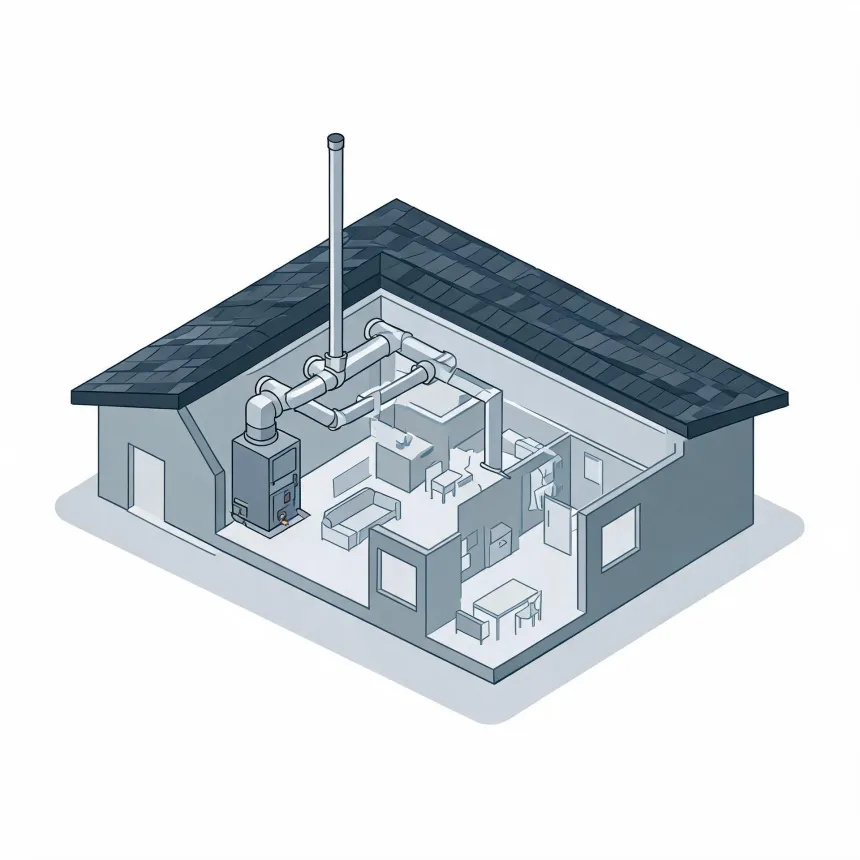
Estimates for a typical Broomfield County home, compared with an older unit built to the previous federal minimum, from EIA household energy data, Colorado fuel prices and NOAA climate normals. Your home will differ.
Repair makes sense when one part has failed and the heat exchanger is sound.
Replacement makes sense when the heat exchanger is cracked or the furnace keeps needing parts.
When a contractor looks at an old furnace, the question is never just what broke. It's what that part failing says about everything around it. A cracked heat exchanger means replacement, no question, because that crack lets combustion gas mix with the air moving through the house. A failed igniter or a bad pressure switch is a different story. Those parts fail on their own schedule and swapping them tells you nothing bad about the rest of the furnace. The harder calls sit in between. A blower motor on its way out in a furnace that's otherwise sound is worth fixing. The same motor failing in a furnace where the heat exchanger is already rusted and the inducer was just replaced last year is a sign the whole unit is reaching the end together. A good contractor checks the heat exchanger and the overall condition of the cabinet before quoting a repair, not just the part that quit.