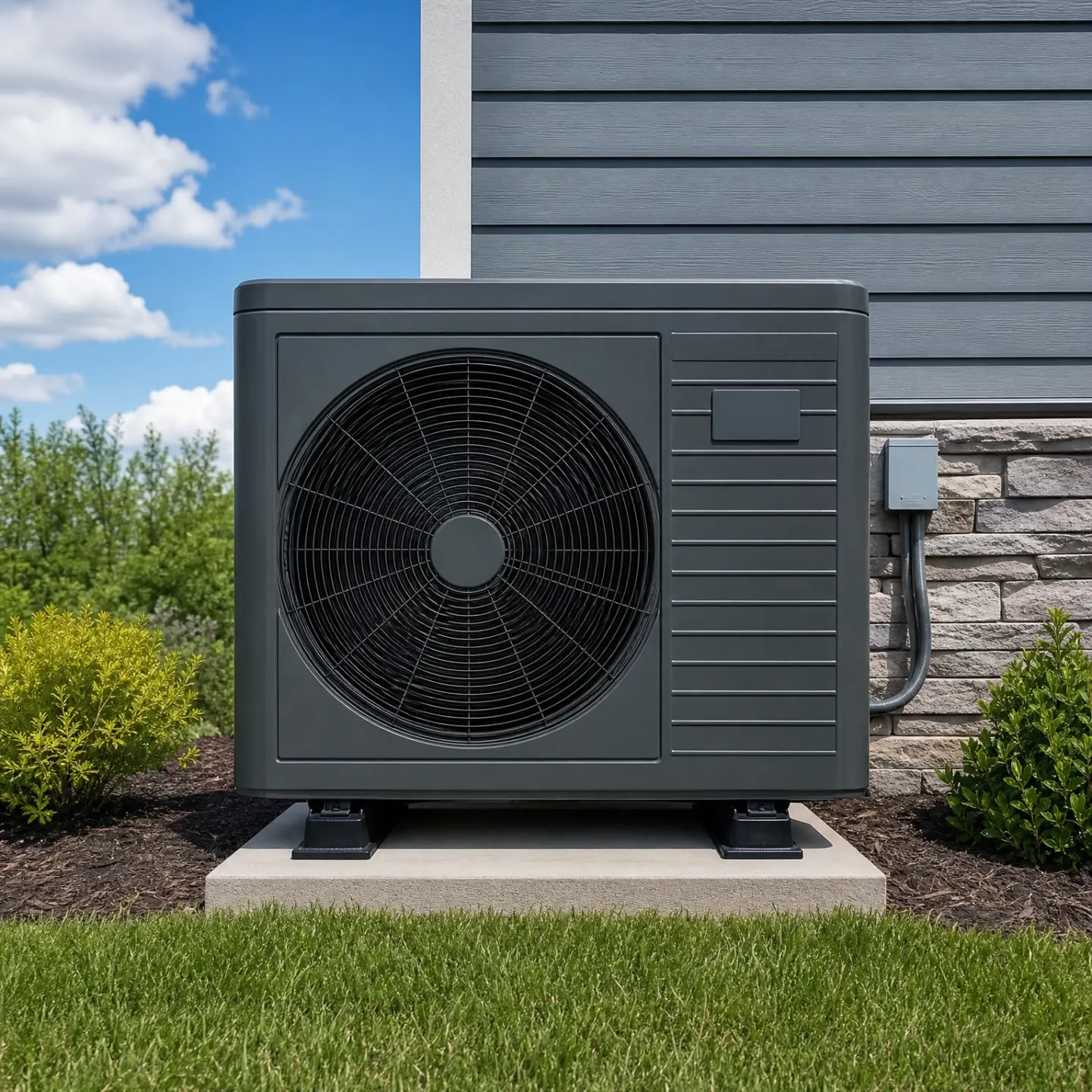
Power here runs 15.93 cents a kilowatt-hour
Clear Creek County homes paid an average of 15.93 cents per kilowatt-hour in 2025. A heat pump runs on electricity, so that rate sets what every hour of heating or cooling actually costs you.

Takes about a minute. No obligation.
Clear Creek County homes paid an average of 15.93 cents per kilowatt-hour in 2025. A heat pump runs on electricity, so that rate sets what every hour of heating or cooling actually costs you.
Two heat pumps can heat the same house and use different amounts of electricity to do it. At this rate, the difference shows up on your bill every month the system runs, not just once at installation.
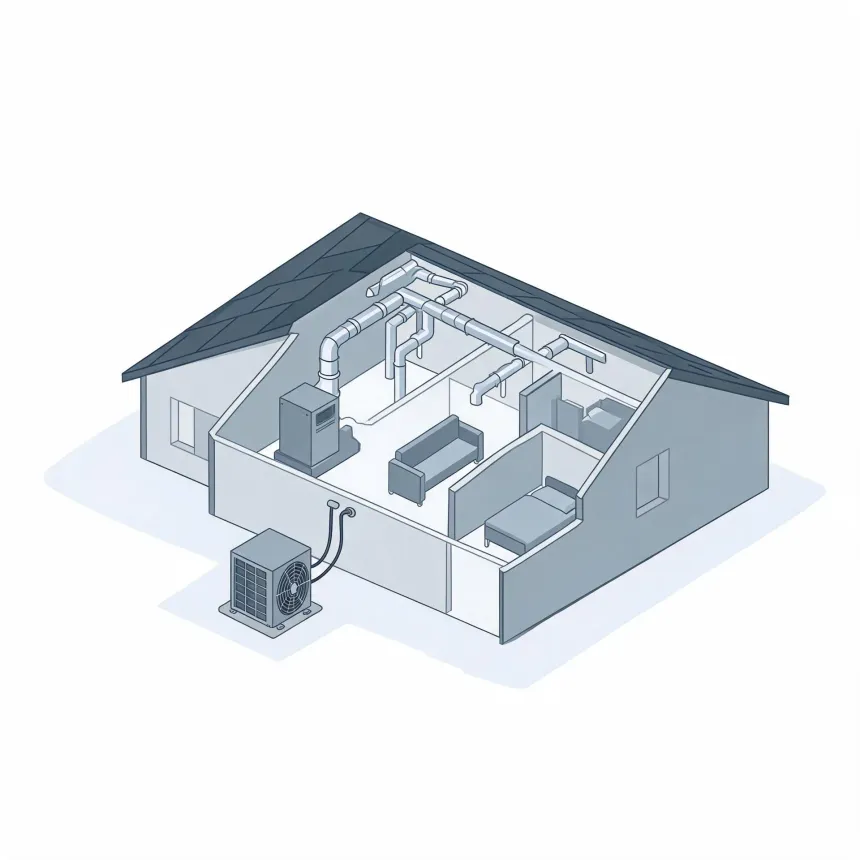
Winter storms hit Clear Creek County 74 times between 2015 and 2024.
A heat pump installed here has to hold up through weather like that every winter, not just run on a mild day.




Clear Creek County falls under zone 7 in the 2021 energy code, the coldest tier that code sets. Any split-system heat pump installed here has to meet the federal minimums that came in on January 1, 2023: at least 14.3 Btu of cooling for every watt-hour it draws, and at least 7.5 Btu of heating for every watt-hour over the winter. Those numbers set a floor. A contractor sizing a system for this county has to work above it, not around it. There's also a federal tax credit for qualifying heat pumps, worth knowing about before you compare models.
The rate is already on this page. What it means for you is simple: when you compare quotes, ask what each system draws to run, not just what it costs to put in. That number is what shows up on your bill every month after.
Find a contractorThe rating on the label tells you how much heat the system moves for the electricity it draws. A higher rated system moves more heat per watt, and that ratio holds whether it's running ten minutes a day or twelve hours. Run it longer and the difference between a well-rated system and a poorly matched one just multiplies. The rating also isn't fixed. It's measured under set conditions, and a system that's sized wrong for the space, or installed with a duct run that restricts airflow, won't hold the number on the label. Airflow across the coil has to be right for the rating to mean anything in practice. A unit that's oversized will cycle on and off more than it should, and short cycling wears the compressor without giving the efficiency rating a chance to show up on the bill. One that's undersized runs constantly trying to catch up, which also burns more than the label suggests. The rating is a ceiling, not a guarantee, and what the contractor does with sizing and ductwork decides how close the system gets to it.
A heat pump has to be sized to the house, not guessed from square footage. A contractor works out a load calculation that adds up the walls, the windows, the insulation and the layout room by room, then sizes the equipment to match what that house actually loses in winter and gains in summer. Skip that step and the number on the equipment label stops meaning anything.
A heat pump that's too big satisfies the thermostat fast and shuts off, then starts again a few minutes later. That short cycling wears the compressor down and never runs long enough to pull moisture out of the air or settle into its rated efficiency. One that's too small never catches up, so it runs nearly nonstop and leans on backup heat more than it should. Either mistake shows up as higher bills and a shorter equipment life, even with a good rating on the label.
A quote should tell you more than the price. Ask what the load calculation found, room by room, and whether the system being quoted matches it. Ask what happens at the coldest point in the forecast range, since every heat pump loses capacity as the temperature drops, and the quote should say what covers the gap. Ask what backup heat is paired with the system and when it's set to kick in, because a unit that leans on backup more than it needs to will cost more to run than the label suggests. Ask about the ductwork too, since a heat pump moves a different volume of air than a furnace, and existing ducts may need changes to carry it without restricting airflow at the coil. A contractor who answers these without hesitation has actually done the calculation. One who can't is guessing at the same number you are.
Installation day starts before anyone touches the old equipment. The crew sets up protection on the floors and walkways, because the work runs from the mechanical room or closet out to the outdoor pad and back more than once. The old system comes out first if this is a replacement, including the line set if it's not being reused. Running new electrical is common, since a heat pump draws differently than a furnace or straight air conditioner did, and the breaker panel has to be able to carry it. The outdoor unit goes on a pad or bracket set level and clear of rooflines, because snow and ice shedding onto it will eventually damage the coil or the fan. Indoors, the air handler or coil gets tied into the ductwork, and this is where a contractor checks that the existing ducts can actually carry the airflow the new system needs, adding returns or resizing a run if they can't. Line sets get brazed, pressure tested, then evacuated to pull out moisture and air before refrigerant goes in, and skipping that step is what leads to a failed compressor down the road, not next week but in a year or two. Once it's charged, the system gets commissioned: airflow checked at the coil, refrigerant charge verified against the manufacturer's numbers, and the thermostat and any backup heat set up to work together instead of fighting each other. A contractor walks through that last part with you, since knowing when backup heat kicks in matters for how the system actually runs once they've left.