Gas here runs $10.09 per million Btu
Colorado households paid $10.09 per million Btu of natural gas in 2024. A furnace that wastes less of that gas burns less of it to make the same heat.
Takes about a minute. No obligation.
Colorado households paid $10.09 per million Btu of natural gas in 2024. A furnace that wastes less of that gas burns less of it to make the same heat.
At that price, the difference between a furnace that converts most of its fuel to heat and one that doesn't shows up every month it runs. In Silverthorne that's most of the year.
NOAA nClimDiv, 1991–2020 normals
The size of the furnace matters more than the brand on it.
One sized to the actual heat loss of the house costs less to install and run than one sized by guesswork.




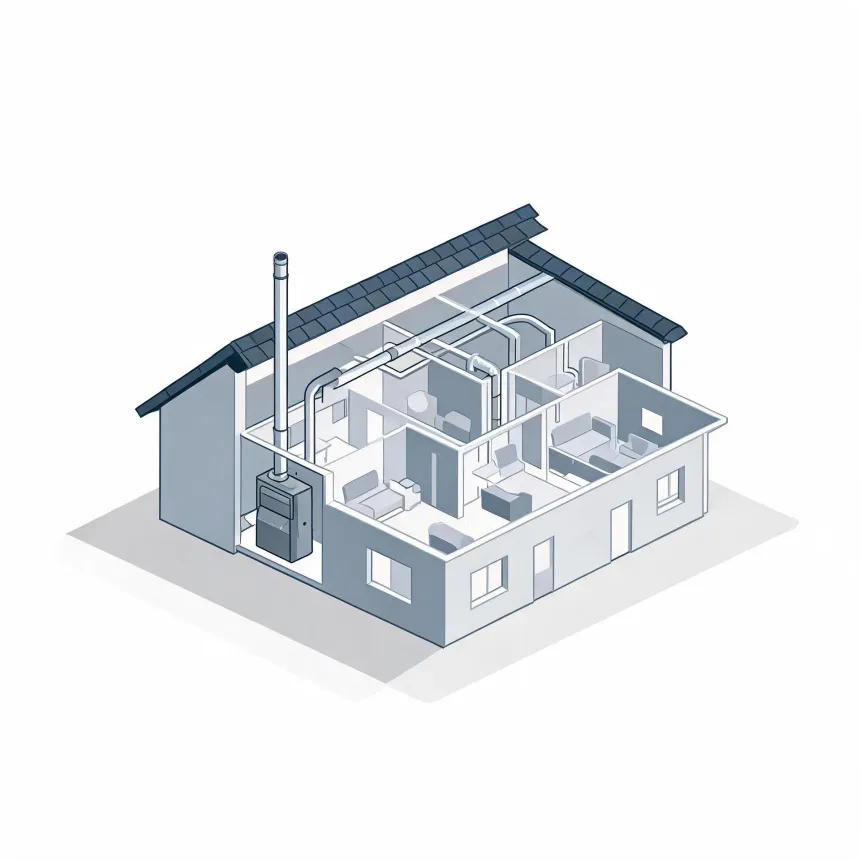
Ask what the contractor's heat loss calculation found, not just what size they're proposing. A furnace sized right handles the coldest morning without short cycling and doesn't oversize for the mild days. Ask about the AFUE rating and what that means for venting, a higher rated furnace usually vents through PVC pipe instead of metal flue, and that changes where it can go in the house. Ask how they're handling the existing ductwork, whether it was sized for the old furnace's airflow and whether it'll work with the new one. Ask what happens to the gas line and electrical connection during the swap, since those are often reused but should be checked, not assumed fine. And ask what the warranty covers on the heat exchanger versus everything else, because that part usually carries different terms than the rest of the furnace.
Heat runs here every month of the year, and overnight lows average 8 below zero through December, January and February. A furnace sized to the house handles that load without strain. One sized by guesswork has to work harder for it, in every one of those months.
Find a contractorA furnace that's too big for the house doesn't heat it better. It satisfies the thermostat fast, shuts off, then starts again a short while later. That's short cycling, and it puts more wear on the igniter and the blower motor than steady, longer runs would. A furnace that's too small never gets ahead of the load. It runs long and still can't hold the temperature on the coldest mornings, so it runs longer still. Either way the furnace is working against its own size, not with it. The right size comes from a heat loss calculation on the house itself, the windows, the insulation, the square footage, not from matching whatever size was there before. A furnace that's sized to the house cycles the way it's supposed to, warms the place evenly, and doesn't spend its life working too hard or not hard enough.
The AFUE number on the label is the share of fuel the furnace turns into heat over a year. The rest goes out the vent. It has nothing to do with how big a house it can heat or how fast it heats it. That's the sizing question, a separate one from efficiency.
A furnace earns its AFUE number in a lab, with clean ductwork, a proper gas supply, and venting that matches what it needs. A duct system that chokes airflow or a vent run that's wrong for the furnace will keep it from running the way the label says it should, no matter what's printed on it.
Estimates for a typical Summit County home, from EIA household energy data, Colorado fuel prices and NOAA climate normals. Your home will differ.
The old furnace comes out first, and that's when anything hidden gets found. The installer disconnects the gas line, the electrical and the venting before touching the new unit, and each of those gets checked rather than assumed fine. Setting the new furnace in place is the easy part. The real work is connecting the gas and testing for leaks, wiring the control board and thermostat, and sealing the duct transitions so warm air isn't leaking out at every joint. If the new furnace vents differently than the old one, that means new pipe, not a reuse of the old flue. Once it's running, the installer checks the gas pressure, the temperature rise across the heat exchanger and the airflow at the registers. A furnace that passes those checks on day one was put in right, not just hooked up.