


Illuminated timber-and-stone luxury homes photographed at twilight with snow-capped mountains visible in the background.

Heat Pump Installation in Central, CO

Tell us about the job

Takes about a minute. No obligation.

Step 1 of 3: Equipment

Colorado homes paid 14.92 cents per kilowatthour for electricity in 2024. A heat pump moves heat instead of burning fuel or resistance wire to make it, so it gets more warmth out of every kilowatthour it uses. At that price, the gap between an efficient unit and a middling one lands on every bill you get, all year. Worth asking about now, because the install is the one time you choose which one goes in.

15°F
the average winter night it heats against
70°F
the average summer afternoon it cools against
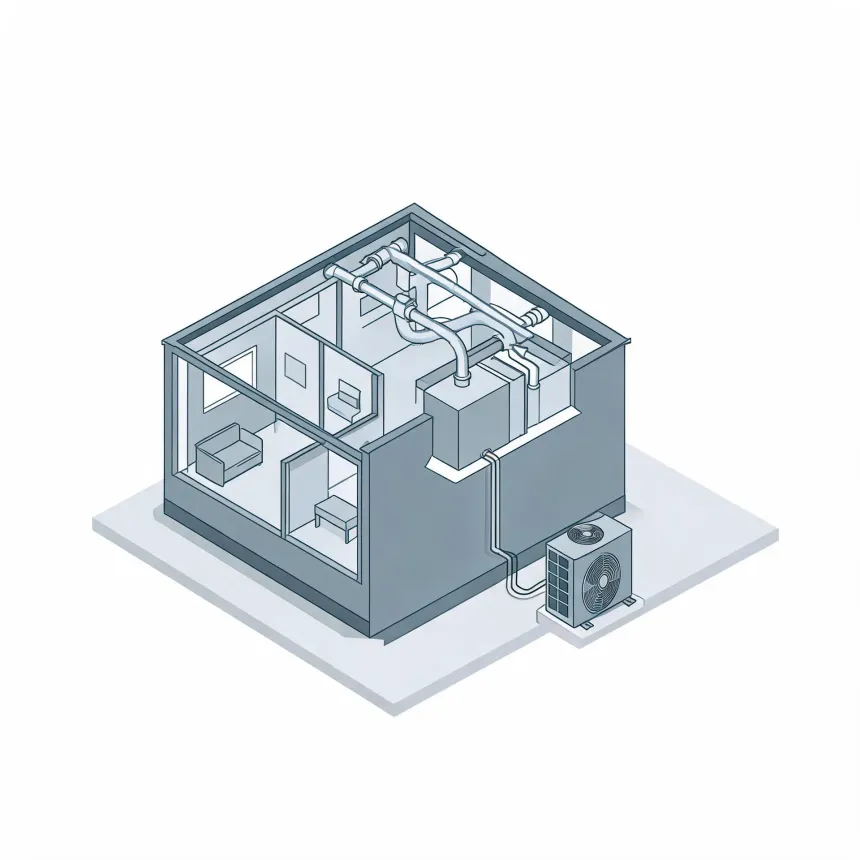
Isometric line illustration of a cutaway house showing interior rooms with furniture, ceiling ductwork connected to an indoor air handler, and refrigerant lines running to an outdoor condenser unit on a pad.

The old furnace or AC doesn't just get unplugged and left in the garage.

A licensed contractor disconnects the refrigerant lines, the gas line or the ductwork tie-ins, then hauls the unit out as part of the install.

Most homes here run on gas, which is what a heat pump has to compete with

54.2% of homes heat with gas
71 damaging wind events from 2015 to 2024
74 winter storms from 2015 to 2024

Gilpin County sits in climate zone 5B. It's a cool, dry zone where heating carries most of the year's load. Any split-system heat pump installed here has to meet the federal minimum for units built from 2023 on. That's 14.3 SEER2 for cooling and 7.5 HSPF2 for heating. The HSPF2 number is the one that matters most in a zone like this, since it measures the job your system spends most of its time doing. A unit that just clears the minimum will run differently over a winter than one built well past it. Worth asking what HSPF2 rating you're being quoted, not just the price.

Pick the efficiency you want now, because this is the only time you get to choose

At 14.92 cents a kilowatthour, the difference between a middling heat pump and an efficient one shows up on every bill after this one. The install is the one time you get to pick which one goes in the ground or on the pad. Ask what HSPF2 rating comes with the quote before you sign off on either.

Find a contractor
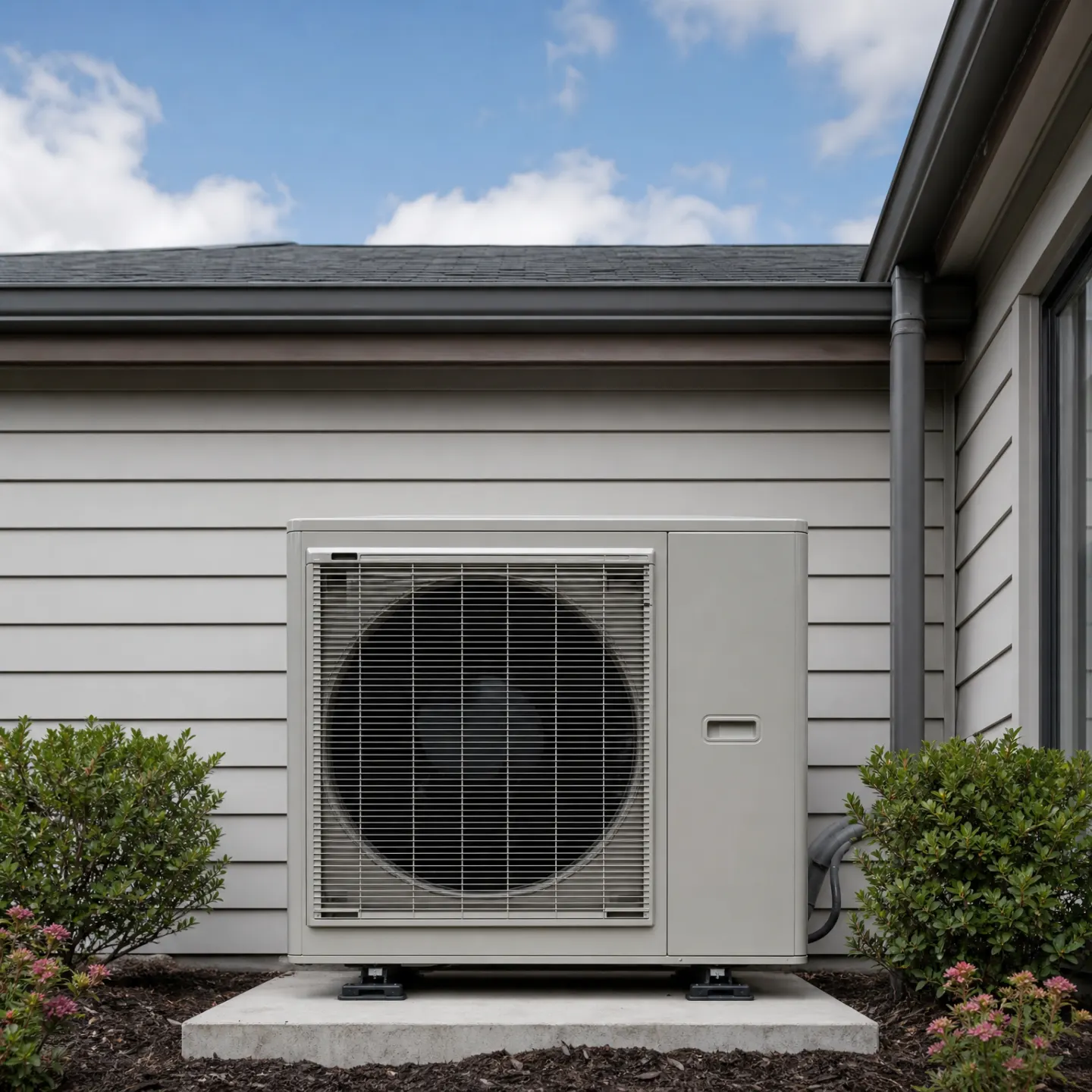
A gray heat pump condenser unit mounted on a concrete pad against the gray lap-siding exterior wall of a house.

Sized to the house, not the catalog

A heat pump that's too big for the house will short cycle. It satisfies the thermostat fast, shuts off, then fires back up a few minutes later because it never ran long enough to settle the temperature at the vents or pull moisture out of the air. All that stopping and starting wears on the compressor more than steady running would. Too small, and it runs the opposite problem. It never shuts off on the coldest days, falls behind the thermostat, and leans hard on backup heat strips to close the gap. Getting the size right means a contractor works out the house's actual heat loss and heat gain room by room, not a rule of thumb based on square footage. That calculation factors in the windows, the insulation, the ceiling height, which walls get sun through the day, then sizes the equipment to what the house really loses on the coldest night and gains on the hottest day. Done right, the system runs long steady cycles most days and only calls on backup heat for the handful that actually need it.

The rating is measured, not guessed

HSPF2 and SEER2 come from lab testing done the same way for every unit, running it through a set cycle of conditions and measuring what goes in against the heat it moves. That's why you can compare one quote against another using those numbers alone. A higher rating almost always means more refrigerant stages or a variable-speed compressor instead of a single-speed one, which is the actual hardware doing the work of using less power for the same heat.
It's a lifetime number, not a day one

On any single afternoon, a high-efficiency heat pump and a low-efficiency one might use about the same power to hold the house at temperature. The rating is an average across a whole season of weather, mild days and hard ones together. Where it shows up is over years of operation, not any one bill you could point to and call proof.

What you pay for an install comes down to what the job actually takes, not just the equipment sitting on the truck. A straight swap, same spot, same line set, same ductwork, goes faster than one where the old system and the new one don't line up the same way. Line sets get replaced more often than reused, since the oil in old refrigerant lines doesn't mix well with what a new system runs on. If the ductwork was sized for a furnace and gas coil, it may need rework to move the airflow a heat pump wants, especially at lower fan speeds. A heat pump also draws power differently than the gas furnace or AC it's replacing. The breaker panel has to have the capacity and the right circuit to match, and that's something a contractor checks before the install, not after. None of this shows up on the unit's price tag, but all of it shows up in the quote.

Install day starts with the old equipment coming out and doesn't move fast until it's gone. The refrigerant has to be recovered from the old lines before anyone cuts them loose, since it can't just vent to the air. Once the old unit's out, the crew sets the new pad or bracket, runs new line set if that's what the job calls for, and gets the indoor and outdoor units in place before touching the electrical. Wiring and the breaker connection come next, then the refrigerant lines get connected, pressure tested, and pulled down into a vacuum to clear out any air or moisture before the system ever sees a charge. Only after that does the unit get its refrigerant charge and a startup check, where the contractor confirms it's pulling the right current, moving the right airflow, and holding the pressures the manufacturer specs for that model. A thermostat swap or reprogram usually happens last, once the system's already proven it runs right.