
A multi-story timber-frame and stone house glows with warm interior and exterior lighting on a dark residential street, with mountain peaks and pine trees visible in the background.

Furnace Repair in Central, CO

Tell us about the job

Takes about a minute. No obligation.

Step 1 of 3: Equipment

A tech starts by asking what the furnace is doing, when it started, and whether anything changed right before it did. Then it's a look at the thermostat call, the flame, and how the system responds from a cold start. Most furnaces store their own fault history in the control board, shown as a flash pattern on a small light, and that narrows things down before any panel comes off. From there the tech checks the igniter or pilot, the flame sensor, the pressure switch, and the inducer motor, since a failure in any one of these will shut the whole system down as a safety measure. If the furnace is short cycling or blowing cool air, airflow across the heat exchanger gets checked too, because a dirty filter or blocked vent can trip the same limit switch as a real mechanical fault. The visit ends with the tech telling you plainly what failed, what it takes to fix it, and whether the furnace is worth repairing at all.

15°F
the average winter night it heats against
54%
of homes here heat with gas, so most furnaces here burn gas
74 winter storms
in ten years, the nights a failure hurts most
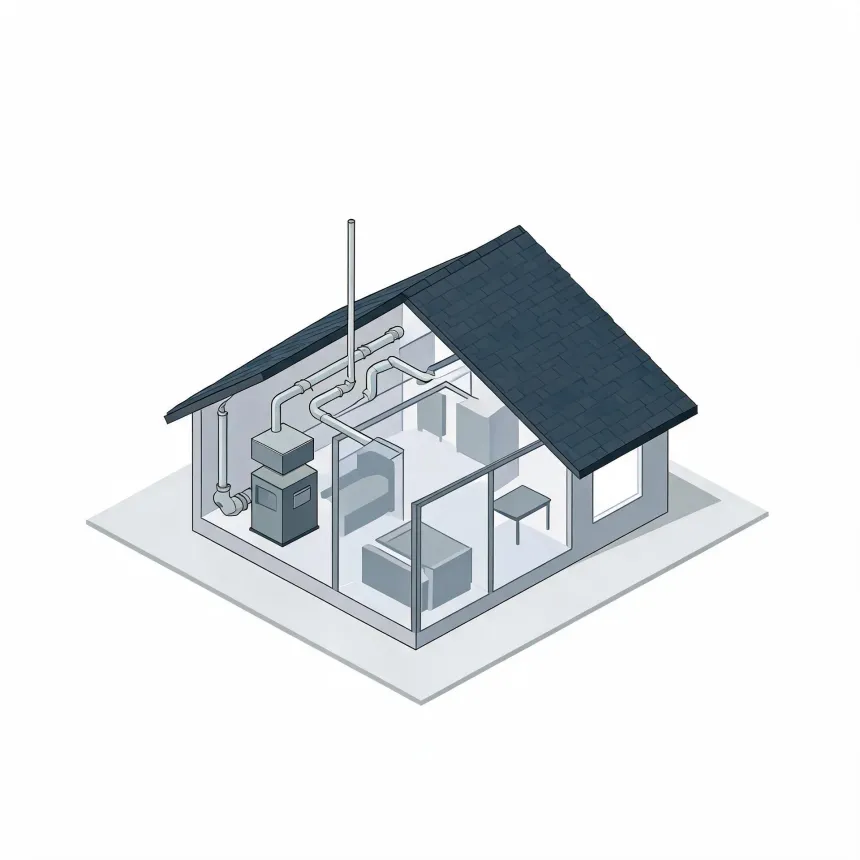
Isometric cutaway illustration of a small house with a dark shingled roof, showing an interior furnace unit, ductwork, and a flue pipe extending through the roof.
Your furnace works hardest from October through April.

NOAA nClimDiv, 1991–2020 normals

Half the homes in Gilpin County were built in 1984 or later.

A furnace that came with a house that age usually still has years left in it, which is why repair is worth a real look before anyone talks replacement.

Natural gas here runs $10.09 per million Btu, and a furnace working overtime burns through it fast

Winter nights average 15°F
74 winter storms from 2015 to 2024
Climate zone 5B

A furnace that's short cycling or struggling to reach temperature is pulling more gas than it needs to for the heat it puts out, and at $10.09 per million Btu that difference shows up on the bill fast. A failing igniter or pressure switch doesn't make the furnace use less fuel, it just means more cycles trying to get the same result. Waiting a few weeks to call someone doesn't save money, it just means paying that higher rate for longer on a furnace that isn't running the way it should. Getting the actual part diagnosed now is what stops the bleeding.

Get the furnace looked at before you consider replacing it

Half the homes in Gilpin County date to 1984 or later. If yours is one of them, the furnace likely still has real life in it. Worth having a tech diagnose the problem and give you a straight answer on repair first.

Find a contractor
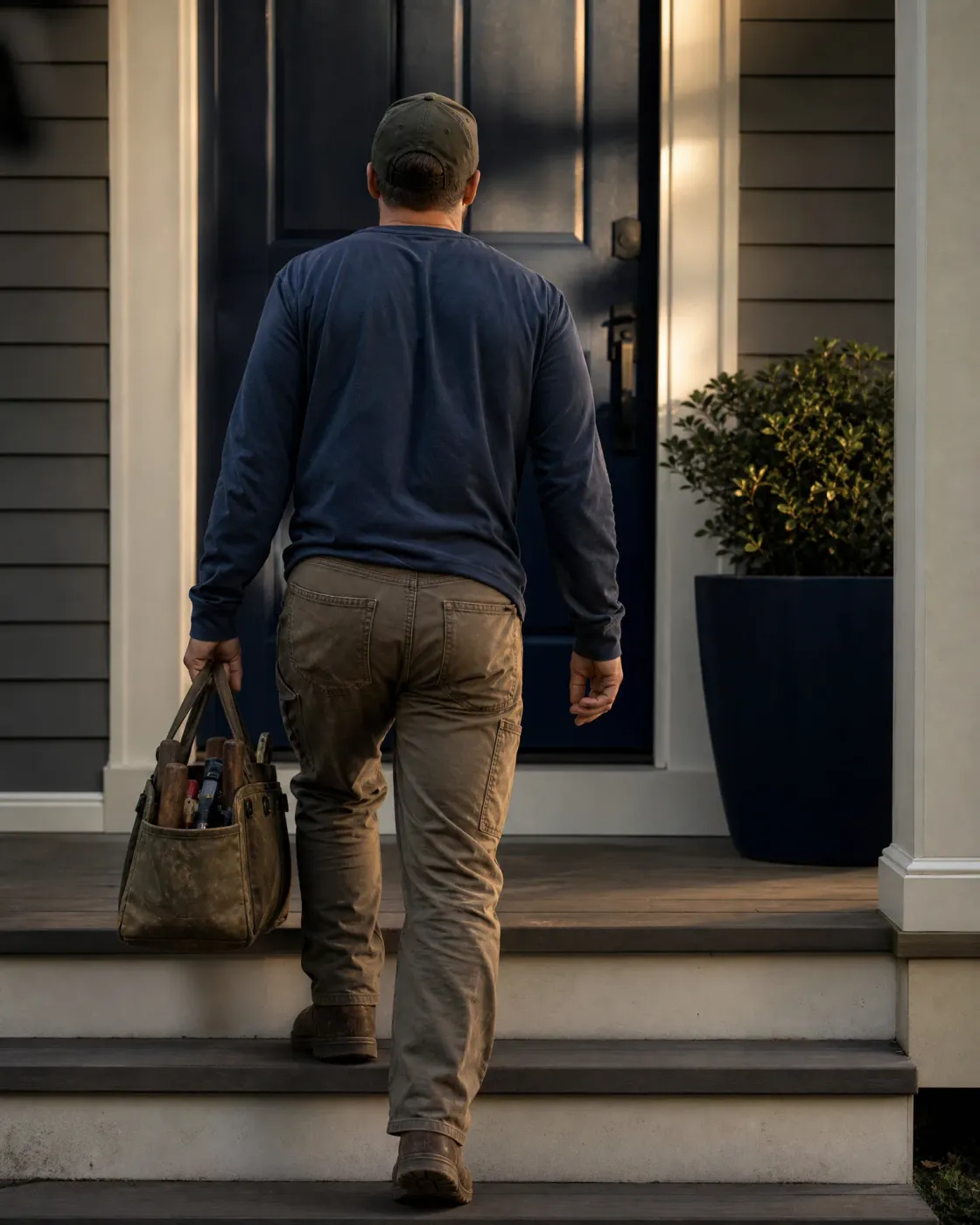
A man in a cap, navy long-sleeve shirt and tan work pants carries a canvas tool bag up steps toward a dark front door, with a potted shrub beside the porch.
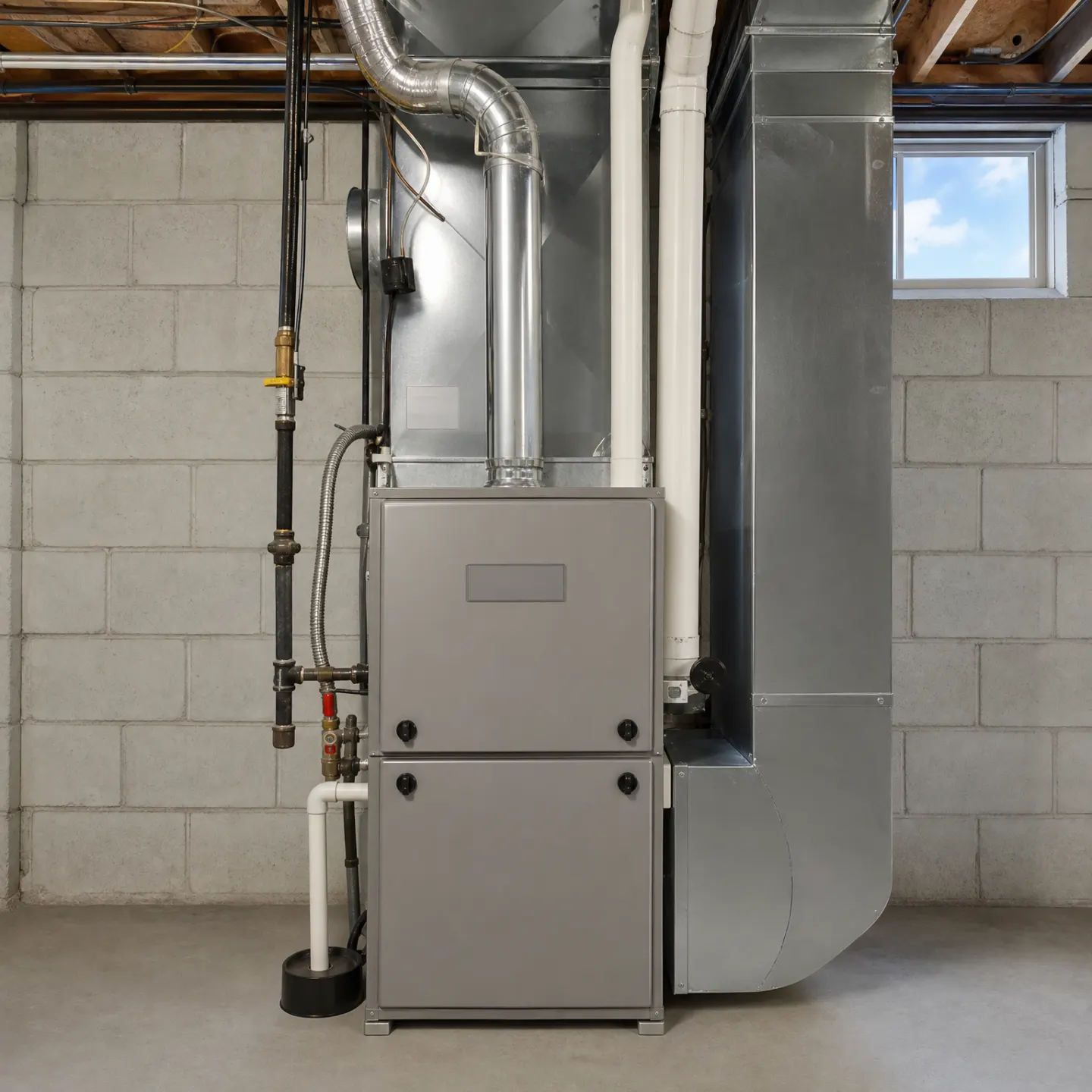
A gray high-efficiency gas furnace installed in an unfinished basement, surrounded by gas lines, a condensate drain, and sheet-metal ductwork.

Listen for what changed before you call it a mystery

A furnace that needs attention usually tells you before it quits outright. It short cycles, running a few minutes and shutting off before the house warms up. It blows air that isn't as hot as it used to be, or air that's flat out cool. The burner flame looks different too. A steady flame burns blue, and if it's gone yellow or starts flickering, that points at a dirty burner or a venting problem. Sound matters as much as anything. A boom at startup means delayed ignition. A screech usually means the inducer motor or a bearing going bad. A clicking that never catches into a flame means the igniter or the pressure switch is failing. Some of these the furnace catches on its own, locking out and tripping the limit switch before anything gets damaged further. Run time matters too. A furnace cycling on and off all day puts far more wear on an igniter and a pressure switch than one that only fires a few times. Once a part is close to failing, that extra cycling is usually what pushes it over.

Most failures trace back to one part shutting the system down

A furnace is built to stop itself rather than run unsafe. When the igniter cracks, the flame sensor gets coated with a film it can't read through, or the pressure switch can't confirm the inducer is pulling properly, the control board cuts the furnace off. Those parts fail on a schedule, after enough cycles of heating and cooling, so a furnace with a lot of run time on it has worked its way through more of that schedule.

Airflow problems get blamed on the wrong part

A dirty filter or a blocked vent doesn't just make the house colder. It makes the heat exchanger run hotter than it should, and the limit switch trips to protect it, which looks exactly like a mechanical failure from the thermostat's side. A tech has to rule out airflow before replacing anything, because swapping a pressure switch or igniter won't fix a problem that's actually a filter.

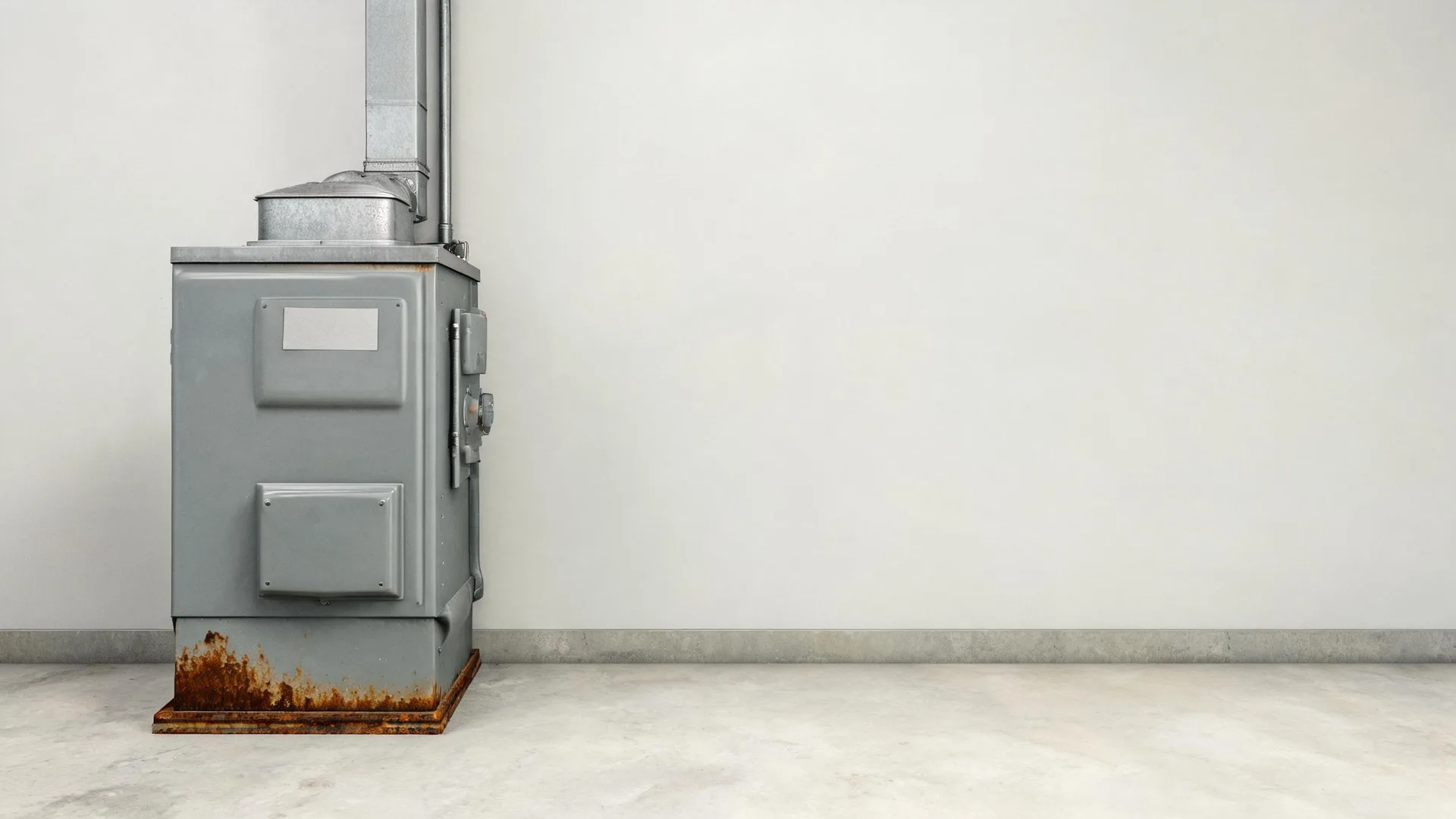
An unfinished basement featuring concrete block walls, exposed floor joists, a bare concrete floor, and a forced-air furnace with a large metal exhaust duct in the corner.

A new furnace would cut about $140 a year off heating for a typical Gilpin County home.

  • A new high-efficiency furnace$590 a year
  • An older furnace$730 a year

Estimates for a typical Gilpin County home, compared with an older unit built to the previous federal minimum, from EIA household energy data, Colorado fuel prices and NOAA climate normals. Your home will differ.

Repair makes sense when one part has failed and the heat exchanger is sound.

Replacement makes sense when the heat exchanger is cracked or the furnace keeps needing parts.

A furnace is a collection of parts with different lifespans, not one thing that fails all at once. An igniter or flame sensor can be replaced on its own and the rest of the furnace keeps going like nothing happened. What changes the math is the heat exchanger. Once that's cracked, the furnace can't run safely, and there's no part swap that fixes it. So the real question isn't the age of the furnace, it's which part is asking for attention. A control board, blower motor or pressure switch going bad is usually a straightforward repair. A heat exchanger going bad usually isn't. A tech who's opened the cabinet can tell you which kind of problem you've got, and that answer matters more than how many winters the furnace has already been through.