


What the cold does to a heat pump here
Winter nights in Gilpin County average 15°F. That is the number to hold onto, because it sits below both of the marks that matter for a heat pump. Below 40°F a standard heat pump puts out less heat than its rating says. Below about 35°F it often needs backup heat to make up the difference. Your average winter night is colder than both marks, not just close to them.
This is not a handful of bad nights. About 190 nights a year here drop to freezing or below, roughly half the nights in the year, and the heat runs here every month. On almost every one of those cold nights, a standard heat pump is working below the point where it keeps up on its own. The 9 nights that hit 0°F or colder are a small slice of that, and backup heat tends to carry more of the load on nights like those.
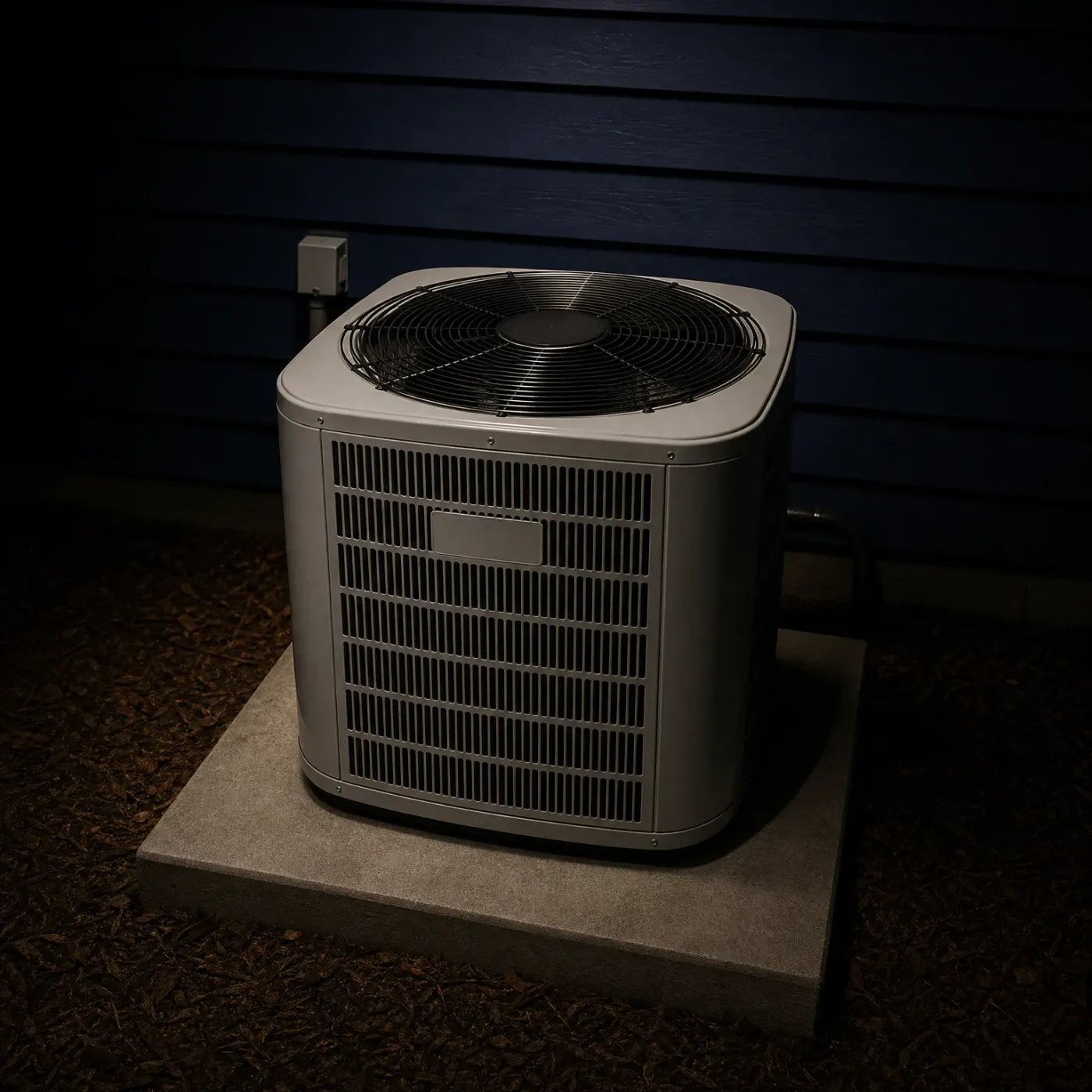
A cold climate heat pump changes this picture. To earn that label a unit has to prove, in third party testing, that it still makes 1.75 units of heat for every unit of electricity at 5°F and holds onto 70 percent of its warm weather capacity at that temperature. Field testing on prototypes backs this up in practice: backup heat only covered a small share of the heat needed between 0°F and 35°F, and running on backup alone was rare even above 0°F. A furnace built to the federal minimum will not do this. A heat pump built to the federal minimum will not either. If a heat pump is going in a house here, this rating is what makes the difference between a system that keeps up and one that leans on backup heat most of the winter.