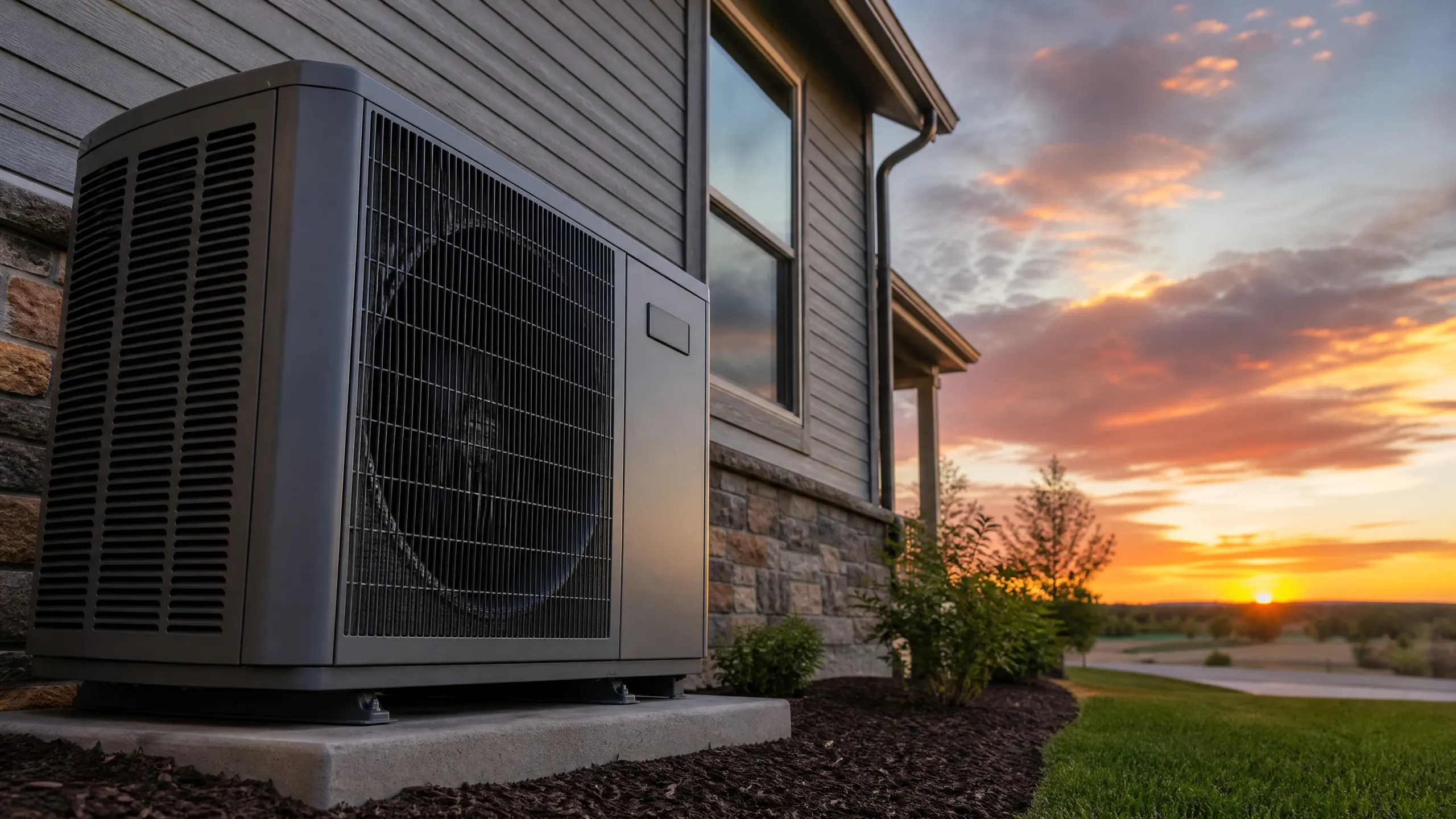




An outdoor air conditioning condenser unit mounted on a concrete pad next to a residential house at sunset.

Heat Pump Installation in Salida, CO

Tell us about the job

Takes about a minute. No obligation.

Step 1 of 3: Equipment

Electricity in Chaffee County runs 17.45 cents per kilowatt-hour on average. That's higher than most US counties pay. A heat pump runs on electricity for every hour it works, so that rate hits your bill every time the system cycles on. Two heat pumps can heat the same house and cost noticeably different amounts to run, depending on how much heat each one pulls from a kilowatt-hour. Where power costs this much, that difference is worth paying attention to before you buy, not after.

9°F
the average winter night it heats against
71°F
the average summer afternoon it cools against
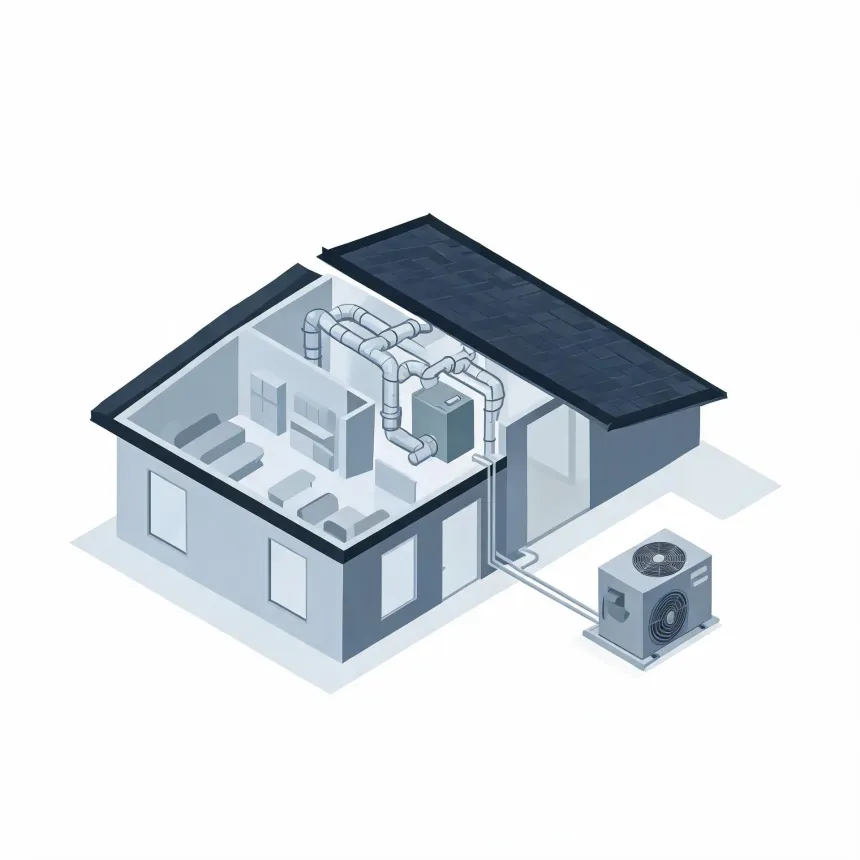
Isometric illustration of a cutaway single-story house showing interior ductwork and an air handler connected by lines to an outdoor condenser unit on a pad beside the building.

Gas heats close to half the homes in Chaffee County.

A heat pump installed here usually works alongside a gas furnace, not in place of one.

A system that runs through 9 degree nights and 160 winter storms has to be built for it

72 damaging wind events from 2015 to 2024
160 winter storms from 2015 to 2024
Winter nights average 9°F
Pick a contractor who sizes it for what it has to survive160 winter storms between 2015 and 2024. Get the size and the install right the first time.

Chaffee County falls in climate zone 6B, which the energy code treats as cold with a long heating season. Any split-system heat pump installed here, if built on or after January 1, 2023, has to meet the federal minimum: at least 7.5 Btu of heat delivered for every watt-hour it uses over the winter, and at least 14.3 Btu removed per watt-hour over the summer. That's the floor, not a target, and it narrows down which systems a contractor can even offer you. A federal tax credit is available on qualifying heat pumps, which can offset part of what you pay going in.

The system you pick now is the rate you pay every month after

Power here costs more than most places pay, and a heat pump runs on it every hour it works. Ask what each system you're comparing actually delivers per watt-hour before you sign off on one. That's the number that sets your bill, not the price tag on the unit.

Find a contractor
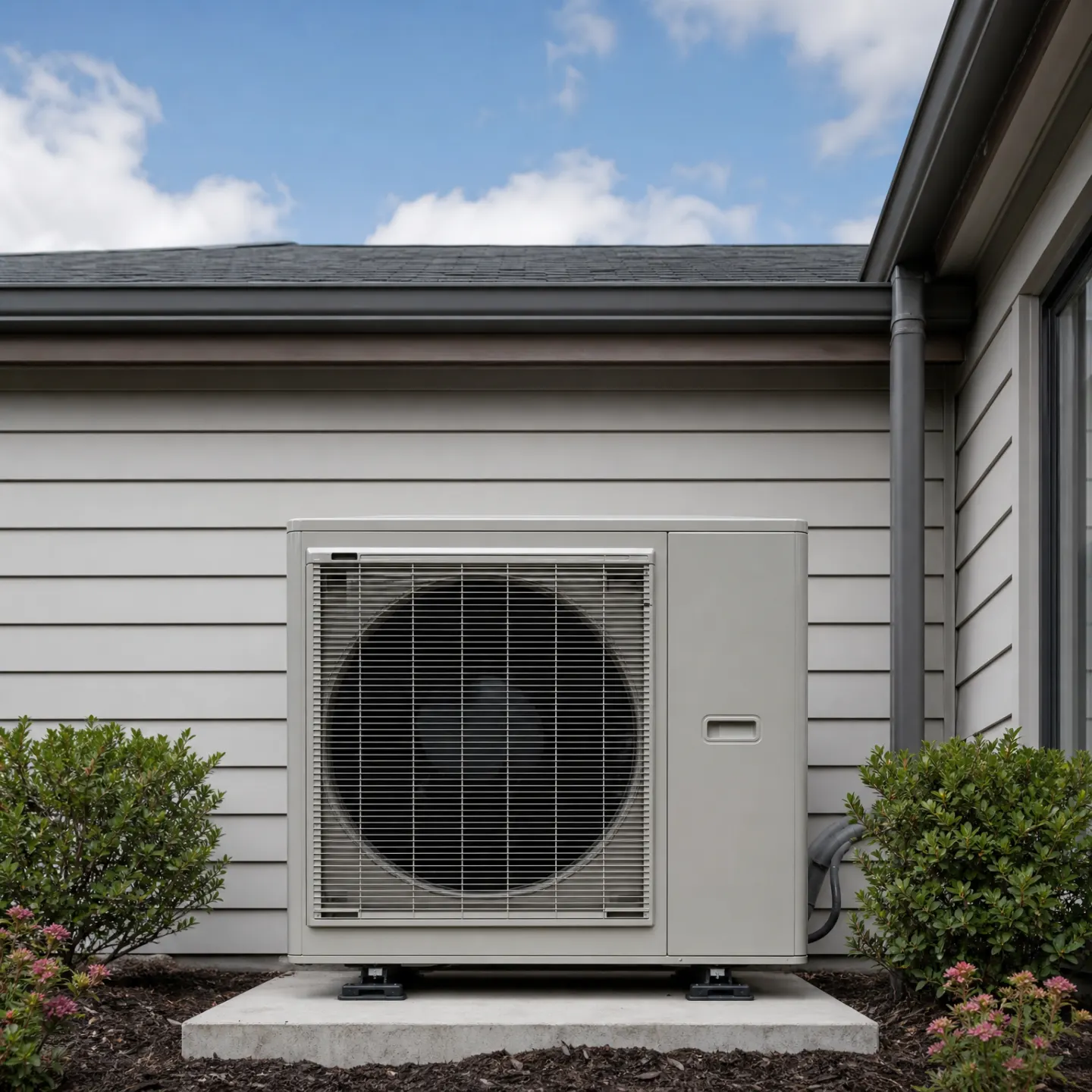
A gray heat pump condenser unit mounted on a concrete pad against the gray lap-siding exterior wall of a house.

What happens to the old system

The old system doesn't get shut off and left. A contractor has to recover the refrigerant from it before anything gets disconnected, that's a legal requirement, not an option. Once it's empty, the indoor and outdoor units come out, along with the line set running between them. If the new heat pump uses a different refrigerant or different line sizes, that old line set usually can't be reused, so it comes out too. The electrical circuit feeding the old unit gets checked against what the new one needs. A heat pump often draws differently than whatever was there before, especially if it's replacing a straight air conditioner or an electric furnace setup, and the breaker or wiring sometimes needs to change to match. If the old system is a gas furnace being supplemented rather than replaced, that part stays and the two get connected to work together instead of against each other. None of this is optional groundwork. It's what decides whether the new system runs the way it's rated to.

The rating is a ratio, not a grade

HSPF and SEER are both a measure of heat moved against electricity spent. A higher number means the compressor is pulling more heat out of the outside air for the same watt-hour, not that the unit is bigger or stronger. Two systems can heat the same house to the same temperature and still land on opposite ends of that ratio, because one compressor is doing the job with less electricity than the other.
The rating holds up differently as it gets cold

That seasonal number is an average across a full winter, not a fixed output at every outdoor temperature. A heat pump pulls less heat out of the air the colder that air gets, so the ratio it actually hits on the coldest nights runs below the number on the label. Ask what the unit delivers at low outdoor temperatures, not just the seasonal average, since that's the condition it has to work through here.

A quote for the same job can run far apart from one contractor to the next, and the reason usually isn't markup. Sizing the unit takes a load calculation, room by room, not a guess based on square footage or whatever the old system was rated for. A unit that's too big cycles on and off instead of running steady, and one that's too small never quite catches up on the coldest days. Labor varies too, since running new line set or upgrading a electrical panel takes more time than swapping like for like. Ductwork matters as much as the equipment. If the existing ducts are undersized or leaky, a heat pump will struggle to move the air it's rated to move, no matter how good the unit is. None of that shows up on a spec sheet, only in how the contractor scopes the job before they hand you a number.

Install day starts with the house being checked against the plan, not the plan being checked against the house. The outdoor unit needs a pad, clear airflow on at least a couple sides, and a spot where the line set can run to the indoor unit without fighting a wall full of framing. Once that's settled, the line set gets run, brazed, and pressure tested before any refrigerant goes in. A leak in a joint that wasn't tested right doesn't show up that day. It shows up months later as a system that's lost charge and isn't heating like it should. The indoor unit gets set, wired, and tied into the existing ductwork or air handler, and the whole system gets charged to the manufacturer's spec, not just topped off until it feels cold. Before the crew leaves, it should run through a full heating and cooling cycle while someone checks the temperature split at the vents and the pressures on the gauges. A system that looks installed and a system that's been verified to run right are not the same thing, and the only way to tell the difference is watching it actually run before anyone signs off.