Storms hit this county hard
Larimer County logged 359 severe weather events between 2015 and 2024, including 155 hail events and 102 cases of damaging wind. That's a lot of chances for an outdoor unit to take a hit.
Takes about a minute. No obligation.
Larimer County logged 359 severe weather events between 2015 and 2024, including 155 hail events and 102 cases of damaging wind. That's a lot of chances for an outdoor unit to take a hit.
13% of Colorado households went at least a day without power in 2024. A furnace with an electronic ignition or a blower motor needs that power to run, no matter how much gas is behind it.
NOAA nClimDiv, 1991–2020 normals
Half the homes in Larimer County were built in 1993 or later.
A furnace that age has likely got years left, and that makes repair the right first call.



Natural gas here ran $10.09 per million Btu in 2024. A furnace that's short-cycling, running its blower too long, or firing weak and staying on longer to make up for it burns through that gas without heating the house any better. You won't see that on the unit itself. You'll see it on the bill, month after month, until the part causing it gets fixed. A furnace that's struggling doesn't get cheaper to run while you wait on it.
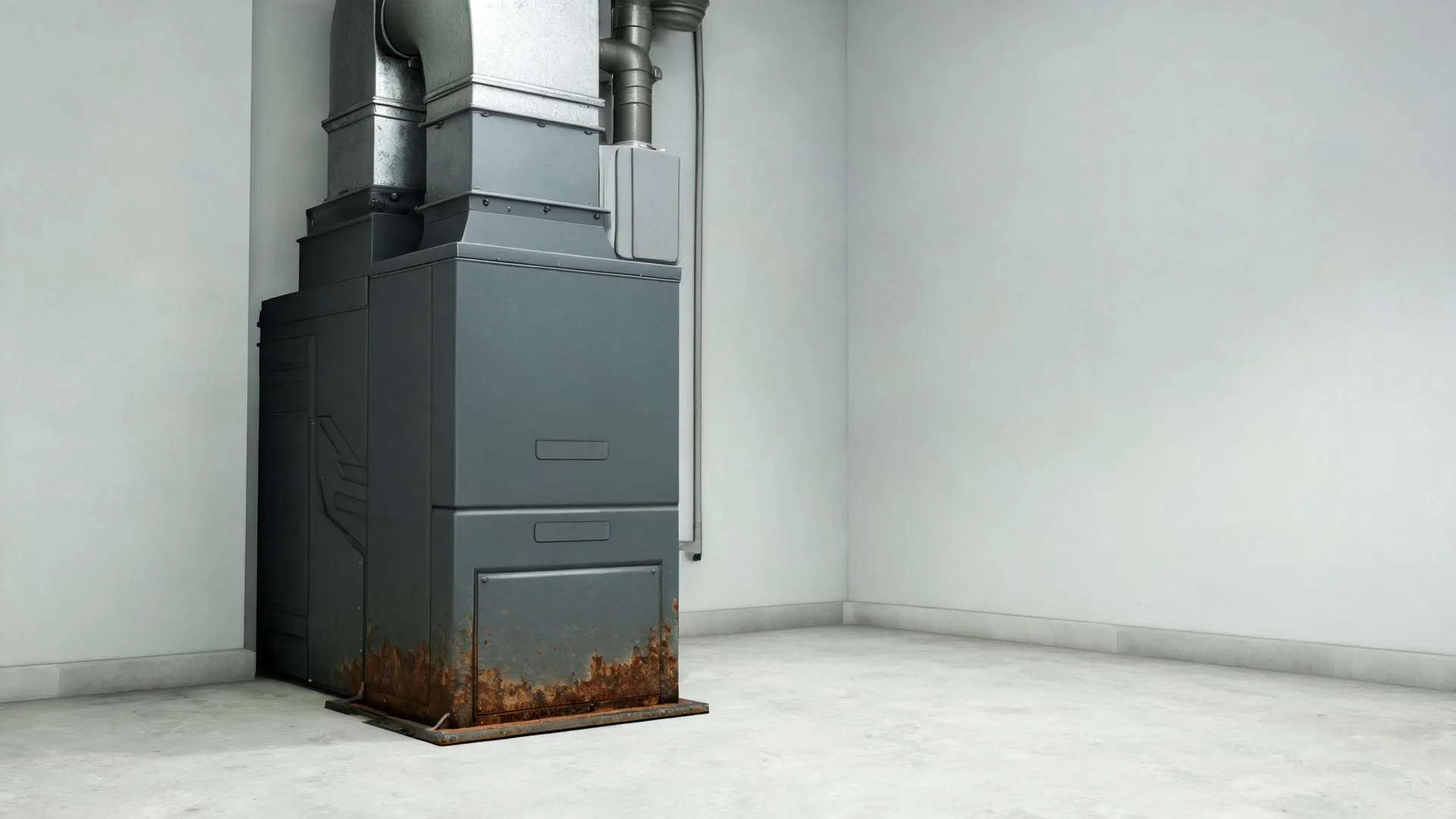
If your furnace sat through a hailstorm or a bad windstorm this year, a checkup can tell you whether it's still firing the way it should. If the power went out, that's worth a look too, since the ignition and blower both need it back to start the furnace again.
Find a contractor
September through June, this furnace is on. That's ten months out of twelve, with only a short break in summer to rest. Add in the winter storms, close to a hundred of them hitting this county over the past ten years, and the furnace is often running its hardest on the worst nights of the year. That kind of run time catches up with an igniter or a blower motor no matter how new the unit is. A part that's been firing nearly every month for years will show wear before one that only has to work a season or two.
Look at the thermostat first. Make sure it's set to heat and the set point is actually above room temperature, and swap the batteries if it uses them. Check the furnace switch, the one that looks like a light switch near the unit, and make sure it's on. Go to the breaker panel and see if the furnace breaker tripped. If you have a standing pilot, check whether the pilot light is lit, and follow the relight steps printed on the panel inside the furnace door. Last, look at the filter. A filter packed with dust chokes airflow and can shut the furnace down on its own.
A furnace that clicks over and over without lighting is failing to ignite, and running it like that repeatedly isn't worth trying past a couple of tries. A burner flame that looks yellow or flickering instead of steady blue means it isn't burning clean. Any smell of gas means you shut off the gas valve and call from outside, not from the furnace. A tripped breaker that trips again right after you reset it means something inside is drawing too much power, and that's a job for a contractor, not another reset.
Estimates for a typical Larimer County home, compared with an older unit built to the previous federal minimum, from EIA household energy data, Colorado fuel prices and NOAA climate normals. Your home will differ.
Repair makes sense when one part has failed and the heat exchanger is sound.
Replacement makes sense when the heat exchanger is cracked or the furnace keeps needing parts.
A furnace is worth repairing far more often than it's worth replacing, and age alone doesn't settle the question. What matters is which part failed and what else is starting to go with it. A cracked heat exchanger is the one thing that ends the conversation, since that's a safety problem, not a wear item, and it usually means the furnace is done. An igniter, a flame sensor, a draft inducer, or a blower motor are different. Those fail on their own, one at a time, and swapping one doesn't mean the next is coming. The pattern to watch for is a furnace that needs a tech out two or three times in the same season for different problems. That's usually the cabinet telling you it's tired, even if each visit was a fair repair on its own.