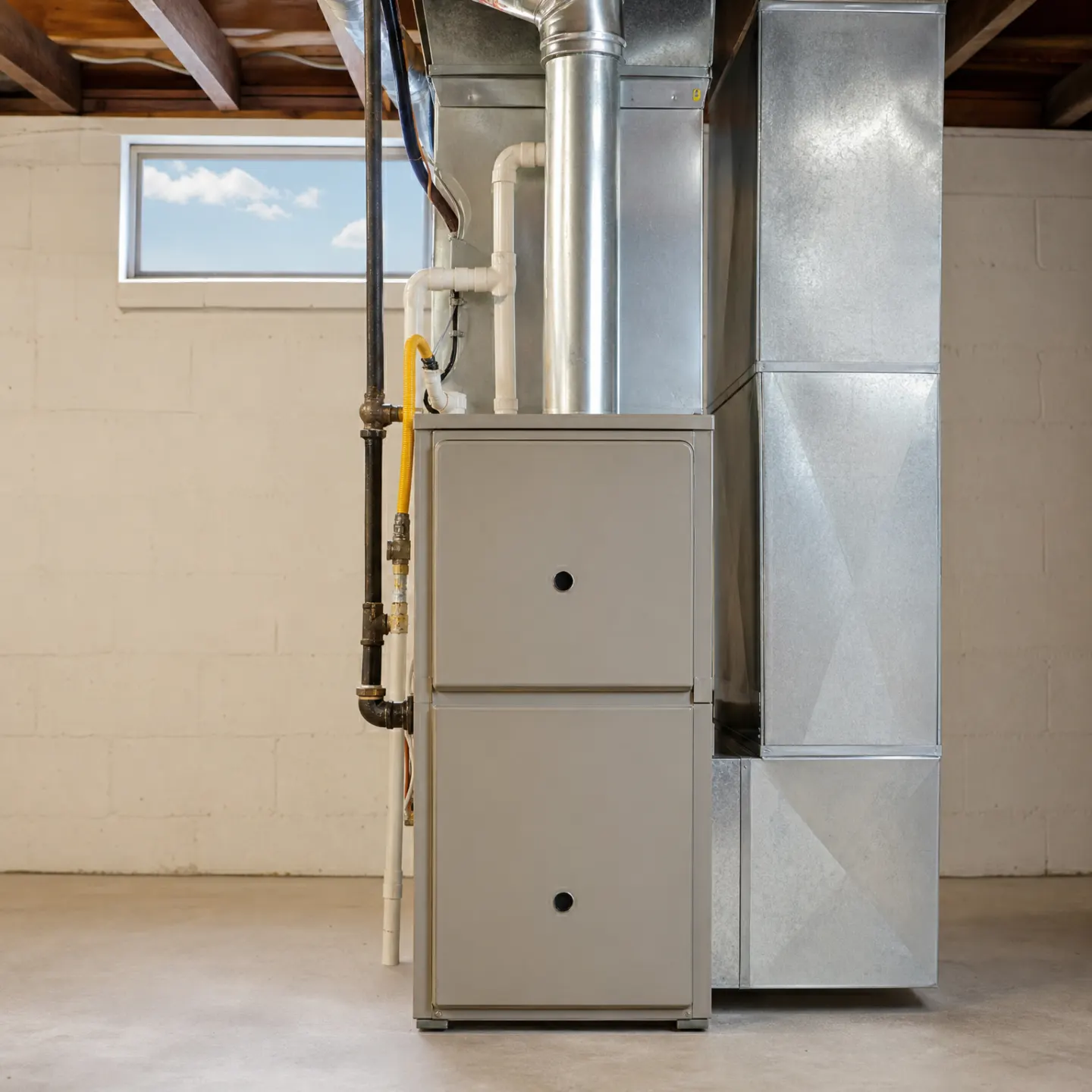
An unfinished basement featuring a forced-air furnace, exposed wooden ceiling joists, bare concrete walls, and miscellaneous items including cardboard boxes and coiled cables on the floor.

Furnace Maintenance in Grand Junction, CO

Tell us about the job

Takes about a minute. No obligation.

Step 1 of 3: Equipment

Nine months of work a year

Furnaces in Mesa County run from September through May. That's most of the year asking the igniter, the blower motor and the heat exchanger to cycle on and off, day after day. A furnace that only had to carry a few months of cold would wear at half the rate.
Storms push it harder

Mesa County saw 182 winter storms between 2015 and 2024, snow, ice and blizzards that drop the temperature fast and keep the furnace running flat out for days at a stretch. Those stretches are when a weak part gives out, usually on the coldest night of the run.

Almost three out of four homes in Mesa County heat with gas.

A gas furnace tune-up means checking the burner and venting, not just swapping a filter.

Half the homes here are new enough that a yearly check still catches problems early

Half the homes here were built by 1987
Heat runs September through May
Winter nights average 18°F
Storms find the weak spot firstMesa County logged 350 severe weather events from 2015 to 2024, and the furnace is usually what gets asked to make up for it.

September is when furnaces here start carrying the full load, nine months of it straight through May. Book the tune-up in August, before that first cold morning asks the igniter and blower to prove themselves. A furnace that starts the season with a cracked heat exchanger or a weak igniter usually shows it in the first hard week, not before. Waiting until September means the check happens the same week the furnace is already working, instead of before. August is quiet. The furnace is idle, a contractor has time on the schedule, and whatever needs fixing gets fixed before the overnight lows head toward 18 degrees.

Get it looked at before it has to carry the season

Nine months of heating a year does not leave much slack. Get the furnace checked before September, while a contractor can still fix what's worn without the house going cold in the meantime.

Find a contractor
A gas furnace with attached ductwork, gas piping, and condensate lines installed in a concrete-block basement.

A newer furnace still needs the yearly check

A newer furnace still has most of its working life ahead of it. The yearly check is what gets it there without a breakdown along the way. A technician can catch a cracked heat exchanger or a worn igniter while it's still a small fix, not an emergency call on the coldest night of the year. For a system that came with the house, that's the whole job: keep it running the way it did on day one, for as long as it's built to last.

Keep the filter clean

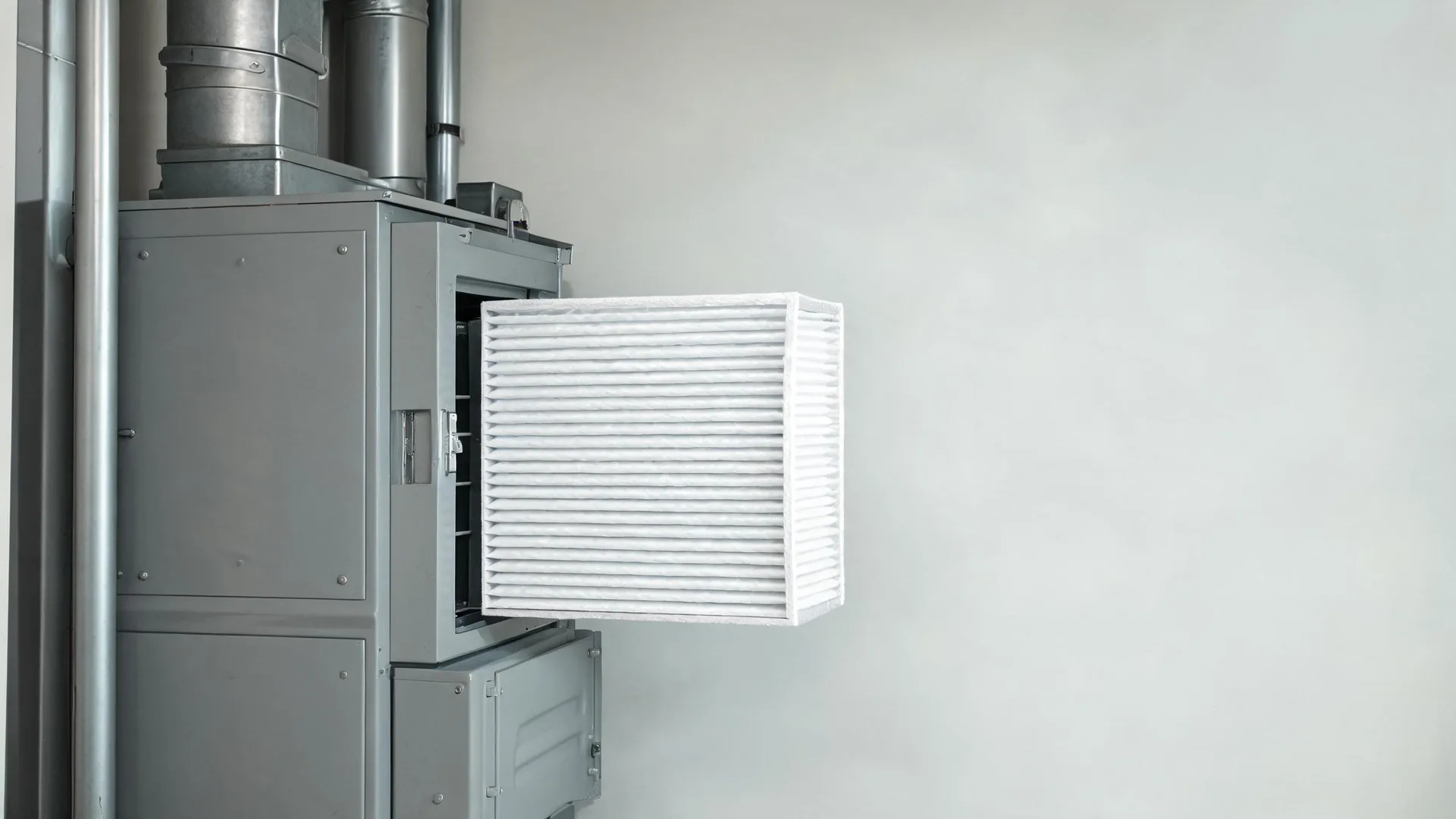
A dirty filter chokes airflow across the heat exchanger, and that makes the burner cycle harder to push the same heat through. Check it by holding it up to a light. If light barely gets through, swap it. A clean filter also keeps dust off the blower wheel, which otherwise throws it out of balance over time.

Know what to leave alone

Don't open the burner compartment or touch the gas valve. Those need a trained eye and the right tools to service safely. What you can do is watch the vent pipe outside for blockage, listen for new rattles or a burner that sounds different lighting off, and keep anything flammable away from the furnace closet. Anything past that is a call for a technician, not a homeowner with a wrench.

A tune-up is mostly about what you'd never see from the filter slot. A technician pulls the burner assembly out and looks at the flame itself, whether it's burning steady and blue or lifting and rolling the way it does when the gas mixture is off. The heat exchanger gets checked for hairline cracks, which don't show up as a smell or a sound until they're bad enough to let combustion gas mix with the air moving through the house. The flame sensor gets cleaned, since a coating of oxidation on it is what makes a furnace shut off a few seconds after lighting, over and over, without ever throwing a code you'd understand. Amp draw on the blower motor gets checked against what it should be, because a motor pulling too many amps is wearing out its bearings right now, months before it seizes. None of that shows up when you look at the furnace standing in the closet. It only shows up when someone takes it apart and checks each piece against what it's supposed to do.

The furnace tune-up covers the inside. The outdoor venting and the area around the unit are worth a look too, especially after the kind of year Mesa County just had. Damaging wind hit the county 152 times between 2015 and 2024, and that kind of wind carries branches, shingle grit and loose debris into places it doesn't belong. A vent pipe or intake blocked by debris changes how the furnace draws air, and that's not something a filter check catches. A technician doing the tune-up can look at the venting and the space around the unit while everything else is already open. It's one more thing covered in the same visit, not a separate call.