Illuminated timber-and-stone mountain cabins along a curved road at twilight, with lit trees and mountain peaks in the background.

Furnace Maintenance in Rifle, CO

Tell us about the job

Takes about a minute. No obligation.

Step 1 of 3: Equipment

Ten months of runtime

A furnace in Garfield County heats from September through June. That leaves a short window where it sits idle, and the rest of the year it's cycling on and off to keep up. Parts that might coast through a milder climate are working almost year round here.

Storms don't wait for a good time

Garfield County saw 258 winter storms between 2015 and 2024, heavy snow and ice included. When one hits, the furnace has to perform right then. A tune-up catches a weak part while it's still weak, not after a blizzard finds it first.

Half the homes in Garfield County were built in 1993 or later.

A furnace that age still has years ahead of it, and a yearly check is what gets it there.

Furnace season starts in September here, and it starts for real. There's no easing into it the way you might in a place with a longer fall. Book the tune-up in August, before the first cold snap, while a technician still has room on the schedule and your furnace is still sitting idle. Once it's running, a weak part is a part that's already working. Catch it before that first startup and it's a quick fix instead of a cold house.

Get it checked before it has to carry the whole winter

This furnace runs nine out of every ten months of the year here, and it starts back up in September for real, not gradually. Have it looked at now, while it's still sitting idle and a weak part is still just weak.

Find a contractor
A man in a dark cap, navy T-shirt and tan work pants, seen from behind, carries a canvas tool bag up porch steps toward a dark blue front door, with a potted shrub in a blue planter to the right.
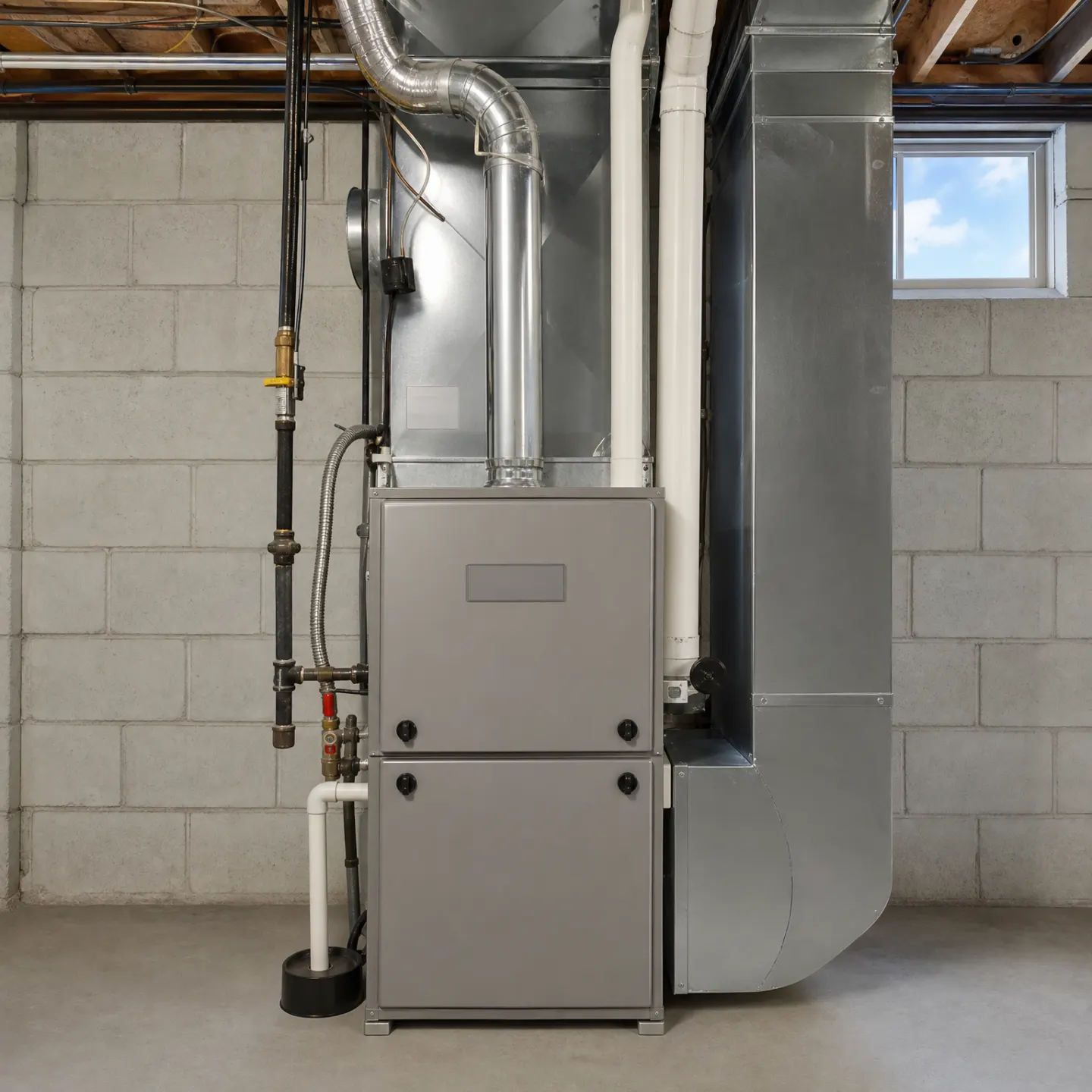
A gray high-efficiency gas furnace installed in an unfinished basement, surrounded by gas lines, a condensate drain, and sheet-metal ductwork.

A newer furnace still needs the yearly look

A yearly check on a newer furnace is cheap insurance. The technician can clean the burner, check the flame sensor, and confirm the blower motor is pulling the right amperage before any of that drifts into a real problem. Catching a small thing now is what keeps a furnace running well past the point where the one next door started needing repairs.

The signs are easy to miss

A furnace rarely quits without warning. It short cycles, turning off before the room reaches temperature. The blower runs longer than it used to, or kicks on with a bang instead of a soft start. The flame behind the viewing window burns yellow or flickers instead of holding a steady blue. None of that stops the furnace from running, so it's easy to live with until the day it doesn't start at all.

A check finds it before you do

A technician can catch what the signs above miss entirely. A flame sensor coated in residue still lets the furnace run, but it will shut the burner down the first cold morning it can't detect a flame. A blower motor pulling too many amps still spins, right up until it doesn't. These are things you find during a check, not during a breakdown.

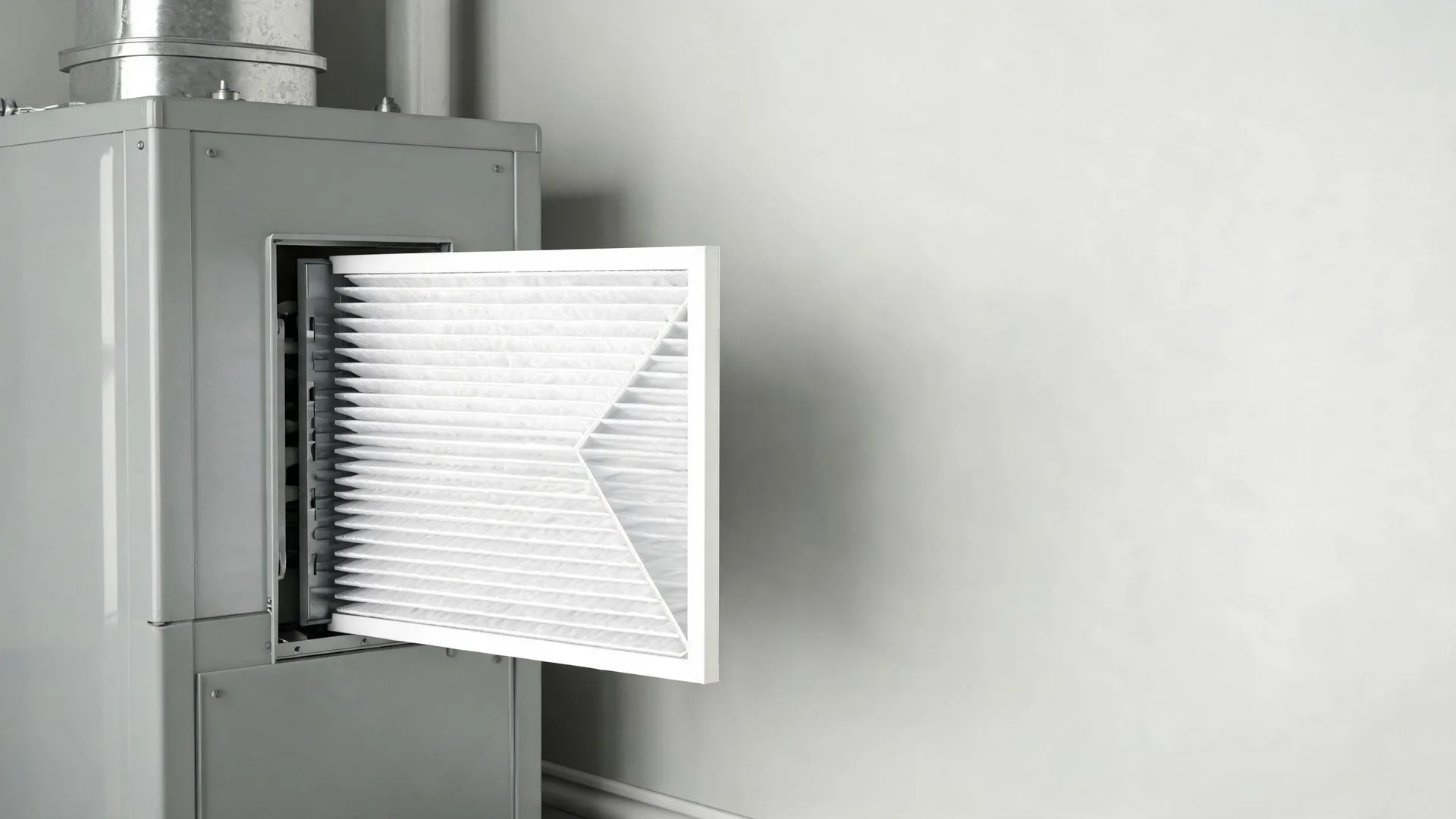
A furnace filter does one job: keep the air moving through clean. Once it's packed with dust, the blower has to pull harder to push air past it, and that strain runs straight back to the motor. On the other side of that airflow sits the heat exchanger, and a furnace starved for air runs hotter than it should. That's what cracks a heat exchanger years before its time. The drain matters too, on any furnace that condenses exhaust into water as it runs. If that line clogs, the furnace shuts itself down rather than let water back up where it shouldn't go. None of these parts fail on their own schedule. They fail on the filter's schedule, and a tune-up is where that gets checked.

Most furnaces in Garfield County run on gas, not electricity. Close to two in three homes here heat with it, and most of the rest run on electricity or propane. A gas furnace has a burner, a flue, and a set of safety controls that an electric furnace simply doesn't carry. The burner needs to stay clean enough to fire evenly. The venting needs to carry exhaust out of the house every single time the furnace runs, not most of the time. A tune-up on a system like this means more than swapping a filter. It means checking the burner flame, testing the safety controls that shut the gas off if something goes wrong, and making sure the flue is actually doing its job.