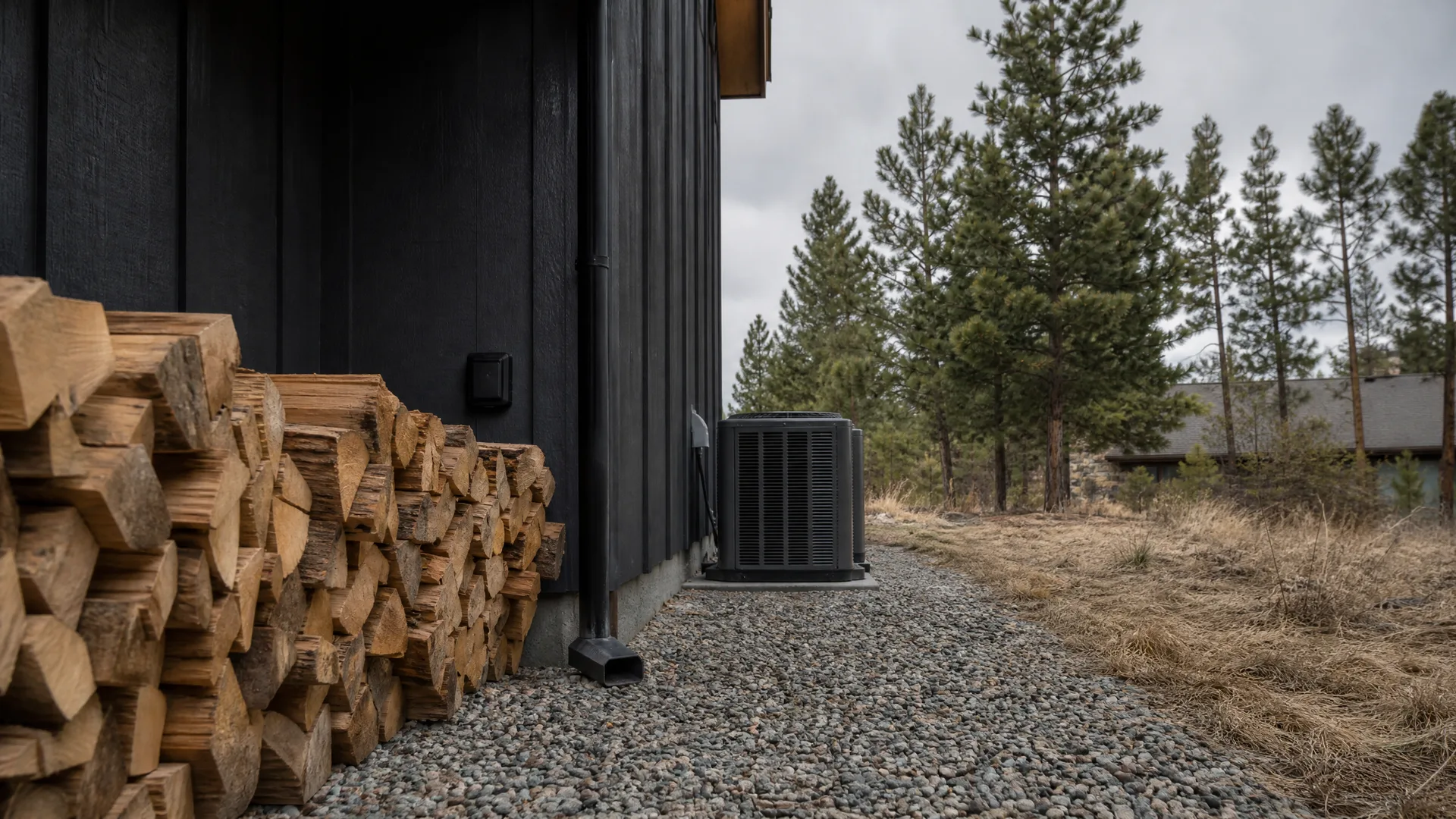



A stack of split firewood beside a dark vertical-board house wall, with an outdoor air conditioning condenser unit on a gravel path and pine trees under an overcast sky.

Furnace Maintenance in Montrose, CO

Tell us about the job

Takes about a minute. No obligation.

Step 1 of 3: Equipment

Winter storms hit Montrose County 202 times between 2015 and 2024. Damaging wind added another 53. That's weather moving through constantly, and a furnace that sits through all of it doesn't stay in the same shape it started in. Snow and ice work into vents and intake pipes. Wind drives debris against anything sitting outside. None of this shows up until the furnace is asked to run, which in this county means cold mornings when you need it most. A check before winter catches what the weather already did.

Your furnace runs eight months a year here, October through May.

That long a stretch gives worn parts plenty of time to fail before spring.

October is when it starts working. Get it checked in September.

Heat runs October through May
Climate zone 5B
Winter nights average 18°F

Most houses in Montrose County heat with gas. That means the furnace has a burner and a flue, not just a blower and a filter. The burner has to light cleanly and burn right, and the flue has to carry the exhaust out of the house instead of back into it. A tune-up on a gas furnace checks the flame sensor, the igniter, and the venting, along with the safety controls that shut the system down if something is wrong. Skip that and a filter change is only half the job.

Check it before the cold asks something of it

Your vents and intake pipe sat through that outside, exposed to whatever the snow and wind did to them. A tune-up gets someone up there to check that before the furnace is lighting up on a cold morning with something blocking it.

Find a contractor
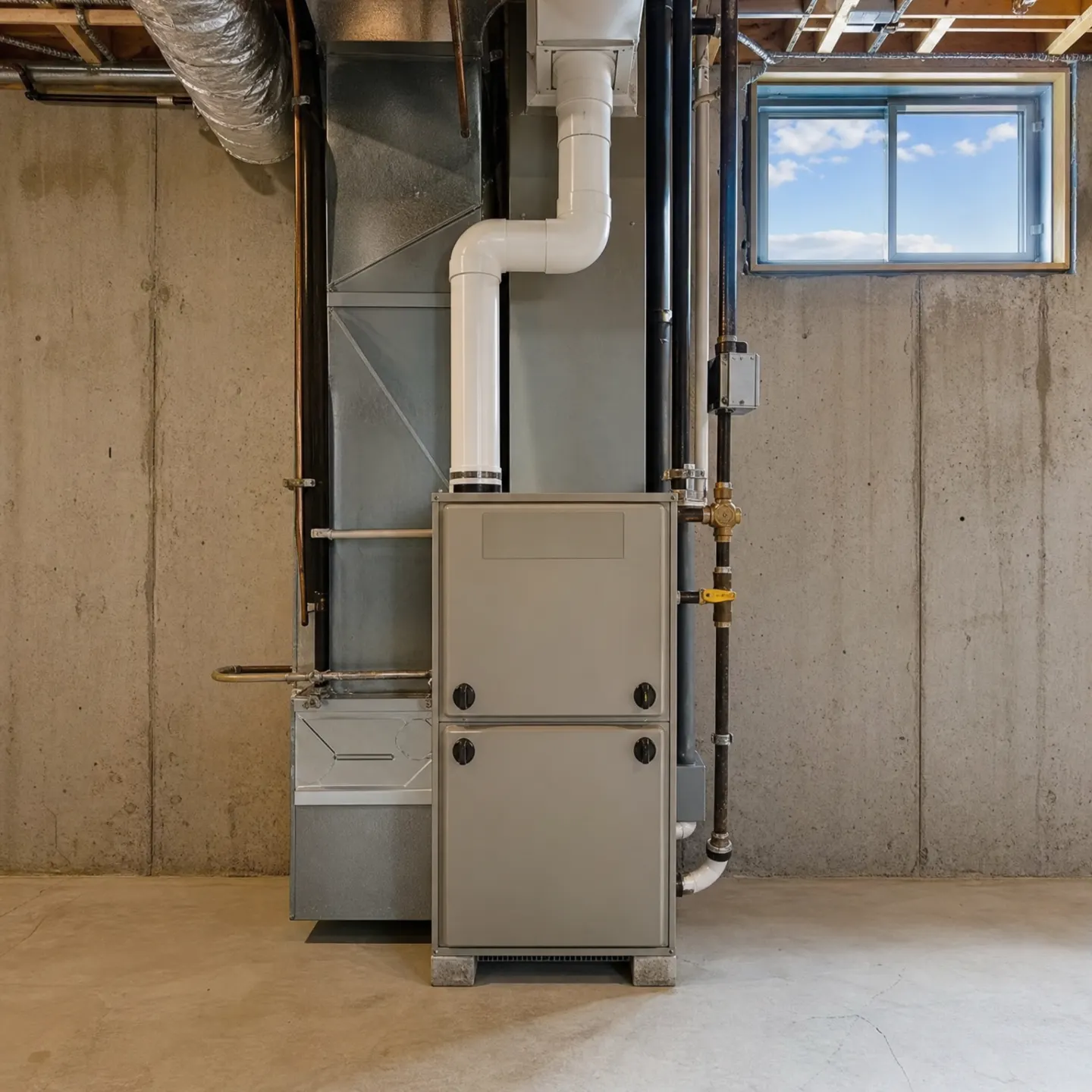
A gray gas furnace with attached ductwork and piping installed in an unfinished concrete basement.

A newer furnace still needs looking after

Half the homes in Montrose County were built in 1991 or later. If yours is one of them, the furnace inside it is likely well within its working life, not on its way out. That's worth something, but it doesn't mean skip the yearly check. A newer furnace still has a flame sensor that collects a film over a season, an igniter that weakens a little each time it fires, a flue that needs to be clear every single time it runs. A yearly check is what keeps a furnace that still has years left actually using them, instead of losing efficiency quietly or failing early because something small went unchecked.

Change the filter

A dirty filter chokes airflow, and the furnace runs longer to push air through it. Look at it once a month during the season. Hold it up to a light. If light barely gets through, swap it. A clean filter is the one thing between visits that actually affects how hard the furnace works.
Know what to leave alone

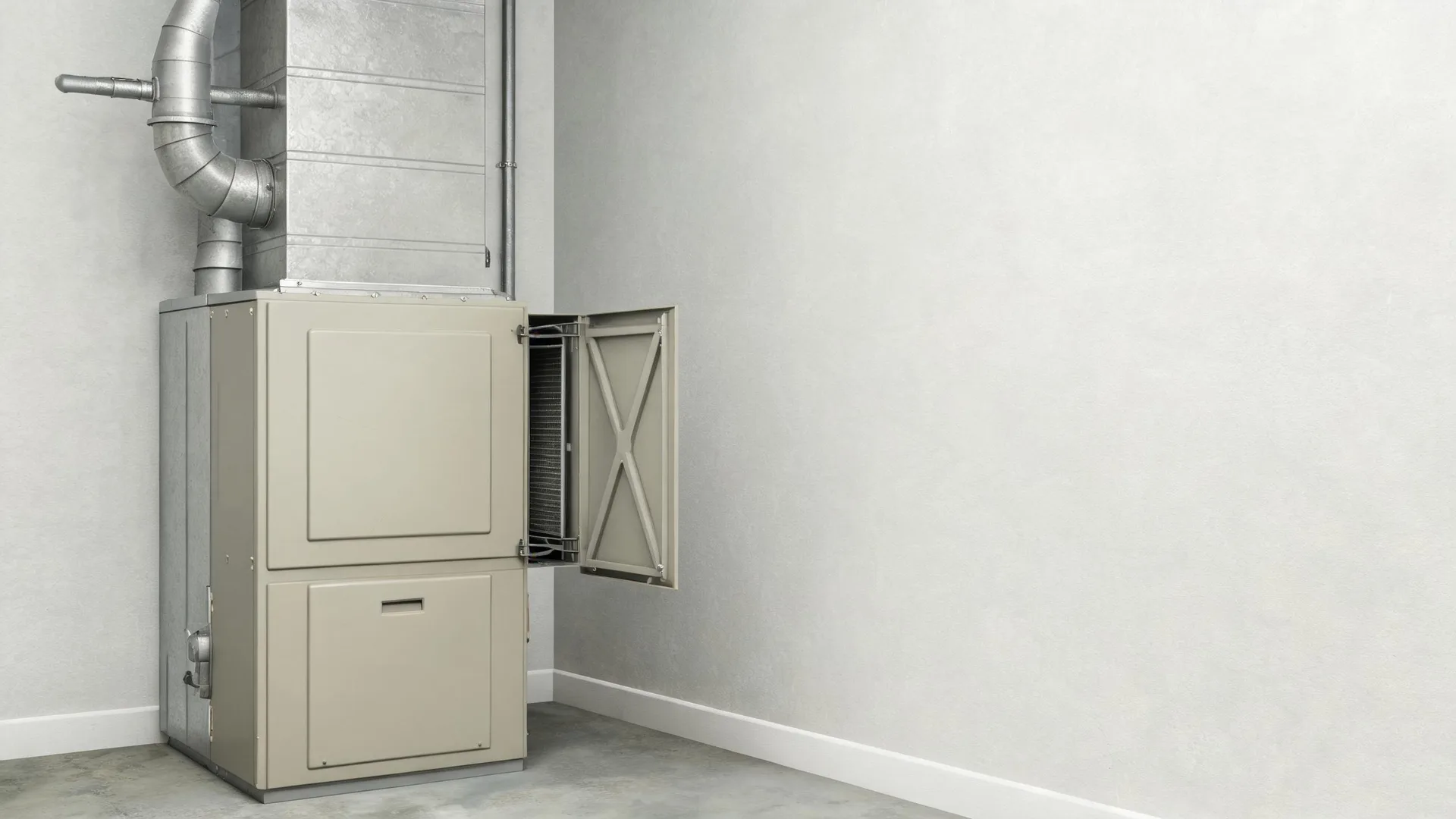
Clear anything stacked near the furnace so air can reach it, and keep an eye on the vent pipe outside for blockage. Past that, leave the cabinet closed. The burner, the flame sensor, the igniter and the heat exchanger need a trained eye and the right tools. Opening that up without knowing what you're looking at turns a simple check into a bigger problem.

A quick visit gets the filter swapped and the furnace fired up to see that it runs. That tells you almost nothing. A thorough tune-up gets the cabinet open and the burner looked at while it's lit, not just listened to from across the room. The flame should burn steady, mostly blue, not lifting or rolling away from the burner. The flame sensor gets cleaned, not just glanced at, since the film that builds on it over a season is what causes a furnace to shut off right after it starts. The igniter gets checked for a weak glow or a crack, because that's the part most likely to leave you with no heat at all. Someone should also pull a reading on the flue to confirm exhaust is actually leaving the house. If a tech is in and out in a few minutes without opening the cabinet, that was a filter change, not a tune-up.

Eight months of running time wears a furnace down faster here than in a place where it only kicks on for a few weeks at a stretch. The igniter weakens a little more with every cycle. The flame sensor collects film faster with more hours on the burner. A furnace that was fine in October can be struggling to stay lit by the middle of winter, and you won't know until it does. A tune-up before the season starts catches a weak igniter or a dirty sensor while it's still an easy fix, not a no-heat call on a cold morning.