A gravel road lined with a rustic log fence on the left and a row of dark-clad gabled cabins with metal roofs on the right, surrounded by pine forest.

Heat Pump Repair in Grand Junction, CO

Tell us about the job

Takes about a minute. No obligation.

Step 1 of 3: Equipment

Check the simple things first

Look at the thermostat setting and the batteries in it before anything else. Check the breaker for the indoor air handler and the one for the outdoor unit. Pull the air filter and hold it up to a light. If you can't see light through it, that alone can make a heat pump struggle to keep up. Walk outside and look at the outdoor unit for ice covering the coil or leaves and debris packed against it.

Know what tells you to call now

A heat pump blowing air that feels cool when it should be heating is normal to a point, since the air coming out is always cooler than a furnace's. But air with no warmth at all, and a house steadily losing ground, means something is wrong. Ice on the outdoor unit that doesn't clear on its own, a burning smell, or the outdoor fan sitting still while the indoor blower runs are not things to wait on. Shut the system off at the thermostat if you smell burning or hear grinding, and get a tech out before running it any further.

9 months
September through May, your system heats
2 months
July through August, it cools
18°F
the average winter night it heats against
83°F
the average summer afternoon it cools against
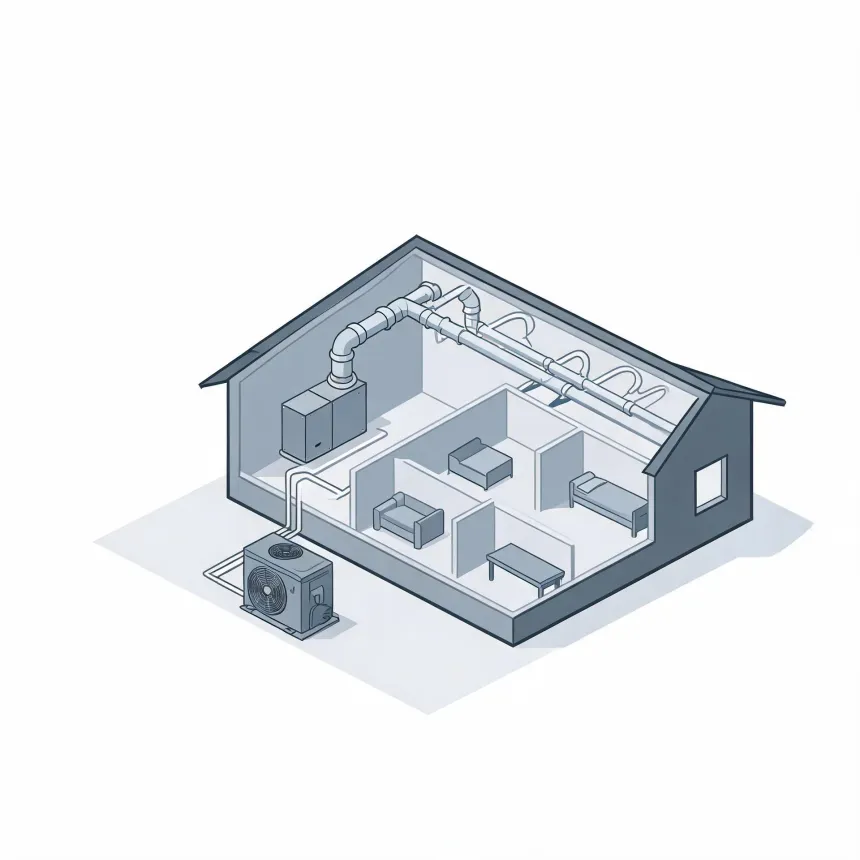
Isometric line illustration of a cutaway house showing interior rooms with furniture, a furnace or air handler with overhead ductwork, and an outdoor condenser unit connected by lines outside the wall.
Your system heats September through May and cools July through August.

NOAA nClimDiv, 1991–2020 normals

Mesa County gets its share of winter storms and hard wind off the Grand Mesa, same as the rest of the region.

None of that is what's wrong with your heat pump. It's almost always a worn part or a refrigerant issue, the kind any unit develops with age.

At 14.92 cents a kilowatt-hour, a heat pump that's struggling costs you every month it runs.

Power costs 14.92 cents a kWh statewide
152 damaging wind events from 2015 to 2024
14 hail events from 2015 to 2024
Nothing about Grand Junction is hard on a heat pump182 winter storms hit Mesa County between 2015 and 2024. The grid mostly held.

Half the homes in Mesa County were built in 1987 or later, and if yours is one of them, your heat pump probably isn't that old. Equipment this age usually fails because one part wore out or the charge is low, not because it's at the end of the line. That's a repair, not a reason to replace the system. Worth checking when your unit went in, or when it was last replaced, before anyone talks you into more than a fix.

Fix it now, and stop paying for a heat pump that isn't working right

A heat pump that's low on charge or losing a part runs longer to do the same job, and at 14.92 cents a kilowatt-hour that shows up on the bill fast. Getting the actual cause found and fixed stops the meter from running against you.

Find a contractor
A man in a cap, dark shirt and tan work pants walks up porch steps toward a navy blue front door, carrying a canvas tool bag beside a potted shrub.
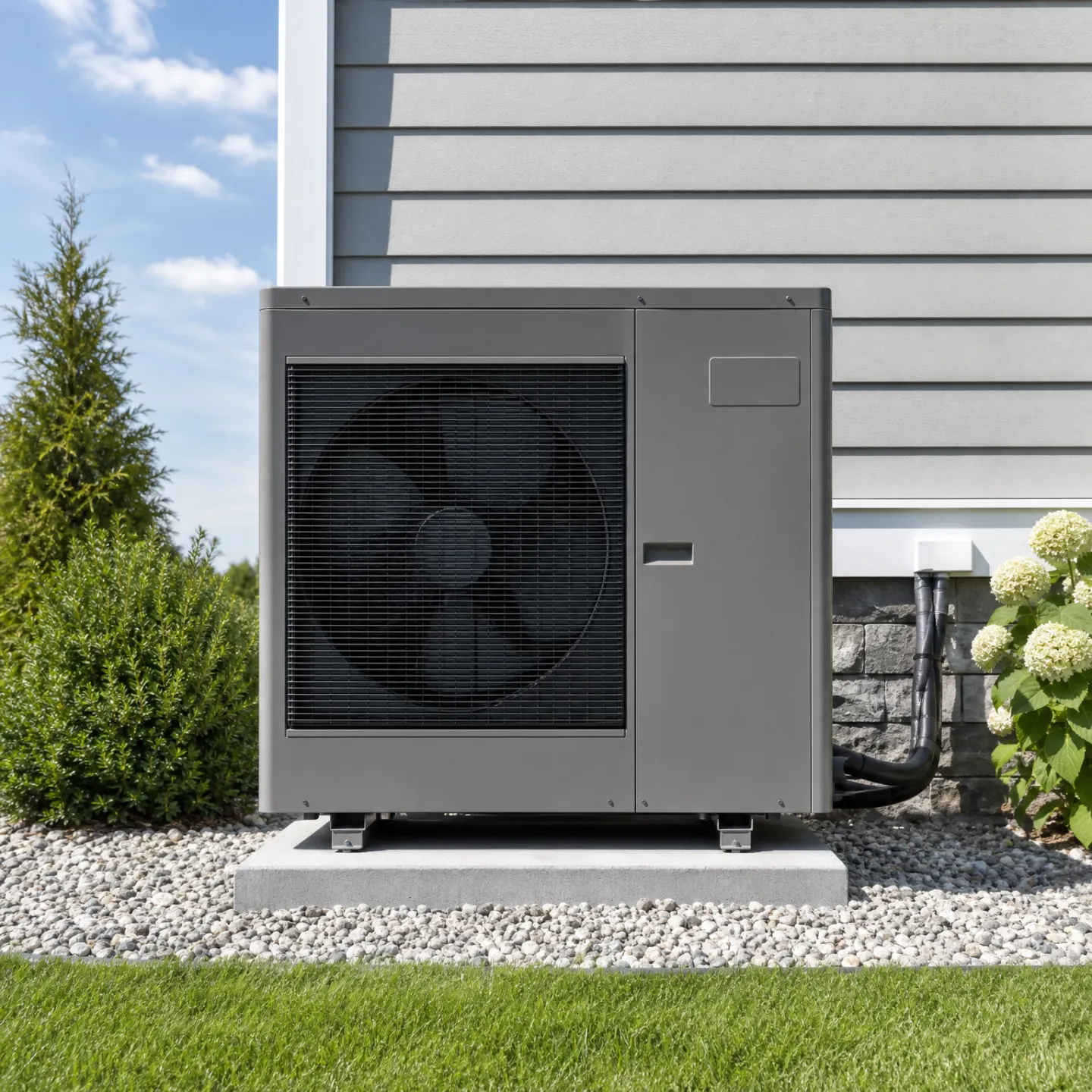
A gray air-source heat pump mounted on a concrete pad next to a house with gray vinyl siding, surrounded by gravel and flanked by green shrubs and white hydrangea flowers.

This heat pump hasn't been at it as long as you'd think

A heat pump that came in when a newer house was built hasn't been running as long as the county's housing age might suggest. It cycles on and off with the seasons year after year, and most of that wear lands on one part at a time, a contactor, a capacitor, a reversing valve. The whole unit doesn't fail at once. If you know when yours was installed, that tells you more about where it stands than the age of the house around it.

A low charge doesn't stay a small problem

A heat pump low on refrigerant makes the compressor work harder to move heat from outside air into the house. That extra strain is what burns out a compressor that would otherwise have run for years. A weak system caught early is a service call. Left running, it turns into a compressor replacement.

Ice on the coil feeds on itself

A heat pump defrosts itself on a normal cycle, melting off any frost that builds up on the outdoor coil. When that cycle stops working, ice keeps building instead of clearing, and ice blocks the airflow the coil needs to pull in heat. Past a certain point the unit is just running, not heating, until someone deals with the ice directly.

Most heat pump failures trace back to a handful of parts, not the whole system. The reversing valve is a common one. It's what switches the unit between heating and cooling, and when it sticks, the system keeps running but stops doing what the thermostat is asking for. Capacitors and contactors wear out from simple use, every start and stop cycles them a little closer to failure, and when one goes the outdoor unit may hum without starting or not respond at all. A dirty outdoor coil makes the whole system work harder to move heat, the same way a clogged filter does on the inside. None of these mean the unit is done. They mean one part needs attention before it takes anything else down with it.

A heat pump nearing the end of its life usually gives some warning before it gets there. Repairs start coming more often, the same part fails again after being replaced, or the compressor itself is the thing going bad rather than a capacitor or valve feeding it. A compressor replacement is the one repair worth weighing against a new system, since it's the most expensive part in the unit and the labor to replace it isn't small either. Anything short of that, a reversing valve, a contactor, a dirty coil, is a straightforward fix on a system that has plenty of life left. The question isn't how old the unit sounds. It's which part failed and whether this is the first time or the third.