



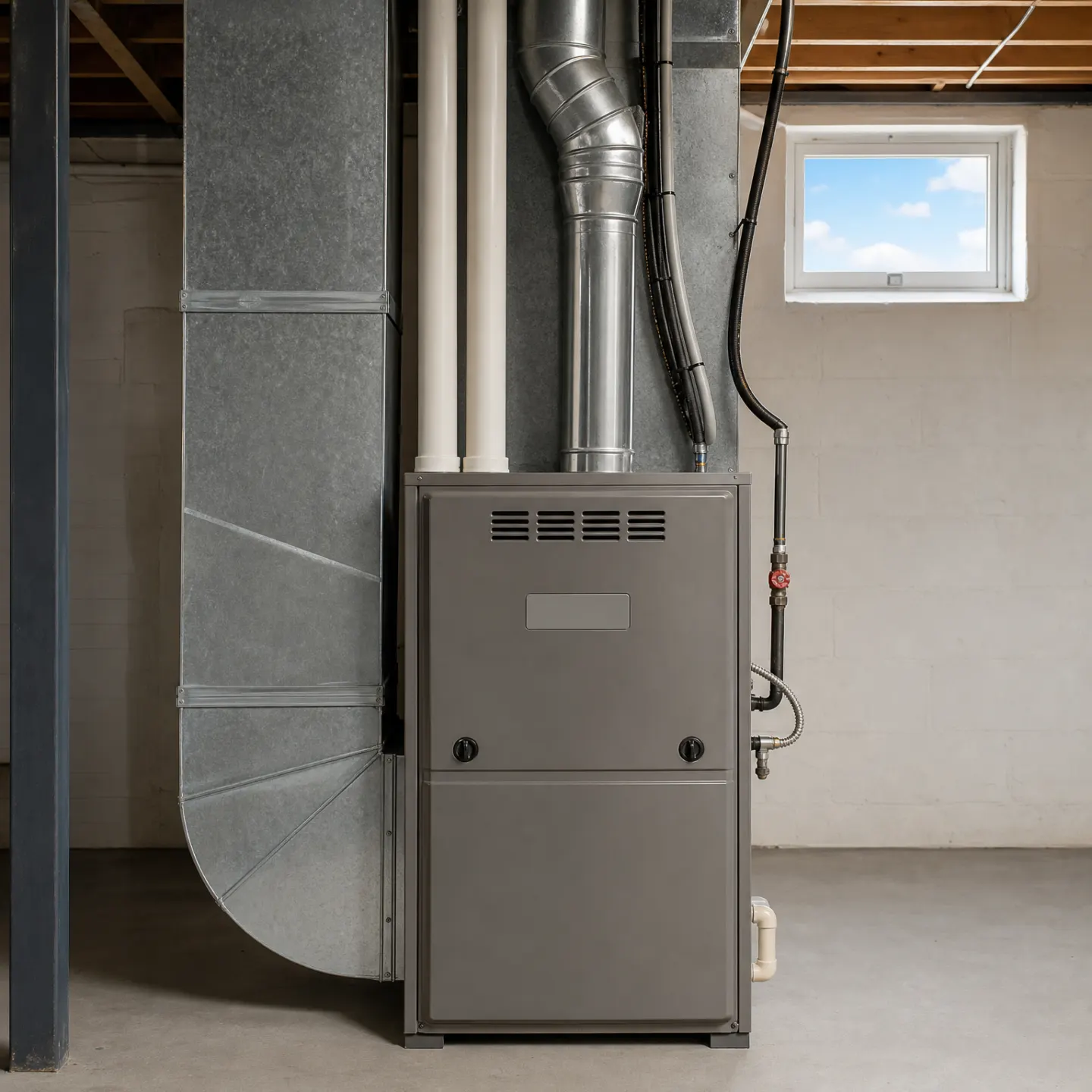
A gas furnace and sheet-metal air handler unit installed in an unfinished concrete basement.

Furnace Maintenance in Delta, CO

Tell us about the job

Takes about a minute. No obligation.

Step 1 of 3: Equipment

Furnaces around Delta run from September through May, nine months of the year. That's most of the calendar spent cycling on and off, heating the house through the night and into the cold mornings. Delta County saw 192 winter storms between 2015 and 2024, counting heavy snow, ice and blizzards, and every one of those is the furnace working flat out to keep up. A system that runs that much doesn't get much of a break to recover between seasons. Parts wear faster under that kind of use, and the igniter or the blower motor can start failing years before they would in a place with a shorter winter.

Dust builds on the burners a little every month the furnace runs.

A tune-up catches that buildup before it turns into a cracked heat exchanger or a dead igniter.

Nine months of heat starts in September. Have it checked in August.

Heat runs September through May
Winter nights average 17°F
192 winter storms from 2015 to 2024
Most of Delta County Heats with GasGas heats 51.4 percent of homes here, more than any other fuel

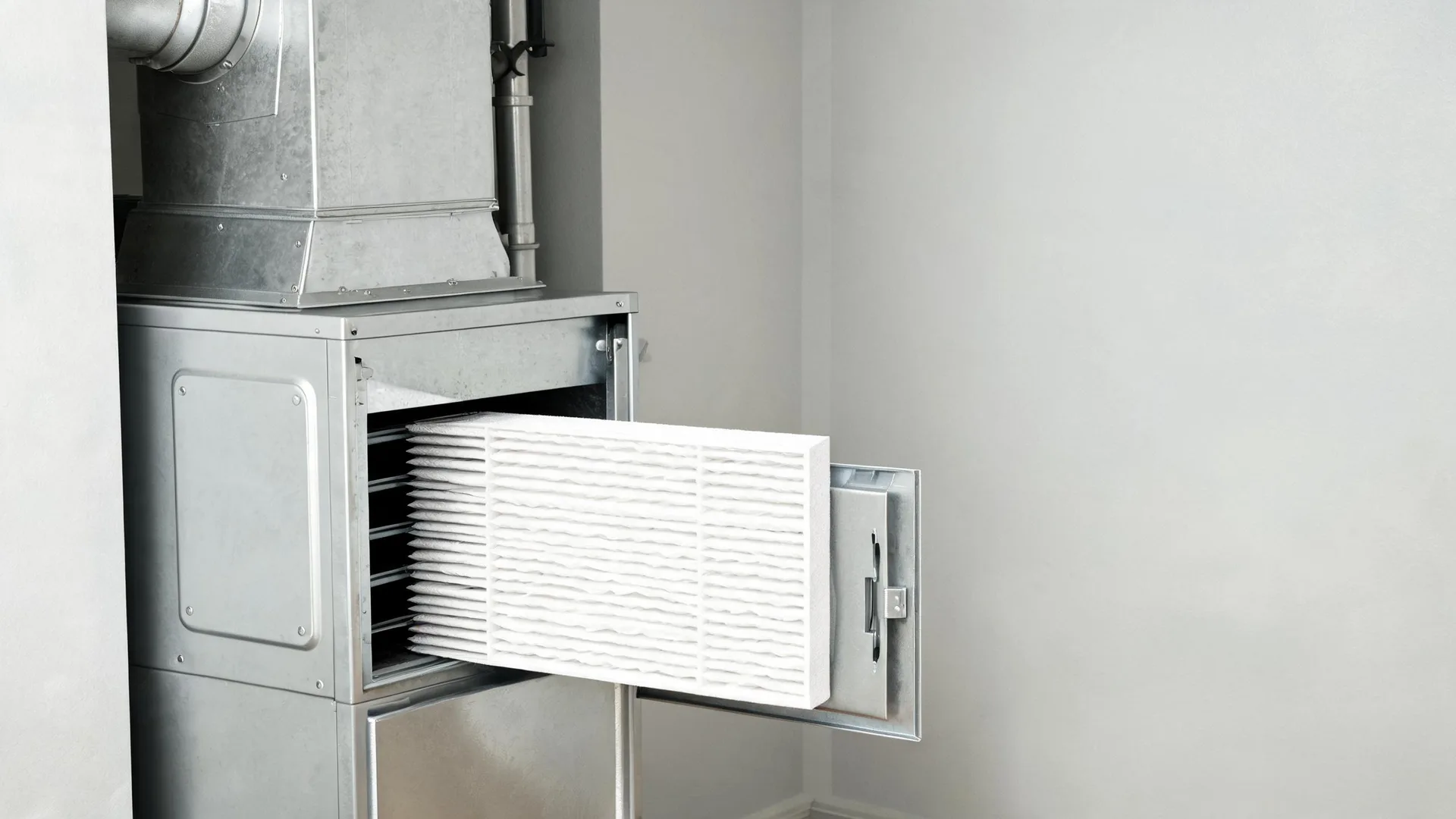
The filter is the first line of defense. A dirty one chokes airflow across the heat exchanger, and that makes the burners run hotter and longer to push the same heat through the house. The blower motor strains against that restriction too, and strain now means a shorter life later. On a furnace with a secondary heat exchanger, condensation drains out through a small tube, and that tube can clog with the same sediment and buildup a condensate line always collects. A clogged drain backs up and can shut the furnace down on a safety switch, no warning, just no heat. None of these parts are complicated. They just need someone to look at them before the season asks the furnace to run every day for months.

Get Ahead of the Season While There's Still Time

A furnace that runs nine months straight doesn't get much downtime to show you a part is wearing out. Get it looked at before September, while there's still time to fix what the last winter started.

Find a contractor
A gray residential gas furnace installed in an unfinished basement, surrounded by ductwork, a metal flue pipe, and a gas supply line.

A Running Furnace Isn't the Same as a Checked One

A quick tune-up checks that the furnace lights and the air coming out of the vents feels warm. That tells you the furnace works today. It doesn't tell you much else. A thorough one pulls the burner assembly and looks at the flame itself. A clean burner flame is steady and mostly blue. If it's yellow, lazy, or flickering, something is burning dirty or the gas mix is off, and that can mean carbon monoxide building where it shouldn't. A thorough check also means testing the flue draft, since a furnace that can't vent properly will push exhaust back into the house instead of up the flue. The heat exchanger gets inspected for hairline cracks, which you can't always see without pulling a panel and using a light. The blower wheel gets checked for dust buildup on the blades, because a caked wheel moves less air even when the motor runs fine. Amp draw on the blower motor gets tested against what the motor is rated for, since a motor pulling more current than it should is a motor on its way out. None of this shows up if the only thing checked is whether the furnace turns on.

The Signs Rarely Come First

A furnace usually fails quietly before it fails loud. A short cycle, where it fires up and shuts off again before the house warms, often means a flame sensor coated in residue or a clogged filter choking airflow. A burner flame that's gone yellow instead of steady blue is telling you something about combustion, not just color. A faint burning smell the first few times it runs each season is normal as dust burns off the heat exchanger, but a smell that lingers past the first hour is not. None of these stop the furnace from running. They just mean it's running wrong.
Why Waiting Costs More Than Looking

A furnace that's struggling doesn't announce it. The blower motor keeps turning even while it's pulling more current than it should. The heat exchanger can carry a hairline crack for a long time before it fails outright. Left alone, a small issue like a dirty flame sensor or a slipping airflow problem doesn't stay small. It makes the parts around it work harder, and that's how one worn part turns into two.

Between visits, the filter is the one thing worth checking yourself. Pull it out, hold it up to a light, and if you can't see light through it, swap it. A clean filter is a cheap way to keep airflow where it belongs. Keep the area around the furnace clear too. Boxes, laundry, anything stacked near the unit can block the air it needs to pull in and breathe out safely. Look at the flame if the cabinet lets you see it. It should be steady and blue, not yellow or jumping around. Beyond that, leave the cabinet closed. The blower wheel, the heat exchanger, the flue connections, those need a trained eye and the panels off, not a homeowner with a flashlight.

A tune-up starts with the furnace off and the cabinet open, not with it running. The burners get pulled and cleaned, since a dusty burner doesn't light evenly and that uneven light is what turns a flame yellow instead of blue. The flame sensor gets cleaned or tested, because a coated sensor is the most common reason a furnace fires for a few seconds and quits. Electrical connections get checked for anything loose, since a loose connection is what causes a furnace to run fine for weeks and then stop cold. The igniter gets looked at too. It's a thin piece, and it weakens a little every time it heats up and cools down, until one day it doesn't glow hot enough to light the gas. Belts and bearings get checked on older blower motors, and the motor's mounts get checked for wear that lets it vibrate loose over time. Gas pressure gets measured at the valve, because pressure that drifts too high or too low changes how clean the burners fire. None of this takes long when nothing's wrong. It's how you find out something's wrong before it decides to tell you itself.