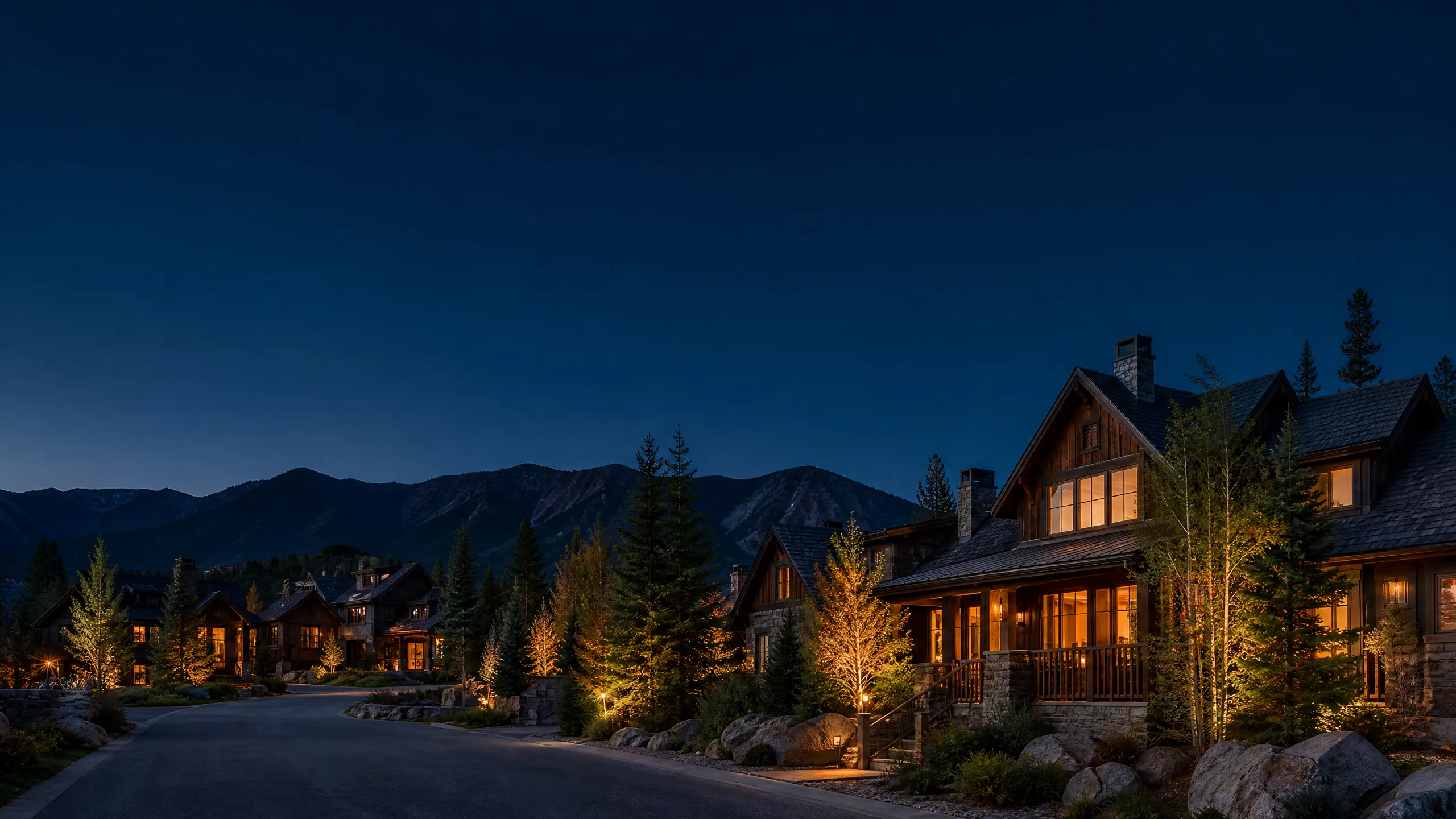



Illuminated timber-and-stone mountain cabins along a curved road at twilight, with lit trees and mountain peaks in the background.

Furnace Maintenance in Elizabeth, CO

Tell us about the job

Takes about a minute. No obligation.

Step 1 of 3: Equipment

Elbert County saw 319 severe weather events between 2015 and 2024. That includes 165 hail events, 83 damaging wind events, and 24 tornadoes. A furnace isn't exposed to much of that, but the parts of the system that sit outside are. Hail dents housings and bends fins. Wind drives branches and grit into places they don't belong. Statewide, 13% of households went at least a day without power in 2024, and a furnace with electronic ignition won't run during an outage no matter how well it's been maintained. A tune-up before winter is the time to find out whether storm season left anything behind.

Most homes in Elbert County run on gas, either piped in or delivered as propane.

A furnace tune-up here has to include the burner and venting, not just the filter.

Nine months of heat a year wears a furnace down fast

Heat runs September through May
Winter nights average 15°F
46 winter storms from 2015 to 2024
A newer county, a furnace worth keeping upHalf the homes in Elbert County were built in 1996 or later.

Furnaces here start running in September and don't let up until May. That's nine months of the year this system has to work. August is the month before that, and it's the right time for a tune-up. A furnace with a bad igniter or a dirty flame sensor will show you as soon as it has to run every day. Catching it in August means a technician finds it on their schedule, not on a night when the house is already cold.

Get the furnace checked before winter puts it to the test

Winter storms hit this county 46 times between 2015 and 2024. When one knocks out power, a gas furnace with electronic ignition still won't start, no matter its condition. A tune-up now is also when a technician can check the outdoor parts of the system for hail dents or debris from the season before, while the schedule still has room for it.

Find a contractor
A man in a cap, dark shirt and tan work pants walks up stone steps toward a dark blue front door, carrying a canvas tool bag, with a potted shrub beside the entry.
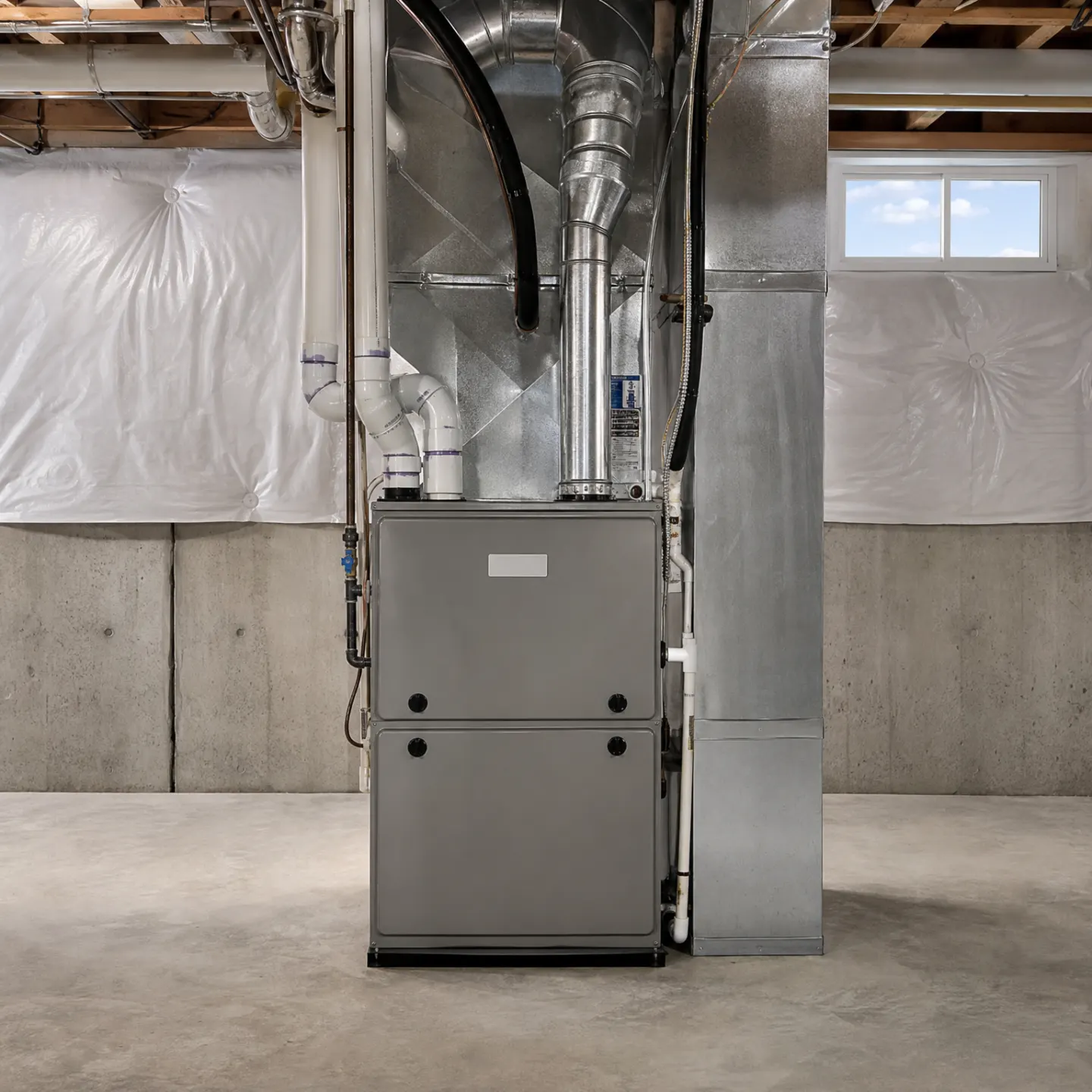
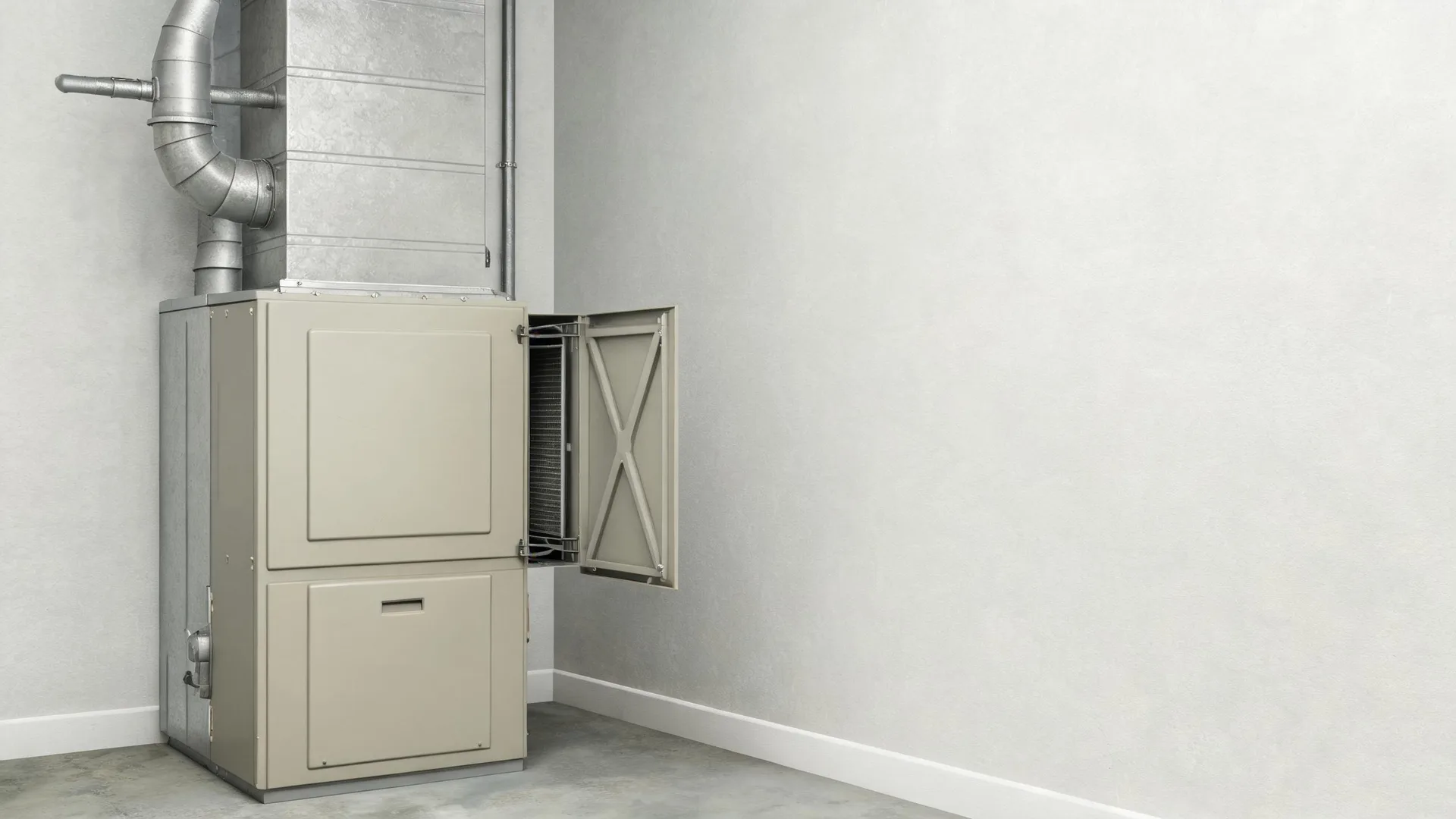
A gray residential gas furnace installed in an unfinished basement, connected to sheet-metal ductwork and PVC pipes.

Nine months of runtime, time to get ahead of it

Nine months of running is most of the year for this system. A tune-up scheduled well before September gives a technician time to find a cracked heat exchanger or a worn blower motor and order the part before the furnace has to run every night. Once winter settles in and a storm knocks out power on top of it, that same repair means waiting it out with a cold house instead.

The filter is doing more than you think

A dirty filter chokes airflow across the heat exchanger. The blower has to work harder to push air through it, and the exchanger runs hotter than it should. Over time that heat stress is what cracks an exchanger. Swapping the filter is the cheapest insurance this system gets.
The drain only matters on certain furnaces

A high-efficiency furnace pulls extra heat out of the exhaust and that creates condensate, which has to drain somewhere. If that line clogs, the furnace can shut itself down rather than let water back up into places it shouldn't be. A tune-up is when that line gets cleared before it backs up on its own schedule instead of yours.

Between tune-ups, the filter is the one thing worth checking yourself. Pull it every month or so and hold it up to a light. If you can't see through it, swap it. A furnace that short-cycles, kicking on and off in quick bursts, is also worth a call rather than a wait, since that pattern wears on the ignition system faster than steady running does. Keep furniture and boxes away from the return vent so the blower isn't straining to pull air through a blocked opening. If the furnace has a standing pilot, you can check that the flame burns steady and blue. A yellow or flickering flame means something's off with combustion and it needs a technician, not a homeowner fix. Past that, leave the burner, the exchanger and the ignition components alone. Those are built to be opened by someone with the tools and training to put them back together correctly.

A furnace in a home built in 1996 or later still has a lot of working life in it, and that's exactly when a yearly tune-up pays off most. A technician can catch a worn part while it's cheap to fix and the system is still running fine otherwise. That's harder to do once a furnace is old enough that everything's wearing out at once. If your place was built after the mid-1990s, a yearly check is how you keep it in that easier range longer. Skipping a year doesn't spare the furnace any wear, it just means nobody's looked.